
Reviewed · OSAKA PRIVATE TOURS
Nara: Full-Day Private Guided Tour
Nara’s appeal comes into focus when you connect its great temples with the everyday streets around them. This eight-hour private tour moves from a rooftop view to Tōdai-ji, Kasuga-taisha, deer-filled Nara Park, and Naramachi, with a local guide to tie the sights together.
I like two things in particular: the chance to see older Nara beyond the main temple route, and the flexibility of a private guide who can explain the city as you walk. One guide, Mouloud Hammaduo, was praised for finding quieter paths and old houses, though you should not assume he will lead every departure.
The main consideration is cost beyond the $225 tour price. Public transport, lunch, and two temple or shrine entrance fees are extra, and the day includes plenty of walking between stops.
- A rooftop start gives you a broad view of Nara before the temple visits begin.
- Tōdai-ji’s great Buddha anchors the day with an eighth-century temple and one of Japan’s largest seated Buddha statues.
- Deer are part of the route, not a separate attraction: the walk through Nara Park passes among more than 1,200 of them.
- Naramachi adds a quieter change of pace, with merchant-town architecture and old houses.
- Private guiding is the key value, especially if you want historical context and a route that can steer away from the busiest paths.
A rooftop view sets the scene
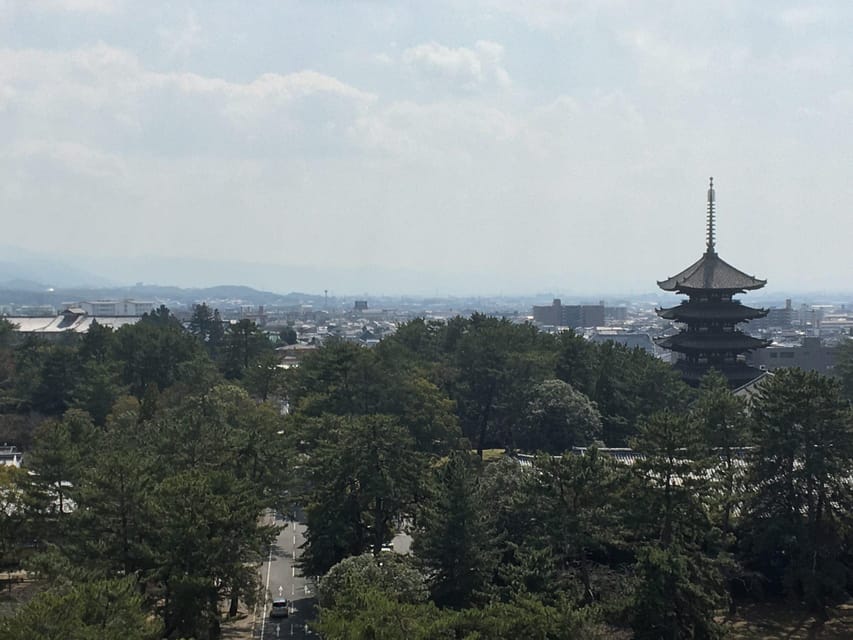
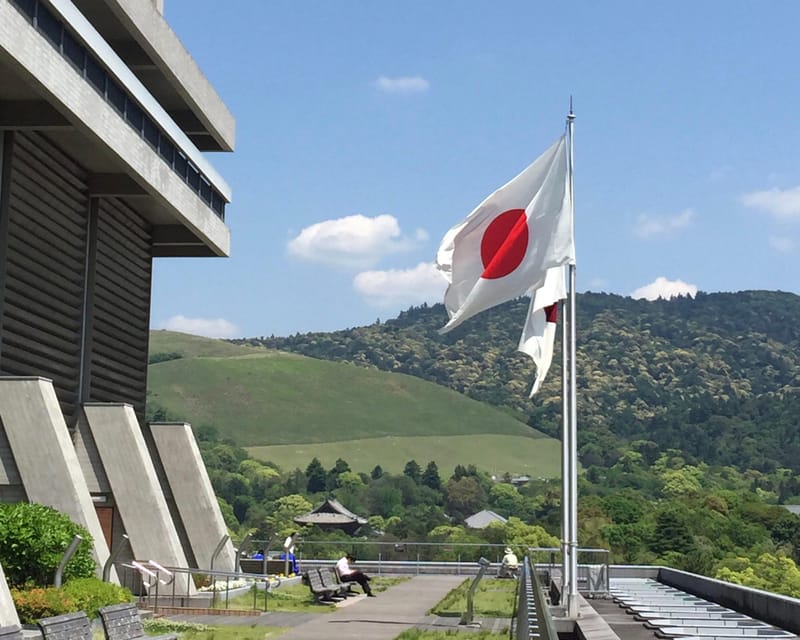
The tour begins at the Nara Prefectural Government Office, where you spend about an hour on a guided visit and walk. The rooftop is a practical first stop: from above, you can get a sense of how the city’s temples, parkland, and older streets fit together before you explore them on foot.
That overview matters in a city where major sights sit within a wider setting of nature and historic neighborhoods. Your guide can use the view to introduce Nara’s role as Japan’s first fixed capital and set up the period-by-period story that continues through the day.
This is a photo stop as well as an orientation. It is worth taking a moment to look beyond the camera frame and ask your guide how the sites relate to one another. The tour is private, so questions can shape the conversation rather than wait for a group to catch up.
Tōdai-ji and its enormous Buddha
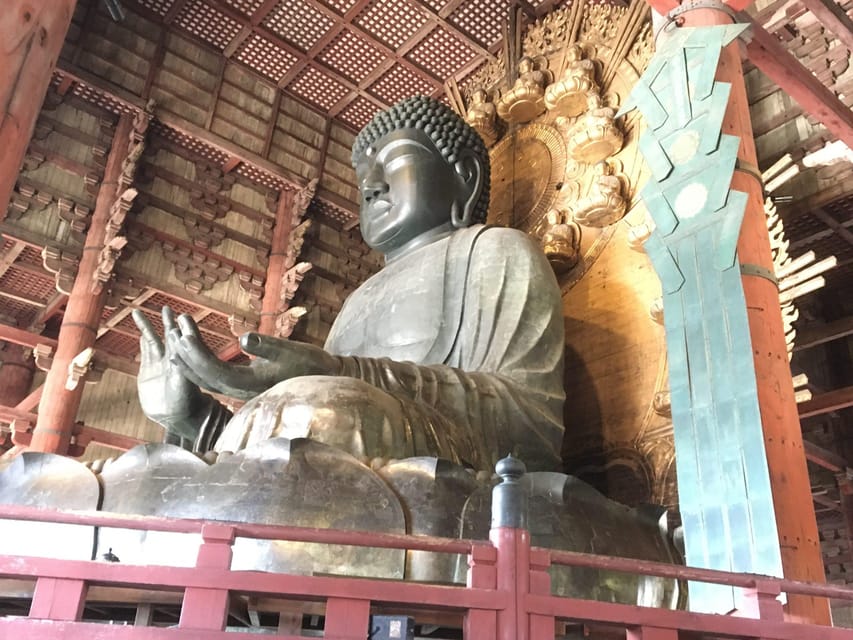
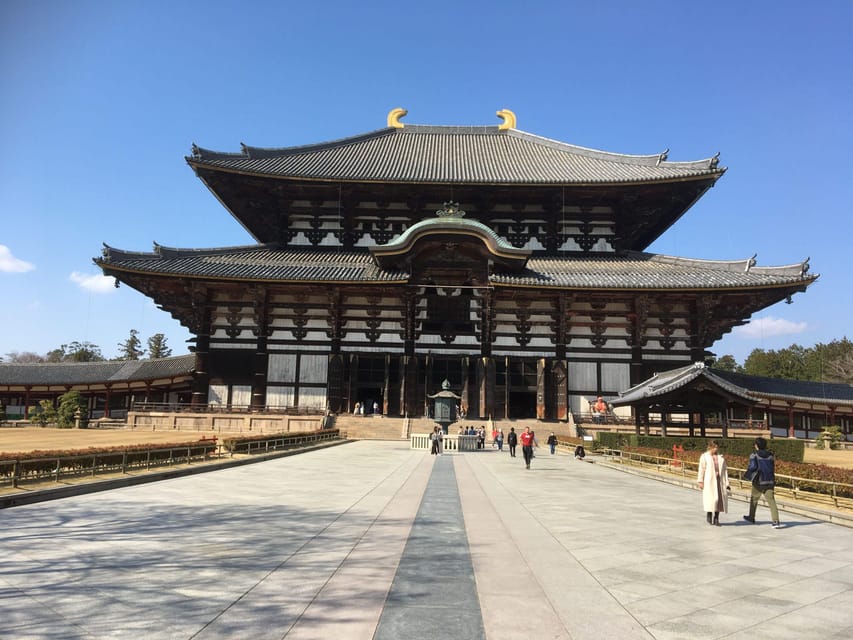
The visit to Tōdai-ji is scheduled for two hours, making it the longest stop. The temple dates to the eighth century and is home to Japan’s largest seated Buddha. Its scale is the sort of thing that is hard to understand from a photograph; seeing the statue in its temple setting gives the visit its weight.
A guide adds useful context here. You are not simply looking at a large statue, but learning about the Nara Period and the role of the temple in the city’s early history. The guide-led format is particularly helpful if you want more than a quick look and a photo.
The two-hour block also gives the temple more breathing room than a rushed pass-through. Still, this is a major sight and can be busy. One reason to value a private guide is the possibility of adjusting how you spend your time, although the exact route and timing depend on the day.
Tōdai-ji’s entrance fee is not included and is listed at 800 yen per person. Factor that into your budget, along with the Kasuga-taisha fee later in the day.
More private tours around Nara:
- Nara Half Day Trip Walking Tour (Private Option Available)
★ 5.0 · 937 reviews - Nara 6hr Private Tour with Government-Licensed Guide
★ 5.0 · 219 reviews - Nara: Private Tour with Private Guide
★ 4.8 · 66 reviews
Lunch breaks up a full day on foot
A one-hour lunch stop at a local restaurant follows Tōdai-ji. Lunch is not included, with an estimated cost of about 2,000 yen per person. The restaurant is described as local, but no specific menu or venue is guaranteed, so treat this as a meal break rather than a promised food-focused experience.
The timing is sensible. You get a pause before the afternoon visits, and an hour gives you some room to eat without turning the day into a long sit-down. If you have dietary needs, it is wise to confirm arrangements with the provider before booking, since no special menu details are provided.
Kasuga-taisha and the deer paths
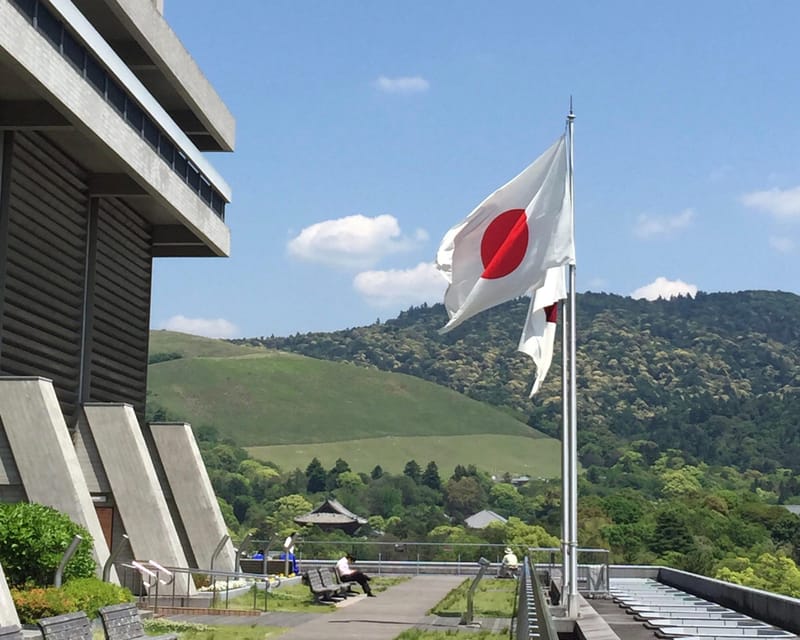
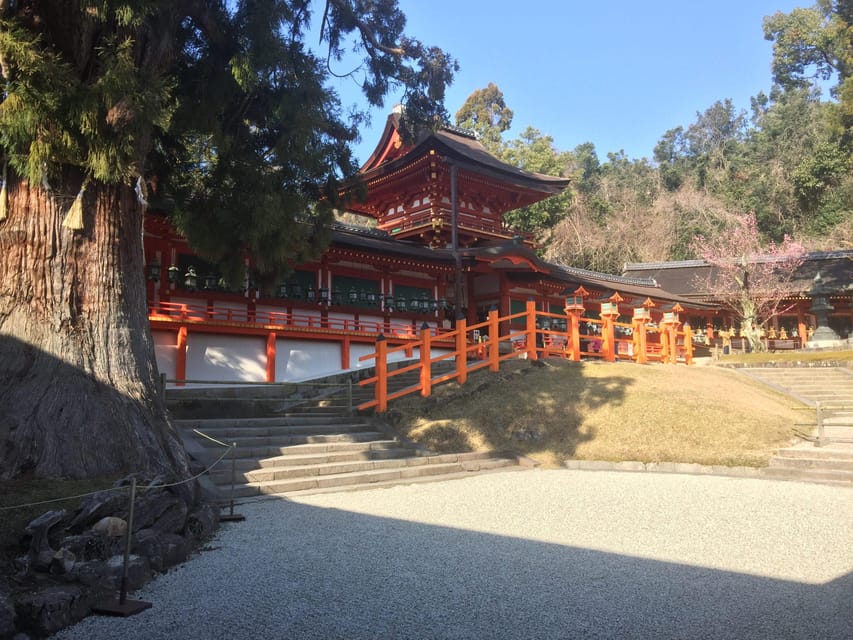
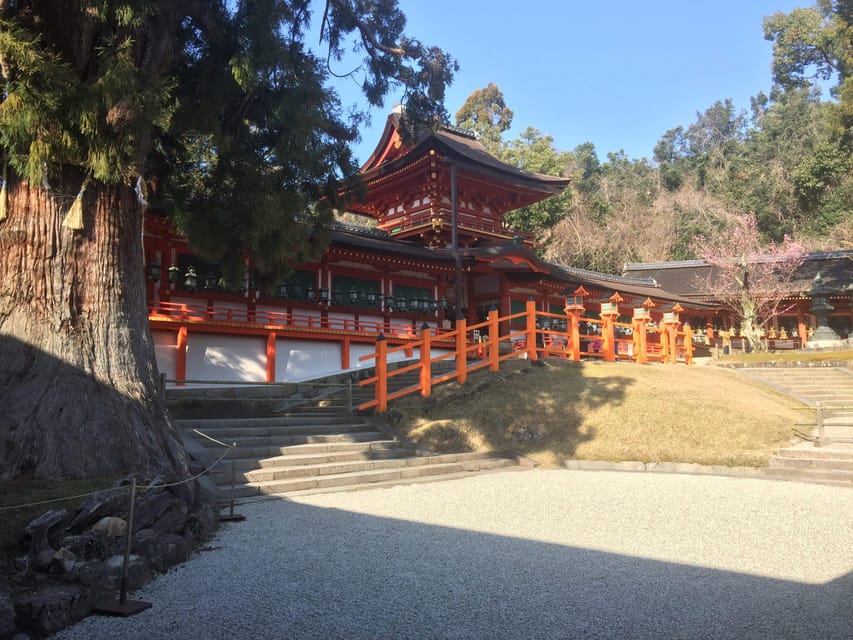
Kasuga-taisha is scheduled for about an hour, including a guided visit, walk, and photo stop. The shrine is a change of mood after the monumental scale of Tōdai-ji. Here, the setting and the freely roaming sacred deer are central to the experience.
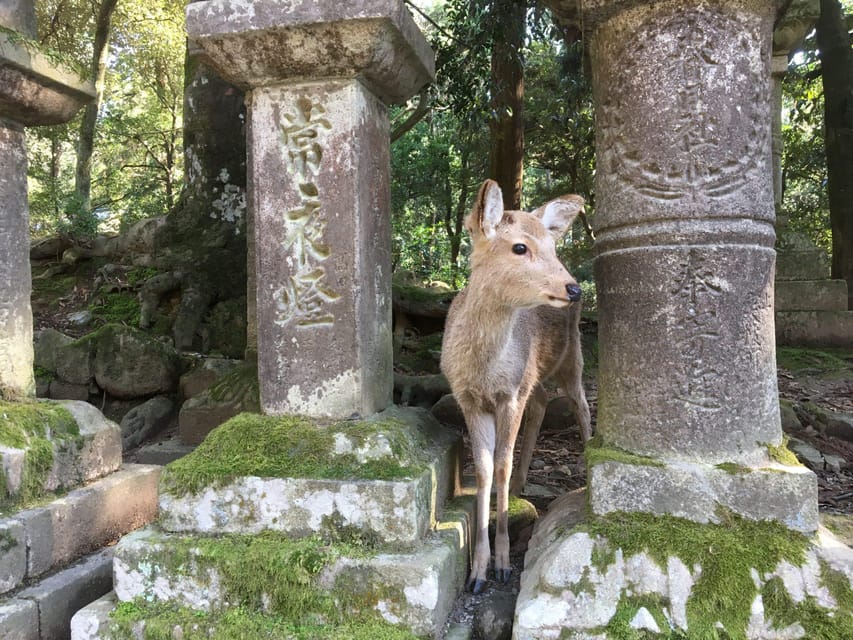
The shrine entrance fee is 700 yen per person and is paid separately. The walk continues into Nara Park, where the route passes among more than 1,200 deer. That number explains why deer are not just a quick photo opportunity here: they are part of the texture of the city and the walk.
A practical tip comes from the experience of other visitors: keep cookies out of sight. Deer may approach when they think you have food. Enjoy the encounter, but follow your guide’s advice about how to behave around them. The animals are a memorable part of the day, though their presence can also make some paths feel busy.
The tour allots another hour to Nara Park. That gives you time to experience the green space rather than simply cross it between attractions. If your main interest is wildlife, remember that this is one part of a broader historical walking tour, not a dedicated animal encounter.
Naramachi’s merchant streets and old houses
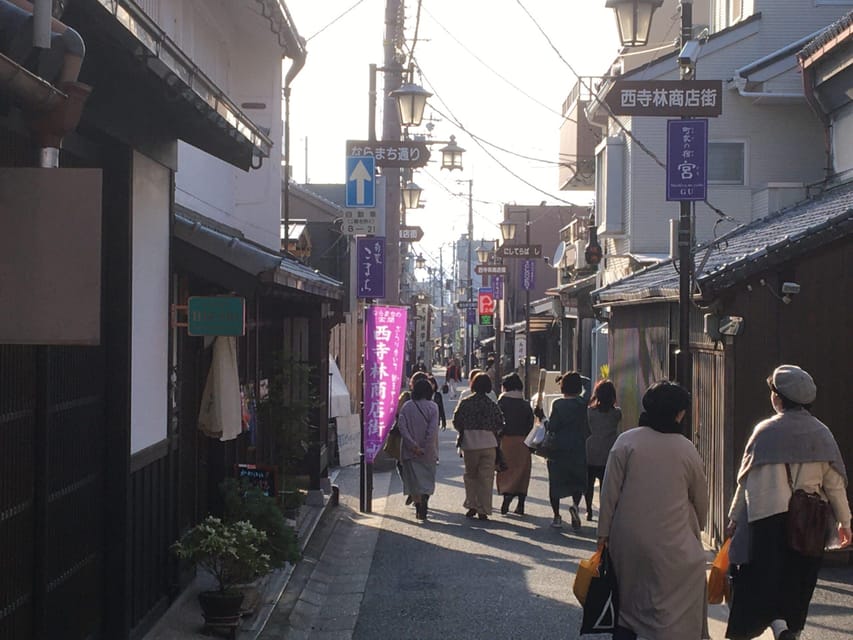
Naramachi brings the day down from grand religious landmarks to the scale of ordinary city life. This former merchant district is known for traditional Edo-period architecture, and the tour includes a guided walk and visits to old houses.
This is where the private format can pay off in a different way. One guide, Mouloud Hammaduo, was specifically praised for taking a visitor to older parts of Nara and places away from the usual busy routes. That is a useful clue about the kind of experience this tour can offer: not just the headline monuments, but quieter corners that help you picture how the city developed.
The old houses provide a tangible contrast with the eighth-century sites. You move from the Nara Period to the Edo Period, roughly the seventeenth through nineteenth centuries, and see how the city’s story continues beyond its time as the capital. The hour here is a good fit for travelers who like architecture and neighborhood walks.
More full-day trips around Nara:
- Osaka: Minoh, Katsuoji Temple, & Minoh Falls Full-day Tour
★ 4.9 · 172 reviews - Osaka’s Best and Brightest: Private Full-Day Tour by Vehicle
★ 5.0 · 147 reviews - Full Day Tour of Kyoto with Private Transportation
★ 5.0 · 130 reviews - Full Day Hiroshima and Miyajima Tour by Bullet Train from Osaka
★ 4.5 · 117 reviews
Kōfuku-ji rounds out the route
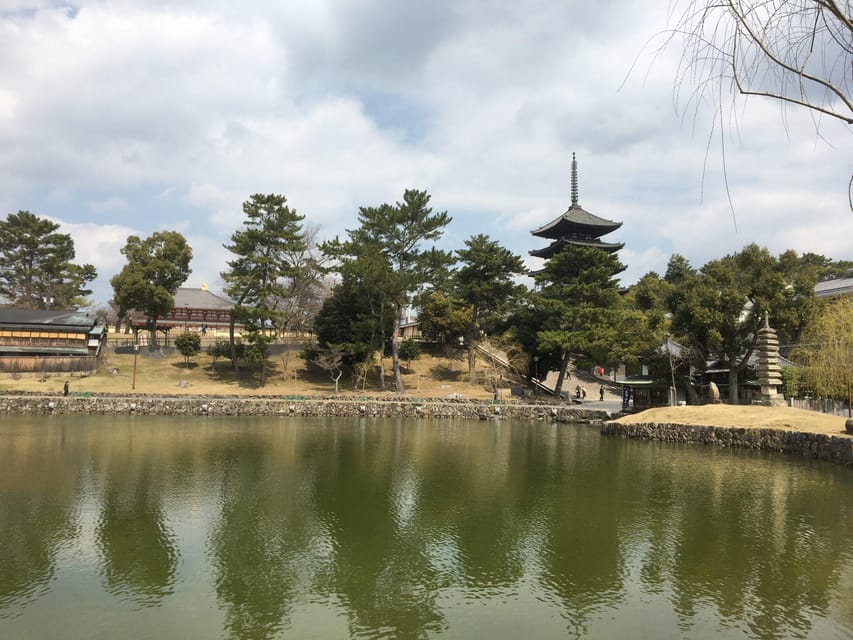
Kōfuku-ji is the final scheduled visit, with about an hour for a guided walk. Its place at the end of the day gives you one more major temple setting after the quieter lanes of Naramachi.
By this point, you will have seen Nara through several lenses: city overview, early Buddhist history, shrine and parkland, merchant architecture, and another temple complex. The guide’s role is to connect these parts so the day feels like a story rather than a checklist.
The tour returns you to one of three drop-off locations: Osaka, Nara, or Kyoto. The listed pickup choices are the same. If you are traveling from Osaka or Kyoto, allow for the stated public transport cost of around 3,000 yen per person for the day.
What the $225 price covers, and what it does not
At $225 per person, this is a premium way to see Nara. The price covers the guide and guide fees, and the group is private. That means you are paying for a dedicated guide rather than a seat on a large group departure, which can be worthwhile if historical explanation, flexibility, or a quieter route matter to you.
The extras add up. Budget about 3,000 yen per person for transport if coming from Osaka or Kyoto, around 2,000 yen for lunch, 700 yen for Kasuga-taisha, and 800 yen for Tōdai-ji. Together, those stated costs come to about 6,500 yen per person on top of the tour price for someone traveling from Osaka or Kyoto. Transport from Nara is not priced in the information provided.
The value is strongest if you want a guide to make sense of several sites in one day and help you find more than the busiest viewpoints. It is less compelling if you prefer to explore independently, want a very short visit, or are focused on keeping costs low. The route is also full: there are seven scheduled stops, with walking built into nearly every one.
Who will get the most from this tour
This tour suits first-time visitors who want a structured introduction to Nara’s temples, deer, and older neighborhoods in a single day. It is also a good match for people who value conversation and can make use of a private guide’s knowledge of local history and less crowded routes.
The English, French, and Japanese guide options offer flexibility for different language needs. The tour is described as wheelchair accessible, but it also involves walking across several locations. If you have specific mobility needs, ask the provider how the route and individual stops can work for you.
The four-review rating is a perfect five, but that is a small sample. The most useful praise is specific: the guide’s historical explanations, good English, professional manner, and ability to show quieter parts of Nara. Those are the qualities that give this tour its strongest case.
Should you book this Nara day?
Book it if you want a full, guided introduction that combines major landmarks with old-town character, and you are comfortable paying extra for transport, meals, and admissions. The best reason to choose it is the private guide: a good guide can help you understand why Nara’s ancient temples, deer park, and Edo-era houses belong in the same day.
Skip it if you would rather set your own pace without a guide or need a low-cost outing. For everyone else, the mix of Tōdai-ji, Kasuga-taisha, Nara Park, Naramachi, and Kōfuku-ji makes a strong day, especially if you want to see more than the most obvious stops.
FAQ
How long is the tour?
The tour lasts eight hours.
Where can the tour start and end?
Pickup and drop-off options are Osaka, Nara, and Kyoto.
What languages are available?
The live guide is available in French, English, and Japanese.
What is included in the $225 price?
The guide and guide fees are included. Transport, lunch, and entrance fees are not included.
How much should I budget for the listed extras?
Lunch is about 2,000 yen per person, Tōdai-ji admission is 800 yen, and Kasuga-taisha admission is 700 yen. Transport is around 3,000 yen per person for the day if traveling from Osaka or Kyoto.
Is this a private tour?
Yes. It is offered for a private group.
Is the tour wheelchair accessible?
Yes, the activity is listed as wheelchair accessible. The route also includes walking, so contact the provider if you need details about access at particular stops.
Just added around Nara
- Nara: Write Your Own Name in Kanji (Japanese Calligraphy)★ 4.4 · 3 reviews
- Nara: Sake Tasting Tour at the Birthplace of Japanese Sake★ 4.9 · 8 reviews
- Nara: Private City Tour With A Local Guide★ 4.2 · 8 reviews
- Nara Heritage Walkabout from Nara Park to Todaji-ji temple★ 5.0 · 5 reviews
- Nara: Half-Day Private Tour of 4 Must-See Spots & Deer Park★ 5.0 · 3 reviews
- Nara: Cultural Heritage Tour by Rickshaw★ 5.0 · 5 reviews
- Nara: Cooking class, learning how to make authentic sushi★ 5.0 · 5 reviews
- Nara – Craft Beer, Sake, and Food Walking Tour★ 3.5 · 9 reviews
Osaka Private Tours, compared.
Nara Half Day Trip Walking Tour (Private Option Available)
Read our review →
Private Osaka Walking Tour: Highlights & Hidden Gems
Read our review →
Osaka 4hr Private Tour with Government-Licensed Guide
Read our review →
Himeji Half-Day Private Tour with Government-Licensed Guide
Read our review →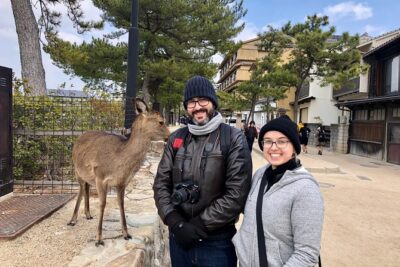
Nara 6hr Private Tour with Government-Licensed Guide
Read our review →
3/4/5 Hours Private Tour in Osaka with Local Guide
Read our review →
2.5 Hour Private History and Culture Tour in Himeji Castle
Read our review →
Osaka 6hr Private Walking Tour with Government Licensed Guide
Read our review →Browse the lists this tour appears in