
Reviewed · KYOTO DAY TRIPS FROM OSAKA
Nara Early Morning Tour (Kyoto or Osaka Departure Available)
Nara’s deer may be the first thing you notice, but an early start lets you see the city’s temples and sacred paths before the park fills up. This 4.5-hour walk pairs the free-roaming deer with landmarks from Japan’s former capital, guided by someone who can explain what you are seeing along the way.
I like the small group, capped at 12, and the chance to visit four distinct places in one morning. I also like that the route balances a lively encounter with the deer against the quieter, more contemplative setting of Kasuga Grand Shrine.
The trade-off is the walking: expect about 10,000 steps, and plan to pay ¥800 to enter Todaiji. You also need to arrange your own transport back to Kyoto or Osaka, even if you select the option that covers the trip to Nara.
- Arrive before the main crowds: The early schedule is the point of the tour, especially in peak season.
- See four major Nara stops: Kofuku-ji, Kasuga Grand Shrine, Nara Park, and Todaiji are all on the route.
- Keep the group personal: No more than 12 people join, and some departures may be smaller.
- Meet the deer in their home park: Nara’s deer roam freely, with local religious lore explaining their special status.
- Budget for Todaiji and the return trip: Its entry fee is ¥800, and transport back to Kyoto or Osaka is not included.
- Come ready to walk: The route covers a lot of ground and is not recommended for people over 75; children under 6 cannot join.
Why an early start changes the Nara visit
Nara is one of Japan’s most popular day trips, and its best-known sights can feel quite different as the day goes on. Starting early gives you a better chance to enjoy the temple grounds and park paths at a calmer pace, before more people arrive. The timing is not a side benefit. It is the main reason to choose this tour over a later visit.
The route also gives you a useful introduction to Nara’s layered character. You move from Kofuku-ji, a Buddhist temple founded when Nara became the capital in 710, to Kasuga Grand Shrine, a major Shinto site, then through a park where deer roam freely, and finally to Todaiji and its Great Buddha. Seeing the different settings close together makes the city’s spiritual and civic history easier to picture.
Your guide provides context that can be hard to pick up from a quick look at a building or statue. The strongest feedback about the guides emphasizes clear explanations, patience with questions, and an ability to keep the walk friendly and unhurried. Guides named in past experiences include Momoka, Nana, Haruka, Futaba, Koh, Shin, and others. Your guide will depend on the departure, but the format is designed to give a small group room to ask questions.
Kofuku-ji: a first look at Nara’s old capital
The walk begins at Kofuku-ji, founded in Nara in 710, the same year the capital was established there. Its five-storied pagoda is the familiar landmark, and one of Japan’s tallest wooden pagodas, only about seven meters shorter than the country’s tallest. The stop lasts about 30 minutes, enough for an introduction and a look around, rather than an extended temple visit.
This is a good place to begin because it gives you a sense of the scale and age of Nara’s religious buildings before the route moves into forested shrine grounds and the larger temple complex. You can also ask your guide about the architecture and the role of the city as an early capital. The visit is listed without an admission charge, so the main value here is the setting and the explanation.
Keep your expectations in line with the time allowed. Thirty minutes is a short stop, and this is a walking tour with several destinations, not a deep exploration of every building. If one particular temple is your main reason for visiting Nara, you may want more time to explore it independently after the tour.
More Kyoto day trips around Nara:
- World Heritage Kyoto & Nara Uji Authentic Matcha Experience
★ 5.0 · 1,573 reviews - Kyoto/Osaka: Kinkakuji, Bamboo Forest, and Nara Deer Park
★ 4.4 · 265 reviews - Nara Early Bird Tour (Kyoto Departure Option Available)
★ 4.9 · 142 reviews
Kasuga Grand Shrine: lanterns along a sacred route
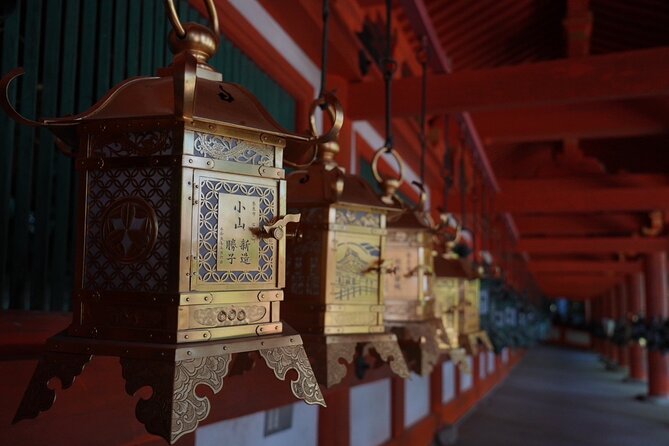
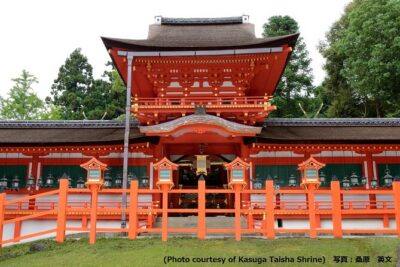
The tour spends about an hour at Kasuga Grand Shrine, the longest stop before Todaiji. The shrine is known for its lanterns, around 3,000 stone and bronze examples donated by worshippers. That number hints at the scale of the tradition: the lanterns are not just decoration, but offerings tied to the shrine’s long religious life.
The hour gives you more time to absorb the atmosphere than the brief first stop at Kofuku-ji. The shrine’s association with deer also connects the site to the next part of the walk. According to local tradition, one of Kasuga’s four gods rode a deer to Nara, which helps explain why the animals are regarded as sacred.
This stop is likely to appeal if you enjoy learning how a place is used and understood, not just photographing its most famous feature. The guide can make the lanterns and the shrine’s story more legible. Still, the tour only gives you the time built into its route; it is not a long independent visit, and the early pace means you should stay with the group.
Nara Park: deer, biscuits, and a little unpredictability
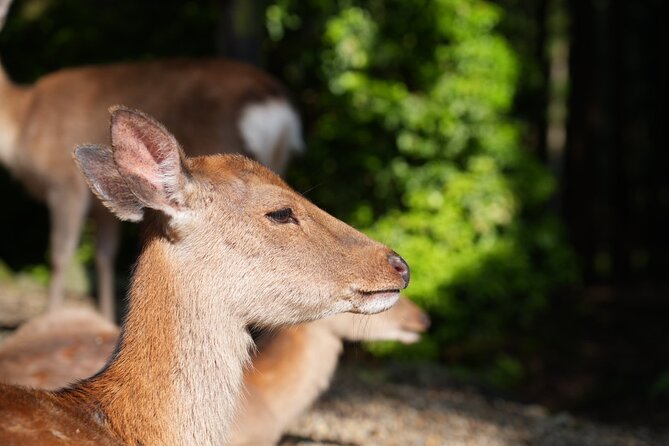
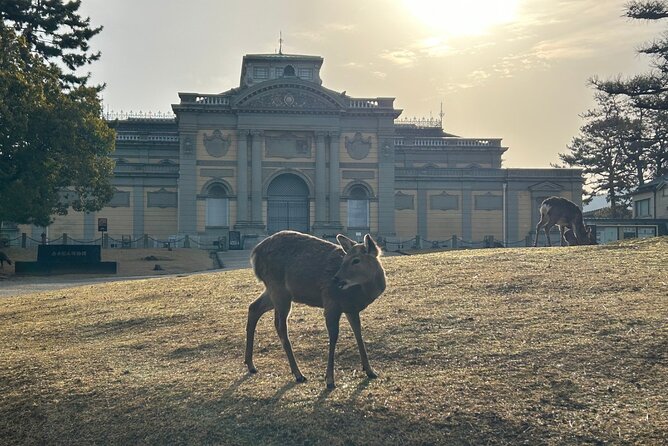
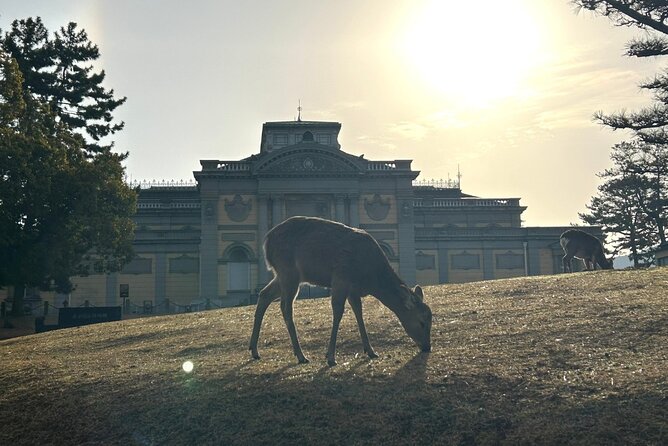
Nara Park is home to thousands of free-roaming deer, and the tour gives you about 30 minutes here. The deer are part of the city’s identity, not animals kept behind a fence. Their presence is tied to the Kasuga shrine tradition, and the combination of wildlife, temple grounds, and everyday visitors makes the park feel unlike a standard urban green space.
You may see deer bowing for food, and feeding them can be a memorable part of the visit. Biscuits are available to buy in the park, according to the tour experience. The deer are cute, but they can be more determined than their polite bows suggest once food is involved. Keep your attention on the animals and your own belongings, and follow your guide’s instructions.
Thirty minutes is enough for a taste of the park and a chance to meet the deer, but not a leisurely wander through all of it. That is a fair trade for a half-day route covering several major sights. If you want to spend more time with the deer or explore the park at your own pace, you can return after the guided portion.
Todaiji: face-to-face with the Great Buddha
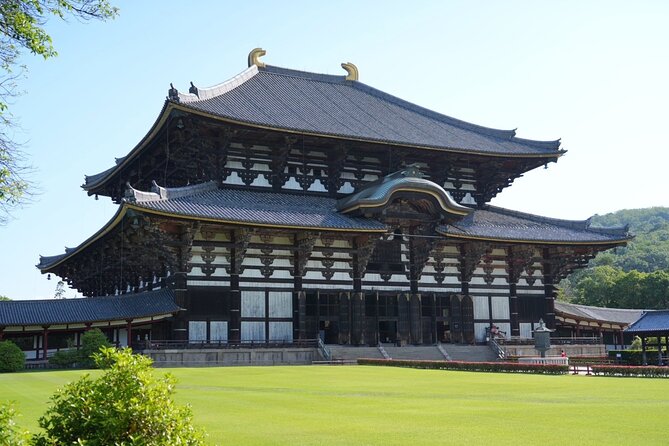
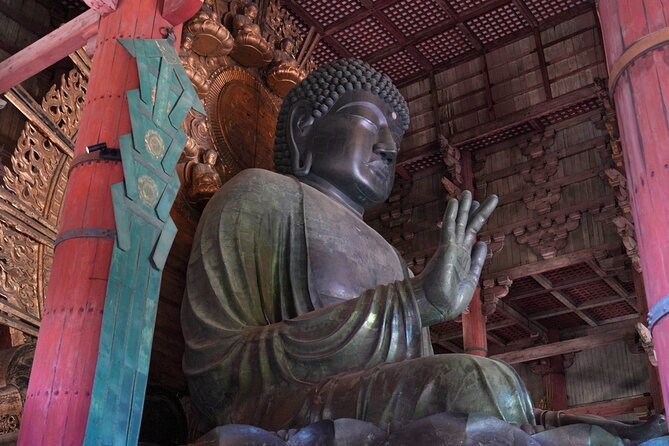
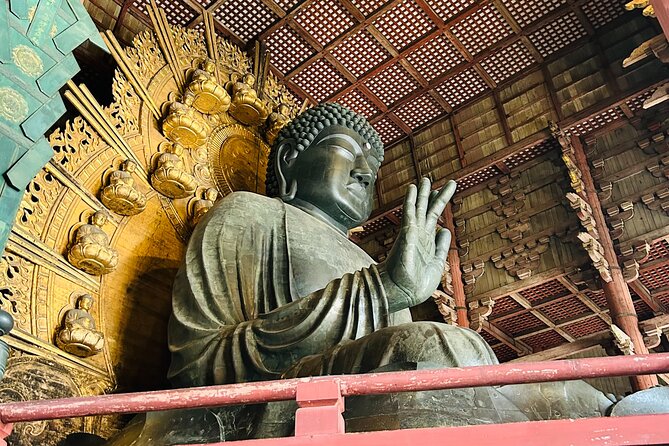
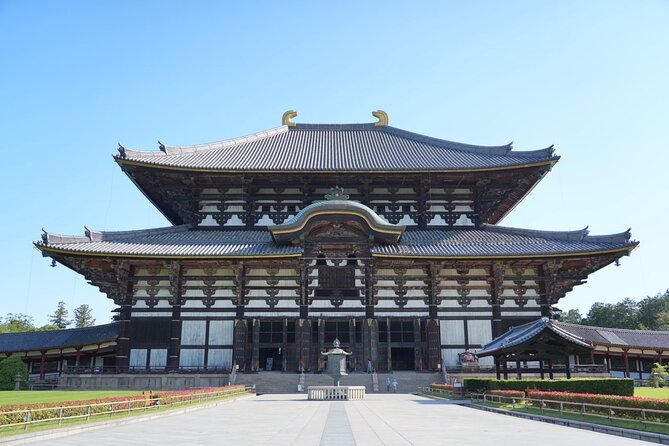
The final major stop is Todaiji, with about an hour set aside. The temple is famous for its Great Buddha, Japan’s largest Buddha statue. The main hall is also striking for its sheer size; it was described as the world’s largest wooden building until recently. The scale is more impressive in person than in a photograph, and your guide can help connect the building and statue to the wider story of Nara.
Unlike the other listed stops, Todaiji’s entrance fee is not included. Budget ¥800 per person for admission. That extra charge is worth considering when you compare the tour’s advertised price with your actual outing cost, particularly if you are traveling as a family.
An hour gives you time to see the Great Buddha and take in the hall, but it is still a guided stop within a route that covers four sites. If you like to linger in temples, this visit may feel brisk. On the other hand, having the route and history explained can help you use that hour well instead of arriving at the hall without much context.
More early starts around Nara:
- Osaka Early Morning Tour with English-Speaking Guide Dotonbori
★ 5.0 · 110 reviews - Osaka Morning Tour: Shitennoji Temple, Shinsekai &Doutonbori
★ 5.0 · 23 reviews
What the group size and guide add
A maximum of 12 people is a practical advantage on a walking tour. It is easier to hear explanations, ask questions, and keep the group moving together than it would be with a large coach party. Some departures have been much smaller, but you should plan on a group of up to 12 rather than expect a private tour.
The guides are a central part of the experience. Past guides such as Momoka, Nana, Haruka, Futaba, and Koh have been praised for making history accessible, answering questions, helping families feel at ease, and keeping a sensible pace. Some have also shared local tips, such as where to find freshly made mochi, or helped with train connections and restaurant suggestions. These personal touches are possible, but specific guides and extra recommendations cannot be guaranteed.
The style sounds conversational rather than lecture-heavy. That matters when you are walking for several hours: a guide who can answer questions without turning every stop into a long speech helps the time feel lively and manageable. If you enjoy asking about Japanese history, religion, architecture, and customs, you are likely to get more from the tour than you would by simply following a route on a map.
Walking, transport, and the real cost
The tour lasts about 4 hours and 30 minutes and involves roughly 10,000 steps. This is a substantial morning walk, not a drive-around sightseeing trip. Wear comfortable walking shoes and be prepared to spend much of the outing on your feet. The tour calls for a moderate fitness level, is not recommended for people over 75, and does not accept children under 6.
The listed price is $61.02 per person. For that, you get an English-speaking guide and, if you choose the relevant option, transportation from Kyoto or Osaka to Nara. The group cap and guided context add value, particularly if you want to understand the sites rather than just move between them. But the price is not the full cost of the day: Todaiji admission is another ¥800, food and drinks are not included, and your return transportation is on you.
There is an option to include pickup at Kyoto Station, and a transport option is available from Kyoto or Osaka. Check the specific departure choice when booking, since the included transport applies only if you select that option. The meeting and ending point is Nara Park, so plan how you will get there and how you will leave. The tour does not include the fare back to Kyoto or Osaka.
If you are visiting from Kyoto or Osaka, the independent return is manageable if you are comfortable arranging your own train journey, but do not mistake the included outward transport for a round trip. Guides have helped with train questions, but you should still leave the tour knowing that the return fare and route are yours to handle. Food and drinks are also not part of the package, so plan for those separately.
Who should book this Nara walk?
This tour suits you if you want to see Nara’s headline sights in one morning, prefer a guide to explain the history, and care about getting ahead of the largest crowds. It is particularly useful for first-time visitors, families with children aged 6 or older who can manage the walking, and anyone who likes asking questions along the way.
It is less suitable if you need a slow, low-step outing, want to spend hours at one temple, or prefer a fully independent day. The route is active, time at each stop is set, and the return journey is not covered. Those are not hidden flaws, but they do shape the experience.
I would book it if the combination of early timing, small group, guide, deer, and major temples fits your plans. Before paying, confirm which transport option you are selecting, add Todaiji’s ¥800 admission to your budget, and make a plan for getting back. If that all works for you, this is a well-balanced way to meet Nara before the busiest part of the day.
FAQ
How long is the Nara Early Morning Tour?
The tour lasts approximately 4 hours and 30 minutes.
How many people can join?
The maximum group size is 12 people.
What sites does the tour visit?
The route includes Kofuku-ji Temple, Kasuga Grand Shrine, Nara Park, and Todaiji Temple.
Is transportation from Kyoto or Osaka included?
Transportation from Kyoto or Osaka to Nara is included only if you select the relevant option. The tour also offers an option with pickup at Kyoto Station.
Is the return trip to Kyoto or Osaka included?
No. Transportation from Nara back to Kyoto or Osaka is not included.
How much does it cost to enter Todaiji?
Todaiji admission costs ¥800 per person and is not included in the tour price.
How much walking should I expect, and are there age restrictions?
Expect to walk about 10,000 steps. The tour is not recommended for people over 75, and children under 6 cannot join.
Just added around Nara
- Nara: Write Your Own Name in Kanji (Japanese Calligraphy)★ 4.4 · 3 reviews
- Nara: Private City Tour With A Local Guide★ 4.2 · 8 reviews
- Nara Heritage Walkabout from Nara Park to Todaji-ji temple★ 5.0 · 5 reviews
- Nara: Sake Tasting Tour at the Birthplace of Japanese Sake★ 4.9 · 8 reviews
- Nara: Half-Day Private Tour of 4 Must-See Spots & Deer Park★ 5.0 · 3 reviews
- Nara: Full-Day Private Guided Tour★ 5.0 · 4 reviews
- Nara: Cooking class, learning how to make authentic sushi★ 5.0 · 5 reviews
- Nara: Cultural Heritage Tour by Rickshaw★ 5.0 · 5 reviews
Kyoto Day Trips from Osaka, compared.
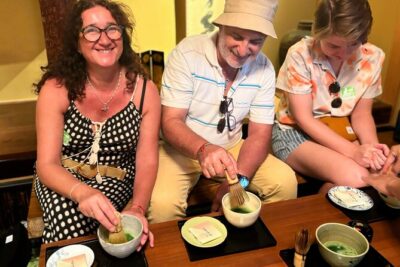
World Heritage Kyoto & Nara Uji Authentic Matcha Experience
Read our review →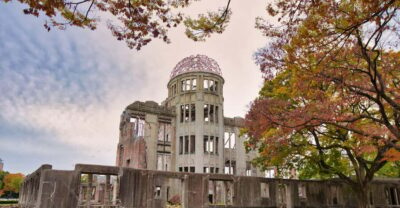
Hiroshima Miyajima Bus Tour & Shinkansen Ticket
Read our review →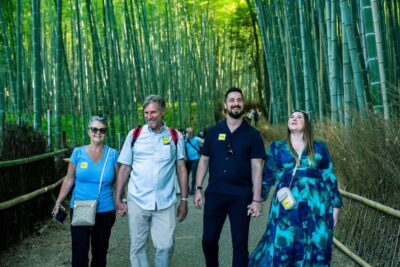
Ancient Capital Tour: Kyoto and Nara Highlights from Kyoto/Osaka
Read our review →
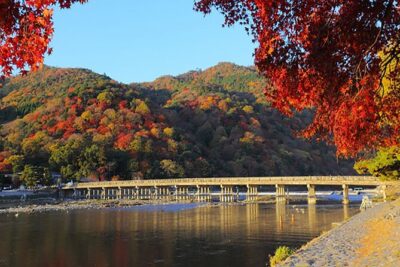
Sagano Romantic Train & Arashiyama, Kiyomizudera, Fushimi Inari Taisha Day Tour
Read our review →Browse the lists this tour appears in