
Reviewed · OSAKA WALKING TOURS
Nara Half Day Trip Walking Tour (Private Option Available)
Nara’s appeal is bigger than its famous deer. In five hours, this small-group walk links the Great Buddha at Todaiji, Kasuga Taisha’s lanterns, a traditional merchant’s house and the old town, with a guide to make sense of what you’re seeing. There is even a chance to encounter a Japanese pyramid among the less familiar sights.
I like two things in particular: the mix of headline temples and quieter local stops, and the included lunch, which gives the day a welcome pause and a taste of regional food. Guides such as Shin, Yuki, Miyabi and Yusuke have been praised for explaining customs clearly, adapting the pace and helping people interact safely with the deer.
One consideration: this is still a five-hour walking tour, and summer heat or winter cold can make it tiring. Food needs also require planning: gluten-free meals cannot be accommodated, and other dietary requests must be made by the day before.
What makes this Nara walk worthwhile
- A close look at Todaiji: Enter the main hall to see the Great Buddha, then pass through Nandaimon and its imposing guardian figures.
- Kasuga Taisha and its lanterns: Visit one of Nara’s best-known Shinto shrines, set near the Kasugayama forest.
- A meal that is part of the experience: Lunch at a traditional Japanese restaurant is included, and the food can feature local dishes.
- Deer with a little guidance: Your guide can explain how to approach and feed them respectfully, since some deer can crowd visitors.
- A glimpse of old Nara life: Naramachi’s historic streets and merchant’s house offer a change of pace from temple grounds.
- A small group: The tour is capped at eight people, with a private option available.
The route from Kofuku-ji to Naramachi
The meeting point is the Statue of Gyoki-bosatsu at 27 Higashimuki Nakamachi. The tour ends back there, making the start and finish straightforward to plan around. It lasts about five hours, though the listed visits account for only a little over three hours. The remaining time allows for walking between sites and the transitions that make this a connected outing rather than a string of rushed entrances.
You’ll cover familiar landmarks, but the route also makes room for smaller details. That balance is useful in Nara, where the famous sites can fill a day on their own, yet the older town streets and local customs help explain why the city is more than a quick deer-park stop.
More walking tours around Nara:
- Nara Highlight Walking Tour with Furoshiki Experience with Lunch
★ 5.0 · 73 reviews - Nara: Private Walking Tour with a Local
★ 4.3 · 36 reviews - Nara – Craft Beer, Sake, and Food Walking Tour
★ 3.5 · 9 reviews
Kofuku-ji’s five-story pagoda
The walk begins at Kofuku-ji Temple’s five-story pagoda, a landmark built by the Fujiwara clan in 730. The stop is brief, about 15 minutes, and admission is free. Think of it as a striking introduction to the temple district, not an extended visit to explore every building.
The pagoda’s carved detail and long history give your guide a natural starting point for discussing Nara’s religious and political past. If you like to linger over architecture, keep in mind that this stop is short; the tour has several major sites to fit into half a day.
Todaiji and the Great Buddha
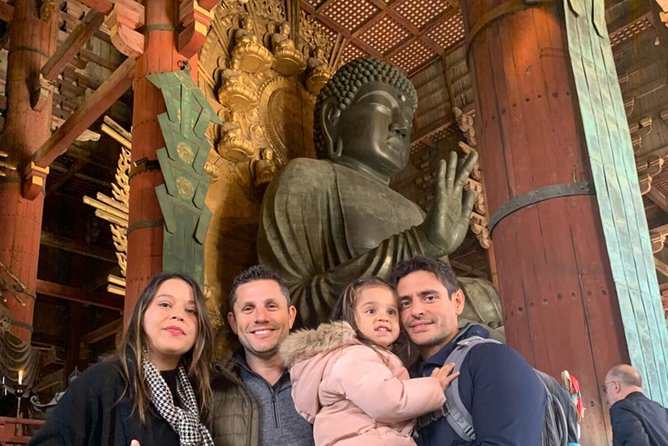
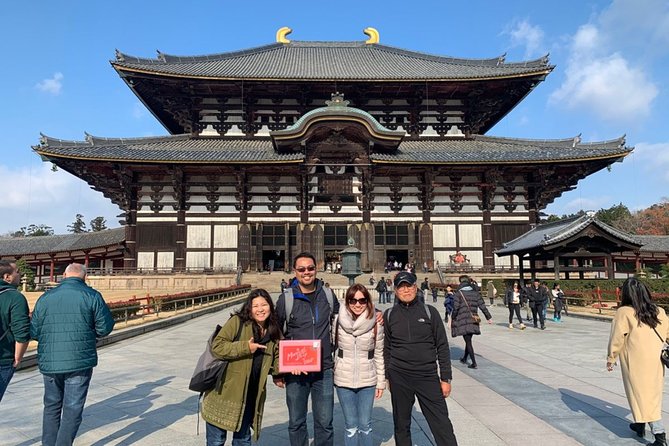
At Todaiji, the focus is the main hall and Nandaimon gate. Admission is included, and the visit is scheduled for about 30 minutes. The guardian statues at the gate make a powerful first impression, while the Great Buddha inside is the central reason many people come to Nara.
A guide can add context that makes the scale and religious setting easier to understand. Several guides, including Shin, Yuki and Miyabi, have been praised for explaining temple customs and answering questions in an approachable way. That matters here: the hall is impressive on its own, but even a little explanation can help you read what you’re seeing.
Thirty minutes is not a long time at such a major temple. If you want to study every detail, take photographs at length or revisit the grounds independently, you may want extra time before or after the tour.
Lunch at a traditional Japanese restaurant
The group pauses for about 45 minutes at a long-established restaurant in an old part of town. Lunch is included, and it is often described as one of the most memorable parts of the day. Some meals feature a spread of local dishes, and the restaurant offers an experience quite different from grabbing a quick snack between temples.
The meal also provides a useful break in a walking-heavy schedule. Some guides have introduced traditional foods and drinks along the way, and particular outings have included sake tasting. These extras are not guaranteed, so treat them as possible additions rather than a fixed part of the plan.
Be clear about food needs before booking. Requests should be made by the day before, and the operator cannot guarantee an allergy-free meal or accommodate gluten-free requests. Kitchens belong to the restaurants, so substitutions may not always be possible. Vegetarian needs have been accommodated on some tours, and one group received a vegan meal, but you should ask in advance rather than rely on a particular menu.
More private tours around Nara:
- Nara 6hr Private Tour with Government-Licensed Guide
★ 5.0 · 219 reviews - Nara: Private Tour with Private Guide
★ 4.8 · 66 reviews - Discover Ancient Nara: Private Car Tour from Kyoto or Osaka
★ 5.0 · 52 reviews - Private Nara Tour and Sake Tasting (Departing from Kyoto/Nara)
★ 5.0 · 40 reviews
Kasuga Taisha and the lanterns
Next comes Kasuga Taisha, with about 30 minutes for the shrine and the nearby Kasugayama Primeval Forest. Admission is included. The shrine is known for its many lanterns, which give this stop a distinct feel after Todaiji’s vast hall and monumental Buddha.
The visit offers a chance to compare Shinto practice with the Buddhist sites earlier in the walk. Guides have helped explain customs such as how to make a wish and how to behave at sacred sites. That practical context is especially useful if this is your first time visiting Japanese shrines.
The listed time is brief, so you should not expect a long forest walk. It is a compact introduction to the shrine grounds and setting, with the guide helping you focus on the details that can be easy to miss when moving through a busy site.
Nara Park’s deer, with a few ground rules
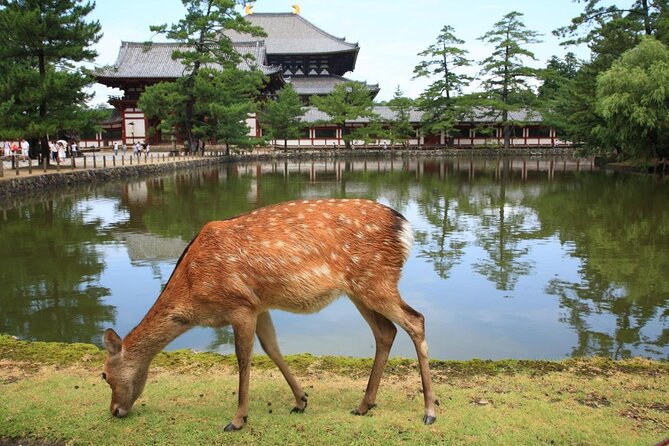
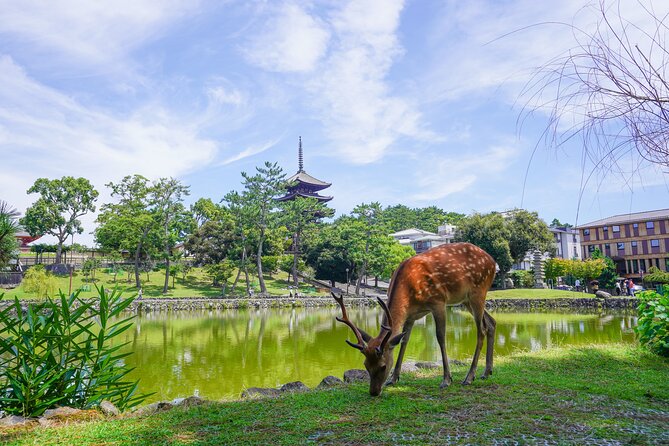
Nara Park is the part many people picture first, and the tour sets aside about 30 minutes to explore. The deer are wild animals, not a petting-zoo cast, and they can be persistent when food is involved. Guides explain how to interact with them more respectfully and avoid encouraging a crowd around you.
Some guides have taken groups toward areas where younger deer may be gentler, and families often find the animal encounters a highlight. You may see deer bow before receiving crackers, but don’t mistake that gesture for a promise of perfect manners. The animals can be pushy, especially when they expect a snack, so follow your guide’s instructions and keep food put away until you’re ready.
The park stop is free and open-air, which makes weather a factor. A cold wind has made the walk less comfortable for some groups, while summer heat and humidity can be serious. Bring water and a hat in hot months, and dress for the forecast in winter.
Naramachi’s merchant houses and old streets
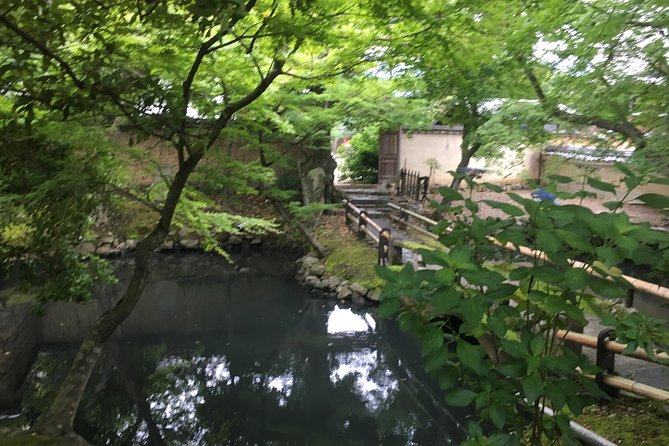
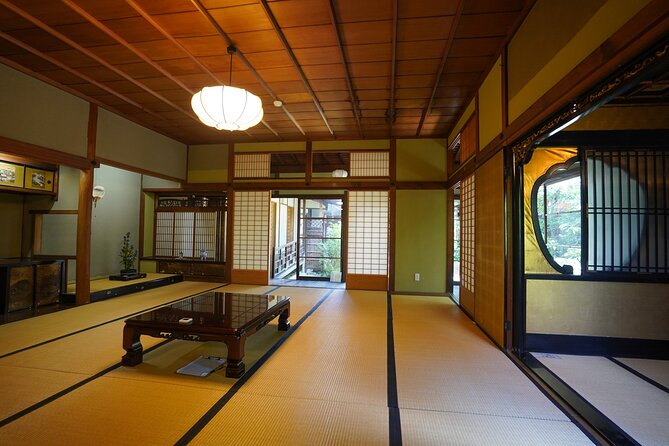
The final listed stop is Naramachi, with about 35 minutes to walk the historic streets and enter Naramachi Nigiwai no Ie, a traditional merchant’s house. Admission is included. This is a welcome shift from grand religious architecture to the scale of daily life in an older Japanese town.
Inside a merchant’s house, you can get a sense of how local homes and businesses were arranged. The surrounding lanes also give the guide room to point out shops and local specialties. Some guides have introduced artisan goods, Nara sweets and other nearby places to eat, offering useful ideas if you plan to stay in town after the tour.
The route’s lesser-known sights may also include a Japanese pyramid, an unusual counterpoint to the better-known temple stops. The precise details of this stop are not specified, so ask your guide what you’ll see on your date. It’s a reminder that Nara has more than its standard postcard views, though the main draw remains the blend of major temples, local history and deer.
Guides, group size and pace
The group is limited to eight people, which makes it easier to hear explanations and ask questions than on a large coach outing. The tour is described as suitable for all ages, and guides have adjusted routes for a group’s mobility and energy. Still, it is a walking tour with several short breaks, so let the operator know in advance about health concerns.
Guide names that appear often include Shin, Yuki, Miyabi and Yusuke, along with Jimmy, Nao, Mari, Eri and others. Names and assignments vary by date, so you cannot count on a particular person. What you can reasonably expect is a local guide who explains Nara’s temples, shrines and customs, and can help you navigate the deer encounter.
Some guides have also taken photographs and shared them afterward, or steered groups away from the busiest stretches. Those touches depend on the guide and conditions. The main value is having someone who can connect the sites and adjust the pace, rather than simply point out buildings.
Is $105.45 a fair price?
At $105.45 per person, this is not the cheapest way to see Nara. The price includes a guide, admission to Todaiji and Kasuga Taisha, lunch, and a five-hour route that combines major sights with a merchant’s house and old-town streets. If you were planning to visit the same places and arrange lunch independently, the guided tour adds structure and context as well as the meal.
The value is strongest for a first visit, a short stay or anyone who wants help linking Nara’s religious sites to its local life. People who already know the temples, prefer to set their own pace or want to spend a long time at each stop may find a self-guided day more flexible. A private option is available, but its price and exact arrangement are not specified here, so check those details before choosing it.
The experience has a 4.9 rating from 937 reviews, and 99% recommend it. Those figures point to consistently strong satisfaction, especially with the guides, lunch and smooth pacing. They do not remove the practical limits: weather can affect comfort, food needs take advance planning, and five hours on foot is still five hours on foot.
Practical details before you book
Wear comfortable walking shoes and plan for the season. Japan’s summer can reach 40°C (110°F), while winter temperatures can fall to -5°C (20°F). In summer, carry water and wear a hat; in cold weather, bring layers that can handle an outdoor walk.
The meeting point is near public transportation, and the activity ends at the same location. Mobile tickets are available. Group discounts are offered, but the amount is not specified. Free cancellation is available until 24 hours before the start time; poor weather cancellations come with the choice of another date or a full refund.
Should you book this Nara tour?
Book it if you want an efficient introduction to Nara, appreciate a guide who can explain local customs, and like the idea of having lunch and key admissions handled for you. The mix of Todaiji, Kasuga Taisha, deer and Naramachi gives you a fuller picture than a quick park visit, while the small group leaves room for questions.
Think twice if you need a gluten-free meal, have significant mobility concerns, or want to spend hours at one temple. For most first-time visitors with a half-day to spare, the included meal, local guidance and varied route make the price reasonable. Just plan for the weather, ask about dietary needs ahead of time, and remember that the deer are charming but not always patient.
FAQ
How long is the Nara walking tour?
It lasts approximately five hours. The schedule includes several short breaks and visits to temples, a shrine, Nara Park and Naramachi.
What is included in the price?
Lunch and admission tickets for Todaiji Temple and Kasuga Taisha are included. Kofuku-ji Temple and Nara Park are listed as free-entry stops.
Where does the tour start and end?
It starts at the Statue of Gyoki-bosatsu, 27 Higashimuki Nakamachi, Nara. The tour ends back at the meeting point.
How large is the group?
The maximum group size is eight travelers. A private option is available.
Can the tour accommodate dietary needs?
Dietary requests must be made by the day before. Gluten-free meals cannot be accommodated, and allergy-free meals or other dietary changes cannot be guaranteed.
What happens if bad weather cancels the tour?
You will be offered a different date or a full refund if the experience is canceled because of poor weather.
More day trips around Nara
- Osaka: Nara and Uji Day Trip with Deer Park and Hot Spring
★ 4.4 · 302 reviews - Kyoto/Osaka: Kyoto and Nara Customizable Guided Day Trip
★ 3.1 · 5 reviews - From Kyoto/Osaka: Kyoto Top Highlights 1-Day Guided Bus Tour
★ 4.5 · 714 reviews - Kyoto and Nara Day Trip from Osaka
★ 4.0 · 175 reviews
Just added around Nara
- Nara: Write Your Own Name in Kanji (Japanese Calligraphy)★ 4.4 · 3 reviews
- Nara: Private City Tour With A Local Guide★ 4.2 · 8 reviews
- Nara Heritage Walkabout from Nara Park to Todaji-ji temple★ 5.0 · 5 reviews
- Nara: Sake Tasting Tour at the Birthplace of Japanese Sake★ 4.9 · 8 reviews
- Nara: Half-Day Private Tour of 4 Must-See Spots & Deer Park★ 5.0 · 3 reviews
- Nara: Full-Day Private Guided Tour★ 5.0 · 4 reviews
- Nara: Cooking class, learning how to make authentic sushi★ 5.0 · 5 reviews
- Nara: Cultural Heritage Tour by Rickshaw★ 5.0 · 5 reviews
Osaka Walking Tours, compared.

Osaka Local Foodie Walking Tour in Dotonbori and Shinsekai
Read our review →
Osaka Bar Hopping Night Walking Tour in Namba (3 bars, 6 tastes)
Read our review →
Deep Backstreets Walking Tour with Dinner Option
Read our review →
Ultimate Osaka Walking Tour: Castle, Dotonbori & Hidden Gems
Read our review →
Main Sights and Hidden Spots Guided Walking Tour
Read our review →
Private Osaka Walking Tour: Highlights & Hidden Gems
Read our review →
Osaka Castle Walking Tour and Castle Tower Admission
Read our review →
Kuromon Market Food Walking Tour in Osaka (6 stops, 6 tastes)
Read our review →Browse the lists this tour appears in