
Reviewed · OSAKA WALKING TOURS
Nara Highlight Walking Tour with Furoshiki Experience with Lunch
At Todai-ji, Nara’s landmark Great Buddha sits inside one of Japan’s most important temple precincts. This small-group walk links that famous sight with lantern-lined Kasuga Taisha, Nara Park’s free-roaming deer, and a hands-on furoshiki session, giving you more than a quick temple photo stop.
I like the mix of major heritage sites and everyday Japanese craft, and the included traditional lunch makes a five-and-a-half-hour walk feel like a full day rather than a string of admission gates. One consideration: lunch and the wrapping workshop depend on the option you book, and Wednesday lunch is not included.
- Small group: The tour caps attendance at seven, which can make it easier to hear your English-speaking guide and ask questions.
- Three major stops: Kasuga Taisha, Nigatsu-do, and Todai-ji offer different views of Nara’s religious past and architecture.
- Deer in Nara Park: You have a chance to meet the city’s famous free-roaming deer along the way.
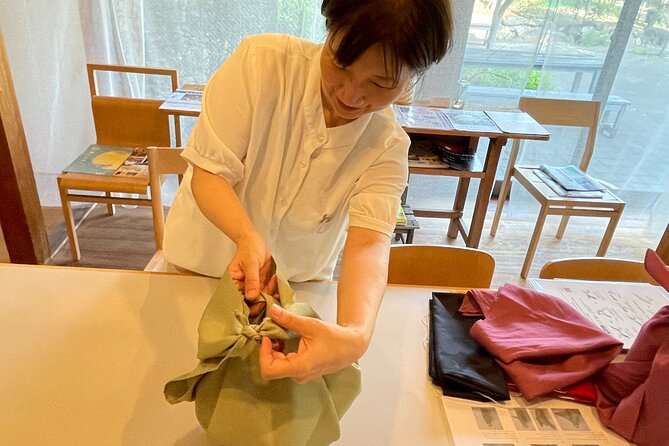
- A practical craft stop: The furoshiki workshop introduces Japanese cloth wrapping, and you take home your own cloth if your option includes it.
- Lunch is option-dependent: A traditional Japanese meal is included with some options, but not on Wednesdays.
- Budget for local transport: The bus fee is not included and is listed as ¥500 per person.
A half-day that joins Nara’s headline sights
Nara is compact enough to explore on foot, but its landmark temples and shrines can feel like separate stops if you arrive without a plan. This tour ties them together in a single route, with a local English-speaking guide to provide context as you move between them.
The schedule runs about five and a half hours, long enough to see several important sites without turning the day into an all-day march. You’ll visit Kasuga Taisha, Tamukeyama Hachimangu, Nigatsu-do, and Todai-ji, then pause for lunch and a furoshiki activity before finishing in Naramachi.
The group limit of seven is a useful detail. You are not joining a large procession, and a small group can make it simpler to keep pace, hear explanations, and ask a question when a temple detail catches your eye. The tour has been led by a guide named Keiko, whose personal approach helped make the history engaging on a particularly small-group outing. Guide assignments can vary, so don’t assume she will lead your date.
Kasuga Taisha’s lanterns and woodland setting
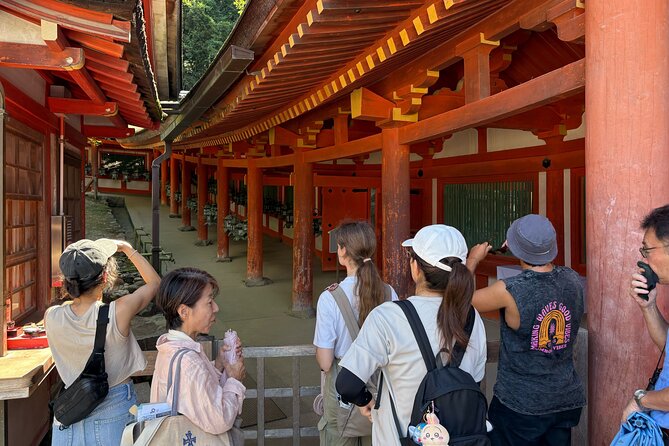
The first scheduled stop is Kasuga Grand Shrine, or Kasuga Taisha, a Shinto shrine founded in 768. Its stone and bronze lanterns are the detail to watch for: they give the shrine a distinctive look and are lit during special festivals.
You have about 20 minutes here, with admission included. That is enough for a focused look at the shrine’s character, but not a leisurely visit to every corner of the grounds. Keep your attention on the lanterns and the setting around the shrine rather than expecting a long, unhurried exploration.
The shrine’s place in the route also helps you see how Nara’s sacred sites sit among one another. This is not only a stop to tick off. It gives you a first sense of the area’s religious importance before the tour moves toward the temple precincts.
More walking tours around Nara:
- Nara Half Day Trip Walking Tour (Private Option Available)
★ 5.0 · 937 reviews - Nara: Private Walking Tour with a Local
★ 4.3 · 36 reviews - Nara – Craft Beer, Sake, and Food Walking Tour
★ 3.5 · 9 reviews
Tamukeyama Hachimangu and the protection of Todai-ji
Tamukeyama Hachimangu is a smaller Shinto shrine, built in 749 to protect the nearby Great Buddha Hall at Todai-ji. It is dedicated to Hachiman, a deity associated with war and protection.
This stop adds a useful layer to the day. Rather than treating each shrine and temple as an isolated monument, you can see how one religious site was connected to the safety of another. It is a modest shrine, so visitors seeking grand scale should save that expectation for Todai-ji. Its value is in the role it played and its proximity to the Great Buddha Hall.
The itinerary does not give a visit length for Tamukeyama, so the time you spend there may be brief. The tour’s overall duration is fixed at about five and a half hours, and the day includes several other stops.
Nigatsu-do’s hillside view and annual ceremony
Nigatsu-do, a hall within the Todai-ji complex, is known for the Omizutori ceremony held each March. The ceremony has a history stretching back more than 1,250 years, making this a stop with a continuing ritual life, not simply an old building.
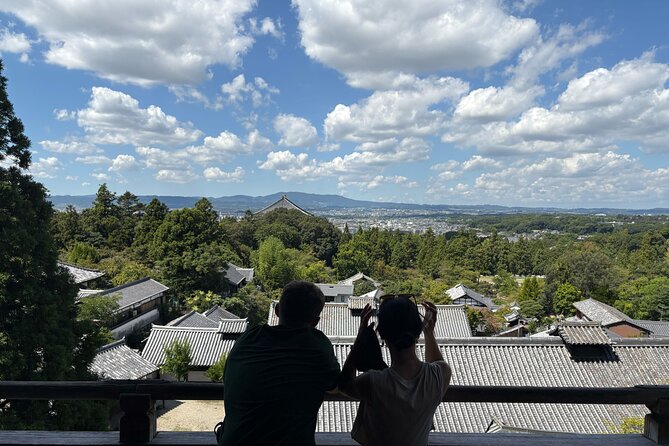
You have about 20 minutes here. The hall is also noted for its view, giving you a change of perspective after the shrine visit. It is a good place to pause and take in the wider setting before the tour’s longer Todai-ji visit.
The short stop means you should not expect to study every feature in detail. Still, the combination of a historic ceremony and a scenic outlook gives Nigatsu-do a distinct role in the itinerary.
Todai-ji and the Great Buddha
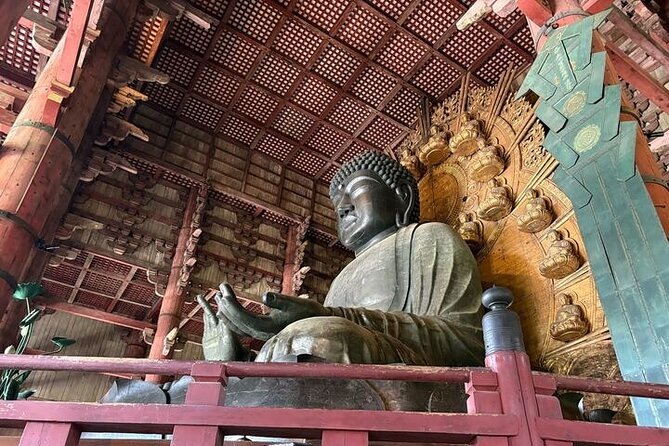
Todai-ji is the day’s major temple stop. Founded in the eighth century, it is a UNESCO World Heritage site and home to the Great Buddha, a monumental bronze statue. The scale is the point: this is not a quiet, tucked-away temple visit, but one of Nara’s defining sights.
The schedule allows about 40 minutes, with admission included. That is the longest temple visit on the route, and it gives you time to see the Great Buddha Hall and take in the statue without having to manage the visit alone. Your guide can help explain why the temple matters within Nara’s religious history, while you focus on the building and its most famous figure.
Todai-ji can draw plenty of attention, so expect a popular landmark rather than a secluded sanctuary. The tour’s group cap helps keep the guided portion personal, but it cannot make a major World Heritage site private. If you want a deep, slow visit to every part of the temple grounds, you may want extra time after the tour.
More trips with lunch around Nara:
- Osaka: Five Must-See Highlights Walking Tour & Ramen Lunch
★ 4.7 · 411 reviews - Osaka/Kyoto: Amanohashidate & Miyama Tour with Boat & Lunch
★ 4.6 · 207 reviews - Walking Tour of Osaka’s 5 Must-See Sights, with Ramen for Lunch
★ 5.0 · 158 reviews - 5-Hour Osaka Highlights Bike Tour with Lunch
★ 4.8 · 146 reviews
Nara Park’s deer, with a little care
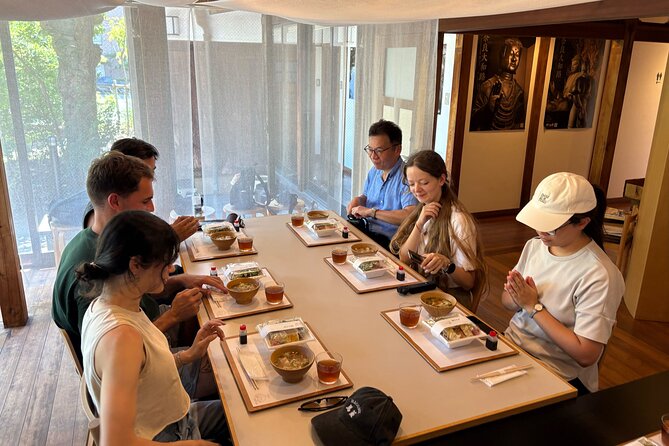
Nara Park is known for its free-roaming deer, and meeting them is one of the tour’s most memorable contrasts with the formal temple visits. You move between centuries-old religious sites and animals wandering through the park, a very Nara combination.
The tour promises time to meet and interact with the deer, but the schedule does not give a separate duration for this part. Treat it as an element of the walk rather than a long wildlife visit. The deer are part of a public park setting, not an arranged animal encounter, so follow your guide’s instructions and give them room.
I like that this stop makes the day feel less like a sequence of buildings. It also gives you a chance to experience the open spaces between Nara’s major sites, though the exact amount of time with the deer depends on the pace of the group.
Lunch and a furoshiki cloth to take home
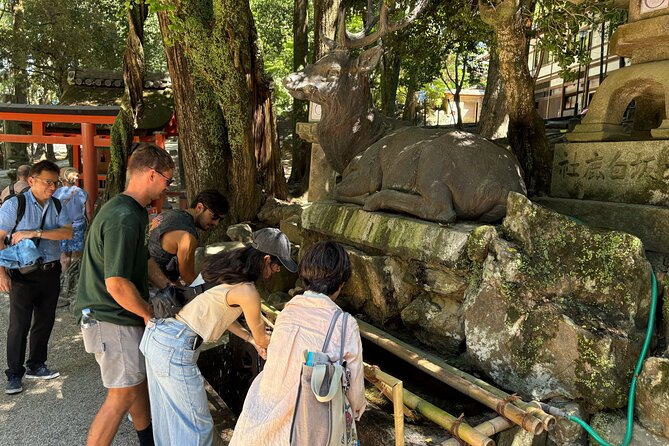
At Shika no Fune Mayu, the group spends about an hour for lunch and the furoshiki activity. The meal is described as a traditional Japanese lunch, with freshly cooked rice and seasonal vegetables from Nara. It gives you a proper pause in the middle of a walking day and a chance to sample local ingredients rather than relying on a quick snack.
The lunch is not included with every booking option, and it is not included on Wednesdays. Check the option details before paying so you know whether the meal is part of your price. The same care applies to the furoshiki workshop, which also depends on the selected option.
Furoshiki is cloth used for wrapping and carrying items. The short workshop lets you try the technique and, when included in your option, take home your own cloth. It is a practical souvenir with a story behind it, not another object destined to sit on a shelf. The listed hour covers both lunch and the activity, so neither should be mistaken for a long class or an extended restaurant stop.
Naramachi’s old townhouse and the tour’s finish
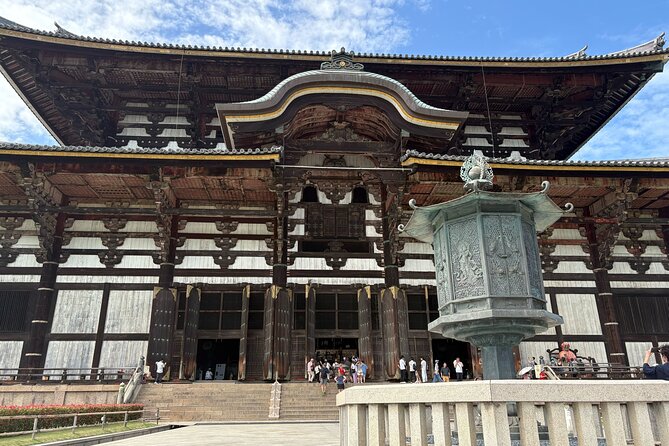
The final scheduled stop is Naramachi Nigiwai-no-le, a historic townhouse in Naramachi. Built in 1917 by an antique dealer, it is now a Registered Tangible Cultural Property. This is a different kind of heritage from the grand temples: a preserved home connected to the old merchant district.
The visit is about 15 minutes and admission is free. It offers a brief look at how Nara’s character extends beyond temples and shrines. Since the stop is short, take it as an introduction to the district rather than a full exploration of Naramachi.
The tour ends near Nakatanidou in the shopping district, with access to both JR Nara Station and Kintetsu Nara Station. That finish is practical if you want to continue browsing or head back by rail.
What the $37 price covers, and what to check
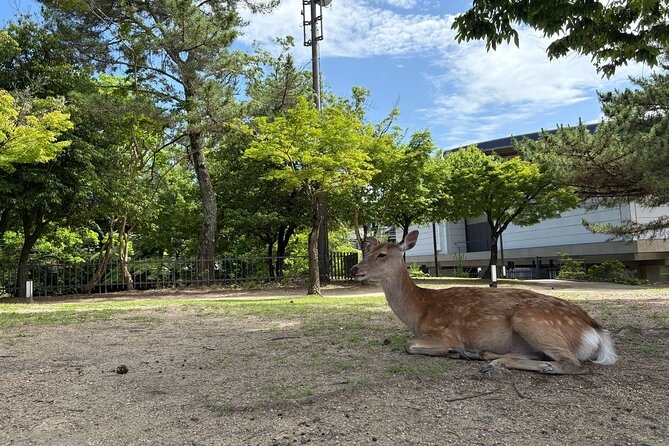
At $37 per person, the tour can be good value if your booking option includes lunch and the furoshiki workshop. The price also includes an English-speaking local guide and entrance fees for the temples and shrines on the route. Those inclusions reduce the small costs and planning decisions that can interrupt a day of sightseeing.
Do not assume every option bundles the same extras. Lunch and the wrapping activity depend on the option selected, and Wednesday lunch is specifically excluded. A ¥500 bus fee per person is also not included, so leave room in your budget for local transport.
The tour’s value is strongest if you want a guided introduction to Nara’s central sights, rather than simply a ride between attractions. You are paying for a route, context, and a small-group format, as well as any included meal or activity. If you prefer to linger at Todai-ji or explore Naramachi at your own pace, you may find a self-guided day more flexible.
Is this Nara walk right for you?
I would consider this tour if you have one day in Nara and want a clear plan that combines the great temple sights with a local craft and meal. It suits first-time visitors who value context, families or small parties who prefer a limited group, and anyone who likes having a guide to connect sites that might otherwise blur together.
The strongest parts are the mix of major landmarks with the furoshiki activity, and the small group size. The guide’s role matters here: a past outing led by Keiko was especially engaging for a party of two, showing how personal the format can feel when the group is small. Still, guide assignments may change.
Book after checking two details: whether your chosen option includes lunch and furoshiki, and whether your date is Wednesday. If you want a relaxed day with plenty of time at each site, this itinerary may feel brisk. If you want an efficient, guided overview with a little more than temple sightseeing, it is a sensible way to spend five and a half hours in Nara.
FAQ
How long is the Nara Highlight Walking Tour?
It lasts approximately five hours and 30 minutes.
How many people can join the tour?
The maximum group size is seven people.
Are lunch and the furoshiki workshop included?
They depend on the option you choose. Lunch is not included on Wednesdays, so check your selected option before booking.
Are temple and shrine entrance fees included?
Yes. Entrance fees for the temples and shrines visited on the tour are included.
Is local bus transport included in the price?
No. The listed bus fee is ¥500 per person.
Where does the tour start and finish?
It starts at the Gyoki Bosatsu statue at 27 Higashimuki Nakamachi in Nara. It finishes near Nakatanidou in the shopping district, which has access to JR Nara Station and Kintetsu Nara Station.
Just added around Nara
- Nara: Write Your Own Name in Kanji (Japanese Calligraphy)★ 4.4 · 3 reviews
- Nara: Private City Tour With A Local Guide★ 4.2 · 8 reviews
- Nara Heritage Walkabout from Nara Park to Todaji-ji temple★ 5.0 · 5 reviews
- Nara: Sake Tasting Tour at the Birthplace of Japanese Sake★ 4.9 · 8 reviews
- Nara: Half-Day Private Tour of 4 Must-See Spots & Deer Park★ 5.0 · 3 reviews
- Nara: Full-Day Private Guided Tour★ 5.0 · 4 reviews
- Nara: Cultural Heritage Tour by Rickshaw★ 5.0 · 5 reviews
- Nara: Cooking class, learning how to make authentic sushi★ 5.0 · 5 reviews
Osaka Walking Tours, compared.

Osaka Local Foodie Walking Tour in Dotonbori and Shinsekai
Read our review →
Osaka Bar Hopping Night Walking Tour in Namba (3 bars, 6 tastes)
Read our review →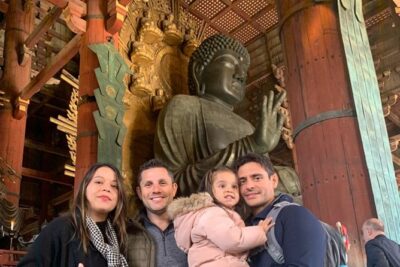
Nara Half Day Trip Walking Tour (Private Option Available)
Read our review →
Deep Backstreets Walking Tour with Dinner Option
Read our review →
Ultimate Osaka Walking Tour: Castle, Dotonbori & Hidden Gems
Read our review →
Main Sights and Hidden Spots Guided Walking Tour
Read our review →
Private Osaka Walking Tour: Highlights & Hidden Gems
Read our review →
Osaka Castle Walking Tour and Castle Tower Admission
Read our review →Browse the lists this tour appears in