
Reviewed · OSAKA TEMPLE AND SHRINE TOURS
Nara: Essential Private Tour with Deer Park and Temples
Nara’s special trick is how quickly it moves from city streets to temple grounds and deer-filled parkland. This three-hour private tour links major sites in Japan’s first permanent capital, with an English-speaking guide to explain what you’re seeing and help you make sense of the route.
I like two things in particular: the mix of temples and open green space, and the personal attention that comes with a private guide. Past guide Masa has helped visitors navigate, answered detailed questions and offered practical advice, including how to feed the deer without attracting a crowd.
The trade-off is time. Six stops in three hours leave little room to linger, and the route is not suitable for wheelchair users, pregnant women or people with animal allergies. If you want a slow, unhurried temple visit, plan extra time before or after the tour.
Key points to know
- Start and finish at Kintetsu Nara Station: The meeting point is near Exit 3 and the tourist information center.
- Six stops in three hours: The route includes shopping streets, temples, Nara Park and a garden.
- A private English-speaking guide: You can ask questions as you go, rather than relying on a fixed group commentary.
- Deer are part of the experience: Your guide can help you understand how to approach and feed them.
- Admission is included: The tour covers entry to temples and parks, while drinks, souvenirs and other personal expenses are extra.
- Comfortable shoes matter: Expect a route focused on walking between city and temple sights.
From Kintetsu Nara Station into the old capital
The tour begins at Kintetsu Nara Station, a convenient point from which to start exploring. To find your guide, exit through the East Gate and head toward Exit 3. Go up the stairs or the adjacent escalator; the tourist information center is there, and your guide will wait nearby with a GetYourGuide sign.
That clear meeting instruction is useful in a busy station, especially if Nara is your first stop in the city. You return to the same station at the end, so there is no separate drop-off to arrange. Hotel pickup and drop-off are not included.
Nara was Japan’s first permanent capital, and its central sights make a compact introduction to the country’s early history and religious culture. The tour’s sequence is designed to connect those layers: a shopping street, temple grounds, the deer park, another shrine, the great temple of Tōdai-ji, then a garden.
The group is private, so you can ask for clarification and follow your own questions. That is a real advantage at sites where a building, statue or ritual may mean more once someone explains its place in the story. Past guide Masa has been praised for patience, clear explanations and a well-planned route. The guide on your date may differ, but the tour is conducted in English.
More temple and shrine visits around Nara:
- E-Bike Nara Highlights – Todaiji, Knives, Deer, Shrine
★ 4.8 · 186 reviews - Nara: Great Buddha, Kasuga Shrine & Deer Park Tour
★ 4.8 · 62 reviews - E-Bike Nara Highlights – Todaiji, Knives, Deer, Shrine, and Gems
★ 4.5 · 34 reviews
Higashimuki Shopping Street sets the scene
The first stop is Higashimuki Shopping Street, with about 20 minutes of guided time. It gives you a glimpse of Nara as a living city, not only a collection of historic monuments. Shops and everyday street life offer a useful contrast to the temples ahead.
This opening stop is brief, so think of it as orientation rather than a shopping break. If you hope to browse at length or buy souvenirs, you may want to return after the tour. Personal purchases are not included in the price.
Kōfuku-ji brings temple history into view
Next comes Kōfuku-ji, with around 30 minutes for a guided visit. This temple complex is one of the main cultural stops on the route, and a guide can help you notice details that are easy to pass over when you are simply moving from one building to the next.
You’ll have time to take in the setting and ask questions, but not to explore every corner at leisure. The value here is the explanation: visitors who want more than a quick photo stop can use the guide’s context to connect the temple to Nara’s past.
Admission to temples and parks is included, which helps make the tour price easier to assess. Still, the pace is purposeful. If you like to sit quietly or study temple art for a long stretch, allow time to revisit independently.
Nara Park pairs open space with deer
The route then spends about 30 minutes in Nara Park. The park is a major part of Nara’s appeal, with open green space and deer moving through the area. It also changes the rhythm of the tour after the more formal temple grounds.
The deer are friendly wildlife, but they are animals, not props. One visitor specifically valued learning how to feed and interact with them without getting surrounded. That practical guidance can make the encounter more relaxed, particularly if you have never been close to Nara’s deer before.
Do not count on this short stop as a long wildlife visit. The tour balances the park with several cultural sites, and the time here is limited. People with animal allergies should also take the stated restriction seriously. If deer are the main reason for your visit, consider allowing more time in the park after the guided route.
More private tours around Nara:
- Nara Half Day Trip Walking Tour (Private Option Available)
★ 5.0 · 937 reviews - Nara 6hr Private Tour with Government-Licensed Guide
★ 5.0 · 219 reviews - Nara: Private Tour with Private Guide
★ 4.8 · 66 reviews - Discover Ancient Nara: Private Car Tour from Kyoto or Osaka
★ 5.0 · 52 reviews
Himuro Shrine offers a quieter pause
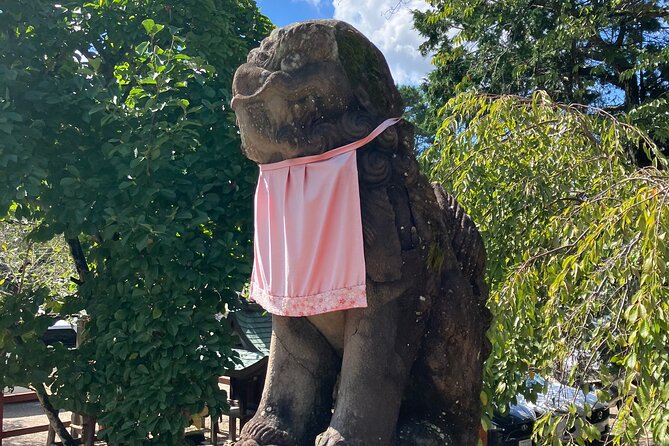
Himuro Shrine follows, with about 20 minutes for a guided visit. After the broad park setting, this stop brings the focus back to a shrine and its religious surroundings. A guide can explain the site as part of the city’s wider cultural life rather than leaving you to guess at its significance.
The visit is short, and it sits between the park and Tōdai-ji, so it works as a compact stop rather than a long period of reflection. If you value a steady flow between different kinds of places, that variety is a strength. If you prefer to spend most of your time at one shrine, the schedule may feel brisk.
Tōdai-ji is the tour’s longest stop
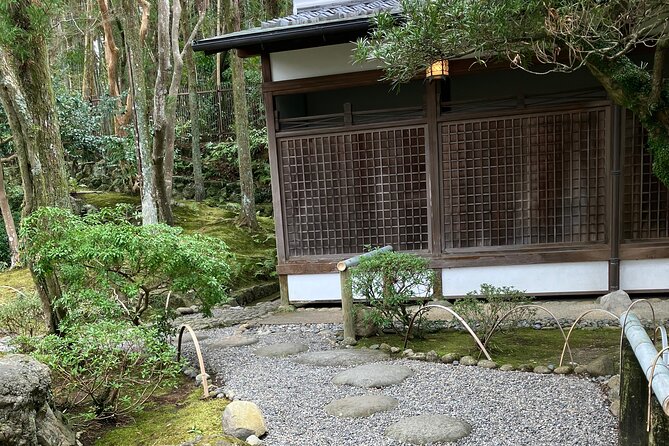
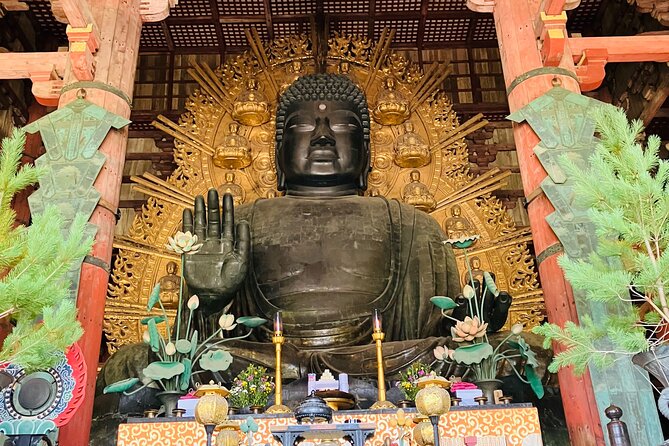
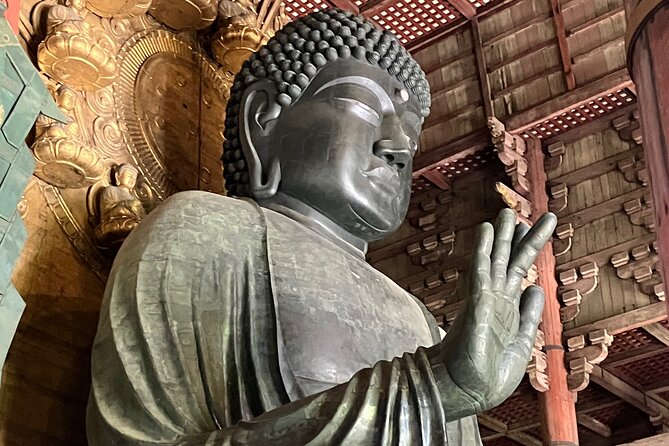
The tour gives Tōdai-ji about an hour, the longest block of time on the route. That extra time is welcome at a major temple complex, where the scale and religious art deserve more attention than a quick walk-through. Your guide can explain the temple’s history and the statues within it, details that can give the visit much more meaning.
This is likely to be the centerpiece for many visitors. One couple particularly appreciated learning about the temple and its statues, as well as being able to talk with the guide while moving between sights. The private format means you can ask follow-up questions instead of trying to catch a group leader’s words from the back.
An hour is generous compared with the other stops, but it is not unlimited. If Tōdai-ji is your main priority, you may want to return later to explore at your own pace. The tour’s purpose is to give you a broad, guided introduction to Nara, not to cover every detail of the temple grounds.
Yoshikien Garden softens the final stretch
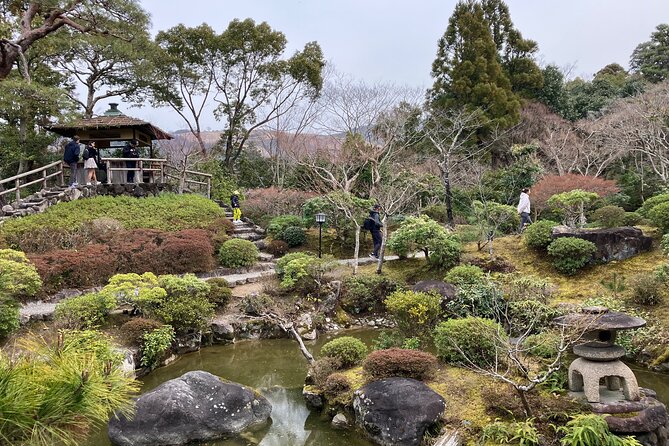
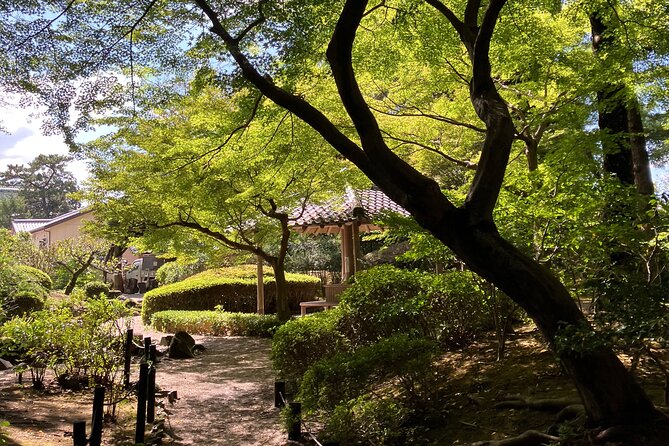
The final listed stop is Yoshikien Garden, with about 20 minutes of guided time. After temples and the deer park, a garden provides a quieter close to the route and another way to see the balance between built heritage and nature that defines this visit.
The short visit means you should treat it as an introduction, not a long garden stay. It is a pleasant change of pace, though the overall schedule remains full. From here, the group returns to Kintetsu Nara Station.
What the three-hour pace means for you
The six timed visits add up to three hours, so this is a carefully packed introduction. You get a varied route and an expert’s explanations without giving up most of your day. The flip side is that every stop has a limit, and the tour may not suit someone who likes to linger over every view.
The private format helps. You can ask questions, and the guide can respond to your interests. Past visitors have valued Masa’s patience, friendly manner and ability to explain sites clearly. One person also appreciated help with navigating the area and translating in shops, while another mentioned practical care such as carrying an extra umbrella. Those examples suggest a guide who pays attention to the needs of the group, though specific assistance can depend on the guide and circumstances.
The tour’s English language is clearly stated. Some visitors have received information in their native language, but you should not assume that translation into another language is part of the standard tour. If you need a language other than English, check before booking.
Is $126 per person a fair price?
At $126 per person, this is not the cheapest way to see Nara. You are paying for a private, English-language guide, a structured route through six stops and admission to temples and parks. The strongest value is the personal interpretation: the guide can explain what you’re looking at, answer questions and help you move through a busy day with a plan.
The cost makes most sense for a first visit, for people who want cultural context, or for a small private party that values individual attention. It is less compelling if you are content to visit the main sites on your own, already know the area well, or prefer to spend a long time at one place. Drinks, souvenirs and other personal expenses are extra, and gratuity is optional.
You can reserve now and pay later, and cancellation up to 24 hours before the tour allows a full refund. Check the available start times when planning your day.
Practical details before you book
Wear comfortable shoes. The route includes several stops around the city, temple grounds and parkland, so footwear that handles a full walking tour is a better choice than dress shoes. A hat, camera and sunscreen are also recommended.
Smoking and flash photography are not allowed. The tour is not suitable for wheelchair users, pregnant women or people with animal allergies. Hotel transfers are not provided, so make your way to Kintetsu Nara Station for the start and return there at the end.
Who should choose this Nara tour?
I’d choose this tour if I wanted a strong first look at Nara and preferred a guide to explain the temples, shrine and deer park as I went. It is especially useful if you value private attention, want help getting oriented, or have questions about the city’s past and customs.
I’d skip it if you want a leisurely half-day with long stops, need wheelchair access, or have an animal allergy. For everyone else, the route offers a sensible balance: major cultural sights, time among the deer and a garden visit, all in three hours. Book it for a focused introduction, then keep some free time to return to the place that captures your interest most.
FAQ
How long is the tour?
The tour lasts three hours.
Where does the tour start?
It starts at Kintetsu Nara Station. Exit through the East Gate and head toward Exit 3, where the tourist information center is located.
Where will I meet the guide?
The guide waits near the tourist information center by Exit 3 with a sign displaying the GetYourGuide logo.
Where does the tour end?
The tour returns to Kintetsu Nara Station.
What language is the tour in?
The live tour guide speaks English.
Is this a private tour?
Yes. It is offered as a private group tour.
Are temple and park admissions included?
Yes. Admission to temples and parks is included in the tour price.
Is hotel pickup included?
No. Hotel pickup and drop-off are not included.
What should I bring?
Comfortable shoes, a hat, a camera and sunscreen are recommended.
Can I cancel for a refund?
Yes. You can cancel up to 24 hours in advance for a full refund.
Just added around Nara
- Nara: Write Your Own Name in Kanji (Japanese Calligraphy)★ 4.4 · 3 reviews
- Nara: Private City Tour With A Local Guide★ 4.2 · 8 reviews
- Nara Heritage Walkabout from Nara Park to Todaji-ji temple★ 5.0 · 5 reviews
- Nara: Sake Tasting Tour at the Birthplace of Japanese Sake★ 4.9 · 8 reviews
- Nara: Half-Day Private Tour of 4 Must-See Spots & Deer Park★ 5.0 · 3 reviews
- Nara: Full-Day Private Guided Tour★ 5.0 · 4 reviews
- Nara: Cooking class, learning how to make authentic sushi★ 5.0 · 5 reviews
- Nara: Cultural Heritage Tour by Rickshaw★ 5.0 · 5 reviews
Osaka Temple and Shrine Tours, compared.

E-Bike Nara Highlights – Todaiji, Knives, Deer, Shrine
Read our review →
Minoh, Katsuoji Temple, & Minoh Falls Full-day Tour
Read our review →
Osaka Temple Cool Foot Bath & Matcha Experience〈45min〉
Read our review →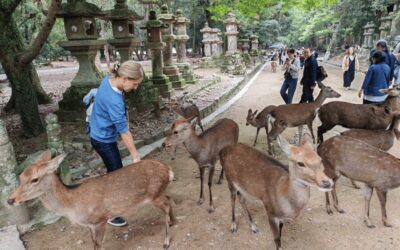
Katsuo-ji Temple, Arashiyama Forest, & Nara Park
Read our review →
Minoh Waterfall & Katsuo-ji Temple Half-Day Tour
Read our review →
Osaka Half-day E-bike Adventure: Minoh Falls & Katsuoji Temple
Read our review →Browse the lists this tour appears in