
Reviewed · OSAKA TEMPLE AND SHRINE TOURS
Nara: Great Buddha, Kasuga Shrine & Deer Park Tour
Nara’s deer wander among shrine paths and temple gates, but the most striking moment comes inside Todai-ji, where the Great Buddha fills a vast wooden hall. This three-hour walk links the deer, Kasuga Taisha, and one of Japan’s great Buddhist monuments, with a guide to explain how Shinto and Buddhism share this old capital.
I like two things in particular: the route joins three major sights without making you plan the connections, and the price includes Todai-ji admission, Kasuga Taisha’s special inner shrine admission, and deer crackers. Guides such as Eri and Takashi have also helped with practical questions and local recommendations, adding more than a string of dates and names.
The main consideration is the pace on foot. The walk includes plenty of walking and steps, and the three-hour schedule leaves limited time to linger at every stop. If you want a slow, unstructured day, explore on your own; if you want context and a well-organized introduction, this tour makes a strong start.
What to know before you book
- Three major stops in three hours: Visit Nara Park, Kasuga Taisha, and Todai-ji with a live guide.
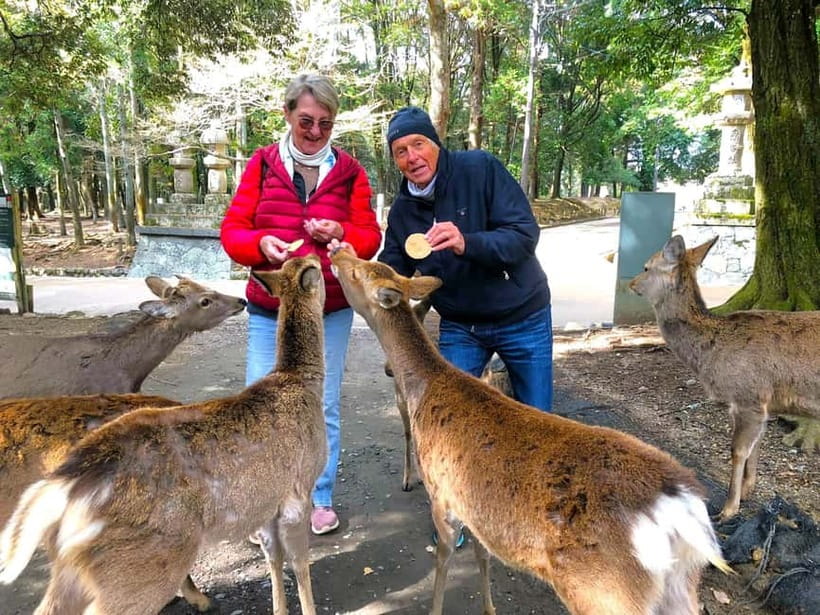
- Deer crackers are included: Feed the deer special shika senbei in Nara Park.
- Temple and shrine admissions are covered: Todai-ji entry and Kasuga Taisha’s special inner shrine admission are included.
- Meet at Himuro Shrine: Find the guide in front of the torii gate, holding a yellow DeepExperience sign.
- Guides add local context: English and Japanese tours are available, with guides including Eri, Takashi, and Teppei.
- Expect a walking tour: The route is rewarding, but there are steps and a fair amount of time on your feet.
Why this route suits a first visit to Nara
Nara served as Japan’s first permanent capital in the eighth century. Its landmarks make the city’s religious history tangible: Shinto worship at Kasuga Taisha, Buddhist devotion at Todai-ji, and the deer that connect the park’s natural setting with local belief.
The appeal of this tour is the way it puts those elements together. You do not simply see a shrine, a temple, and a deer-filled park as separate attractions. A guide can explain why the deer are treated as sacred messengers, how Kasuga’s lanterns reflect generations of worship, and why a giant Buddha was built on such a remarkable scale.
That context matters most if this is your first visit to Nara or your first close look at Japanese religious sites. The guide can connect what you see to Shinto practices and Buddhist history, while you have time to ask questions. Several guides, including Eri, Takashi, and Teppei, have been noted for making room for questions and talking about Japanese daily life as well as the monuments. The assigned guide can vary, so treat those names as examples rather than a promise.
The tour is not a full-day survey of Nara. Its three-hour format focuses on the major highlights, with a short guided visit in the park and about an hour each at Kasuga Taisha and Todai-ji. You get a clear introduction, then can decide what deserves a return visit.
More temple and shrine visits around Nara:
- E-Bike Nara Highlights – Todaiji, Knives, Deer, Shrine
★ 4.8 · 186 reviews - E-Bike Nara Highlights – Todaiji, Knives, Deer, Shrine, and Gems
★ 4.5 · 34 reviews - Nara: Essential Private Tour with Deer Park and Temples
★ 5.0 · 24 reviews
Starting at Himuro Shrine and meeting the deer
The meeting point is in front of the torii gate at Himuro Shrine. Look for a guide holding a yellow DeepExperience sign. Getting to the meeting point is your responsibility, since transportation to and from it is not included.
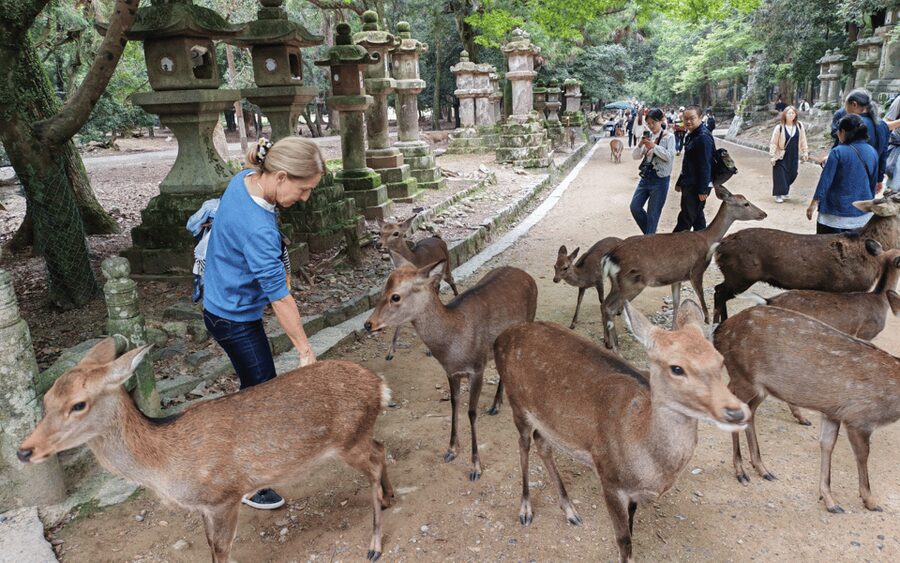
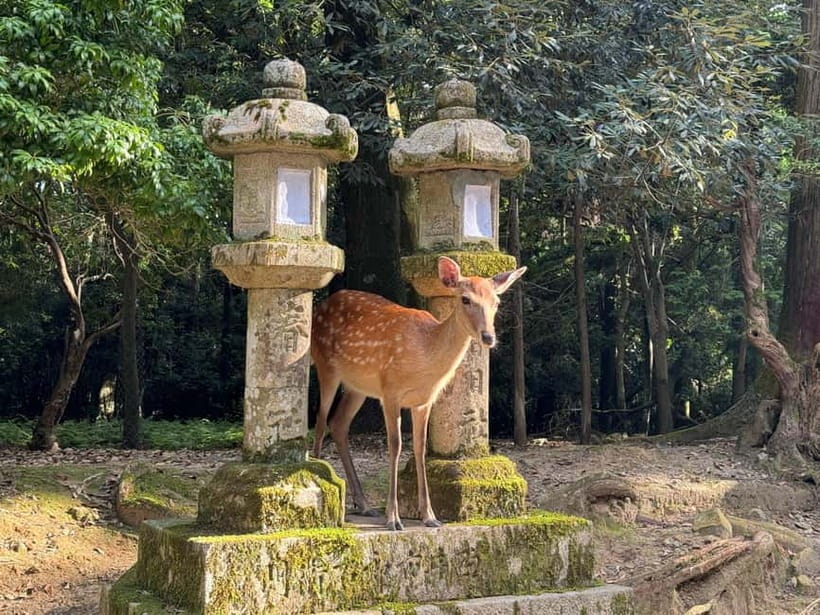
The first stop is Nara Park, where deer roam freely through the grounds. The tour allots about 30 minutes here. You can feed them the included shika senbei, crackers made for deer, while your guide explains why the animals are linked to Shinto belief and Kasuga Taisha.
The deer are a memorable part of Nara, but they are not just a photo opportunity. Their presence helps make visible the close relationship between the sacred sites and the surrounding park. It is worth listening to the guide’s explanation before you focus on feeding them. That bit of context turns a quick encounter into a more meaningful introduction to the city.
Bring a little patience. You may want time for pictures, a chance to feed the deer, and a moment to take in the park. The schedule is short, so this is not a long wildlife stop. The crackers are included, which saves you from having to arrange them separately, but keep your attention on the animals and follow your guide’s instructions.
Kasuga Taisha’s lantern paths and quiet forest setting
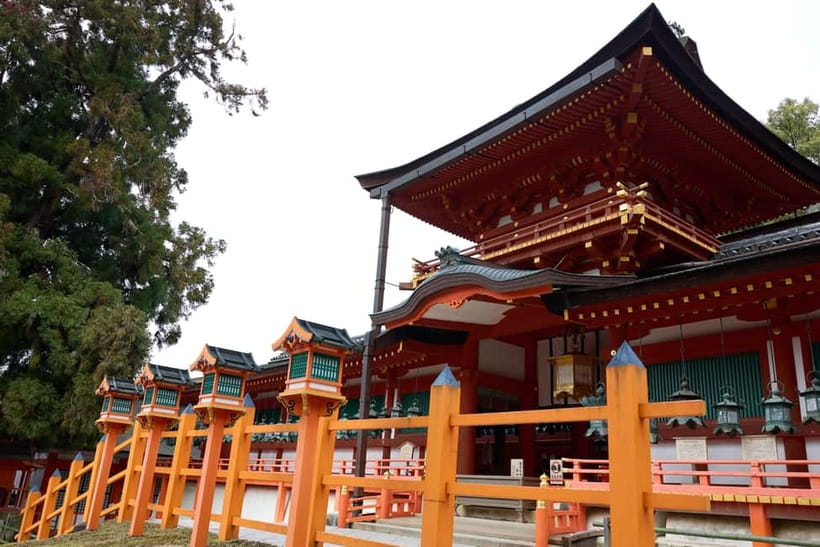
From the park, the tour continues to Kasuga Taisha, one of Nara’s most important Shinto shrines. Founded in 768 and associated with the powerful Fujiwara clan, it has served as a place of ritual and aristocratic worship for centuries. You have about an hour here, including access to the special inner shrine area.
Kasuga Taisha feels different from Todai-ji. Instead of a vast Buddhist hall and monumental statue, the visit centers on shrine buildings, lanterns, and a forest setting that has been preserved for more than a thousand years. The contrast is useful: in a single tour, you can see how distinct forms of worship took shape within the same city.
The shrine is famous for its many stone and bronze lanterns, donated by worshippers over generations. They are lit during special festivals, when the paths take on a different character. Your visit may not coincide with an illumination, so do not expect the lanterns to be glowing. Even unlit, their number and placement tell a story of long-standing devotion.
A guide can help you notice details you might otherwise pass by, including purification practices and architectural features tied to Shinto. This is also a good stop for questions. Guides such as Yayoi and Eri have been praised for explaining shrine customs and answering questions, and Eri has offered local food and sightseeing suggestions. Those personal touches are especially useful if you are trying to plan the rest of your day.
There is a practical trade-off: an hour gives you time to understand the main area, but not to explore every path at your own speed. If you are captivated by the forest or want to linger over the lanterns, you may wish to return after the tour.
Todai-ji and the Great Buddha Hall
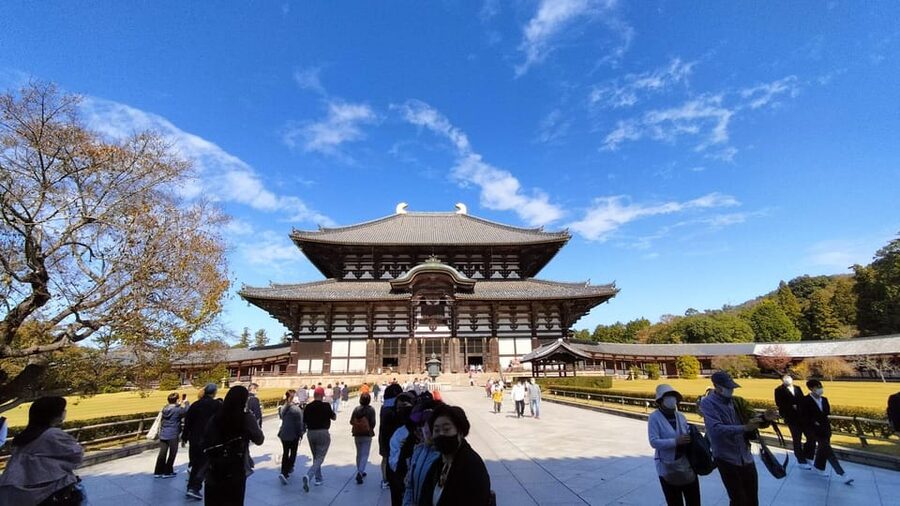
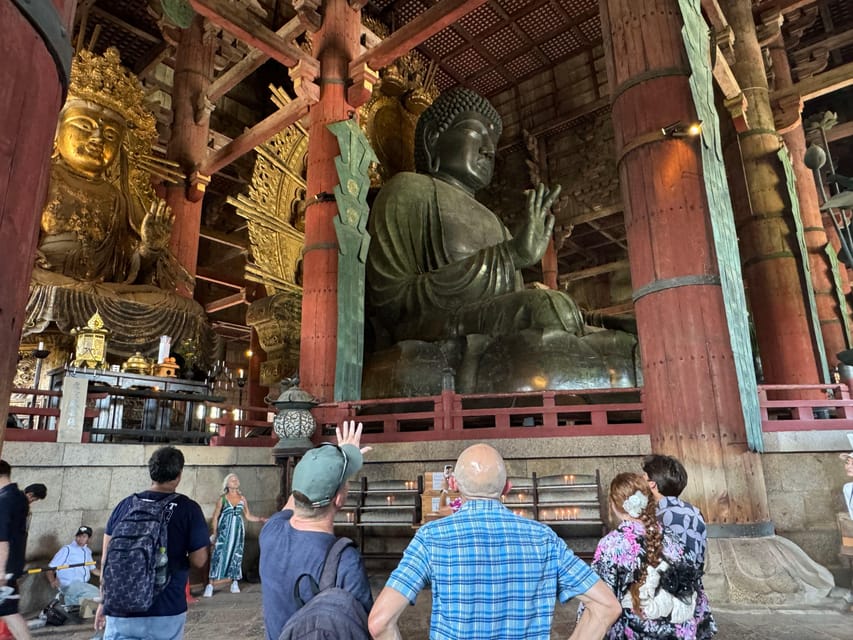
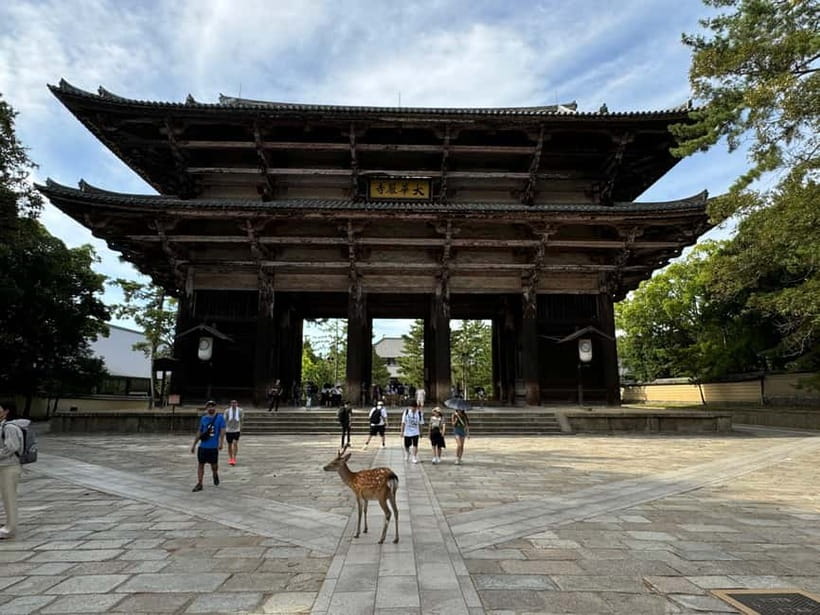
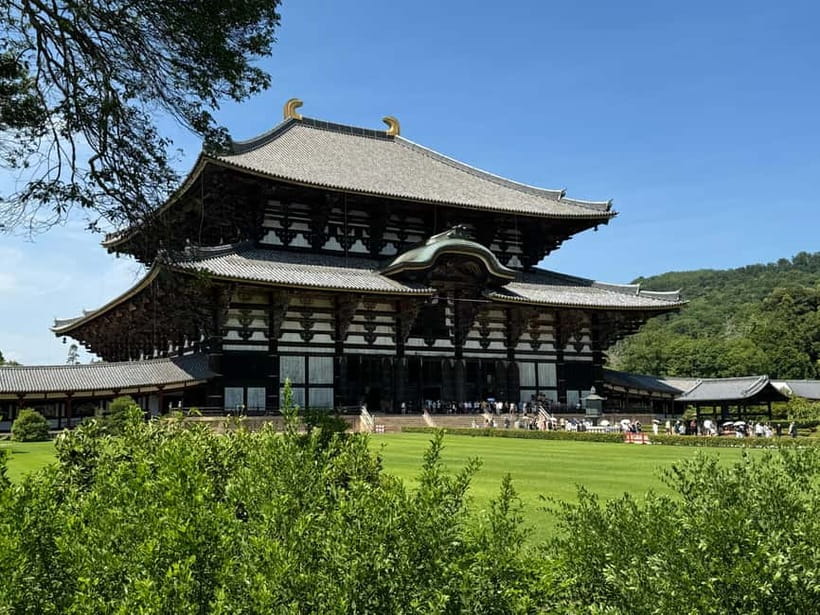
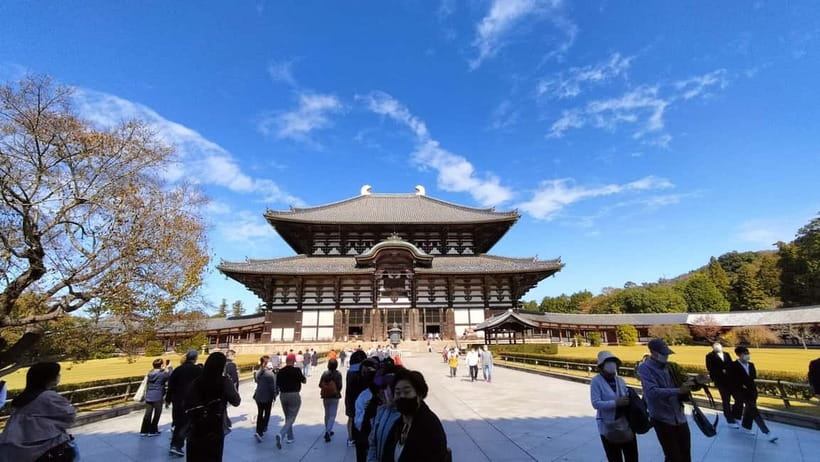
Todai-ji is the tour’s grand finale. The temple is a UNESCO World Heritage site, and its Great Buddha Hall, or Daibutsuden, is among the largest wooden structures in the world. Admission is included, so you can enter the hall and stand before the enormous bronze Buddha without paying an extra entrance fee at the door.
The Great Buddha, known as the Daibutsu, was cast in the eighth century and represents Vairocana Buddha. The scale is the point: the statue and hall express the ambition and religious vision of early Japan in a way that is hard to grasp from a photograph. Your guide can explain the effort behind the construction and why the monument mattered to the capital.
Give yourself a moment to look beyond the statue’s size. The hall’s scale changes your sense of proportion, and the calm face of the Buddha offers a quieter counterpoint to the imposing building around it. Guides have been praised for making the history understandable and allowing time for photographs and questions, which helps you take in the space rather than rush through it.
You have about an hour at Todai-ji. That is enough for a guided visit and time to appreciate the Great Buddha, though it is not an invitation to explore the whole temple complex at leisure. The route includes walking and steps, so comfortable footwear is sensible. One person described the day as involving lots of walking and steps, but also found the effort worthwhile. That is a fair expectation to carry into the visit.
Same city, a different kind of day:
- World Heritage Kyoto & Nara Uji Authentic Matcha Experience
★ 5.0 · 1,573 reviews - Nara Half Day Trip Walking Tour (Private Option Available)
★ 5.0 · 937 reviews - Nara Early Morning Tour (Kyoto or Osaka Departure Available)
★ 5.0 · 676 reviews - Osaka: Nara and Uji Day Trip with Deer Park and Hot Spring
★ 4.4 · 302 reviews
What the guide adds to the day
At sites as famous as these, it is easy to collect photos without understanding what connects them. A good guide supplies the thread: Shinto beliefs around Kasuga Taisha and the deer, Buddhist ideas embodied in Todai-ji’s Great Buddha, and Nara’s role as an early capital.
The guide’s approach can also shape the day’s pace. Eri has been described as a local guide who made small route adjustments, including quieter spots and shorter paths. Takashi has helped visitors with transport questions and onward directions, while Teppei has been praised for answering questions about Japanese culture as well as the monuments. These are examples of the personal help a guide may offer, not guaranteed extras.
The tour is offered in English and Japanese, and private or small-group options are available. A smaller group can make it easier to ask questions and stay close to the guide, while a private tour may suit you if you want more room for conversation. The exact group size is not specified, so check the option available for your date before booking.
Guides have also provided thoughtful help in changing conditions. One supplied neck coolers on a hot day; another waited for a delayed group. These acts are not a formal part of the package, but they point to the value of having a local person managing the walk and helping you make the most of limited time.
Is $77 a good value?
At $77 per person, this is more than a walk between sights. The fee includes a professional guide, the guided visits, Todai-ji admission, Kasuga Taisha’s special inner shrine admission, and deer crackers. If you planned to visit both paid sites independently, the included admissions would make a meaningful difference to the cost, while the guide adds historical and cultural explanation that you would otherwise need to find on your own.
The strongest value is for a first-time visitor who wants the main sights explained in one compact outing. You avoid having to work out the best order and can ask questions as you go. The tour can also make a day trip more efficient, especially if you have limited time in Nara.
It is less compelling if you prefer to set your own pace or already know the sites well. Three hours gives you a solid overview, not an in-depth visit to every part of the park, shrine, and temple. You will also need to cover your own transport to the meeting point and pay for any food, drinks, or personal purchases.
The tour offers reserve-now, pay-later booking and free cancellation up to 24 hours in advance. Those terms can be helpful if your plans are still taking shape, but the bigger booking decision is whether you want a guided introduction or a longer, self-directed day.
Who should book this Nara walk?
I would choose this tour for a first visit, a short stay, or anyone who wants the religious and historical context behind Nara’s best-known sights. It is especially useful if you like asking questions and want a guide to connect Shinto, Buddhism, the deer, and the old capital rather than treating each as a separate stop.
Families and anyone excited to feed the deer may find the opening stop a highlight, while history and architecture fans will get the most from the explanations at Kasuga Taisha and Todai-ji. If heat or rain is a concern, prepare for changing weather and a walk outdoors; a guide has helped with neck coolers on a hot day, but that should not be assumed as a standard inclusion.
If you have mobility concerns, keep in mind that the route involves considerable walking and steps. The available details do not specify an accessibility arrangement, so ask the provider before booking if you need one.
Book it if you want a guided, three-hour introduction with key admissions and deer crackers included. Skip it if you would rather spend a whole day moving slowly between sites or do not need a guide to explain the history. Either way, Nara deserves more than a quick deer photo, and this route gives you a useful reason to look beyond the crackers.
FAQ
Where does the tour meet?
Meet in front of the torii gate at Himuro Shrine. Your guide will be holding a yellow sign with the DeepExperience logo.
How long is the tour?
The tour lasts three hours. The schedule includes about 30 minutes in Nara Park, one hour at Kasuga Taisha, and one hour at Todai-ji, with time for walking between stops.
What admissions are included?
Todai-ji Temple admission and Kasuga Taisha special inner shrine admission are included.
Are deer crackers included?
Yes. The tour includes shika senbei, special crackers for feeding the deer.
Which languages are available?
Live guides are available in English and Japanese.
Is transportation to the meeting point included?
No. Transportation to and from the meeting point is not included.
Can I cancel for a refund?
Yes. You can cancel up to 24 hours in advance for a full refund.
Just added around Nara
- Nara: Write Your Own Name in Kanji (Japanese Calligraphy)★ 4.4 · 3 reviews
- Nara: Private City Tour With A Local Guide★ 4.2 · 8 reviews
- Nara Heritage Walkabout from Nara Park to Todaji-ji temple★ 5.0 · 5 reviews
- Nara: Sake Tasting Tour at the Birthplace of Japanese Sake★ 4.9 · 8 reviews
- Nara: Half-Day Private Tour of 4 Must-See Spots & Deer Park★ 5.0 · 3 reviews
- Nara: Full-Day Private Guided Tour★ 5.0 · 4 reviews
- Nara: Cultural Heritage Tour by Rickshaw★ 5.0 · 5 reviews
- Nara: Cooking class, learning how to make authentic sushi★ 5.0 · 5 reviews
Osaka Temple and Shrine Tours, compared.

E-Bike Nara Highlights – Todaiji, Knives, Deer, Shrine
Read our review →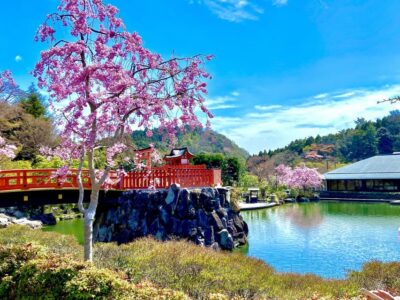
Minoh, Katsuoji Temple, & Minoh Falls Full-day Tour
Read our review →
Osaka Temple Cool Foot Bath & Matcha Experience〈45min〉
Read our review →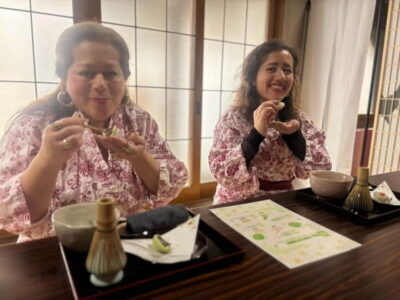
Katsuo-ji Temple, Arashiyama Forest, & Nara Park
Read our review →
Minoh Waterfall & Katsuo-ji Temple Half-Day Tour
Read our review →
Osaka Half-day E-bike Adventure: Minoh Falls & Katsuoji Temple
Read our review →
Essential Private Tour with Deer Park and Temples
Read our review →Browse the lists this tour appears in