
Reviewed · OSAKA PRIVATE TOURS
Osaka: Traditional Japanese Ceramics Private Experience
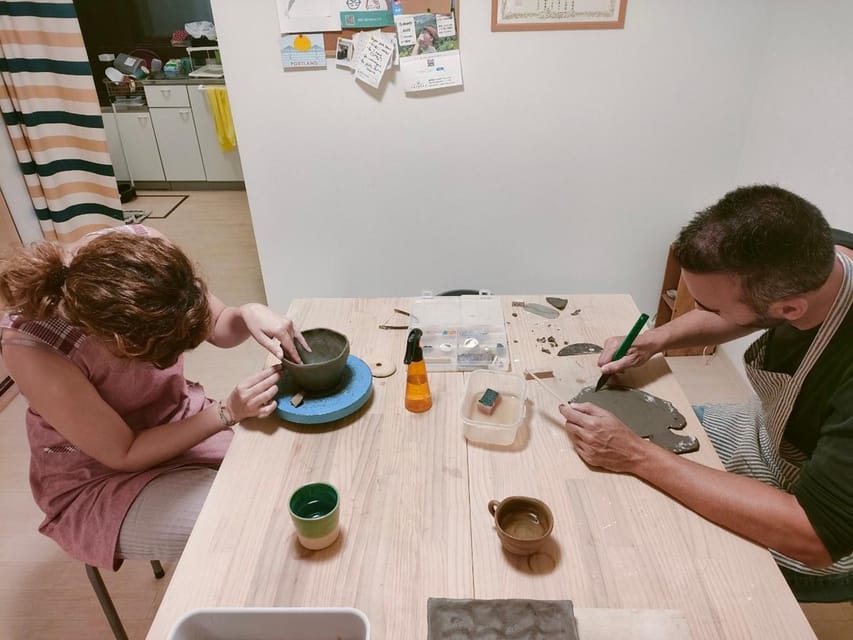
A two-hour pottery class in a century-old Osaka home offers a welcome change from the city’s famous food streets and crowded sights. With instructor Anna, you shape clay from the Shigaraki region into a sake set, sushi set or tea bowl, while learning how Japanese ceramics connect with everyday food and drink.
I like two things in particular: the private, hands-on teaching, which lets Anna adjust her guidance to your experience, and the chance to meet her in a local neighborhood rather than another tour corridor. One thing to plan for: your pottery takes about six weeks to ship, and postage is extra.
At a glance
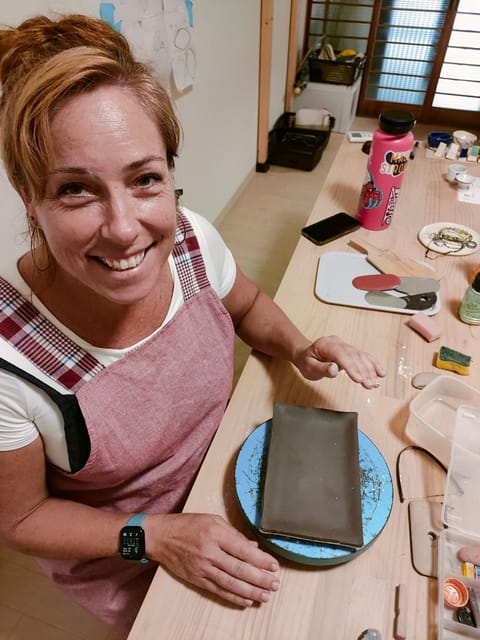
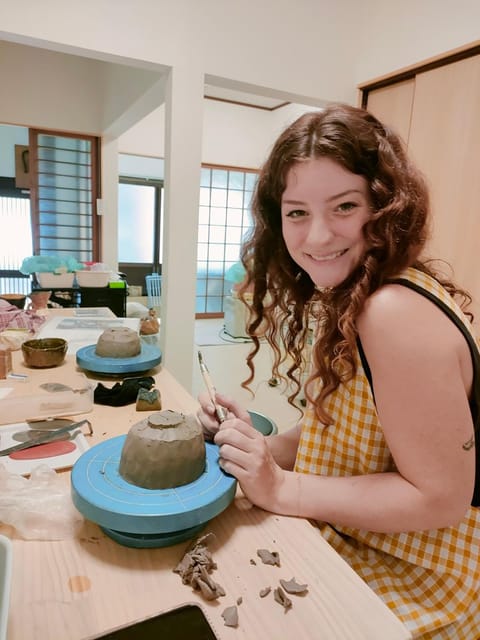
- Make a piece tied to Japanese food culture: Choose a sake set, sushi set or tea bowl, called a chawan.
- Work with Shigaraki clay: The clay comes from one of Japan’s traditional pottery-making areas, and you can finish your piece with Japanese-style glazes.
- Meet Anna at Teradachō Station: She’ll be waiting at the JR station’s north exit with a Ceramics Tocoton sign, then walk you to the studio.
- Enjoy a private class: The instruction is available in English, Spanish, Catalan or Japanese, with time for conversation as well as making.
- Take home a handmade bonus: Anna gives you a small patterned dish and a Sakura-shaped chopstick holder.
- Allow time for delivery: Your own work can be shipped home, but shipping is not included and delivery takes about a month and a half.
From Teradachō Station to an older Osaka
The class begins at JR Teradachō Station’s north exit, where you’ll meet Anna and look for the sign marked Ceramics Tocoton. The station pickup is useful if you’re unfamiliar with this part of Osaka, and it starts the visit with a local introduction rather than asking you to find a private studio on your own.
From the station, you walk away from the better-known tourist areas toward a street lined with shops selling local food. The studio is in a century-old, two-story house, which gives the visit a distinctly domestic feel. It is also described as a family home, so expect a personal workshop rather than a polished commercial classroom.
That setting is part of the appeal. Osaka is often experienced through its big-name sights and famously abundant places to eat. Here, the walk and the house give you a short look at a quieter, everyday part of the city. The trade-off is that the destination is not a grand attraction in itself; the value lies in the conversation and the work you do once you arrive.
More private tours around Osaka:
- Private Osaka Walking Tour: Highlights & Hidden Gems
★ 5.0 · 569 reviews - Osaka 4hr Private Tour with Government-Licensed Guide
★ 5.0 · 359 reviews - 3/4/5 Hours Private Tour in Osaka with Local Guide
★ 5.0 · 189 reviews
Choose a sake set, sushi set or chawan
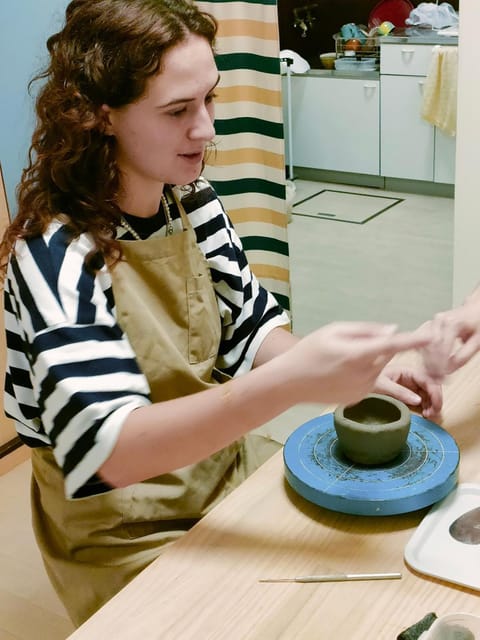
Once you’re in the studio, Anna explains the three projects and their place in Japanese food culture. You can make a small sake bottle and cup, a sushi plate with a chopstick holder, or a chawan, the bowl used for tea. If you’re unsure which one to pick, the introduction helps you decide before you start shaping the clay.
The objects are practical and culturally specific, not generic keepsakes. A sake set connects the craft to serving and sharing a drink; a sushi plate and chopstick holder make a meal setting; and a chawan brings you closer to the forms used in Japanese tea culture. You don’t need prior pottery experience to take part. Anna’s step-by-step demonstrations make the process approachable, and she can adjust the level of guidance if you already have some experience.
The class focuses on hand-building. That means shaping your piece by hand, rather than using a pottery wheel. This suits a short workshop: you can concentrate on the form, texture and proportions without needing to learn a separate machine technique. A few people have made more than one object during the session, but the stated project is one of the three sets, so choose the option you most want to work on.
Shigaraki clay and Japanese glazes

The clay comes from the Shigaraki area, one of Japan’s traditional pottery-producing regions. Using a named local clay gives the class a stronger connection to Japanese ceramics than a simple craft activity with unspecified materials. Anna also introduces typical Japanese glaze colors, so you’ll make choices about the look of your piece as well as its shape.
The class is a good fit if you like learning by doing. Anna guides you through the process, but the aim is for you to make the piece yourself, not watch the instructor do the interesting parts. You’ll have room to try your hand at shaping and finishing, with clear demonstrations and help when you need it.
Keep your expectations realistic. Two hours is enough to learn a few techniques and form a meaningful object, but not to become a potter. The pleasure is in working the clay, seeing it change under your hands and understanding a little more about the craft behind familiar Japanese tableware.
A private lesson with room to talk
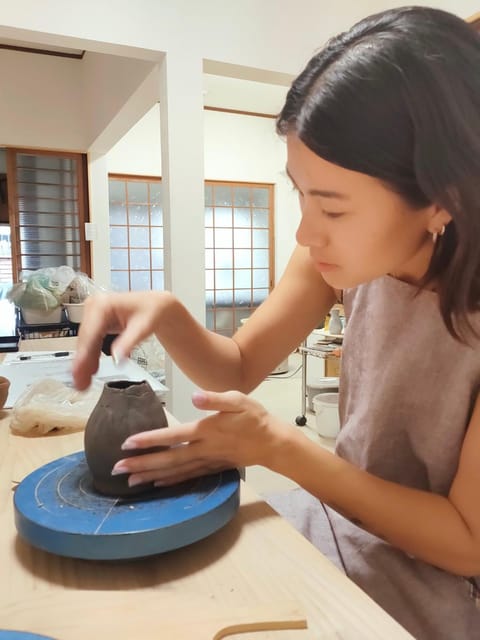
Because this is a private group, the session can feel more like a visit with a local maker than a class shared with strangers. Anna has studied ceramics in Osaka and Barcelona, and the teaching is offered in English, Catalan, Spanish or Japanese. You can ask questions as you work, with room for conversations about Japanese culture, food and local life.
That personal approach is one of the strongest reasons to book. The class is not only about producing a souvenir. The discussion gives context to the shapes and decorations, and makes the meeting feel connected to Osaka rather than interchangeable with a pottery class anywhere else. If you want a quiet, social pause between sightseeing days, this is a useful change of pace.
The setting is also family-friendly for children aged five and up, according to the stated age restriction. A family of five has taken the class together, and the private format can help everyone get attention. Still, the activity involves handling clay and following instruction for two hours, so consider whether younger children in your group will enjoy a focused craft session.
More trips and experiences around Osaka:
- Osaka Go Karting Tour with Funny Costume
★ 5.0 · 2,658 reviews - Osaka Castle: Museum and Tower Entry Ticket
★ 4.5 · 2,380 reviews - Osaka: Shinsekai Food Tour with 13-15 Dishes at 5 Eateries
★ 4.8 · 2,204 reviews - Osaka Food Tour: 13 Dishes at 5 Local Eateries
★ 5.0 · 2,149 reviews
What you take home, and what arrives later
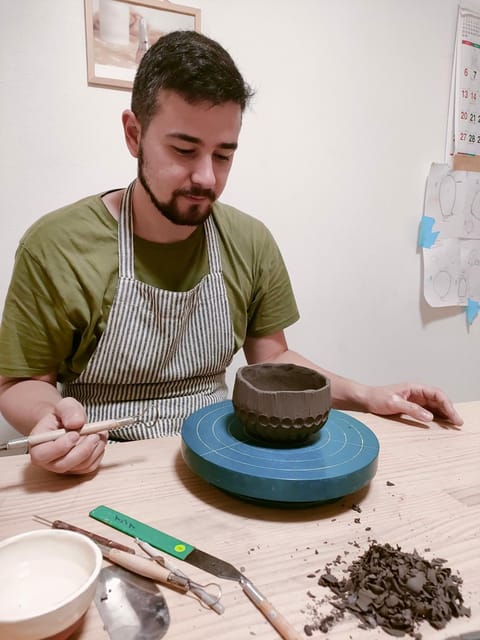
Anna gives you a small plate decorated with a traditional Japanese pattern and a chopstick holder shaped like a Sakura flower. These are handmade by the instructor, so you leave with a finished souvenir even before your own pottery is ready. It’s a thoughtful extra, particularly if you’re packing light or want something tangible to take away that day.
Your own piece needs to be finished and shipped after the class. Allow about a month and a half for delivery, and remember that postage is not part of the $96 per-person price. If you have a tight departure schedule, limited room for packages or uncertainty about international delivery, this delay is worth weighing before you book.
The shipping arrangement makes practical sense for a handmade ceramic object, but it changes the feel of the souvenir. You get to make it in Osaka, then wait for it at home. If you prefer to carry every memento with you, the instructor’s small gift is the immediate keepsake; your own work is the longer-term one.
Is $96 worth two hours?
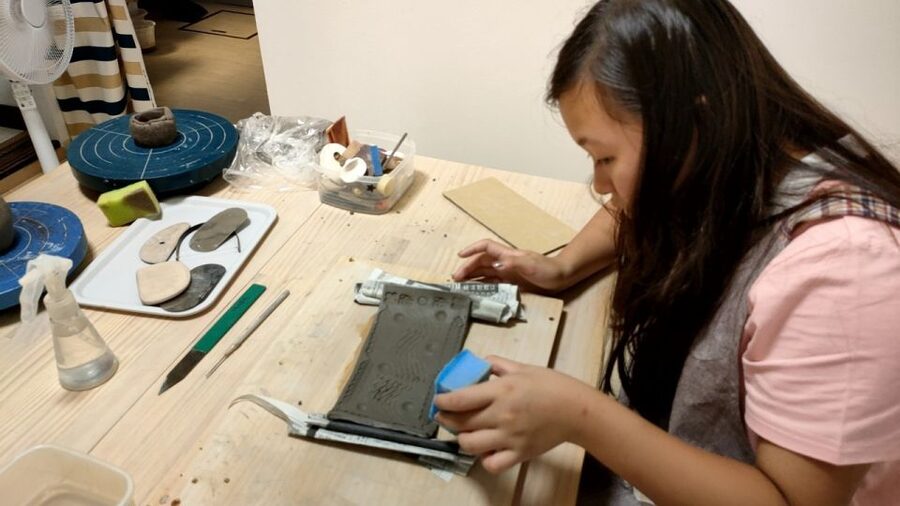
At $96 per person, this is not a bargain-basement craft class. But the price covers private instruction, clay, glazes, the finished ceramic product and the station pickup. You also get a small handmade gift and a personal cultural exchange in a local studio. For someone who values learning a skill and making a one-of-a-kind object, that combination makes the price easier to justify.
The key question is whether you want an activity or simply a souvenir. If all you need is a ceramic object to bring home, buying one in a shop will be cheaper and much faster. If you want to understand how it takes shape, ask questions and make something with your own hands, the class offers far more than a purchase.
The $96 does not include transportation to Teradachō Station or shipping your work home. Factor both into your plans, especially if your accommodation is far from the station or you are keeping a close eye on trip costs. The class lasts two hours, but allow additional time for meeting Anna and walking to the studio.
Who will enjoy this Osaka workshop most
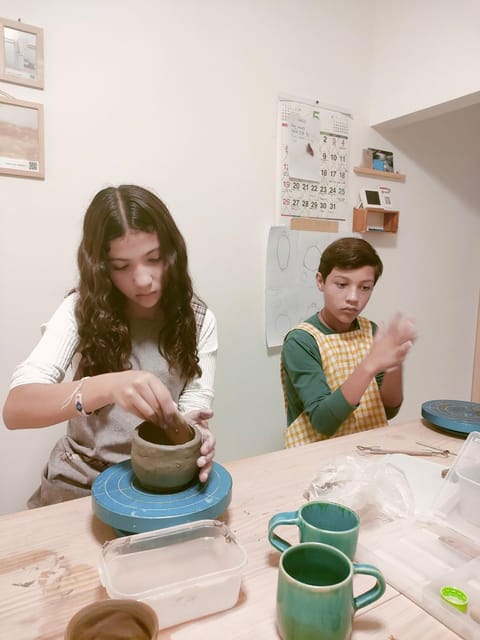
I’d recommend this class to couples, families with children aged five and older, solo visitors and pottery fans who want a slower activity between sightseeing days. Beginners can follow Anna’s demonstrations, while those with experience may get more from the chance to discuss techniques and adapt the lesson to their skill level.
It is especially appealing if you enjoy food culture, Japanese tableware or meeting local makers. The sushi plate, sake set and chawan all give you a clear starting point, and the use of Shigaraki clay makes the work specific to Japan. You’ll leave with a better sense of how an everyday object can carry local craft traditions.
This is less suited to anyone looking for a quick stop, a finished souvenir on the same day or a large-group activity. The studio visit is intimate by design, and the final piece takes weeks to reach you. Arrive on time, too: if you expect to be more than 15 minutes late, contact the provider, since arriving later than that is treated as a no-show.
Should you book it?
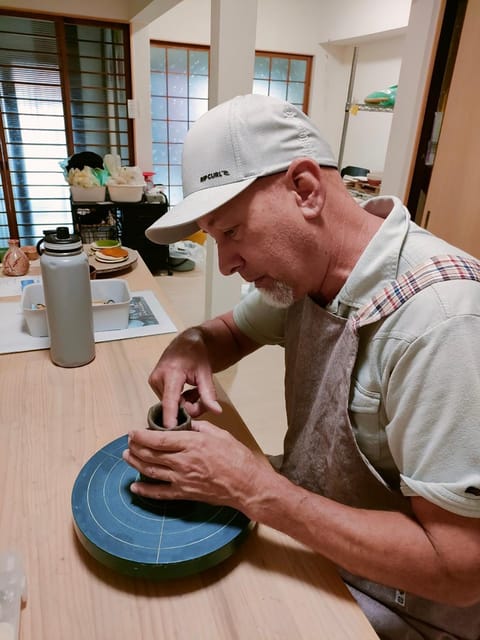
Book this workshop if you want a personal, hands-on way to spend two hours in Osaka and are happy to wait for your finished pottery. The strongest reasons are the private guidance, Anna’s cultural explanations and the chance to make a piece tied to Japanese food traditions in a local home studio.
Skip it if you need a low-cost activity, can’t fit a station trip into your day or want to take your own finished pottery home immediately. If you do book, decide in advance whether you’d rather make a sake set, sushi set or chawan, and budget separately for shipping. For a quieter side of Osaka and a souvenir you’ve shaped yourself, it’s a rewarding choice.
FAQ
How long does the ceramics class last?
The workshop lasts two hours.
Where do I meet the instructor?
Meet at the north exit of JR Teradachō Station. Look for a guide carrying a Ceramics Tocoton sign.
What can I make during the workshop?
You can make a sake set with a small bottle and glass, a sushi set with a plate and chopstick holder, or a chawan tea bowl.
What materials are used?
The class uses clay from the Shigaraki area and typical Japanese glazes.
Which languages are available?
Instruction is available in English, Catalan, Spanish and Japanese.
Is the class private?
Yes. The activity is offered as a private group.
Can I take my own pottery home after the class?
Your finished pottery can be shipped to your home. Shipping costs are extra, and delivery takes about a month and a half.
Is there an age restriction?
The activity is not suitable for children under five.
Just added around Osaka
- Mount Koya from Osaka: Cultural Small Group Day Tour★ 5.0 · 3 reviews
- Matcha Tea Bowl Experience in Osaka★ 5.0 · 11 reviews
- Master Washoku: 5 Core Techniques for Authentic Cooking★ 4.7 · 7 reviews
- Manno: Osaka Premium Wagyu BBQ Experience Reservation★ 5.0 · 4 reviews
- Learning Shodo with a kimono and Trying Samurai Calligraphy★ 4.2 · 7 reviews
- Katsu Curry OR Bento Making Cooking Class & Local Shop Tour★ 4.9 · 11 reviews
- Himeji: Private Guide Tour of the Castle from Osaka or Kyoto★ 4.5 · 7 reviews
- Osaka and Nara Customized Private tour with English Driver★ 4.7 · 4 reviews
Osaka Private Tours, compared.

Nara Half Day Trip Walking Tour (Private Option Available)
Read our review →
Private Osaka Walking Tour: Highlights & Hidden Gems
Read our review →
Osaka 4hr Private Tour with Government-Licensed Guide
Read our review →
Himeji Half-Day Private Tour with Government-Licensed Guide
Read our review →
Nara 6hr Private Tour with Government-Licensed Guide
Read our review →
3/4/5 Hours Private Tour in Osaka with Local Guide
Read our review →
2.5 Hour Private History and Culture Tour in Himeji Castle
Read our review →
Osaka 6hr Private Walking Tour with Government Licensed Guide
Read our review →Browse the lists this tour appears in