
Reviewed · OSAKA SAMURAI EXPERIENCES
Learning Shodo with a kimono and Trying Samurai Calligraphy
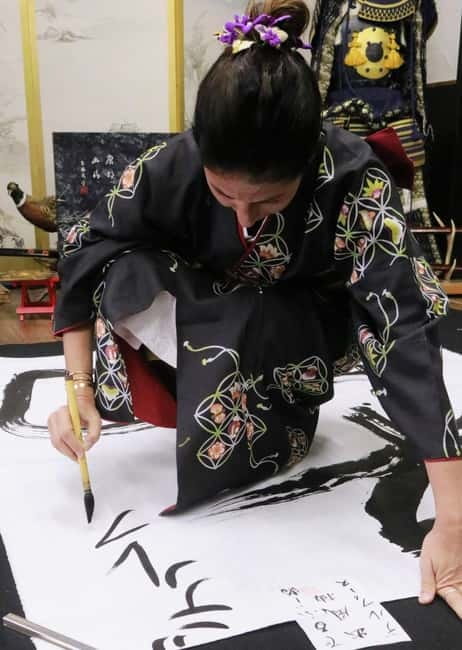
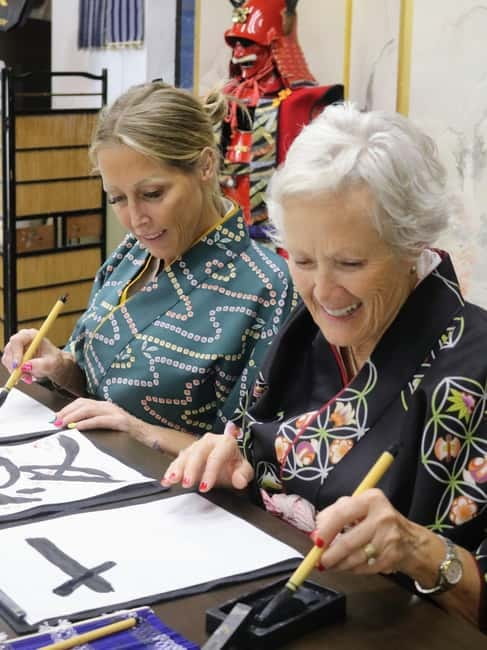
Shodo is more than writing neatly: the brush, the order of the strokes and the empty space around a character all matter. At Samurai Honor in Osaka, you change into a kimono or samurai costume, practice kanji with a certified instructor and leave with a piece of your own work. I like the personal touch of having your name written in kanji, and I like that children can join in rather than watch from the sidelines.
One detail to check before booking: the stated duration is one hour, but the activity description also lays out a separate 30-minute oversized-brush session. The studio setting is practical rather than polished, and passing trains can be noisy, so this is a hands-on cultural stop, not a quiet, formal arts retreat.
- Your name gets a kanji interpretation: The instructor writes the foreign names of participants using chosen kanji, then explains the characters’ meanings.
- Kimono or samurai costume is included: You dress for the activity and finish with photos of your outfit and artwork.
- Brush technique comes before the final piece: You practice how to hold the brush, use the tools and follow the stroke order of your selected kanji.
- The oversized-brush session has a different mood: It asks you to imagine a final character that represents what you want to leave behind, then make it on a large sheet.
- The published timing needs clarification: The experience is listed as one hour, while its description also outlines a 30-minute samurai calligraphy activity.
- Plan for a modest studio near the railway: The instructor may be a highlight, but train noise and a simple venue are part of the setting.
Getting dressed before the first brushstroke
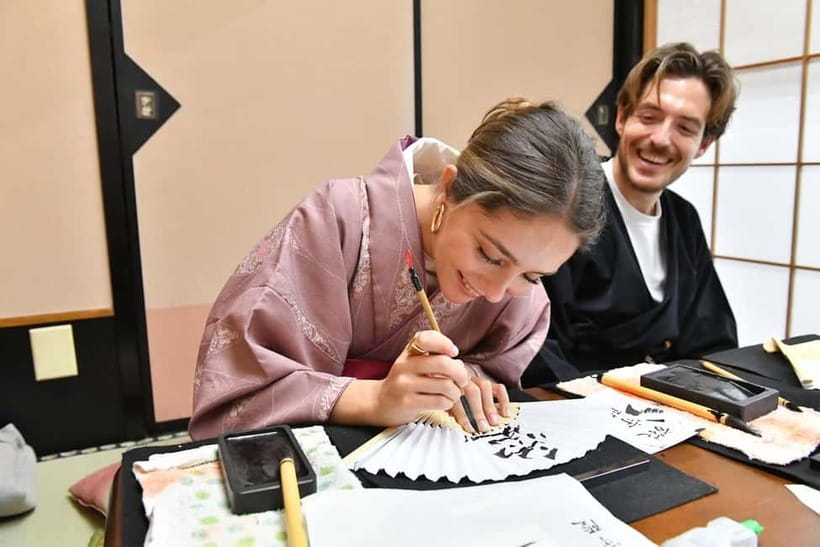
The activity begins with a change into traditional clothing, either a kimono or a samurai costume. That small shift helps mark the occasion: you are not only trying a new art form, but also getting a chance to see yourself in clothing associated with Japanese culture.
A T-shirt is the one item you are asked to bring. Arrive 30 minutes before your reserved start time for instructions and changing. That early arrival matters, especially if you are bringing children or need a little time to get comfortable in your outfit.
Do not assume the basic booking includes every styling detail. Kimono and samurai costumes are included, but Japanese-style hair styling with a hairpin is a paid option. The package details also list outdoor photography and a more complete Japanese attire set among paid options, so check which version you are selecting if those extras matter to you.
Learning the brush, not just copying a character
Once dressed, you begin with the mindset and tools of shodo, Japanese calligraphy. The instructor shows you how to hold the brush and use the equipment before you practice brush movement and technique.
This is useful even if your aim is simply to make a souvenir. Brush calligraphy depends on how you start and finish a stroke, and on how you control the brush as it moves. You will not become a calligrapher in an hour, but learning the basics gives your final piece more meaning than tracing a shape without context.
Next comes kanji practice. You work on a character you selected earlier and follow its stroke order as the instructor demonstrates it. Stroke order is part of the practice, not a fussy extra: it gives you a clear sequence to follow while you concentrate on the brush.
The instructor also writes participants’ foreign names using selected kanji. Each character carries its own meaning, so ask about the choices and what the characters express. This is one of the most individual parts of the session, and a good reason to take your time rather than rush straight to the final draft.
More kimono experiences around Osaka:
- Osaka: Sumo Show & Experience w/ Optional Kimono & Hot Pot
★ 4.5 · 609 reviews - Learning Zen of Japanese Calligraphy in kimono near Osaka Castle
★ 4.5 · 53 reviews - Osaka: Kimono or Yukata Rental &Photos Service Options
★ 4.9 · 25 reviews
Making a piece to take home
After practice, you make a final draft using what you have learned. The activity mentions calligraphy paper, a fan or a hanging scroll as possible formats, though a hanging scroll, or kakejiku, is a paid option. Confirm the available format and any added cost before you book if you have a particular display piece in mind.
Your work is yours to keep as a souvenir. You can also frame and display it at home, though framing is not stated as part of the activity. A paper keepsake is an easy way to remember the lesson, while a fan or scroll may feel more display-ready if you choose an applicable option.
There is also a custom bag to take home. The instructor writes the kanji character you attempted on the bag, which is described as a Samurai Honor original gift and a way to carry your work. It is a practical extra, and more personal than a generic souvenir.
What the oversized-brush samurai session adds
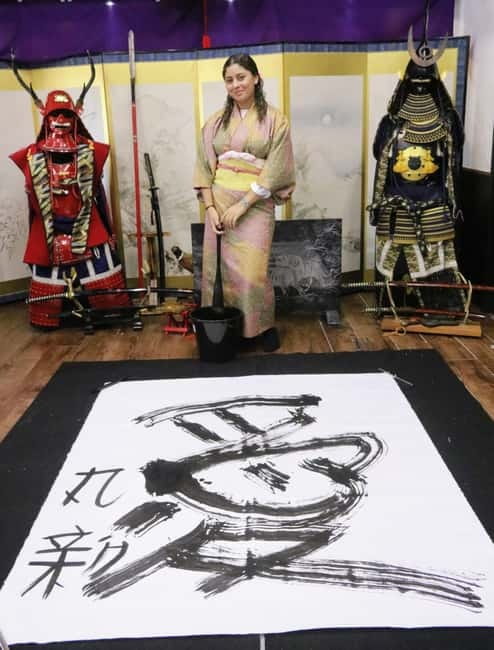
The experience description also outlines a 30-minute activity called Trying Samurai Calligraphy. It asks you to imagine a story about your life and decide what feeling or idea you would want to leave behind in a final character. This is a reflective prompt, rather than a lesson in writing a long passage.
The activity emphasizes the Japanese aesthetic of leaving space around the character. The blank area is treated as part of the composition, not as paper that needs filling. That idea gives the exercise a different focus from standard handwriting practice: you consider the form, the open space and the feeling of the single character together.
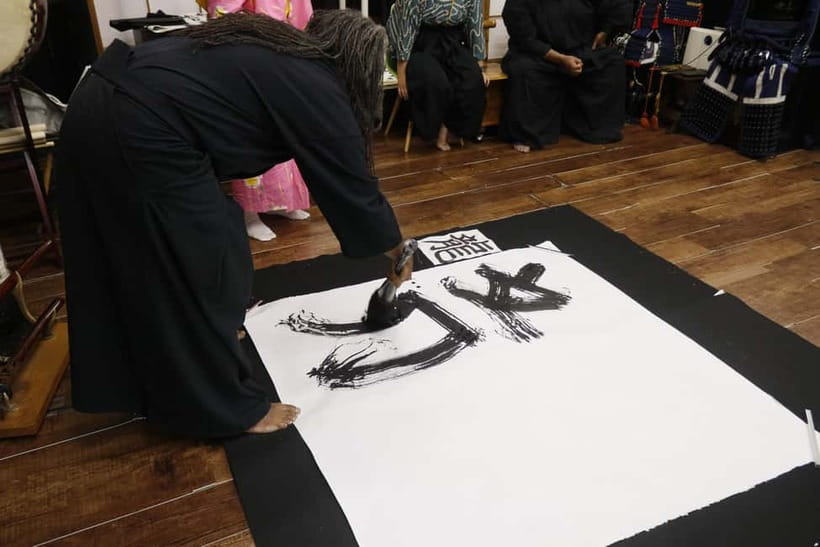
Then comes the physical showpiece. The artist uses a brush more than five times the usual size to make one powerful character on a sheet measuring 150 by 150 centimeters. The description says the whole body is used to control the oversized brush, and that the work aims to feel forceful yet fragile and beautiful.
You sign the piece to identify its maker. The prompt is intentionally dramatic, asking you to consider a final character in life, so it may suit adults and older children more than very young participants. Children under five are not considered suitable for the activity.
The timing deserves a direct question before you pay. The experience is advertised as one hour, while its description separately assigns 60 minutes to learning shodo and 30 minutes to the samurai activity. Ask whether both are included in your selected session, or whether the oversized-brush portion is a separate component.
Photos, hair and family participation
Photography is included, with the finished images sent to a designated email address. The photo shoot captures your kimono or samurai outfit and your artwork, giving you a record of the day without having to manage every picture yourself.
Hair styling is not automatically included. If you want an elegant Japanese hairstyle and hairpin to go with a kimono, select the paid option and confirm its details. The activity description uses the image of a Yamato Nadeshiko or a brave samurai for the final photos, but you can think of the shoot simply as a chance to document the costume and your work.
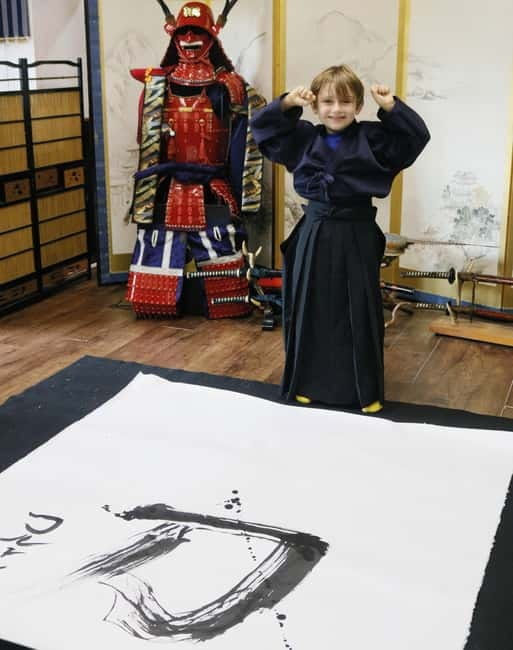
Families have a good reason to consider this session. Children can take part in the calligraphy, and the team is described as patient with young participants. In Japan, children often begin learning calligraphy around ages six to eight, which makes the activity especially well suited to school-age kids who can follow a few steps and enjoy making something themselves.
It is not designed for babies or toddlers: children under five and babies under one are listed as unsuitable, and strollers and baby carriages are not allowed. If you are planning a family outing, check that everyone who will attend can participate comfortably without those items.
More samurai and ninja experiences around Osaka:
- Samurai Training Experience KENDO in Osaka
★ 5.0 · 515 reviews - OSAKA NIGHT FUSION Japanese Taiko Kabuki Samurai Dance Show
★ 4.8 · 155 reviews - Osaka: Samurai Training Experience KENDO in Osaka
★ 5.0 · 111 reviews - Osaka: A Modern Samurai, Kabuki, Taiko, & Dance Show
★ 4.5 · 66 reviews
The Osaka studio and getting there

Samurai Honor is at Excellence Takayama 1F, 2-3-19 Shiginonishi, Joto-ku, Osaka. Use the Google Maps link supplied for the studio rather than Apple Maps, which is noted as showing the wrong address.
Look for a wooden sign reading Honor of the Samurai, or the rack of Samurai Honor activity pamphlets outside. Kimonos and hakama hanging to dry may also help you spot the entrance. The studio is near train tracks, and the sound of trains passing can intrude on the atmosphere. If you expect a serene, carefully staged setting, adjust that expectation; the focus is the instructor and the activity.
There are no station or hotel transfers, and transportation is not included. You will need to make your own way to the studio. The group is limited to 10 participants, which keeps the class small, though the available information does not promise a private lesson.
The activity is wheelchair accessible. Pets, alcohol and drugs, nudity, strollers and baby carriages are not allowed. English is the default interpreter language; Italian, Spanish, French, Chinese, Thai and Indonesian may be available, but you should ask about staff availability before booking.
Is $42 good value?
At $42 per person, the core offer includes the costume, an instructor, taxes, tips and photography, plus the calligraphy session and a custom bag. That is a reasonable price if you want a guided cultural activity with something personal to take home, rather than a quick costume rental or a photo stop alone.
The value depends on what you expect from the time. You get several elements in one visit: dressing up, brush instruction, kanji practice, your name rendered in kanji and a final piece. But some details, including hair styling, a hanging scroll and certain clothing or outdoor photo options, are paid extras. Add those costs before comparing the experience with other activities.
The one-hour versus 90-minute description is the key value question. If the oversized-brush section matters to you, clarify whether it is part of the $42 session and how long you should set aside. Do not plan a tight connection immediately afterward until you know the actual schedule.
The activity offers free cancellation up to 24 hours before the experience, and a reserve-now, pay-later option is available. Those terms offer some flexibility, but they do not replace confirming the meeting point, language and session length.
Who should book this calligraphy experience?
I would consider it for anyone who wants a participatory introduction to calligraphy, particularly families with school-age children. The combination of costume, guided practice and a personalized kanji keeps the hour varied, and the instructor’s patience with children is an important plus.
It also suits visitors who value a hands-on souvenir more than a lavish setting. You leave with your calligraphy work, photos and a bag marked with the character you practiced. If you care most about polished surroundings, quiet or a long lesson, the modest studio and passing trains may disappoint.
Book after checking whether the oversized-brush activity is included, which costume and photo options apply, and whether any extra styling you want costs more. If those details fit your plans, this is a thoughtful, family-friendly way to try a traditional art form without needing prior experience.
FAQ
Where does the activity take place?
It takes place at Samurai Honor, Excellence Takayama 1F, 2-3-19 Shiginonishi, Joto-ku, Osaka. Use the supplied Google Maps location because Apple Maps is noted as incorrect.
How long does the experience last?
It is listed as one hour. The activity description also outlines a 30-minute oversized-brush samurai session in addition to 60 minutes of shodo, so confirm the actual schedule with the provider.
What is included in the $42 price?
The included items are kimono and samurai costumes, a certified professional instructor, taxes, tips and photography. The description also says you receive a custom Samurai Honor bag with a kanji character written on it.
What should I bring?
Bring a T-shirt. Arrive 30 minutes before your reserved time for instructions and changing clothes.
Are hair styling and a hanging scroll included?
No. Japanese-style hair styling with a hairpin and calligraphy on a kakejiku are paid options. Check the selected package for the exact extras included.
Can children take part?
Children can participate in the calligraphy, but the activity is not suitable for children under five or babies under one. Strollers and baby carriages are not allowed.
Can I cancel, and are other languages available?
You can cancel up to 24 hours in advance for a full refund, and reserve-now, pay-later booking is available. English is the default interpreter language; Italian, Spanish, French, Chinese, Thai and Indonesian may be available if staff can accommodate the request.
More craft workshops around Osaka
- Osaka: Private Japanese Calligraphy Experience
★ 5.0 · 66 reviews - Calligraphy Workshop in Namba, Dotonbori
★ 5.0 · 57 reviews - Osaka: Private Tea Ceremony and Calligraphy Experience
★ 5.0 · 50 reviews - Osaka Daruma Workshop — Paint Your Own Good-Luck Daruma
★ 4.9 · 46 reviews
Just added around Osaka
- Mount Koya from Osaka: Cultural Small Group Day Tour★ 5.0 · 3 reviews
- Matcha Tea Bowl Experience in Osaka★ 5.0 · 11 reviews
- Master Washoku: 5 Core Techniques for Authentic Cooking★ 4.7 · 7 reviews
- Manno: Osaka Premium Wagyu BBQ Experience Reservation★ 5.0 · 4 reviews
- Katsu Curry OR Bento Making Cooking Class & Local Shop Tour★ 4.9 · 11 reviews
- Himeji: Private Guide Tour of the Castle from Osaka or Kyoto★ 4.5 · 7 reviews
- Osaka and Nara Customized Private tour with English Driver★ 4.7 · 4 reviews
- Osaka/Kyoto: Arashiyama, Nara Park, Fushimi Shrine Tour★ 4.1 · 13 reviews
Osaka Samurai Experiences, compared.
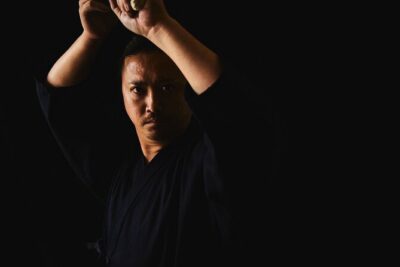

OSAKA NIGHT FUSION Japanese Taiko Kabuki Samurai Dance Show
Read our review →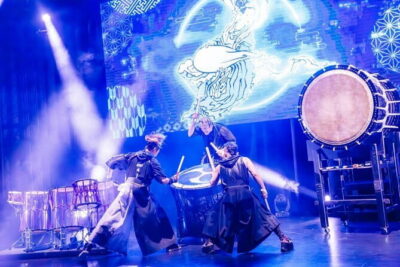
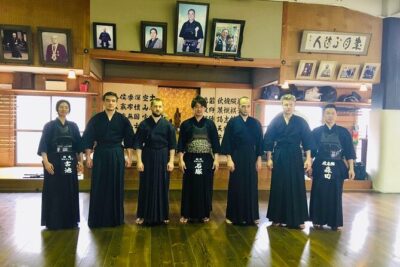
Osaka 2-Hour Genuine Kendo / Samurai Experience In Japan
Read our review →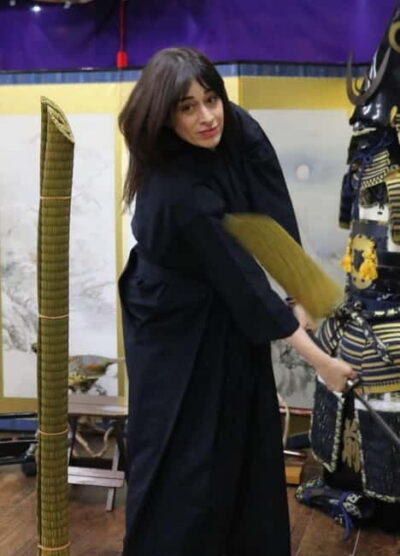
Learn Bushido – Trial Slashing with Samurai Sword
Read our review →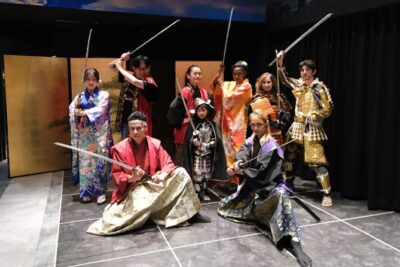
Samurai Show, Tea Ceremony, Japanese Traditional Activities
Read our review →
Private Samurai Experience – Train with Sword Master
Read our review →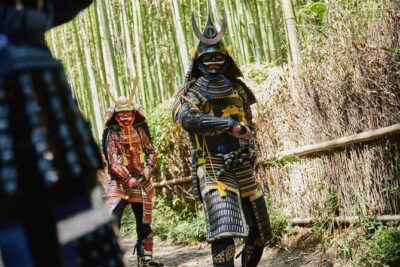
Honor – Experience Samurai & traditional Culture to the fullest
Read our review →Browse the lists this tour appears in