
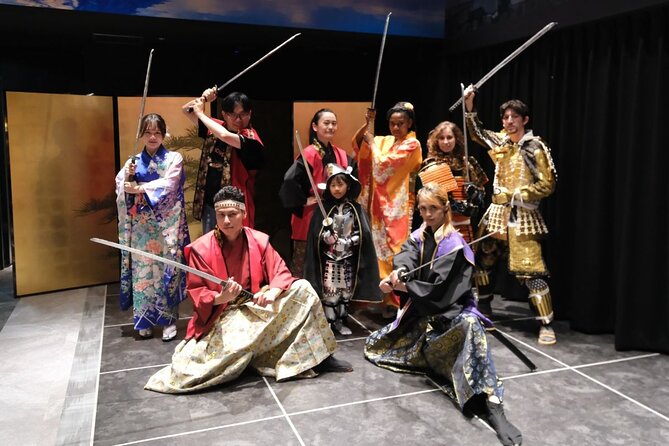
Reviewed · OSAKA TEA CEREMONIES
Samurai Show, Tea Ceremony, Japanese Traditional Activities
A samurai show is the lively hook here, but this Osaka cultural experience is more than a performance: you can try calligraphy, learn the steps of a tea ceremony and handle traditional musical instruments. It takes place indoors, so it can fill a rainy afternoon as well as a clear one.
I like the mix of watching and doing, which gives each activity a little more meaning than a demonstration from the sidelines. I also like that tea, calligraphy, music and the samurai program are bundled into one ticket, making this a practical way to sample several traditions in a single visit.
The main thing to plan around is time. The session is advertised at about two and a half hours, but there is plenty to do, and you may want three hours or more. Kimono and samurai armor are not included in the basic price, so check the current options if dressing up is part of your plan.
The experience at a glance
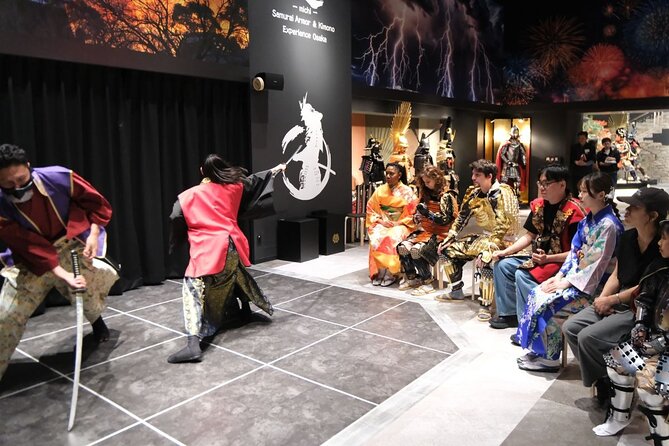
- A samurai performance with audience participation: Watch the action, then try a few safe moves with practice equipment, not real swords.
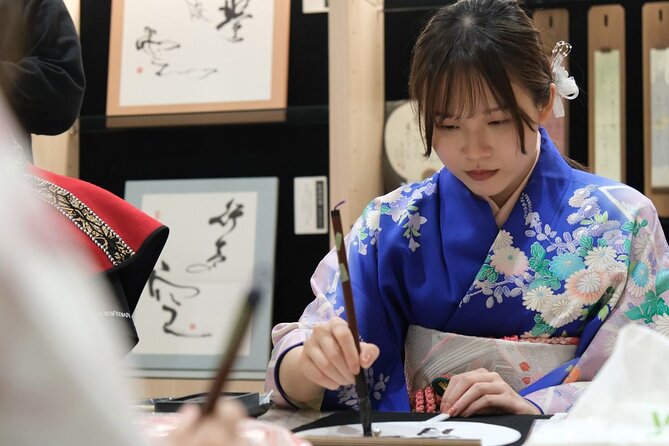
- Tea and calligraphy are hands-on: You are shown how to prepare green tea and how to work with brush and ink.
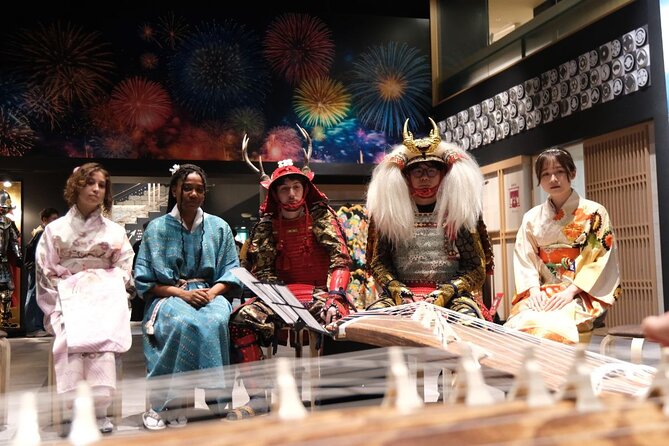
- Traditional music is part of the program: Performers introduce instruments, and you may get a chance to try them yourself.
- The basic ticket costs $44.92 per person: It covers the listed activities, but not kimono, samurai armor or ninja dress-up.
- Keep extra time free: The advertised visit is about 150 minutes, but activities can take longer.
- The venue is in central Osaka: Meet at Shinsaibashi ARTY Inn, a short distance from the Dotombori area.
A central Osaka stop with a cultural focus
Michi’s experience starts at Shinsaibashi ARTY Inn, at 2-chōme-17-3 Nishishinsaibashi in Chuo Ward. The activity is associated with the Dotombori area, putting it within reach of one of Osaka’s best-known districts for food, shopping and evening outings.
The exact end point is the same as the start, so you can return to your plans without arranging separate transport. The venue is near public transportation, which is useful if you are fitting the session between other Osaka stops. The group is capped at 20, a modest size for an activity that involves several stations and demonstrations.
The address is worth saving on your phone before you set out. You receive a mobile ticket, and confirmation is provided at booking. If you are meeting friends or coordinating a family visit, share the address and allow enough time to find the entrance.
More tea ceremonies around Osaka:
- Osaka: Tea Ceremony Experience
★ 4.9 · 1,426 reviews - Tea Ceremony Experience in Osaka Doutonbori
★ 5.0 · 754 reviews - Matcha Making Class in Osaka with Authentic Japanese Sweets Set
★ 5.0 · 509 reviews
Tea ceremony: a quiet counterpoint to the show
The tea ceremony offers a slower pace than the samurai program. You are introduced to the steps involved in preparing and serving green tea, and the value is in learning the gestures and care behind a familiar ritual, not just receiving a cup.
I like that this activity gives you a chance to ask questions and take part. It can be a useful introduction if you have seen tea ceremonies from a distance but want to understand what is happening. The session is designed for visitors with different levels of prior knowledge, so you do not need to arrive knowing the etiquette.
The tea portion may feel brief if you expect an extended formal ceremony. Think of it as a guided cultural activity within a varied program, rather than a full-length tea study. That distinction helps set expectations, especially if tea is your main reason for booking.
Calligraphy: make something of your visit
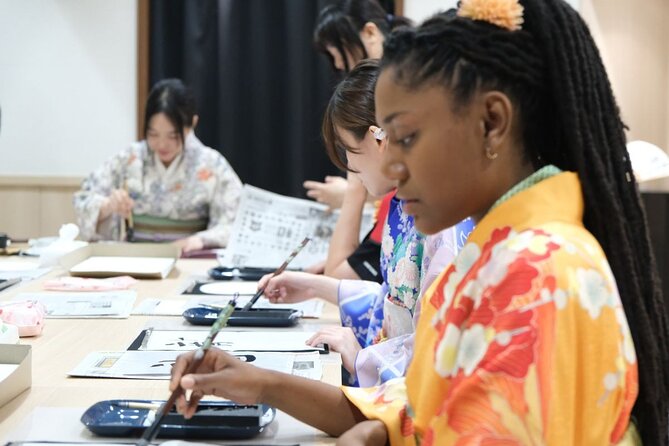
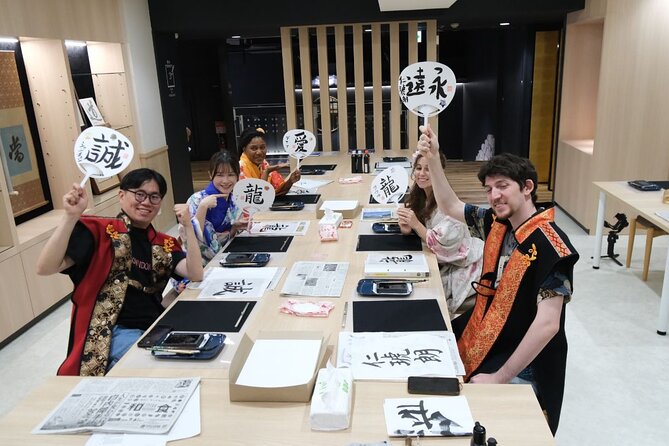
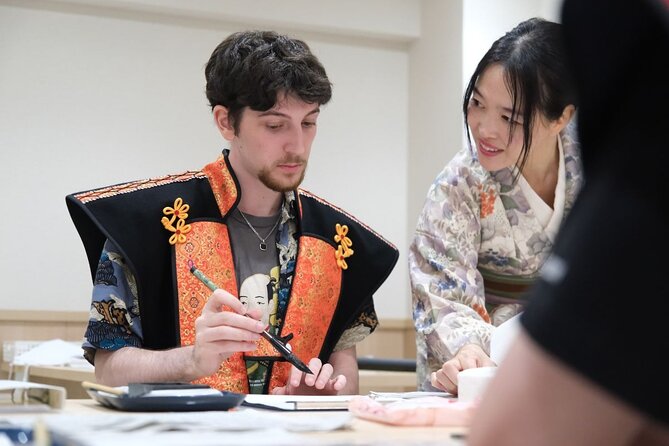
Calligraphy adds a hands-on task and a personal keepsake to the afternoon. You practice brushwork with guidance, and one account of the experience describes making a personalized fan to take home. The exact item may depend on the activity setup, so treat the fan as a possible extra rather than a guaranteed inclusion.
This is a good station for anyone who likes to learn by trying. Calligraphy asks for a different kind of attention than the sword demonstration: slower movements, a steady hand and a willingness to accept that your first attempt may be more spirited than elegant. That is part of the fun.
If you are visiting with children, this activity gives them something concrete to do. The experience has been enjoyed by families across generations, and the staff have been described as patient with larger family groups. Still, the program involves moving between activities, so keeping an eye on younger children is sensible.
Samurai show: theatrical, playful and participatory
The samurai performance is the most dramatic part of the visit. You watch a staged encounter, then may get the chance to practice a few movements. The swords used for practice are not real, so the activity is meant for participation and entertainment, not combat training.
Expect a theatrical show rather than a history lecture or martial arts class. One person may find the performance a little light, especially if they are hoping for a serious display of historical technique. For many, though, the chance to join the action and have a laugh is exactly what makes it memorable.
The basic ticket does not include samurai armor. Some visitors have paid extra to dress in kimono or samurai attire, but those options are separate from the listed inclusions and may change. If you want costume photos, ask the provider about availability and cost before you book. Do not assume the basic ticket includes dress-up.
More samurai and ninja experiences around Osaka:
- Samurai Training Experience KENDO in Osaka
★ 5.0 · 515 reviews - OSAKA NIGHT FUSION Japanese Taiko Kabuki Samurai Dance Show
★ 4.8 · 155 reviews - Osaka: Samurai Training Experience KENDO in Osaka
★ 5.0 · 111 reviews - Osaka: A Modern Samurai, Kabuki, Taiko, & Dance Show
★ 4.5 · 66 reviews
Traditional music you can try, not just hear
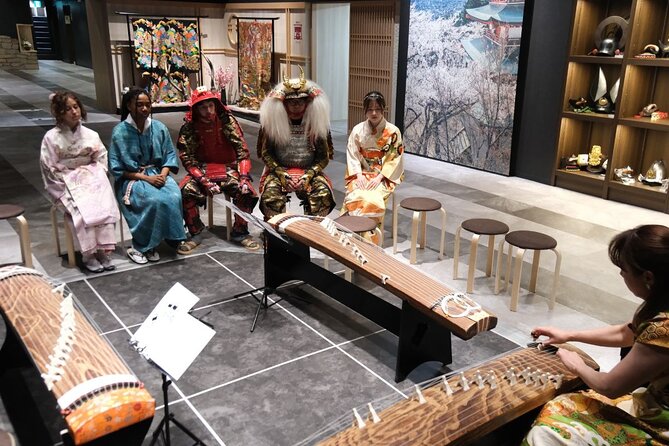
Music gives the program a welcome change of pace. Performers play traditional Japanese instruments, and the format may include a short introduction followed by a chance to try playing. The instruments mentioned by participants include a Japanese guitar, a Japanese flute and a complex keyboard-like instrument.
This is not a concert where you sit quietly for the full session. You may be invited to make some music yourself, and beginners should expect a first attempt rather than a polished performance. That hands-on element is a smart way to make an unfamiliar instrument less mysterious.
The sound and activity also balance the other parts of the visit. After the stillness of tea and the focus of calligraphy, music brings a more social, playful feel. If you are travelling with family or friends who have different interests, the variety makes it easier for each person to find a highlight.
Allow more than the advertised two and a half hours
The stated duration is about 150 minutes. In practice, some people have spent three hours or even three and a half to four hours taking part in the shows and activities. The difference may come down to how much time you give each station and how the program runs on the day.
I would leave at least three hours free, particularly if you want to try every activity, ask questions or take photos. Avoid scheduling a tight connection or a timed reservation immediately afterward. The venue is indoors, and the activities can make a rainy Osaka afternoon especially useful, but weather-related cancellation terms still apply.
The group maximum of 20 helps keep the event from feeling like a huge tour, though several activities and performances are packed into one visit. You may move through stations with staff assistance rather than follow one long, fixed presentation. Keep a little flexibility in your plans.
Is $44.92 good value?
At $44.92 per person, the ticket includes several distinct activities: tea, calligraphy, traditional music and a samurai performance. You are paying for variety and participation, not one long, in-depth class. If you tried to arrange separate introductions to all four subjects, the combined time and effort could be less convenient.
The strongest value comes from the hands-on format. You are not simply watching a demonstration and leaving with a few photos. You can try brushwork, learn tea preparation, hear instruments up close and take part in the samurai activity. That makes the price easier to justify for a first visit to Japan or a short stay in Osaka.
Costumes change the calculation. Kimono, samurai armor and ninja dress-up are not included in the basic ticket. One person reported paying 5,000 yen for a kimono option, but that price should not be treated as current or guaranteed. Confirm any extras with Michi before booking, and compare the total with what you are willing to spend for photos and dress-up.
Who will get the most from this visit?
This is a strong fit if you want a broad introduction to Japanese traditions in one place, especially if you like learning by doing. It works well for couples, families and mixed-age groups because the activities shift between quiet, creative and theatrical. The experience is open to most participants, and family groups have found something for different ages.
It also makes sense if you have a spare afternoon, want an indoor plan, or would like a cultural activity between shopping and meals in central Osaka. You do not need to be an expert in Japanese culture to take part. Friendly staff support is a recurring part of the experience, and Yui and Miyu have been named positively, though you cannot count on a particular staff member being there.
You may want a different activity if you are seeking an advanced tea ceremony, a serious samurai history class or a long music performance. This is a lively sampler, with several short experiences rather than one subject explored in depth. The samurai segment is staged entertainment, and the costume extras cost more.
Booking and practical notes
The activity costs $44.92 per person and uses a mobile ticket. The listed maximum is 20 participants, and the meeting and end point are both Shinsaibashi ARTY Inn. The experience is near public transportation, and most people can participate.
Free cancellation is available until 24 hours before the start time. Cancellations made less than 24 hours in advance are not refundable, and changes inside that window are not accepted. The provider also states that poor weather may lead to a different date or a full refund if the activity is cancelled.
Should you book it?
I would book this if you want a playful, well-rounded introduction to Japanese culture and have at least three hours to spare. The mix of tea, calligraphy, music and samurai action offers good variety for the price, and the chance to try rather than only watch is the main draw.
I would pause if you want a deep, formal lesson in just one tradition, or if you are counting on costume rental being included. Book the basic experience for its cultural activities, then confirm any dress-up options separately. For an easy indoor afternoon in central Osaka, it is a sensible choice.
FAQ
How long does the experience last?
The approximate duration is two hours and 30 minutes. Allow extra time if you want to take part in all the activities, as visits can run longer.
What activities are included in the ticket?
The included activities are a tea ceremony experience, calligraphy, traditional Japanese music and a samurai performance.
Are kimono and samurai armor included?
No. Kimono, samurai armor and ninja dress-up are not included in the basic ticket.
Where does the activity start?
The meeting point is Shinsaibashi ARTY Inn, 2-chōme-17-3 Nishishinsaibashi, Chuo Ward, Osaka.
Where does the activity end?
It ends back at the meeting point.
How many people can join?
The maximum group size is 20 participants.
Is the experience suitable for children?
The activity information says most people can participate. Families with children and grandparents have enjoyed the range of activities, but no specific minimum age is provided.
Is the ticket delivered on a phone?
Yes. The ticket is mobile, and booking confirmation is provided at the time of booking.
Can I cancel for a refund?
You can cancel for a full refund up to 24 hours before the start time. Cancellations made less than 24 hours before the activity are not refundable.
More shows around Osaka
- Osaka: Sumo Show & Experience w/ Optional Kimono & Hot Pot
★ 4.5 · 609 reviews - Osaka: Sumo Stage Show with Bento or Snack + Fight & Photo
★ 4.3 · 364 reviews - Osaka: English Stand Up Comedy Show at Osaka Comedy Club
★ 4.7 · 203 reviews - Osaka: UTAGE Japanese Taiko Live Show
★ 4.9 · 167 reviews
Just added around Osaka
- Mount Koya from Osaka: Cultural Small Group Day Tour★ 5.0 · 3 reviews
- Matcha Tea Bowl Experience in Osaka★ 5.0 · 11 reviews
- Master Washoku: 5 Core Techniques for Authentic Cooking★ 4.7 · 7 reviews
- Manno: Osaka Premium Wagyu BBQ Experience Reservation★ 5.0 · 4 reviews
- Learning Shodo with a kimono and Trying Samurai Calligraphy★ 4.2 · 7 reviews
- Katsu Curry OR Bento Making Cooking Class & Local Shop Tour★ 4.9 · 11 reviews
- Himeji: Private Guide Tour of the Castle from Osaka or Kyoto★ 4.5 · 7 reviews
- Osaka and Nara Customized Private tour with English Driver★ 4.7 · 4 reviews
Osaka Tea Ceremonies, compared.
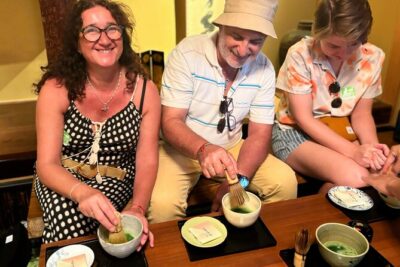
World Heritage Kyoto & Nara Uji Authentic Matcha Experience
Read our review →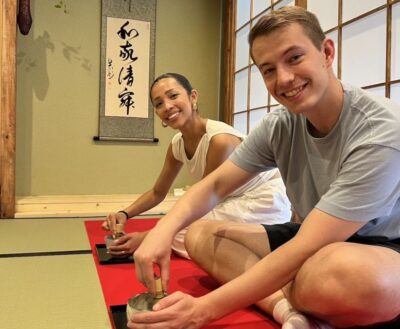
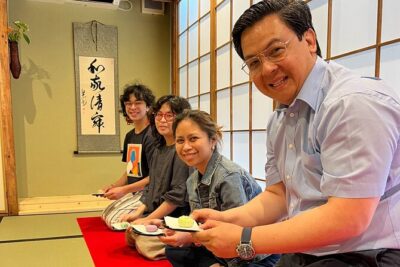

Matcha Making Class in Osaka with Authentic Japanese Sweets Set
Read our review →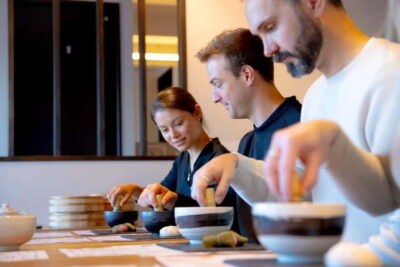

Authentic Tea Ceremony(Max 5 ppl) -Master Matcha Making
Read our review →
Japanese Traditional Sweets Making and Tea Ceremony
Read our review →
Osaka Temple Cool Foot Bath & Matcha Experience〈45min〉
Read our review →Browse the lists this tour appears in