
Reviewed · OSAKA TEA CEREMONIES
Osaka: Private Tea Ceremony and Calligraphy Experience
A tea lesson that lets you whisk your own matcha, followed by calligraphy that turns your name into kanji chosen to suit your personality: this private session gives you two different ways to take part in Japanese culture. You are not just watching someone perform a ceremony or write with a brush. You get a chance to try both, ask questions, and bring home your own work.
I like the personal pace, especially for families or anyone who wants time to ask questions without a roomful of strangers waiting. I also like that the two activities balance each other: the tea ceremony asks you to slow down, while calligraphy gives you something tangible to make. The main consideration is practical: the studio is not suitable for wheelchair users, and the full session takes 135 minutes.
At a glance
- Private group: Your instructor can adjust the pace and make time for photos or questions.
- Tea, then making: Learn about the ceremony, choose a tea bowl, prepare matcha, and enjoy Japanese sweets twice.
- Calligraphy with a personal touch: Pick a theme or word, try the brush strokes, and create a piece using kanji selected to express you.
- A take-home keepsake: Colored paper, your Japanese name, and a stamp for your initials make the artwork your own.
- Namba location: The studio is near Shinsaibashi-suji shopping street, with a specific hotel entrance as the meeting point.
A private lesson, not a performance
The main appeal here is the private format. Your group has the instructor’s attention, so you can ask questions, pause for photos, or request a slower pace. That can make a big difference when you are learning unfamiliar gestures and want to understand what you are doing rather than simply copy along.
The instructor, Wanoma, leads the session at WA NO MA, a cozy studio in Namba. English and Japanese instruction are available. The tone is described as friendly and relaxed, with room for questions and a bit of laughter when a first attempt at whisking or brushwork goes sideways.
Private does not mean formal or difficult. You do not need prior experience with tea or calligraphy, and the session is designed to guide you through the basics. If you are bringing a child, ask for a pace that suits them. Water calligraphy is available for young children, which helps prevent ink from getting on hands and clothes.
The flexibility is useful, but it is still a structured cultural lesson. You will spend time listening and practicing, not just taking photos. If you prefer a quick demonstration or want to race through several activities, 135 minutes may feel long. If you value a personal introduction and time to try things yourself, that length is part of the attraction.
More tea ceremonies around Osaka:
- Osaka: Tea Ceremony Experience
★ 4.9 · 1,426 reviews - Tea Ceremony Experience in Osaka Doutonbori
★ 5.0 · 754 reviews - Matcha Making Class in Osaka with Authentic Japanese Sweets Set
★ 5.0 · 509 reviews
Choose a bowl, then learn the tea ritual
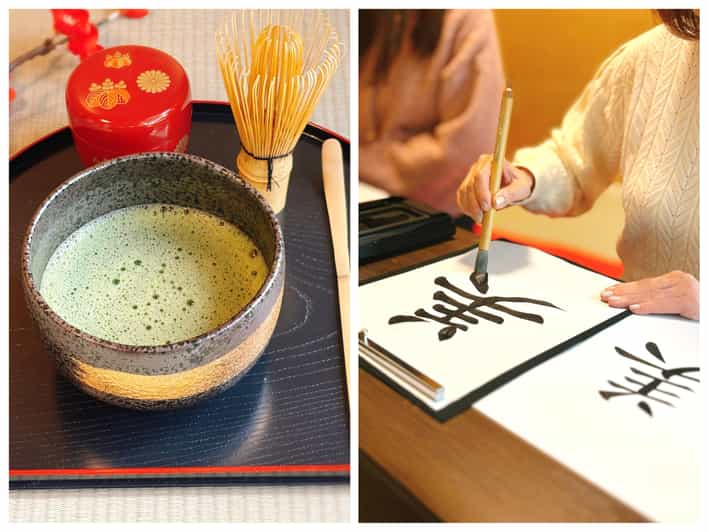
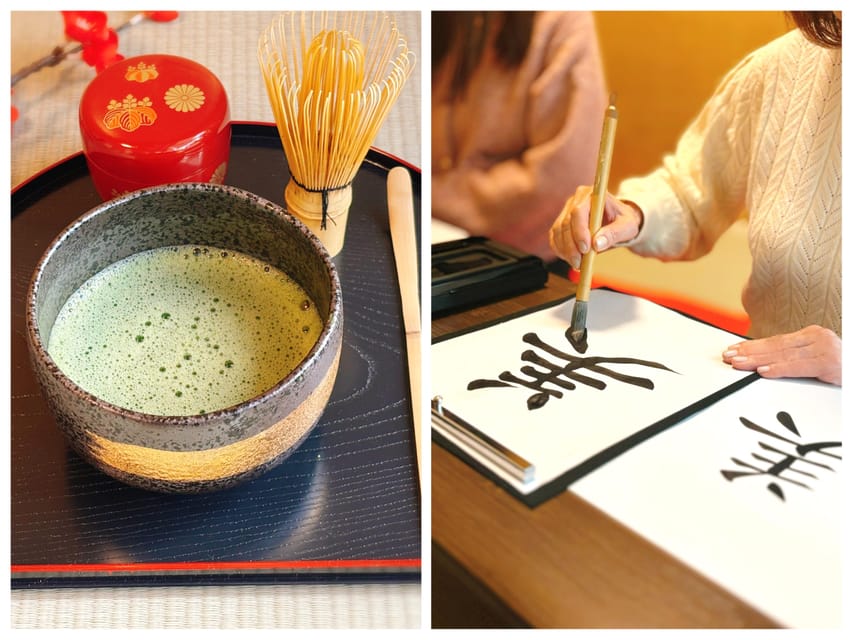
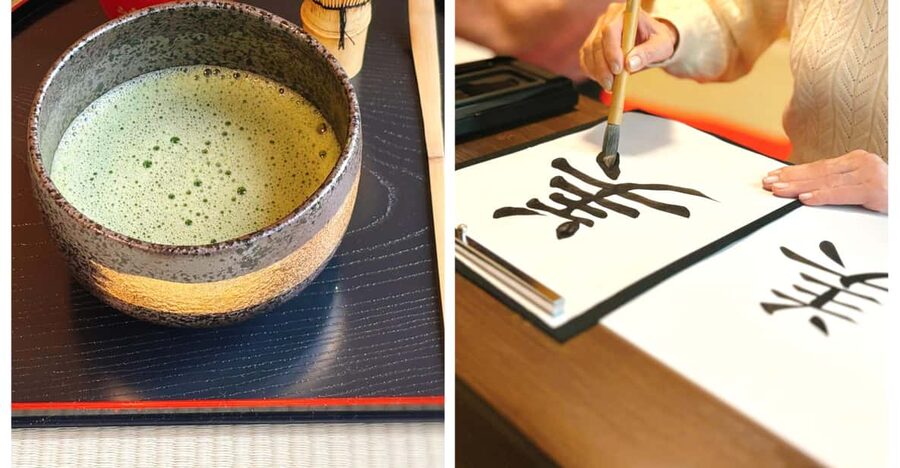
The tea portion introduces the ceremony and its customs before you make matcha yourself. Your instructor explains the steps and the significance behind them, giving the movements more meaning than a simple recipe for whisking powdered tea. You can ask about the history of tea and the role of seasonal details.
One especially appealing touch is choosing a tea bowl that fits how you feel that day. It gives you a small personal choice within a ritual shaped by careful, deliberate actions. The exact bowls on offer may vary, but the point is to notice the vessel as part of the experience, not just a container for tea.
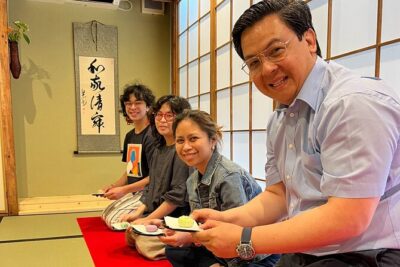
You also taste Japanese sweets during the tea ceremony, with different sweets served twice. Their seasonal connection is part of the lesson: the sweets are not only a treat alongside the matcha, but a way to notice how the time of year can shape a tea gathering. If you have never tried traditional Japanese sweets, this is a gentle introduction rather than a separate tasting.
The ceremony is a quiet contrast to Osaka’s busy shopping streets. That slower pace is one reason the activity works well in the middle of a packed sightseeing day. You get a chance to focus on a few gestures, flavors, and explanations instead of ticking off another landmark.
Make your own matcha
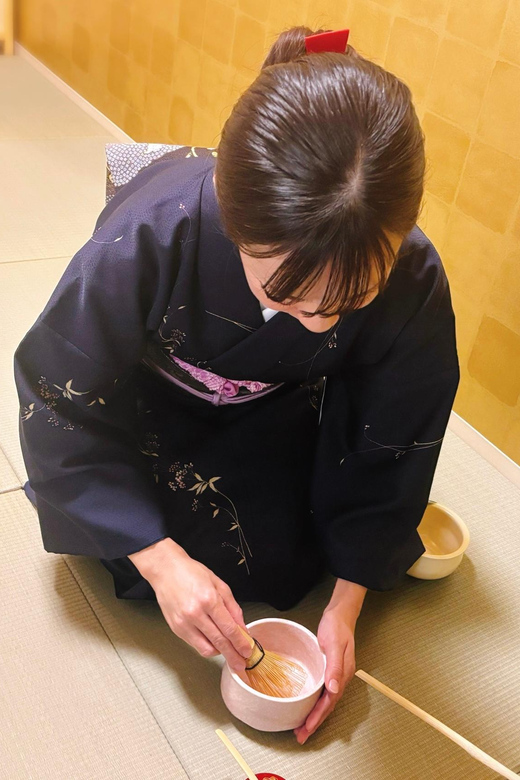
After learning the method, you get to prepare matcha yourself. That hands-on step is important: whisking the tea gives you a feel for the process and helps you remember the lesson later. You do not need experience, and the instructor walks you through what to do.
I like that the activity combines tasting with making. A tea ceremony can feel distant if you only watch someone else handle the bowl and whisk. Here, you have a go yourself, then drink the tea and enjoy the sweets as part of the same lesson.
The session is intended to be relaxing, not a test of technique. Expect to learn the basic actions and to have time to ask what each one means. If you are nervous about getting a gesture wrong, the private setting makes it easier to ask for help without feeling on display.
Turn a word or your name into calligraphy
The calligraphy lesson begins by choosing a theme, favorite letters, or a word you want to write. You can bring an idea, or ask the instructor to suggest kanji that express something about you. For names, the characters are selected to reflect personality, making the piece more personal than a standard name transcription.
Before you make the final work, the instructor explains basic brush techniques and demonstrates the strokes. You practice the chosen character, then select a piece of colored paper for your finished artwork. To complete it, you write your name in Japanese characters and stamp your initials.
This is a friendly activity for beginners, not a test of neat handwriting. The point is to learn how the strokes work and make something that carries your own choices. Some characters are more difficult than others, so you can choose a level that feels right. If you have a particular word in mind, tell the instructor at the start.
The finished artwork is a practical souvenir: light to pack, personal, and made by you. It is also a small reminder of the lesson, since the marks on the page come from a technique you practiced rather than a shop shelf. That handmade element gives the calligraphy a satisfying finish.
More craft workshops around Osaka:
- Osaka: Private Japanese Calligraphy Experience
★ 5.0 · 66 reviews - Calligraphy Workshop in Namba, Dotonbori
★ 5.0 · 57 reviews - Learning Zen of Japanese Calligraphy in kimono near Osaka Castle
★ 4.5 · 53 reviews - Osaka Daruma Workshop — Paint Your Own Good-Luck Daruma
★ 4.9 · 46 reviews
135 minutes gives both activities room
The whole experience lasts 135 minutes, roughly two hours and fifteen minutes. That is enough time for explanation, questions, practice, and the two activities without reducing them to a quick photo stop. The schedule is described as adjustable, so you can request a slower pace or allow time for photos.
The tea ceremony and calligraphy make a good pair because they ask for different kinds of attention. Tea is about following a sequence and noticing the details; calligraphy is about making a mark yourself. Together, they offer a broader introduction than either activity would alone.
This length is worth considering when planning your day. The studio is in Namba, near Shinsaibashi-suji shopping street, so you can fit the session around time in that part of Osaka. Avoid booking it too close to another timed activity if you want to enjoy the lesson without watching the clock.
Is $64 a fair price?
At $64 per person, the price includes the instructor, all fees and taxes, colored paper for the calligraphy, matcha, and Japanese sweets. The value rests less on the materials than on the private instruction and the chance to take part in two activities with individual guidance.
If you are comparing this with a short tea tasting, this session offers considerably more: an explanation of the ceremony, your own matcha-making attempt, sweets, calligraphy instruction, and a finished piece to take home. The private format is particularly useful for couples, families, or small groups who want to ask questions and move at their own pace.
The price may be less compelling if you only want to watch a tea ceremony or are looking for a brief, low-cost activity. You are paying for the time and teaching as much as for the tea. For someone curious about both tea culture and writing, the combination makes the cost easier to justify.
Finding the studio and arriving prepared
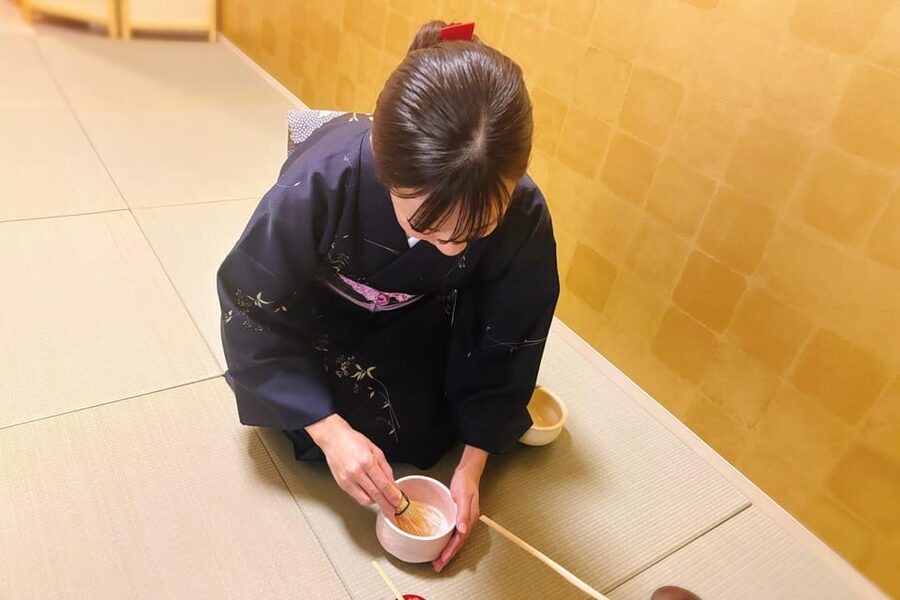
The meeting point is outside the main entrance of New Osaka Hotel Shinsaibashi. From there, continue west for about 30 seconds; look for a blue vending machine near the entrance. Your instructor waits outside the building five minutes before the scheduled time and wears a kimono, making the meeting easier to spot.
Bring socks. Smoking is not allowed during the activity, and the studio is not suitable for wheelchair users. If you have a child with you, water calligraphy is available for young children to help keep hands and clothes clean.
The experience is offered in English and Japanese. You can request time for photos or a slower pace, which is especially helpful if you are attending with children or want to spend longer on a particular part of the lesson.
Who will enjoy this most?
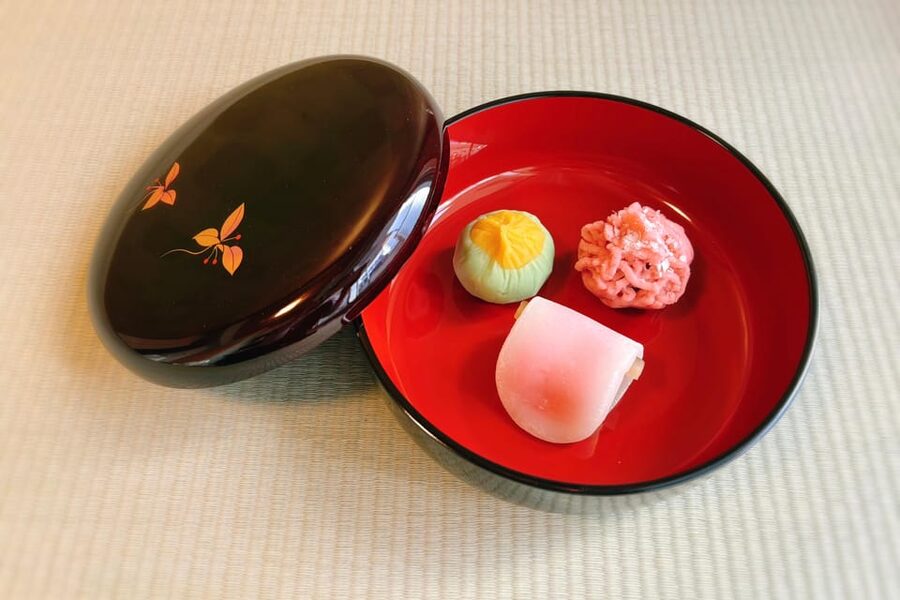
This is a good fit if you want more than a demonstration but do not need an advanced class. First-time visitors to Japan can get an accessible introduction to tea and calligraphy, while people already curious about Japanese culture can use the session to ask detailed questions and learn the meaning behind the actions.
Families can benefit from the private format and the option of water calligraphy for young children. The instructor can adapt the pace, and the mix of listening and hands-on practice gives children more to do than sitting through a long talk. Still, the session lasts more than two hours, so consider your child’s attention span.
Couples and small groups who like making things will appreciate the take-home artwork. If your main interest is tea, the calligraphy section still takes up part of the session, and the reverse is also true. This is a paired experience, not a tea-only or calligraphy-only class.
Should you book it?
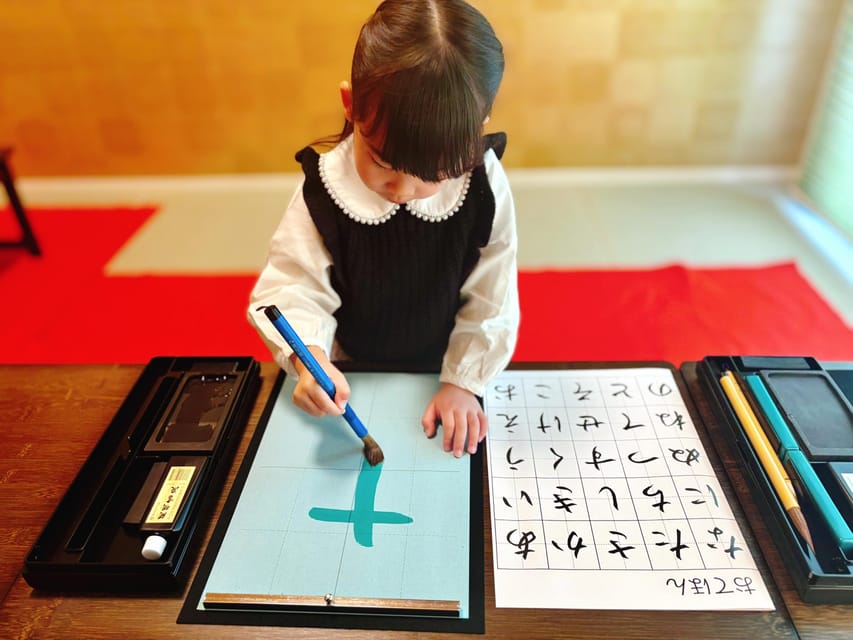
Book this if you want a calm, guided activity in central Osaka that combines learning with doing. The strongest reasons are the private attention, the chance to make your own matcha, and the personal calligraphy keepsake. At $64, it is a good-value choice for anyone who wants a thoughtful cultural experience rather than a quick demonstration.
Think twice if you need wheelchair access, have very little time, or are interested in only one of the two activities. Otherwise, the format is welcoming to beginners, flexible in pace, and well suited to a quieter stretch in a busy Osaka itinerary.
FAQ
How long does the experience last?
It lasts 135 minutes, or about two hours and fifteen minutes.
How much does it cost?
The price is $64 per person. All fees and taxes, the instructor, colored paper, matcha, and Japanese sweets are included.
Is the session private?
Yes. It is a private group experience, with the instructor attending to your group.
What languages are available?
Instruction is available in English and Japanese.
Do I need experience with tea ceremony or calligraphy?
No prior experience is required. The instructor explains the tea-making process and calligraphy basics.
Can I make matcha myself?
Yes. You learn how to prepare matcha and then make it yourself.
Where is the meeting point?
Meet outside the main entrance of New Osaka Hotel Shinsaibashi. Walk west for about 30 seconds and look for a blue vending machine nearby. The instructor waits outside five minutes before your booking time and wears a kimono.
What should I bring, and is the studio wheelchair accessible?
Bring socks. The experience is not suitable for wheelchair users.
More private tours around Osaka
- Private Osaka Walking Tour: Highlights & Hidden Gems
★ 5.0 · 569 reviews - Osaka 4hr Private Tour with Government-Licensed Guide
★ 5.0 · 359 reviews - 3/4/5 Hours Private Tour in Osaka with Local Guide
★ 5.0 · 189 reviews - Osaka 6hr Private Walking Tour with Government Licensed Guide
★ 5.0 · 174 reviews
Just added around Osaka
- Mount Koya from Osaka: Cultural Small Group Day Tour★ 5.0 · 3 reviews
- Matcha Tea Bowl Experience in Osaka★ 5.0 · 11 reviews
- Master Washoku: 5 Core Techniques for Authentic Cooking★ 4.7 · 7 reviews
- Manno: Osaka Premium Wagyu BBQ Experience Reservation★ 5.0 · 4 reviews
- Learning Shodo with a kimono and Trying Samurai Calligraphy★ 4.2 · 7 reviews
- Katsu Curry OR Bento Making Cooking Class & Local Shop Tour★ 4.9 · 11 reviews
- Himeji: Private Guide Tour of the Castle from Osaka or Kyoto★ 4.5 · 7 reviews
- Osaka and Nara Customized Private tour with English Driver★ 4.7 · 4 reviews
Osaka Tea Ceremonies, compared.
World Heritage Kyoto & Nara Uji Authentic Matcha Experience
Read our review →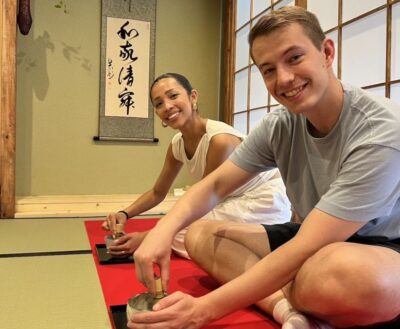
Matcha Making Class in Osaka with Authentic Japanese Sweets Set
Read our review →
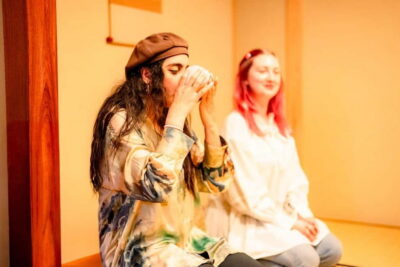
Authentic Tea Ceremony(Max 5 ppl) -Master Matcha Making
Read our review →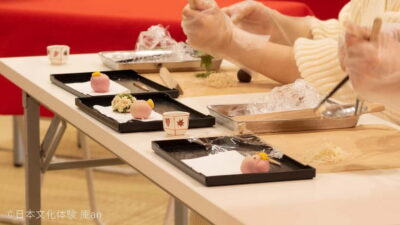
Japanese Traditional Sweets Making and Tea Ceremony
Read our review →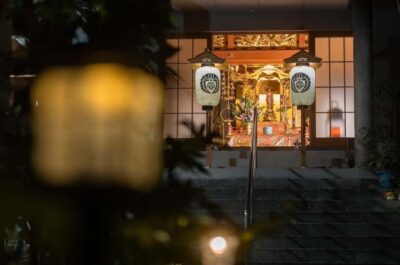
Osaka Temple Cool Foot Bath & Matcha Experience〈45min〉
Read our review →Browse the lists this tour appears in