
Reviewed · AMANOHASHIDATE DAY TRIPS
From Osaka/Kyoto: Amanohashidate Day Tour【Including tickets】
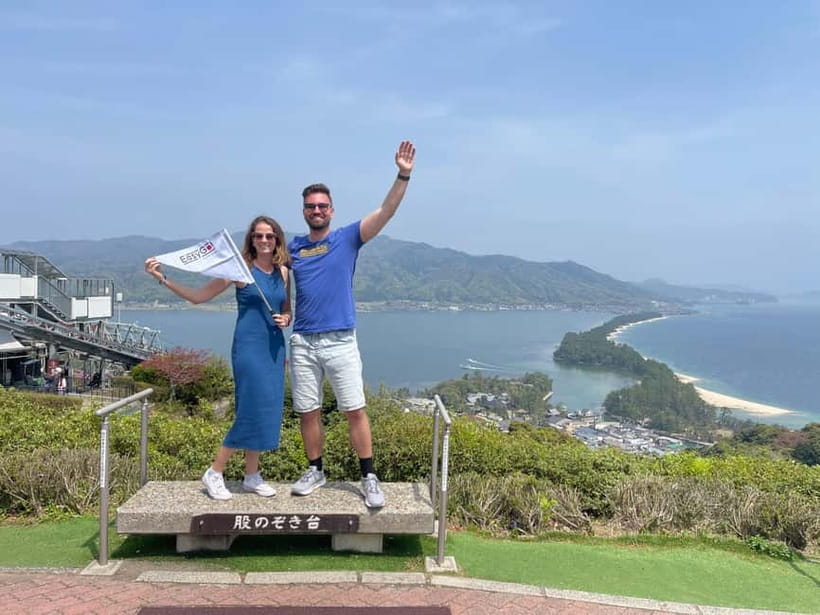
Amanohashidate’s famous sandbar is best seen from above, then upside down: bend over at the viewpoint and look between your legs to make the pine-covered strip appear to bridge sky and sea. This day trip pairs that playful view with a boat ride past Ine’s wooden homes, built right beside the water.
I like that the bus links two places that are awkward to reach by public transport, and that the chairlift and Ine cruise are included in the $58 price. I also like the contrast between Amanohashidate’s broad coastal scenery and Ine’s quieter fishing village.
The main caution is language: the tour is conducted mostly in Chinese, and English or Korean service is not guaranteed, even if requested. The long coach journey and limited time at each stop are other trade-offs to weigh.
Key points
- Try the upside-down view: At Amanohashidate Viewland, look between your legs to see the sandbar as a bridge between sky and water.
- See two very different coastal places: The tour combines a pine-lined sandbar with Ine’s working fishing village and its waterside funaya homes.
- Know what the fare covers: The $58 price includes coach transfers, the round-trip chairlift ticket, and the Ine Bay cruise.
- Plan around the language: Chinese is the main tour language. English or Korean support may be available if requested, but it is not assured.
- Expect a full day on the road: The outing lasts 11 hours, including about five and a half hours of coach travel.
- Be ready for a firm schedule: Arrive 15 minutes early, and do not count on the bus waiting if you are late.
Amanohashidate is a view worth turning upside down for
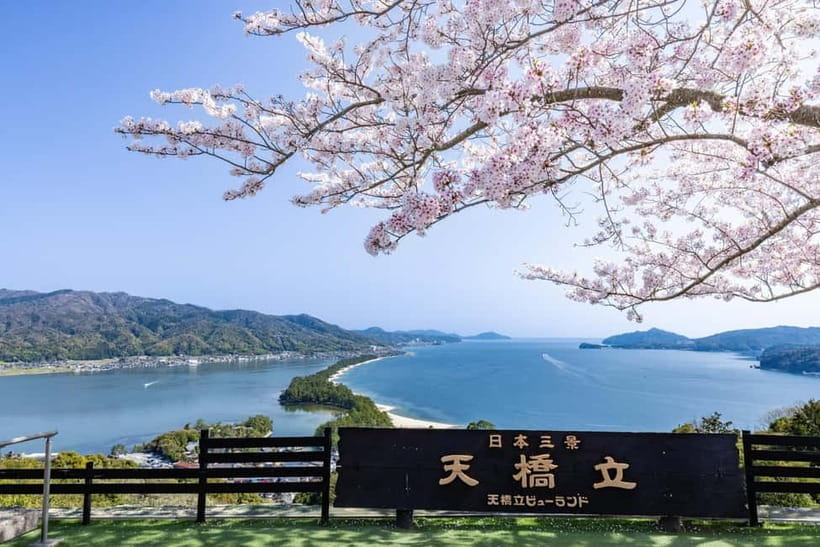
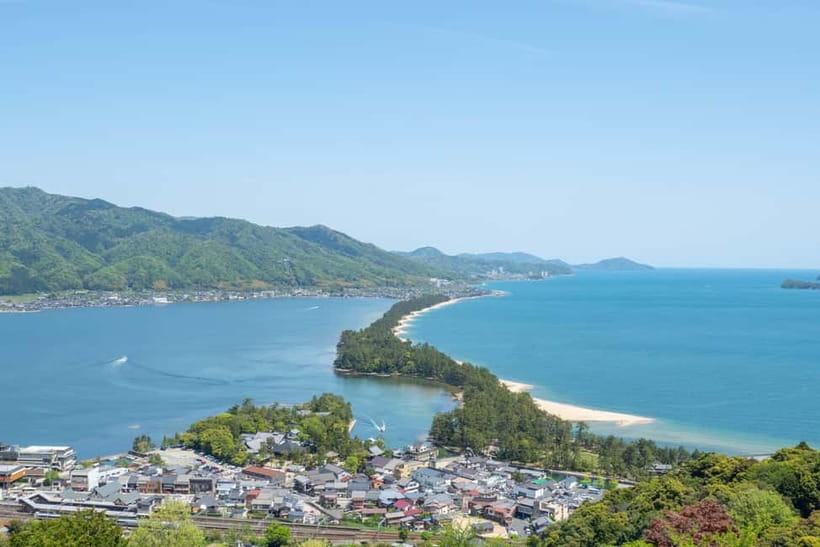
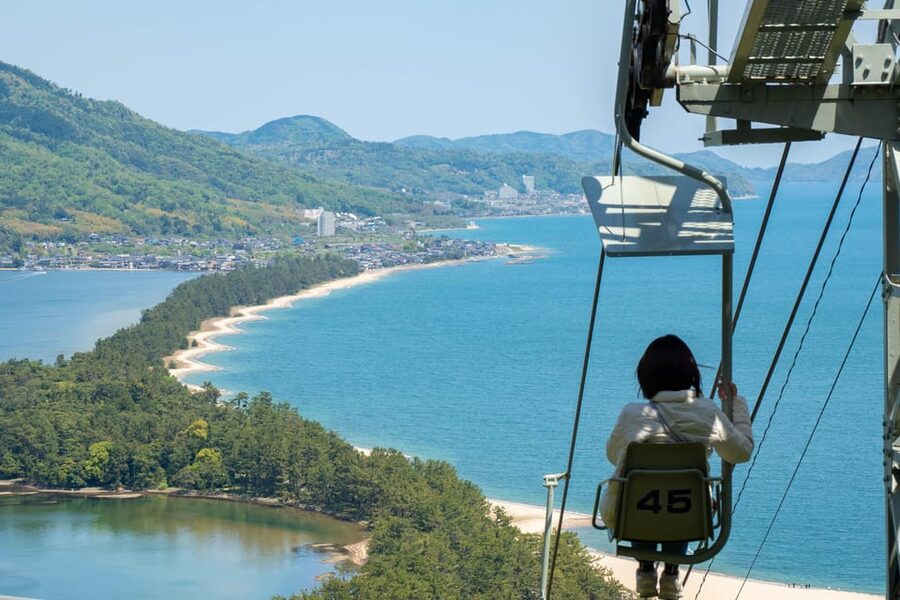
Amanohashidate is a long, narrow sandbar edged by Miyazu Bay, with more than 8,000 pine trees growing along its stretch of sand. The view from Amanohashidate Viewland is the classic way to take it in, but the local trick is more memorable: bend forward and look between your legs. From that inverted angle, the sandbar can seem to rise toward the sky, which helps explain its name, often understood as a bridge to heaven.
The pose is called stock peeping, and it is less solemn than the grand view might suggest. You may feel a little silly, but that is part of the fun. It gives you a different perspective on the shape of the sandbar and makes the viewpoint more than a quick photo stop.
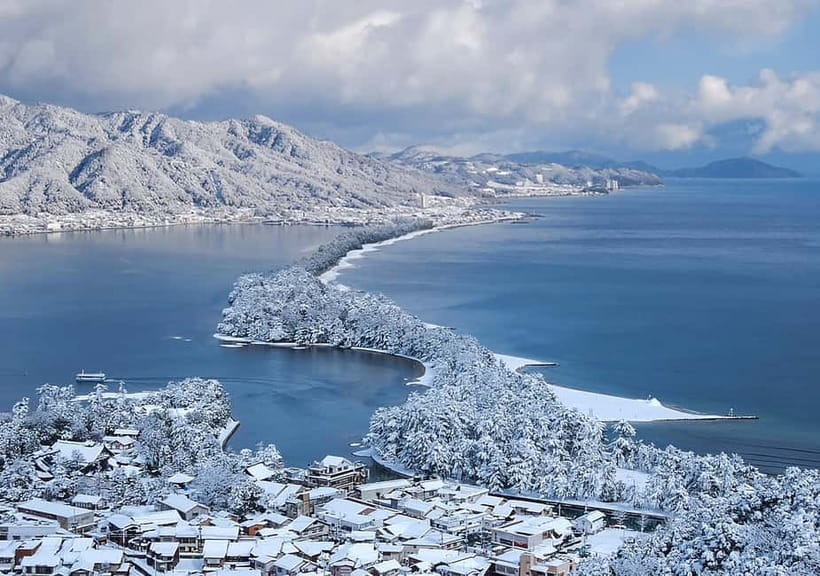
The coast changes with the seasons, so the view will not look exactly the same year-round. The pine trees, bay, and shifting light provide the main show; on a clear day, you can take your time picking out the sandbar’s long curve. If the weather is poor, the view may be less rewarding, and the tour operator may cancel in advance in severe conditions such as typhoons or snowstorms.
More Amanohashidate trips around Osaka:
- Osaka Day Tour: Amanohashidate & Ine Bay
★ 5.0 · 280 reviews - Osaka/Kyoto: Amanohashidate & Miyama Tour with Boat & Lunch
★ 4.6 · 207 reviews - Amanohashidate & Ine Funaya Sightseeing Full Day Trip from Kyoto
★ 4.5 · 62 reviews
A two-hour stop at Amanohashidate Viewland
The coach takes about two and a half hours to reach Amanohashidate from the departure area. You then have around two hours at Viewland, which includes time to get up and down and look around. A round-trip chairlift ticket is included, so you do not need to buy that separately.
The chairlift is part of the outing, not just a way to save your legs. It carries you to the elevated viewpoint where the sandbar comes into view, and the ride itself gives you a gradual change in perspective. If a child or older adult in your party cannot use the chairlift, ask the guide about the monorail alternative. It is available at no extra charge, according to the tour information.
Two hours is useful, but it is not a leisurely visit to every nearby attraction. You will need to choose what matters most: take in the view, try stock peeping, and leave enough time to meet the coach. The area also has places to relax, including hot springs and other facilities, but the schedule does not promise a long stop for them. Treat them as possibilities only if time and access allow.
There is cultural interest here as well as scenery. Chionji Temple, associated with Manjushri Bodhisattva and prayers for wisdom, is part of the wider area’s spiritual story. The tour does not specify a temple visit, so do not assume you will have time to go there. If a temple stop is important to you, check the day’s schedule with the guide before setting off on your own.
Ine’s funaya make the second stop feel different
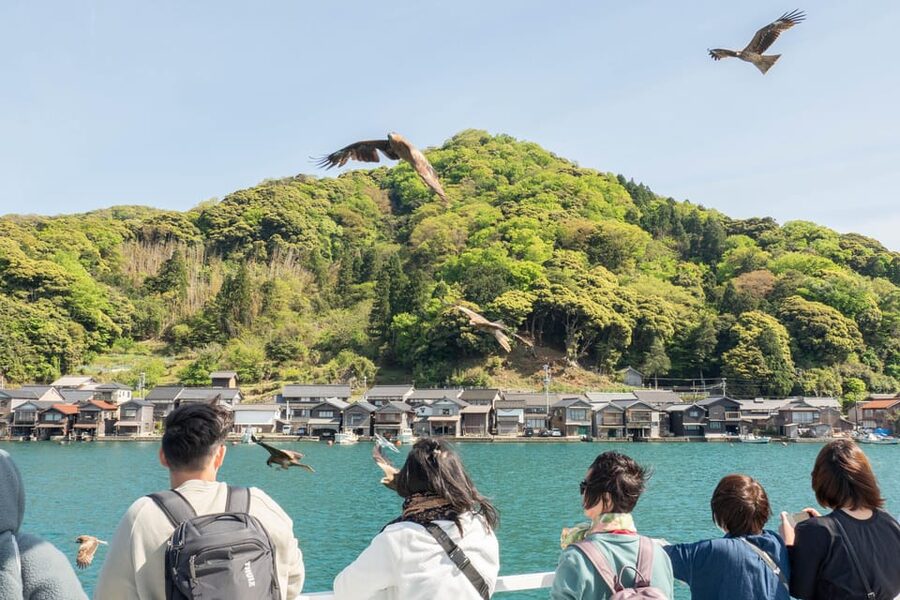
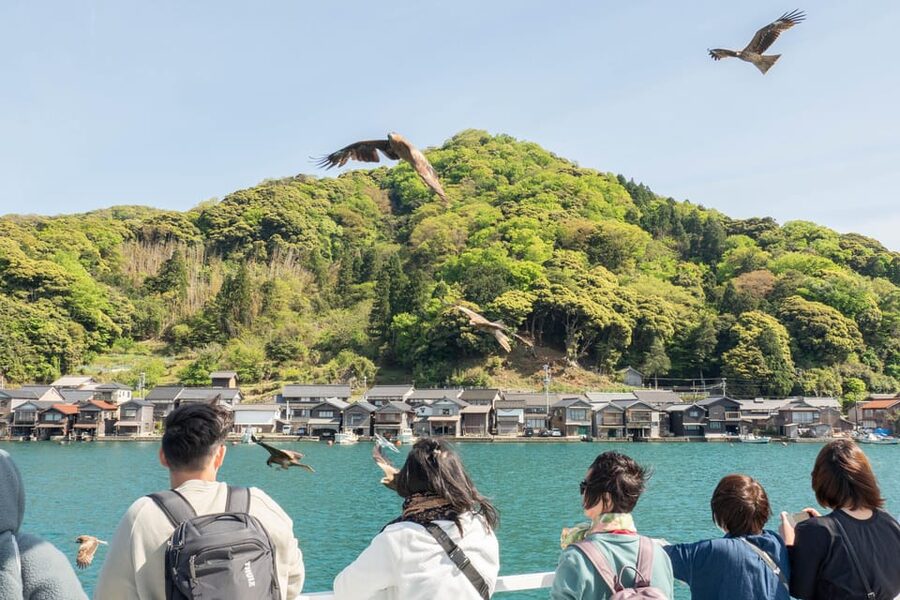
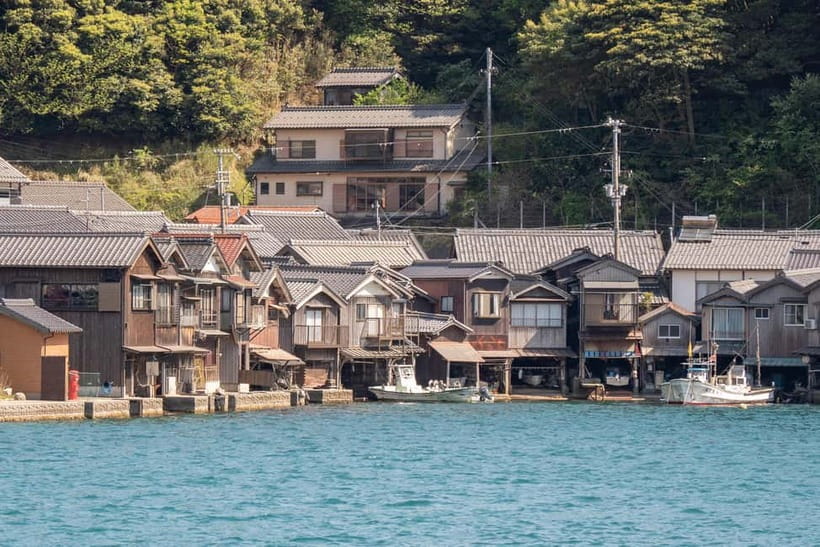
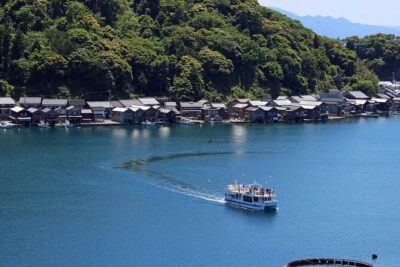
After Amanohashidate, the tour heads to Ine for a 25-minute cruise around the bay. The main attraction is the funaya, traditional wooden houses closely tied to the water. Their unusual form reflects the village’s connection to fishing and the sea, and from the boat you can appreciate how the buildings line the shore.
This is not simply another scenic stop. Amanohashidate is about taking in a wide view; Ine is about noticing how a village is arranged around its daily life. The houses are homes as well as part of a distinctive maritime building tradition. The cruise gives you a view from the bay without requiring you to find your own way between the village and the water.
Twenty-five minutes is enough for a look, not a deep visit. You will not have much time to wander, sit down for a meal, or get to know the village on foot. The village is described as a working fishing community with a quiet pace, so keep your visit respectful: these are residents’ homes, not a themed attraction.
The calm water and rows of timber buildings can make a striking picture, especially in soft morning or evening light. But the tour’s fixed schedule may not coincide with those times, and the supplied itinerary does not promise a particular hour for the cruise. Enjoy the view you get rather than booking this outing for a specific lighting effect.
The coach saves effort, but takes up much of the day
The tour lasts about 11 hours. The outbound coach ride is roughly two and a half hours, followed by the Amanohashidate visit, the Ine cruise, and a return journey of about three hours. That is a substantial amount of sitting, but it also takes care of transport between two coastal destinations that can be inconvenient to combine by public transport.
The departure and return points are either the Kani Doraku Dotonbori East area in Osaka or the sightseeing bus boarding area at Kyoto Station’s Hachijo exit. Your exact meeting place depends on the option you book, so read the confirmation closely. Arrive 15 minutes early. The bus will not wait for late arrivals, and a change to the time or boarding location can cause confusion if you have not checked the latest instructions.
Seats cannot be reserved, so you should not expect to choose a particular place in advance. Bottled water is not provided, and food is not allowed on the vehicle. Bring water for the day and plan to eat during your free time rather than on the coach. Smoking is also prohibited in the vehicle.
You may bring one piece of luggage per person, with a maximum size of 28 to 29 inches. That allowance is useful if you are connecting to another part of Japan, but the tour is still a day trip, not a luggage-storage service. Pack what you need for the outing and keep essentials easy to reach.
More Kyoto day trips around Osaka:
- Osaka/Kyoto: Hiroshima Miyajima Bus Tour & Shinkansen Ticket
★ 4.7 · 919 reviews - From Kyoto/Osaka: Kyoto Top Highlights 1-Day Guided Bus Tour
★ 4.5 · 714 reviews - Ancient Capital Tour: Kyoto and Nara Highlights from Kyoto/Osaka
★ 4.5 · 332 reviews - Kyoto and Nara Day Trip from Osaka
★ 4.0 · 175 reviews
The $58 fare covers the costly parts
At $58 per person, the price includes the bus transfers, the round-trip chairlift ticket at Viewland, and the Ine cruise. Those inclusions make the fare easier to judge: you are paying for transport between distant stops and two activities that would otherwise need to be arranged separately.
Meals, personal spending, and anything not specifically listed as included are extra. Keep a little room in your budget for food and incidentals, and do not assume that optional visits or facilities are covered. The value is strongest if you want to see both destinations in one day without planning the transport yourself.
The outing also guarantees departure for a solo participant, which is useful if you are travelling alone and do not want to depend on finding a companion. That assurance does not mean you can set the group’s pace, though. The coach schedule governs the day, so independent wandering needs to fit within the assigned stop times.
Language support deserves a careful check
The tour is mainly conducted in Chinese. English and Korean-speaking staff may be available if you request them when booking, but language support is not guaranteed and depends on the arrangements for that day. If you book expecting a full English explanation, you may be disappointed.
Some guides have made a helpful impression. Hua Hua was described as exceptionally friendly and accommodating, while Ine was credited with taking good care of the group. Those names are useful examples of the kind of personal attention you might receive, but they are not a promise that either guide will lead your departure.
There has also been a gap between language selected at booking and the language used during the tour. In one case, English information was passed on only occasionally and a short English itinerary sheet helped explain the schedule. That may be enough if you mainly want transport and free time, but it is a real limitation if you are joining for detailed commentary on local culture.
This is best approached as a guided transport day with some orientation, not as a guaranteed, in-depth English-language history tour. If narration matters to you, ask the operator to confirm what language support is actually arranged for your date before booking.
Weather and mobility can affect the day
Amanohashidate’s appeal depends heavily on the view, so weather matters. If severe conditions such as a typhoon or snowstorm are expected, the operator decides whether to cancel one day before departure, by noon local time, and sends notice by email. Keep an eye on your inbox if the forecast is poor.
The tour is listed as wheelchair accessible, but the information does not spell out the details of access at every stop or on the boat. If you use a wheelchair, contact the operator before booking to confirm the specific arrangements that matter to you. For someone who cannot ride the chairlift, the guide can arrange the monorail at no extra charge.
The day’s rhythm is straightforward but strict: meet on time, follow the coach schedule, and return to the bus promptly at each stop. That structure is a fair trade for covering two places in one day, but it leaves little room to linger. If you prefer slow visits and spontaneous detours, consider travelling independently instead.
Should you book this Amanohashidate and Ine tour?
Book this trip if you want the iconic view of Amanohashidate, are curious about the upside-down viewing custom, and would like to see Ine’s waterside funaya without piecing together a long public-transport route. The included chairlift and cruise add practical value, and the guaranteed departure for solo participants is a welcome detail.
Think twice if you need a tour conducted reliably in English, want long stretches of free time, or dislike several hours on a coach. For the best fit, confirm your meeting point and language arrangements before paying, pack water, and arrive early. If those conditions suit you, this is a practical way to see two distinctive corners of the coast in one full day.
FAQ
How long is the tour?
The tour lasts about 11 hours. The coach journey takes roughly two and a half hours going out and three hours returning.
Where can I board the bus?
The two listed starting points are Kani Doraku Dotonbori East in Osaka and the sightseeing bus boarding area at Kyoto Station’s Hachijo exit. Your meeting point depends on the option booked.
What is included in the $58 price?
The fare includes coach transfers, a round-trip chairlift ticket for Amanohashidate Viewland, and the Ine Bay cruise. Meals, personal expenses, and other items not listed as included are extra.
What language is the tour conducted in?
The tour is mainly in Chinese. English and Korean-speaking staff may be available if requested at booking, but that service is not guaranteed.
Can children or older adults avoid the chairlift?
Yes. If a child or older adult cannot ride the chairlift, ask the guide to arrange the monorail. The alternative is listed as having no additional charge.
Can I cancel for a refund?
You can cancel up to 24 hours in advance for a full refund. Reserve-now, pay-later booking is also offered.
Just added around Osaka
- Mount Koya from Osaka: Cultural Small Group Day Tour★ 5.0 · 3 reviews
- Matcha Tea Bowl Experience in Osaka★ 5.0 · 11 reviews
- Master Washoku: 5 Core Techniques for Authentic Cooking★ 4.7 · 7 reviews
- Manno: Osaka Premium Wagyu BBQ Experience Reservation★ 5.0 · 4 reviews
- Learning Shodo with a kimono and Trying Samurai Calligraphy★ 4.2 · 7 reviews
- Katsu Curry OR Bento Making Cooking Class & Local Shop Tour★ 4.9 · 11 reviews
- Himeji: Private Guide Tour of the Castle from Osaka or Kyoto★ 4.5 · 7 reviews
- Osaka and Nara Customized Private tour with English Driver★ 4.7 · 4 reviews
Amanohashidate Day Trips, compared.
Amanohashidate & Ine Funaya Sightseeing Full Day Trip from Kyoto
Read our review →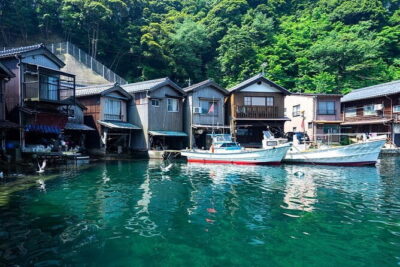
Amanohashidate & Ine Boathouse Full-Day Tour from Kyoto or Osaka
Read our review →
Amanohashidate & Ine Funaya Kyoto coast day trip from Osaka/Kyoto
Read our review →Browse the lists this tour appears in