
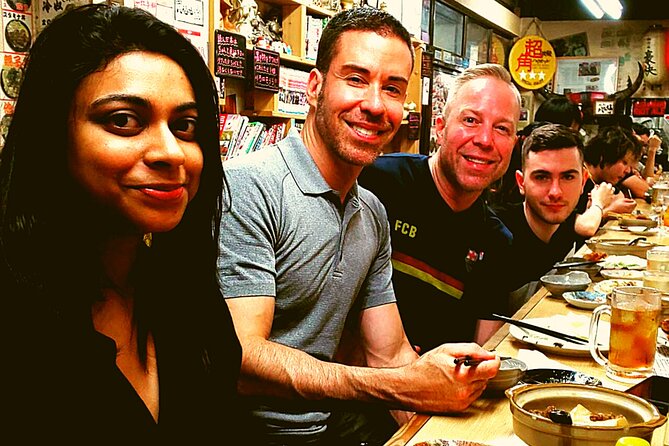
Reviewed · OSAKA TOURS
Deep Backstreet Osaka Tours (Option to add Dinner)
Osaka’s backstreets tell a different story from the neon signs and famous food halls. This evening walk visits old alleys, an unusual cluster of abandoned houses, a historic red-light district, and a neighborhood with a painful past, while your guide explains the social forces behind what you see.
I like the mix of street food and candid local history, and the chance to see small neighborhoods that are hard to interpret on your own. One consideration: this is a roughly three-hour walk through subjects that can be sensitive, including homelessness, sex work, class, and organized crime. Come curious and respectful, not expecting a light sightseeing stroll.
- Two family-run food stalls offer a taste of local street food during the walk.
- Retro shops and narrow lanes bring you into parts of Osaka many standard tours skip.
- A historic red-light district and former ghetto area give context to the city’s less comfortable social history.
- An optional izakaya dinner adds Osaka dishes such as tonpeiyaki, karaage, nikudofu, and yakitori.
- Groups are capped at 15, which leaves room to ask questions and hear the guide.
- The tour begins at 5:30 pm near Daikokucho Station and returns to the starting point.
Osaka after dark, beyond the neon
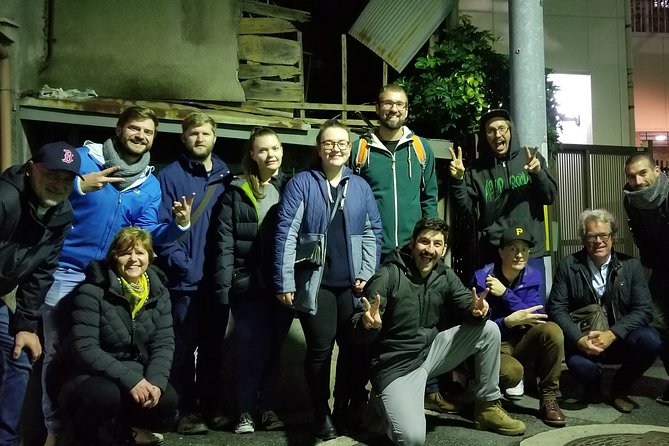
This tour takes a thoughtful route through Osaka’s less polished corners. Rather than focusing on the landmark checklist, it uses backstreets and local districts to talk about the forces shaping daily life: social class, religion, poverty, sex work, and the city’s changing neighborhoods.
The subject matter is frank, but the walk is not presented as a scare tour. The most useful guides make difficult topics understandable without turning residents into curiosities. Names mentioned by people who have taken the walk include Mari, Knox, Bennett, Joseph, Mark, and Rudy and Alex. Guides vary, so you cannot count on a particular person, but the role matters: this tour depends on a guide who can explain context with care and answer questions thoughtfully.
I’d choose it if you have already seen some of Osaka’s headline sights and want a more layered sense of the city. It can also work early in a visit, since the guide’s local recommendations may help you plan later evenings. Just go in ready to listen. Some of the subjects are uncomfortable, and that is part of the point.
Starting near Daikokucho Station
The meeting point is the FamilyMart MYS Daikokucho Station, at 2-chōme-5-16 Shikitsuhigashi, Naniwa Ward. The tour starts at 5:30 pm and ends back where it began, a practical detail if you are arranging dinner or onward travel. The meeting point is near public transportation.
An evening start suits the districts and food stalls on the route, and it means you can pair the walk with a daytime visit elsewhere in Osaka. The tour lasts about three hours, though some people describe it as a little longer. Plan for a good stretch of walking, with breaks along the way. Comfortable shoes are a sensible choice, and you may want a light layer depending on the weather.
The group has a maximum of 15 people. That is small enough to make questions easier than they would be on a large bus tour, while still giving the walk a sociable feel. Solo visitors may enjoy meeting people along the way, but the main value is having a guide to help make sense of places you might otherwise pass without noticing.
More evening meals around Osaka:
- Osaka: Deep Backstreets Walking Tour with Dinner Option
★ 4.9 · 902 reviews - Osaka Umeda: PICCADILLY DINNER SHOW & NIGHTCLUB with Tasting
★ 4.8 · 49 reviews - Osaka: PICCADILLY PREMIUM DINNER SHOW&NIGHTCLUB with Tasting
★ 5.0 · 26 reviews
Retro shops, alleys, and a different Osaka
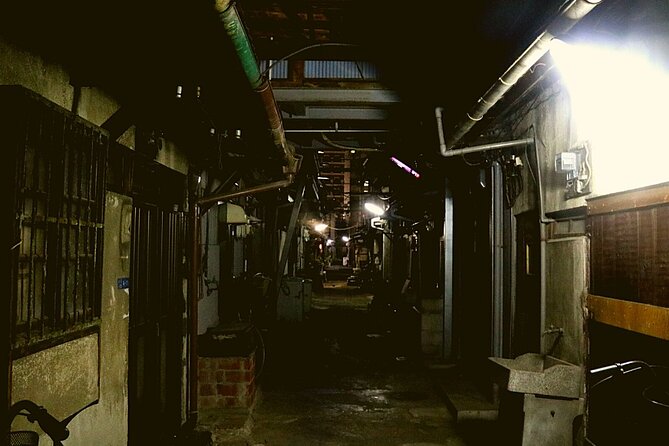
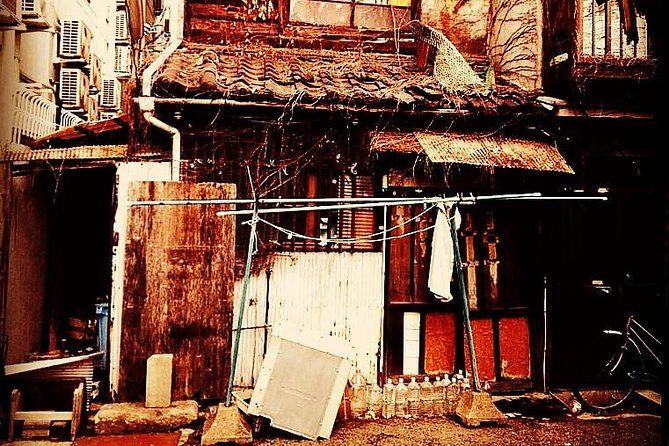
Early in the walk, the route heads through Osaka’s retro zone, where the shops and street scenes can feel deliberately odd or outlandish. These are not polished attractions designed for sightseeing; the appeal is seeing a less familiar side of the city and hearing why it developed as it did.
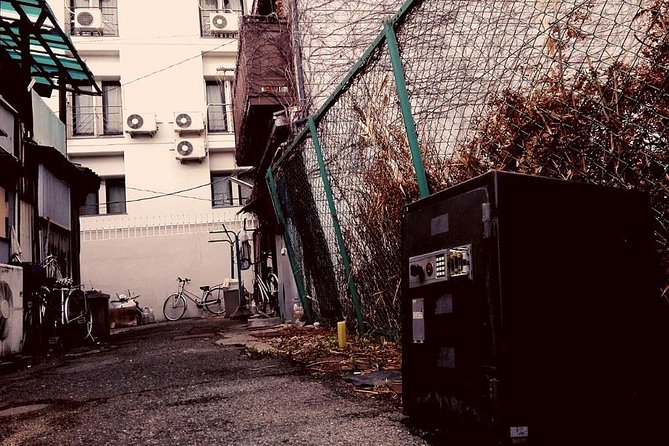
The old lanes are another highlight. Their narrow, twisting layout gives the walk a more intimate scale than the broad commercial streets most visitors use. A guide can point out details and connections that are easy to miss when you are navigating on your own. I like that this part of the tour lets you read the neighborhood at walking pace rather than through a window.
The route also passes an area of abandoned houses. The sight is striking, but the guide’s explanation is what makes it meaningful. One guide described how family name and social standing can affect whether a home stays in a family or is taken on by later generations. That kind of context turns a row of empty buildings into a window on local pressures, rather than just a photo stop.
There may be moments when the group pauses outdoors to talk. One person found a stop in a mosquito-heavy park and a nearby parking area uncomfortable, so insect repellent may be useful in warmer months. It is a small practical point, but worth remembering for an evening walk through green or still areas.
Worship, history, and the districts tourists miss
The tour includes a stop at an important place of worship that is little known to most visitors. The walk also touches on a temple and shrine, with explanations of what they mean in present-day life. These visits offer a useful counterweight to the tour’s grittier subjects: Osaka’s identity is not only about its social problems, but also about the traditions and institutions woven into everyday neighborhoods.
You may also see construction and hear how such projects are funded. This kind of detail can seem modest beside stories of gangs or social exclusion, but it helps connect the past to the present. The route is most effective when the guide links visible places to wider changes in the city rather than treating each stop as an isolated oddity.
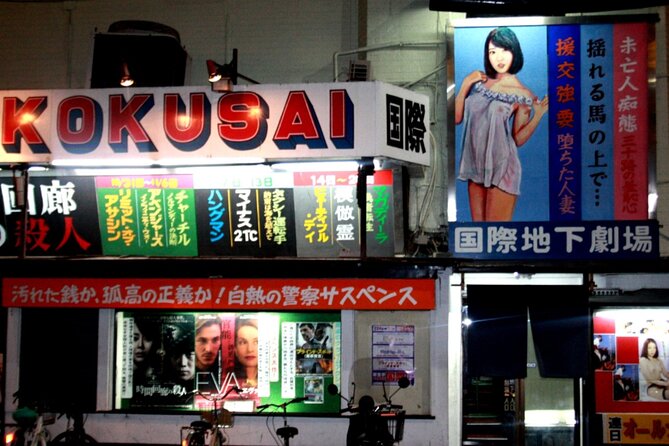
A historic red-light district is one of the tour’s more unusual and sensitive stops. The guide discusses the district’s past and its links to the yakuza, as well as the realities of sex work. This is not a place to gawk or treat residents as part of a show. Go with an open mind, keep your camera use discreet, and let the guide set the tone.
The walk also enters an area with a controversial history as a former ghetto. People have found this part especially revealing because it raises questions about exclusion and the social divisions that are not always visible to visitors. It can be a sobering section. A good guide will give you background without reducing a complex community to a label.
Homelessness, mental health, class, politics, and organized crime may come up in the discussion. These topics are not side notes; they are part of the tour’s purpose. If you want only cheerful food stops and photogenic lanes, this is not the right fit. If you want a clearer sense of the contradictions behind a city’s public image, the candid approach is the main reason to go.
Street food, with an optional izakaya meal
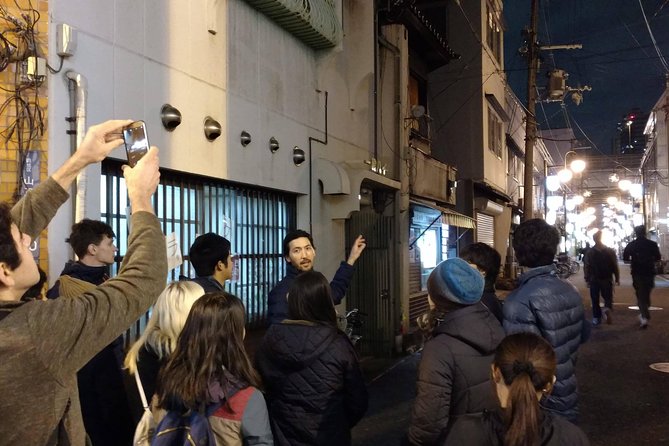
Food breaks make the walking route feel grounded in daily life. You stop at two street-run, family stalls for tastings, getting a chance to try local food without needing to choose from an unfamiliar menu on your own. The exact snacks are not specified, so treat the tastings as a welcome introduction rather than a promised dish-by-dish meal.
The optional dinner adds a traditional izakaya, a casual Japanese pub-style restaurant that the tour describes as difficult to find without local help. The listed dishes include tonpeiyaki, karaage, nikudofu, and yakitori, followed by desserts. One person who chose the dinner also praised the motsunabe and yakitori, though the exact dinner selection may vary.
The meal is described as Osaka soul food and vegetarian-friendly. Since the named dishes include meat and the menu details are not fixed here, tell the operator about dietary needs before booking rather than assuming every dish can be adapted. Alcoholic drinks are not included, but are described as reasonably priced. The dinner option is a useful upgrade if you want a full evening plan; if you would rather choose your own restaurant, the street tastings still give the walk a food component.
At $53.06 per person, the price is best judged against the guide’s access and interpretation, not just the number of stops. You are paying for a three-hour small-group walk, local history, two food tastings, and the chance to find neighborhoods that are difficult to understand without someone familiar with them. Dinner is an option, so check the selected booking price before you decide; the listed base price should not be treated as proof that the restaurant meal is included.
More dining experiences around Osaka:
- Eat Our Favorites! Osaka’s Backstreet Dining
★ 4.9 · 19 reviews
What the walk does especially well
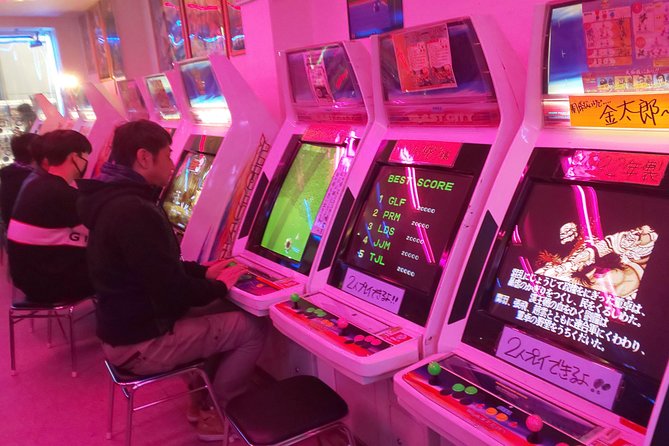
The strongest element is the guide’s ability to make unfamiliar and sometimes difficult subjects approachable. People have singled out guides such as Mari, Knox, Bennett, Joseph, Mark, and Rudy and Alex for their humor, patience, and ability to explain Osaka’s less discussed history. No specific guide is guaranteed, but the repeated praise for engaging storytelling points to the tour’s central strength.
I also like that the experience is not limited to talking. You walk through the neighborhoods, see the lanes and buildings for yourself, visit a place of worship, and eat at local stalls. That combination gives the stories a physical setting. You are not simply hearing that parts of Osaka are overlooked; you are standing in them.
The pace seems manageable for most people, though it involves several hours on foot. Breaks help, and the group is limited to 15, but this is still a walking tour rather than a seated talk. The activity information says most people can participate, but it does not give detailed accessibility information. If mobility is a concern, contact the operator before booking to ask about the route.
Is the dinner upgrade worth it?
Choose dinner if you want an easy, guided finish to the evening and are keen to try several Osaka dishes in a local setting. The main advantage is not simply having food provided; it is being taken to an izakaya you might not find by chance, with someone who can help you make sense of the meal.
Skip it if you prefer to choose your own restaurant, have dietary requirements that need firm confirmation, or want to keep the evening shorter. Drinks are extra, and the dinner option may change the total cost. The food tastings during the walk are included, so you will still get a taste of local fare without upgrading.
Who should book this walk
I recommend this for curious visitors who want more than Osaka’s familiar tourist districts. It suits people interested in social history, urban life, and the subjects that guidebooks often treat briefly. It can also be a strong choice for solo visitors who enjoy meeting a small group and asking a local guide questions.
It is less suitable if you want a gentle stroll centered on architecture, shopping, or bright nightlife. The route includes neighborhoods affected by stigma and poverty, and the discussion can be direct. Treat the area and its residents with respect, and you will get more from the experience than if you come looking for a dramatic spectacle.
The tour has a 4.9 rating and is recommended by 97 percent of those who rated it. It is also described as an award-winning walking tour, with a top Japan ranking in 2019 and 2020. Those figures are encouraging, but the decision should rest on the content: this is an unusually candid, food-accompanied look at Osaka’s overlooked districts.
You can cancel for a full refund up to 24 hours before the start time. The tour requires good weather; if poor weather forces cancellation, you are offered another date or a full refund. The ticket is mobile, and booking confirmation is provided at the time of booking.
Should you book it?
Book it if you want to see Osaka beyond the neon and learn how history, class, religion, and social exclusion shape its neighborhoods. The food stops add pleasure, but the guide’s explanations are the real value. If you prefer a light, conventional sightseeing route, choose another walk. For an honest look at a side of Osaka you are unlikely to find alone, this is a worthwhile evening.
FAQ
How long is the tour?
It lasts approximately three hours. Some walks may run a little longer, and there are breaks along the way.
What time does the tour start?
The start time is 5:30 pm.
Where does the tour meet?
Meet at FamilyMart MYS Daikokucho Station, at 2-chōme-5-16 Shikitsuhigashi, Naniwa Ward, Osaka.
Where does the tour end?
The activity ends back at the meeting point.
How many people can join?
The maximum group size is 15 people.
Is food included?
The tour includes a tasting at a food stall, with stops at two family-run stalls described as part of the walk. A restaurant dinner is an optional upgrade.
What food is served with the dinner option?
The dinner may include tonpeiyaki, karaage, nikudofu, yakitori, and dessert. Motsunabe has also been enjoyed on a tour, but the exact menu is not specified.
Are drinks included with dinner?
Alcoholic beverages are not included. Drinks at the restaurant are described as reasonably priced.
Can I cancel for a refund?
You can cancel for a full refund at least 24 hours before the tour’s start time. If poor weather cancels the tour, you are offered a different date or a full refund.
Just added around Osaka
- Mount Koya from Osaka: Cultural Small Group Day Tour★ 5.0 · 3 reviews
- Matcha Tea Bowl Experience in Osaka★ 5.0 · 11 reviews
- Master Washoku: 5 Core Techniques for Authentic Cooking★ 4.7 · 7 reviews
- Manno: Osaka Premium Wagyu BBQ Experience Reservation★ 5.0 · 4 reviews
- Learning Shodo with a kimono and Trying Samurai Calligraphy★ 4.2 · 7 reviews
- Katsu Curry OR Bento Making Cooking Class & Local Shop Tour★ 4.9 · 11 reviews
- Himeji: Private Guide Tour of the Castle from Osaka or Kyoto★ 4.5 · 7 reviews
- Osaka and Nara Customized Private tour with English Driver★ 4.7 · 4 reviews
Osaka Tours, compared.


Shinsekai Food Tour with 13-15 Dishes at 5 Eateries
Read our review →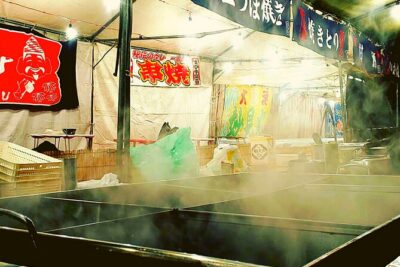
Osaka Food Tour: 13 Dishes at 5 Local Eateries
Read our review →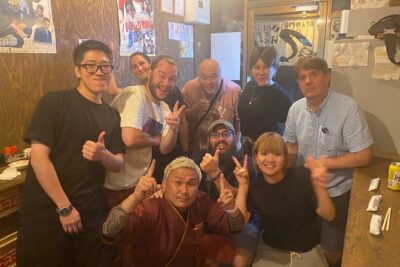
Hungry Osaka Street Food Tour:15 Tastings & 3 Drinks with a Local
Read our review →

Browse the lists this tour appears in