
Reviewed · KOYASAN TOURS
Koyasan: Half-Day Guided Tour of Okuno-in & Key Temples
At Okuno-in, moss-covered tombstones sit beneath enormous cedar trees, along the path to the tomb of a monk said to have continued meditating for a thousand years. It’s a striking start to a tour through Koyasan, a mountain center of Japanese Buddhism where sacred sites are part of everyday life.
I like two things here: a guide connects the three major sites, so their religious roles make sense together, and admission to Okuno-in, Kongobuji and Danjo Garan is included in the $128 price. Guide Megumi is one name associated with the tour; her attentive, flexible approach is a good fit for curious visitors with questions.
The trade-off is that four hours goes quickly, and you’ll walk over uneven ground. The 40-minute lunch break is not a meal included in the price, so bring water and a snack, and plan to pay separately for anything you buy.
Key points
- Okuno-in sets the tone: Walk among cedar trees and moss-covered tombstones in Koyasan’s inner sanctuary.
- Three major sites in one route: The tour also visits Kongobuji Temple and the Danjo Garan precinct.
- A private guide adds context: Tours are offered in English or Japanese, with time to ask questions.
- Lunch is a pause, not a package: The schedule allows 40 minutes for lunch, but food and drinks cost extra.
- Expect a lot of walking: Comfortable shoes matter on uneven paths and temple grounds.
- The tour is built around the sacred sites: It starts at Naka-no-hashi bus stop and finishes at Danjo Garan.
Why Koyasan makes sense with a guide
Koyasan is more than a cluster of historic buildings. It is a sacred mountain center of Japanese Buddhism, and its most important places serve different purposes. Okuno-in is a sanctuary and burial ground, Kongobuji administers Koya Mountain, and Danjo Garan is a center of ascetic practice.
That variety is what makes a guided visit useful. Without explanation, a temple hall, a pagoda and a long avenue of tombs can be impressive but hard to connect. A guide can explain how each place fits into Koyasan’s religious life, and answer the questions that come up as you walk.
This is a private-group tour, not a large group following a flag from one stop to the next. The format can make it easier to ask questions or linger briefly over something that catches your eye. One guide named for the experience is Megumi, whose attentive and flexible manner is especially suited to visitors who like asking questions or taking their time with photographs.
You should still keep your expectations practical. The tour covers three major sites in four hours, with a lunch break and a short bus ride between stops. It offers a strong introduction, not an unhurried study of every temple and corner of Koyasan.
Finding the guide at Naka-no-hashi
The meeting point is the public restroom in front of the Naka-no-hashi bus stop. Look for a guide holding a yellow sign with the DeepExperience logo. The tour begins here and ends at Danjo Garan, so don’t expect a return to the starting point as part of the itinerary.
Arrive ready to walk. Comfortable shoes are important because the route includes uneven surfaces, and the mountain can be cooler than the city. Bring warm clothing suitable for the forecast, plus water and a snack. There are limited places to buy food, and the tour’s lunch stop is only 40 minutes.
A camera is useful, but be thoughtful about where and how you use it. Flash photography is not allowed, and the guide may give instructions about photography or behavior in temple spaces. Koyasan is a sacred place, not just a collection of scenic backdrops; following local guidance is part of visiting well.
The tour is offered in English and Japanese. If you have a question about a particular site or aspect of Buddhist practice, this is a good setting to ask while you are there, rather than trying to piece together the context afterward.
More temple and shrine visits around Osaka:
- Osaka: Minoh, Katsuoji Temple, & Minoh Falls Full-day Tour
★ 4.9 · 172 reviews - Osaka Temple Cool Foot Bath & Matcha Experience〈45min〉
★ 4.9 · 82 reviews - Osaka: Mind & Spirit Balance Temple Reiki Healing
★ 5.0 · 41 reviews
Okuno-in: cedars, tombs and a sacred presence
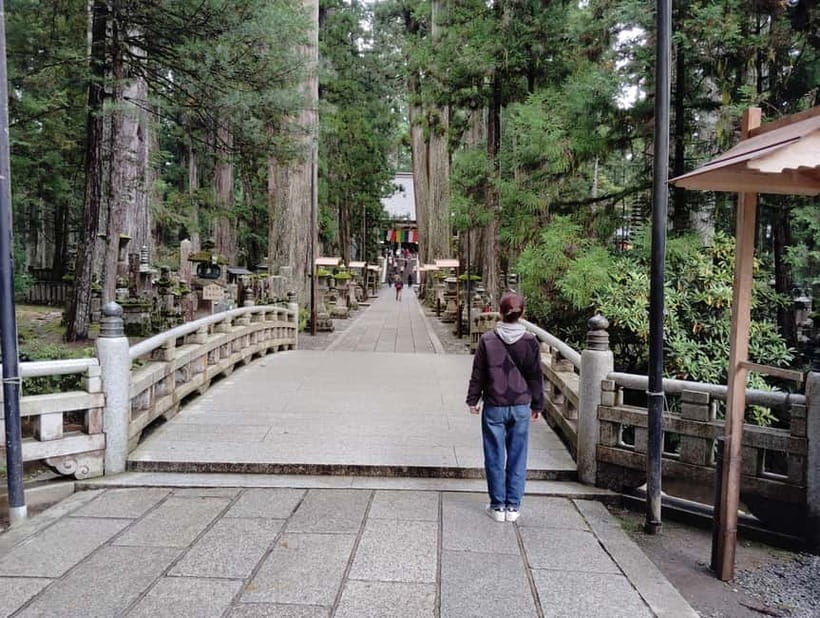
The first major visit is Okuno-in, Koyasan’s inner sanctuary. The guided portion lasts about 75 minutes, giving you time to take in the atmosphere and hear about the site as you walk through it.
The path is lined with huge cedar trees and moss-covered headstones. The tombs belong to people who wished to be buried near the famous monk whose tomb is here. According to local belief, the monk continues his meditation even today. That belief gives the sanctuary its particular feel: this is not simply a place recalling the past, but a site where devotion remains active.
The scale of the cedars and the quiet setting make this the most atmospheric part of the route. Look closely at the headstones as you go, but leave room to listen and observe. A guide’s explanation helps you understand why people chose this place for burial and what the sanctuary means within Koyasan.
The main consideration is the amount of walking. You’ll be on foot for much of this visit, and the ground is uneven. If you have mobility difficulties, the tour is not suitable, and wheelchair users should choose another way to visit.
A short bus ride and a practical lunch pause
After Okuno-in, the schedule includes a 10-minute bus or coach ride toward Mount Koya. It is a brief transfer, not a sightseeing excursion, but it helps connect the sites within the half-day route.
Next comes a 40-minute lunch break. Meals and beverages are not included, and the exact place to eat is not specified. With limited places to buy food in the area, it’s sensible to bring a snack and water rather than rely on finding a convenient meal at the last minute.
Forty minutes is enough for a straightforward pause, but it is not a long sit-down lunch. If you prefer a full meal, you may want to eat before the tour or plan another meal after it. The tour’s compact schedule is its strength: you can see three major sites without giving up a whole day. The compromise is that meal time and independent wandering are limited.
Use the break to rest your feet and check the weather before the next temple visits. Conditions on the mountain can be cooler than in the city, so an extra layer may be welcome even if the day began comfortably.
Kongobuji Temple: the administrative heart of Koya
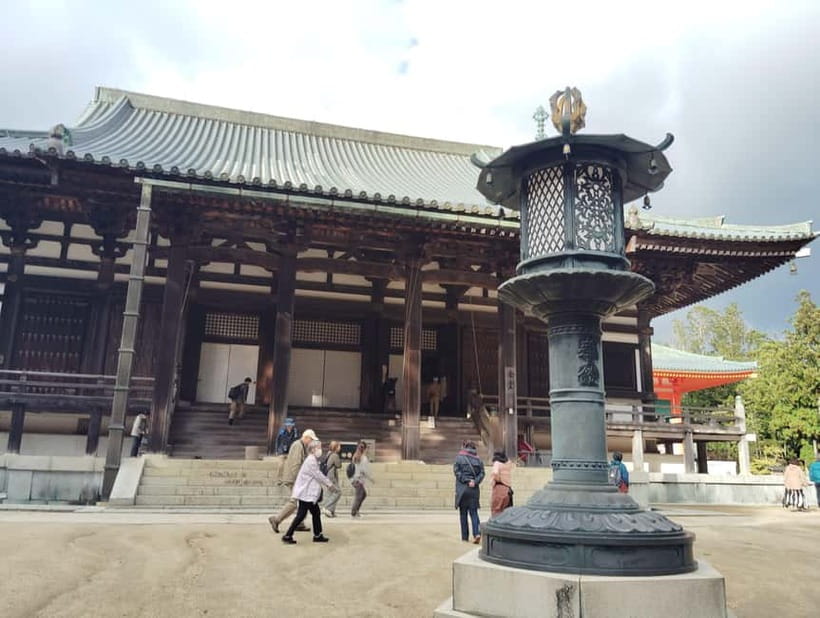
Kongobuji Temple is the central temple that administers the affairs of sacred Koya Mountain. The guided visit lasts about an hour, a useful block of time for seeing its architecture and hearing about its place in the community.
The temple’s rooms offer a different mood from Okuno-in. Here, the focus shifts from the quiet of a forest sanctuary to the architecture and interiors of a major religious institution. Monks once lived in the temple, and its lavish interior was used to entertain nobles visiting Koyasan. That contrast helps show the range of life on the mountain: spiritual practice, administration and formal hospitality all meet here.
Pay attention to the details your guide points out. The rooms are more than ornate spaces to pass through; their design and use tell you something about the temple’s standing and the people who came here. A guide can also help you distinguish what you are seeing from the many other temple features that might otherwise blur together.
Admission to Kongobuji is included in the tour price. Photography rules can vary by setting, so follow your guide’s instructions and remember that flash photography is not allowed.
More Koyasan trips around Osaka:
- Koyasan: A Mysterious Meditation Journey
★ 3.8 · 5 reviews - Mount Koya from Osaka: Cultural Small Group Day Tour
★ 5.0 · 3 reviews - Koyasan Full-Day Private Tour
★ 5.0 · 27 reviews - Koyasan: Must-See Okuno-in Cemetery 2-Hour Guided Tour
★ 4.5 · 7 reviews
Danjo Garan: pagoda and place of practice
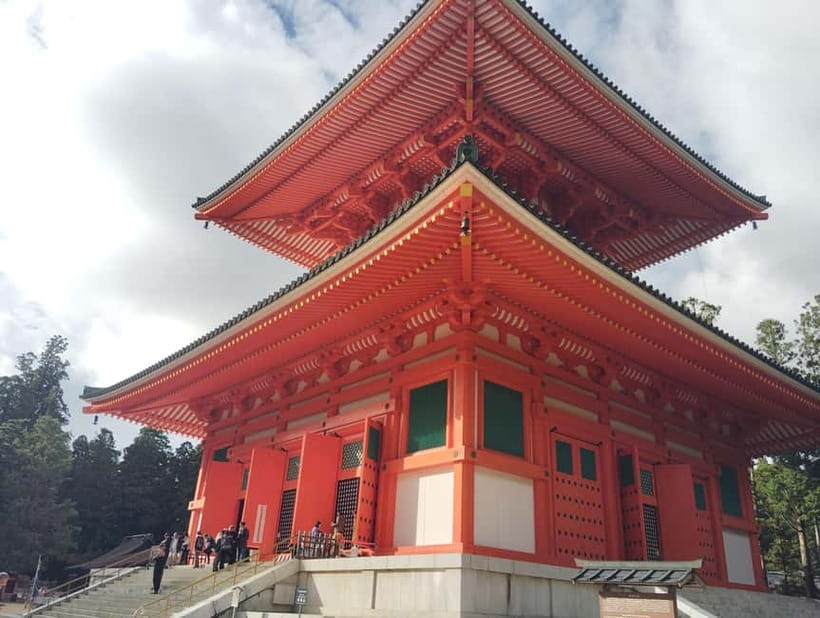
The final major stop is Danjo Garan, the center of Koyasan’s ascetic practices. The guided visit lasts about 50 minutes and brings the tour to a close in the heart of the religious precinct.
The symbolic pagoda is one of the area’s main sights, but Danjo Garan is not just a place to photograph a single building. It is a collection of sacred attractions associated with Buddhist practice, and traditional Buddhist philosophy remains part of the site’s life. The guide’s context can help you see the precinct as a working religious center rather than a row of monuments.
This last stop also gives the day a natural arc. Okuno-in introduces the mountain’s devotional and funerary traditions; Kongobuji shows its central institution; Danjo Garan turns your attention to ascetic practice. Seeing all three in one visit helps you understand Koyasan as a connected place, not just a list of famous names.
The tour finishes here, so consider what you want to do afterward before setting out. The supplied schedule does not include transport back to Naka-no-hashi or hotel drop-off.
What the $128 price covers
At $128 per person, the price includes the guided tour and admission to Okuno-in, Kongobuji Temple and Danjo Garan. That makes it easier to budget for the main sightseeing portion, and it avoids having to arrange separate admission for the three featured sites.
The value depends on how much you want a guide. If you are mainly looking to walk through the grounds at your own pace, you may prefer an independent visit. But if you want the religious roles and history explained as you move between sites, the guide is the part that gives this half-day its purpose.
The private-group format is another part of the value. You have a guide for your own group rather than joining a general crowd, which can make conversation and questions easier. The group size is not specified, so don’t assume a particular number of people or a fixed price for a larger party.
Food, drinks, personal expenses, hotel pickup and drop-off are not included. Keep those costs in mind, especially if you need to arrange your own transport or want a proper meal before or after the visit.
Pace, weather and who will enjoy this tour
This tour suits you if you want a focused introduction to Koyasan and value explanation alongside the sights. It is especially useful if you have limited time on the mountain and want to see Okuno-in, Kongobuji and Danjo Garan in one organized route.
It also suits visitors who like asking questions. The private format and guides who can lead in English or Japanese make it easier to explore the history and traditions at your own pace within the schedule. If you take lots of photos, be considerate of other people and follow guidance on where photography is appropriate.
The main limitation is physical, not intellectual. There is a lot of walking over uneven ground, and the tour is not suitable for people with mobility impairments or wheelchair users. Bring comfortable shoes, check the forecast and dress for cooler mountain weather.
You’ll get less out of it if you want a long, leisurely lunch or hours to explore independently. The schedule is designed to cover the highlights in four hours. That’s a fair trade for a compact visit, as long as you know the pace before you book.
Booking details worth knowing
The tour lasts four hours, and starting times depend on availability. It is offered as a private group with a live guide in English or Japanese. The starting point is the public restroom in front of Naka-no-hashi bus stop, where you should look for the yellow DeepExperience sign.
The activity offers free cancellation up to 24 hours in advance for a full refund, and a reserve-now, pay-later option. These terms can be useful if your plans are still taking shape, but check the current booking details before confirming.
Smoking is not allowed. Flash photography is also prohibited, and the guide’s instructions about conduct in temples should take priority. Bring water, warm clothing, a camera and insect repellent, along with sturdy shoes.
Should you book this Koyasan tour?
Book it if you want a well-paced introduction to Koyasan’s most important sites and a guide to explain what connects them. Okuno-in’s cedar-lined sanctuary, Kongobuji’s role as the mountain’s central temple and Danjo Garan’s place in ascetic practice make a strong three-part visit. Included admission and a private guide add practical value to the $128 price.
Skip it if uneven ground is a problem, if you need wheelchair access, or if you prefer to set your own pace for the whole day. And plan your food: the lunch break is short, and meals are on you. For a curious, active visitor with four hours to spare, this is a useful way to meet Koyasan with more than a map and a camera.
FAQ
How long is the tour?
The tour lasts four hours.
Which places does the tour visit?
It visits Okuno-in, Kongobuji Temple and the Danjo Garan area.
What is included in the price?
The guided tour, a professional guide and admission to Okuno-in, Kongobuji Temple and Danjo Garan are included.
Is lunch included?
No. The schedule allows 40 minutes for lunch, but meals and beverages are not included.
What languages are available?
The live guide is available in English or Japanese.
Where does the tour start?
Meet at the public restroom in front of the Naka-no-hashi bus stop. The guide will be holding a yellow sign with the DeepExperience logo.
Where does the tour finish?
The tour finishes at Danjo Garan.
Is the tour suitable for wheelchair users?
No. The tour is not suitable for wheelchair users or people with mobility impairments, and it involves considerable walking over uneven surfaces.
More half-day trips around Osaka
- Osaka: Half-day Ultimate Highlights Guided Walking Tour
★ 5.0 · 59 reviews - Osaka: Minoh Waterfall & Katsuo-ji Temple Half-Day Tour
★ 4.7 · 27 reviews - Osaka Half-day E-bike Adventure: Minoh Falls & Katsuoji Temple
★ 5.0 · 25 reviews - Osaka Private Half-Day Tour with a Local – Secrets & Highlights
★ 5.0 · 24 reviews
Just added around Osaka
- Mount Koya from Osaka: Cultural Small Group Day Tour★ 5.0 · 3 reviews
- Matcha Tea Bowl Experience in Osaka★ 5.0 · 11 reviews
- Master Washoku: 5 Core Techniques for Authentic Cooking★ 4.7 · 7 reviews
- Manno: Osaka Premium Wagyu BBQ Experience Reservation★ 5.0 · 4 reviews
- Learning Shodo with a kimono and Trying Samurai Calligraphy★ 4.2 · 7 reviews
- Katsu Curry OR Bento Making Cooking Class & Local Shop Tour★ 4.9 · 11 reviews
- Himeji: Private Guide Tour of the Castle from Osaka or Kyoto★ 4.5 · 7 reviews
- Osaka and Nara Customized Private tour with English Driver★ 4.7 · 4 reviews
Koyasan Tours, compared.
Mount Koya from Osaka: Cultural Small Group Day Tour
Read our review →Browse the lists this tour appears in