
Reviewed · KUROMON MARKET TOURS
Kuromon Market Tour: All inclusive 6~8 Dishes & 3~4 samplings
Kuromon Market is easier to enjoy when someone can point out what is worth trying, explain what is on the counter, and help you order. This two-hour walk brings you to market vendors for seafood, Osaka specialties, sweets, and tea, with at least six dishes and three samplings included.
I like two things especially: the small group, capped at nine, leaves room to ask questions, and a guide’s vendor relationships can make unfamiliar food feel less like guesswork. The main consideration is the menu: it is not fixed, and this tour is not suitable for vegetarians or vegans.
What to know before you book
- A generous tasting plan: Expect 6 to 8 dishes and 3 to 4 additional samplings. The tour description also says you may try more than 10 items in total.
- A market guide, not just a food list: Guides such as Anna, Hikaru, and Michael have explained ingredients, local customs, and how to spot authentic products.
- Seafood is a central part of the experience: Past tastings have included oysters, tuna, sea urchin, fish cakes, and carefully prepared fugu. The exact selection can change.
- A compact walk: The tour lasts about two hours and starts at 2:00 pm near Nippombashi Station. It returns to the same meeting point.
- A small group: No more than nine people can join, which helps keep the walk personal and makes questions easier.
- A good first stop for Osaka food: The guide can offer context and, in some cases, ideas for where to eat or what to see next.
Kuromon Market, with a guide to make sense of the stalls
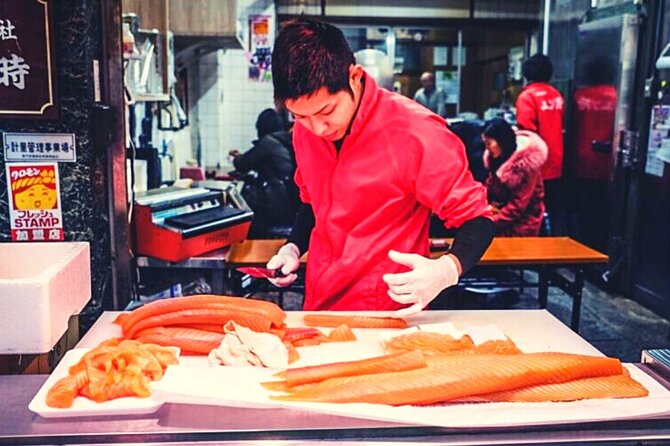
Kuromon Ichiba is a market of counters, ingredients, aromas, and quick decisions. You may see an appealing dish without knowing its name, how it is made, or whether it is a local specialty. That is where a guide earns a place on the walk.
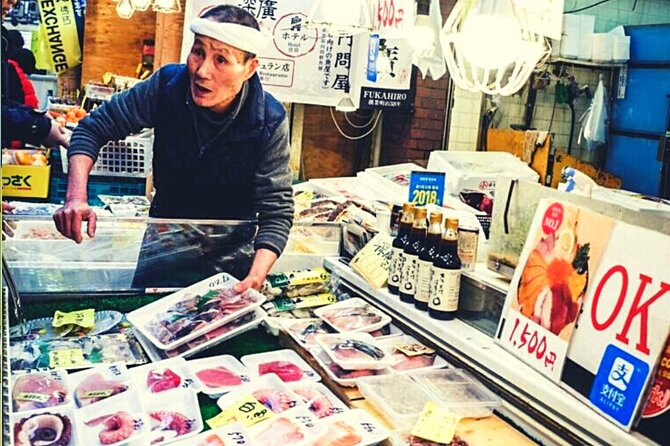
The tour is built around tasting rather than simply passing through. You move between market vendors and sample a range of food, with a guide explaining what you are eating and helping you find stalls that might be difficult to choose on your own. The aim is not to rush through a checklist, but to try foods you may otherwise pass by.
That help matters most when the food is unfamiliar. Visitors have tried items such as sea urchin, pufferfish, oysters, otoro tuna, fish cakes, and sakura-mochi. These are examples, not a promised menu. What you taste depends on what is available and the choices made on the day.
The market is also a working food place, not a set of themed exhibits. A guide who knows the sellers can add context to a visit that might otherwise feel like a blur of counters and choices. Several guides, including Anna, Hikaru, Michael, and Andy, have been praised for explaining food and local customs in an engaging, approachable way. Your assigned guide may be someone else.
More Kuromon Market tours around Osaka:
- Kuromon Market Food Walking Tour in Osaka (6 stops, 6 tastes)
★ 5.0 · 550 reviews - Osaka: Kuromon Market Food Walking Tour (6 stops, 6 tastes)
★ 4.6 · 272 reviews - PRIVATE 6hr, Food tour from Osaka Castle, Kuromon, Dotonbori.
★ 5.0 · 68 reviews
What the two-hour walk is likely to feel like
The tour begins at 2:00 pm at Nippombashi Station, at 1 Chome-5 Nipponbashi in Osaka’s Chuo Ward. From there, the group explores Kuromon Market on foot. It ends back at the meeting point, so you do not need to plan a separate return route.
The route is focused on the market, and the exact order of stops is not specified. Expect the guide to lead you between food stalls, help you choose from what is being sold, and explain the items you sample. The listed range includes fresh seafood, local Osaka dishes such as okonomiyaki, desserts, and Japanese tea.
You are promised 6 to 8 selected dishes and 3 to 4 samplings. The overall description says the group may try more than 10 food items, so the distinction between a full dish and a smaller taste matters. It is best to think of this as a substantial tasting walk rather than a precise course-by-course meal.
The stop count is not the point. A good guide can connect the food to its ingredients, preparation, or place in local eating habits. Some guides have also answered questions about how to recognize authentic products and which stalls focus on family-run trade. That kind of explanation turns a snack into a useful introduction to the market.
Seafood, local dishes, and surprises on the counter
Seafood is one of the tour’s strongest draws. Past tasting examples include oysters, sea urchin, otoro tuna, and fugu, the Japanese name for pufferfish. One visitor singled out the buttery texture of otoro, while another described fugu as a memorable part of the meal.
Fugu is a food with particular care around its preparation. The tour’s past examples indicate that it may be included, but you should not book on the assumption that it will be served. The same goes for whale, which has been sampled on some tours, and any other individual item: the lineup varies.
You may also encounter fish cakes and other local specialties. Okonomiyaki, a savory Osaka dish, is named in the tour description, alongside desserts and Japanese tea. The selection offers a useful spread across savory, sweet, and drink, rather than making the entire experience about raw seafood.
This variety is helpful if you want to test your comfort zone without committing to a full portion at every stall. Smaller tastes let you try something new, while the included dishes give the walk enough substance to feel like a meal. One practical tip: arrive hungry. People have left full, and eating a large lunch beforehand can make it harder to enjoy the later tastings.
The guide is the real reason to book
A market guide does more than translate a menu. You can ask what an ingredient is, how a dish is usually eaten, or what makes one product different from another. Guides have also offered recommendations for restaurants and other places to visit in Osaka, and sometimes for nearby cities.
The strongest part of the experience is the personal connection between guide and vendor. When a guide knows the sellers, you gain a more direct introduction to the market’s food and people. You are not just pointing at something behind glass and hoping for the best.
Several guides have been praised for making the tour work for different ages and tastes. Anna has been described as energetic and accommodating, while Hikaru’s background as a chef helped him explain foods to adults and teenagers. Michael has been noted for tailoring extra samples to the group’s interests. Andy has helped families with children by offering alternatives when a dish did not appeal.
Those examples are useful, but they are not a guarantee of a specific guide or a custom menu. If you have a strong preference, tell the operator in advance or raise it with your guide. One particularly valuable approach is to ask what is authentic, what is a market specialty, and what you might want to revisit later. You can use those answers long after the tour ends.
More market visits around Osaka:
- Osaka: Cooking Class & Sake Tasting with Local Market Visit
★ 4.8 · 31 reviews - Nara, Todaiji Temple & Kuroshio Market Day BUS Tour from Osaka
★ 3.5 · 18 reviews
Small group, more room for questions

The maximum group size is nine. That is small enough to make conversation with the guide practical, and it helps the group move between stalls without feeling like a large procession. A few visitors have also ended up with a private guide when no other participants joined, but you should not count on that.
A small group is especially useful in a market where the experience depends on stopping, looking, and asking questions. You can get help with unfamiliar foods, and the guide can respond to the group’s interests rather than delivering only a set speech. If you are shy about ordering or unsure what to try, that support can make the market feel easier to navigate.
The two-hour length is also a sensible fit for an afternoon. It gives you time to taste several foods without turning the market visit into a full-day commitment. Because the tour starts at 2:00 pm, consider how it fits with lunch. A light meal or no meal beforehand is likely to leave more room for the tastings.
Is $63.43 good value?
At $63.43 per person, this costs more than wandering through the market and buying one snack at a time. You are paying for a guided route, a set of included tastings, and the explanations that help you understand what you are eating. If you would otherwise be uncertain where to stop or what to order, that guidance is a meaningful part of the price.
The food quantity also matters. Six to eight dishes plus three to four samplings is a substantial amount over two hours, and the tour description notes that the total may exceed 10 items. For someone who enjoys trying a range of foods, the price can represent good value, particularly if seafood is high on the wish list.
It is less compelling if you already know Kuromon Market well, prefer to choose every dish independently, or are mainly looking for a formal cooking lesson. This is a walking tasting tour. It focuses on sampling and market context, not on preparing food yourself.
The tour has a 4.9 rating and a 96 percent recommendation rate from 103 reviews. Those figures suggest a strong record, but the practical reasons matter more: people value the guides, the range of foods, and the chance to find stalls they might not have chosen alone.
Who should join, and who should skip it
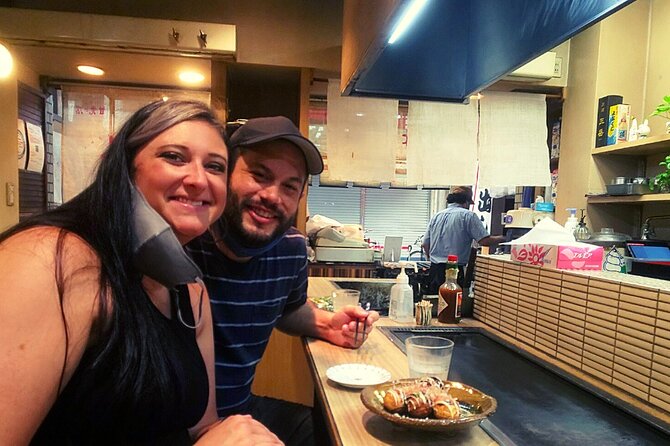
This tour suits first-time visitors to Osaka who want a guided introduction to local food. It is also a strong match for curious eaters who would like to try seafood or unfamiliar specialties but want someone to explain what is in front of them.
Families may find the short duration and small group helpful. Guides have accommodated young children and picky eaters, though individual preferences are not guaranteed to be met. If you are bringing children, consider whether they are comfortable walking and sampling a range of foods.
The tour is not suitable for vegetarians or vegans. Seafood features prominently, and the food is selected around Japanese and Osaka specialties. If you have dietary needs beyond that, the supplied information does not confirm what substitutions can be made, so ask before booking rather than assuming.
You should also be comfortable with a menu that changes. The examples are appealing, but you cannot rely on a particular item such as fugu or sea urchin being available. Think of the promise as variety and guidance, not a fixed tasting menu.
Practical details before you go
The meeting point is Nippombashi Station, at 1 Chome-5 Nipponbashi, Chuo Ward, Osaka, 542-0073. The activity ends at the same point. The tour is near public transportation, and most people can participate. Service animals are allowed.
The ticket is mobile, and confirmation is received at booking. Free cancellation is available up to 24 hours before the start time for a full refund. Cancellations or changes made less than 24 hours before the start are not accepted, with cut-off times based on local time. The tour requires a minimum number of participants; if it is canceled because that number is not met, you are offered another date or experience, or a full refund.
Because the tour is commonly booked well ahead, plan early if your dates are fixed. The average booking lead time is 69 days. That is an average, not a guarantee that a spot will be available at any particular time.
Should you book the Kuromon Market tour?
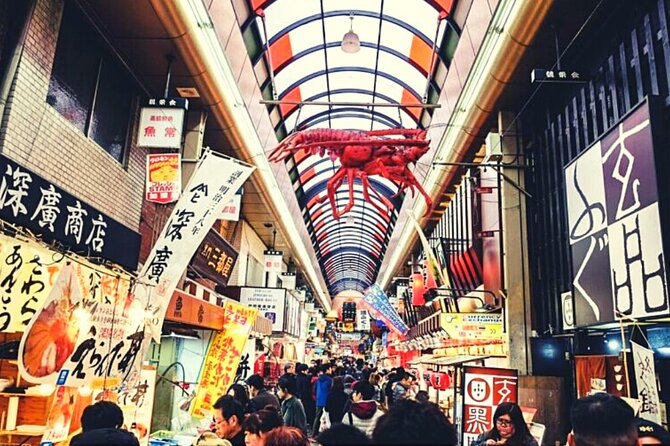
Book it if you want to taste broadly, learn what you are eating, and have a local guide steer you through a market that can be hard to read at first glance. The small group, included food, and vendor connections make this more useful than a simple walk through the stalls.
Skip it if you need a vegetarian or vegan menu, want a fixed list of dishes, or would rather set your own pace and pay for each bite separately. For everyone else, arrive hungry, keep an open mind, and treat the food list as a guide to the kind of experience, not a promise of each specific item.
FAQ
How long does the tour last?
The tour lasts about two hours.
How many foods are included?
The tour includes 6 to 8 selected dishes and 3 to 4 samplings. The description says the total may exceed 10 food items.
Where does the tour start and finish?
It starts at Nippombashi Station, at 1 Chome-5 Nipponbashi in Osaka, and ends back at the meeting point.
What time does the tour start?
The stated start time is 2:00 pm.
Is this tour suitable for vegetarians or vegans?
No. The tour is not suitable for vegetarians or vegans.
Can I cancel for a refund?
You can cancel up to 24 hours before the start time for a full refund. Cancellations made less than 24 hours before the start time are not refunded.
More shopping trips around Osaka
- Cooking Ramen&Gyoza/KatsuCurry/Bento/Okonomiyaki+Store Tour@Osaka
★ 5.0 · 138 reviews
Just added around Osaka
- Mount Koya from Osaka: Cultural Small Group Day Tour★ 5.0 · 3 reviews
- Matcha Tea Bowl Experience in Osaka★ 5.0 · 11 reviews
- Master Washoku: 5 Core Techniques for Authentic Cooking★ 4.7 · 7 reviews
- Manno: Osaka Premium Wagyu BBQ Experience Reservation★ 5.0 · 4 reviews
- Learning Shodo with a kimono and Trying Samurai Calligraphy★ 4.2 · 7 reviews
- Katsu Curry OR Bento Making Cooking Class & Local Shop Tour★ 4.9 · 11 reviews
- Himeji: Private Guide Tour of the Castle from Osaka or Kyoto★ 4.5 · 7 reviews
- Osaka and Nara Customized Private tour with English Driver★ 4.7 · 4 reviews
Kuromon Market Tours, compared.
Kuromon Market Food Walking Tour in Osaka (6 stops, 6 tastes)
Read our review →
PRIVATE 6hr, Food tour from Osaka Castle, Kuromon, Dotonbori.
Read our review →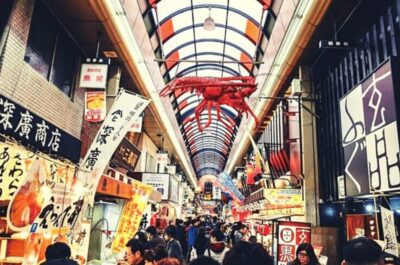
All Inclusive Kuromon Markets Tour: Flavors Of Osaka
Read our review →Browse the lists this tour appears in