
Reviewed · OSAKA FOOD TOURS
Osaka Food Quest: Self-Guided Culinary & History Adventure
Dotonbori’s neon signs and snack stalls make a lively backdrop for a small history lesson: this phone-led quest connects Osaka’s street food to the city’s temples, markets, and traditional theater. You solve 10 puzzles as you walk, using the places around you as clues rather than following a guide with a flag.
I like two things in particular: the route gives you a playful reason to look more closely at familiar sights, and you can stop for food or take a break without holding up a group. At $7.85 per person, it’s also an inexpensive way to add structure to an independent stroll.
The trade-off is that the app is your guide, and its performance matters. One player found it slow and gave up, while others found the route fun and flexible. Plan for more than the advertised hour if you want to eat and explore at an easy pace.
- Ten puzzles turn sightseeing into an active walk, with clues tied to the places you visit.
- Dotonbori’s food stops have real local character, from takoyaki to horumon, a specialty made with beef offal.
- The route pairs food with culture, including Hozenji Temple and the National Bunraku Theater.
- You set the pace, and can pause or resume whenever you like.
- There is no physical guide, so you’ll need to rely on your phone and the quest’s directions.
- Allow two to three hours if you plan to stop, even though the listed duration is about one hour.
A phone-led quest through Osaka’s food streets
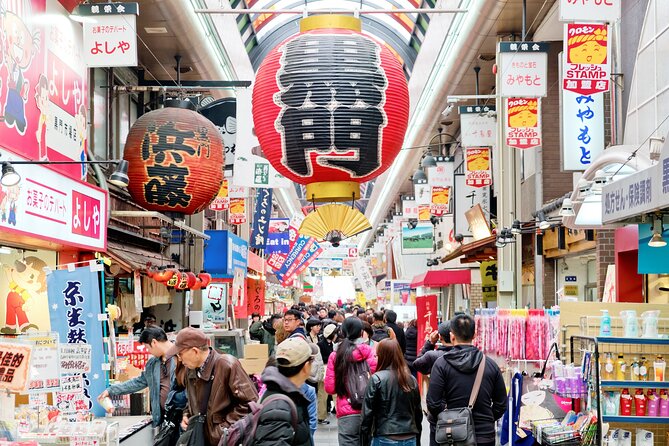
Osaka is often called the Nation’s Kitchen, and this walk gives that nickname a little context. It links popular food districts with stories about culinary customs, local history, and temple rituals, asking you to solve 10 puzzles as you move through the city.
This is not a guided tasting tour. The fee covers access to the mobile quest and its story content, not food or a host who explains each stop in person. You’ll spot places to eat along the way, but choosing what to try and paying for it are up to you.
That distinction matters when deciding what kind of outing you want. If you like exploring on your own but enjoy having a goal beyond simply following a map, the puzzles can add a welcome sense of purpose. If you want a guide to answer questions or arrange tastings, this is not the right format.
The activity is private to your group, with no strangers joining your walk. Couples, families, solo explorers, and small groups can take it at their own pace, and group discounts are available. The quest is listed as suitable for most people, and service animals are allowed.
Starting at Ebisu Bridge in Dotonbori
The start point is 1 Chome-6 Dotonbori, near Ebisu Bridge. The bridge was first built to provide access to nearby Ebisu Shrine, and today it connects two shopping streets, Shinsaibashi-suji and Ebisubashi-suji. It is also linked to a local baseball legend: the Hanshin Tigers are said to suffer a curse associated with the bridge.
That combination of practical city history and local lore suits the format. Rather than just crossing the bridge on your way to a restaurant, you’ll look around for a clue and learn why this spot matters to Osaka. The challenge is a prompt to pay attention, not a reason to expect a long guided explanation.
Dotonbori is one of the route’s strongest sections for food-minded explorers. Its restaurants and shops make it easy to pair the quest with a snack, though that choice can stretch the time well beyond an hour. The tour encourages you to try local specialties, but it does not include food, a tasting menu, or reservations.
More food tours around Osaka:
- Osaka: Shinsekai Food Tour with 13-15 Dishes at 5 Eateries
★ 4.8 · 2,204 reviews - Osaka Food Tour: 13 Dishes at 5 Local Eateries
★ 5.0 · 2,149 reviews - Hungry Osaka Street Food Tour:15 Tastings & 3 Drinks with a Local
★ 5.0 · 1,727 reviews
Finding takoyaki and horumon in Dotonbori
The Konamon Museum offers a clear introduction to takoyaki, Osaka’s well-known octopus snack. It is a place to eat, learn about, and make takoyaki, so it connects the puzzle’s food theme to an actual local specialty. If you’re hungry, this is a natural point to pause, but any food or activity there is separate from the quest price.
Another stop, Showa Taishu Horumon Dotonbori, specializes in horumon, or beef offal. That may be a more adventurous bite than takoyaki, and it gives you a glimpse of a food tradition that is not limited to the familiar festival snacks. You don’t need to eat it to complete the walk, but the stop may prompt you to consider how broad Osaka’s food culture can be.
These food-focused locations are more than background decoration. They give the puzzles a tangible connection to what you can see and smell in the neighborhood. Still, remember that the experience is about discovering food stories, not sampling a set number of dishes. Set aside extra money if tasting is part of your plan.
Pausing at Hozenji Temple and the Bunraku Theater
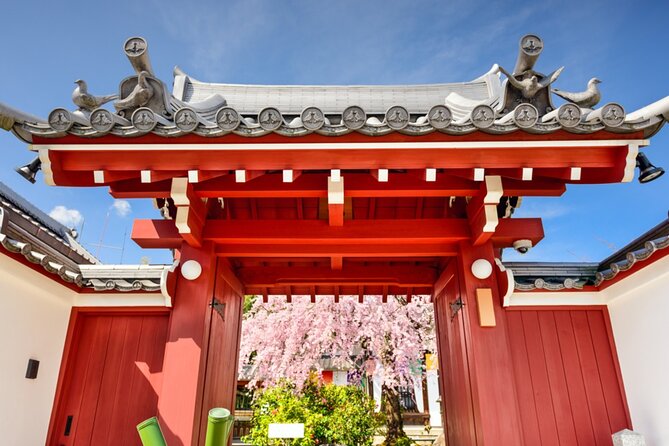
Hozenji Temple, built in 1637, honors Fudo Myoo, one of Buddhism’s five guardians. In the 1600s, the area around Namba and Dotonbori was growing as an entertainment district, with kabuki and bunraku performances drawing audiences. The temple stop adds a quieter cultural note to a walk otherwise known for shopping and food.
The challenge here asks you to look around and connect the site to its story. That can be a good change of pace, especially if the busy commercial streets start to feel like a blur. The temple is not presented as a long visit, so think of this as a brief cultural stop within a larger neighborhood walk.
The National Bunraku Theater continues the performing-arts thread. Established in 1984 as the Kansai home of bunraku, it has a main hall with 753 seats and a smaller hall with 159. The main hall is used largely for bunraku, as well as traditional dance and other forms of drama.
A puzzle stop outside the theater is not the same as seeing a performance. Still, it gives you a reason to notice an important cultural institution and understand how Osaka’s entertainment history sits alongside its food scene. If a show is a priority, you’ll need to check performance details separately; none are included in the quest.
Exploring Kuromon Market
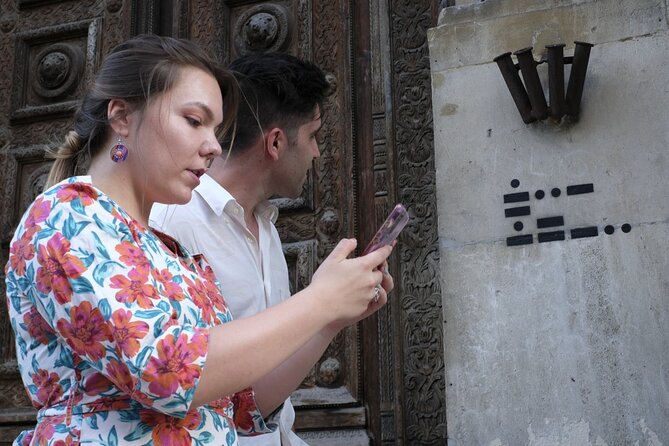
Kuromon Market’s name means black gate, a reference to the black gate of Enmyo Temple, which stood in the area until 1912. The market began as a fish market around 1822 and became an officially approved market in 1902. Those dates help explain why it feels like more than a convenient place to grab a bite: its food trade has deep roots in the neighborhood.
The quest gives you a reason to look for clues as you move through the market. The listed stop allows about 10 minutes, but that is only a suggested visit length, not a limit. If you want to browse stalls or eat, you’ll need longer. Treat the app’s timing as a guide to the route, not a promise that the full outing will fit neatly into an hour.
Markets can be crowded and full of distractions, which is part of their appeal and a small challenge for a puzzle-based activity. Keep an eye on your phone and surroundings, and pause somewhere convenient if you need to read a prompt. This is a walking quest, not a reserved market tour, so you set the rhythm.
More food and drink stops around Osaka:
- Hungry Osaka Street Food Tour: 15 Dishes & 3 Drinks
★ 4.9 · 694 reviews - Kuromon Market Food Walking Tour in Osaka (6 stops, 6 tastes)
★ 5.0 · 550 reviews - Osaka: Guided Food Tour with 12 Dishes at 4 Local Eateries
★ 5.0 · 533 reviews - Absolute Osaka Food Tour
★ 5.0 · 309 reviews
Ending near Namba Yasaka Shrine
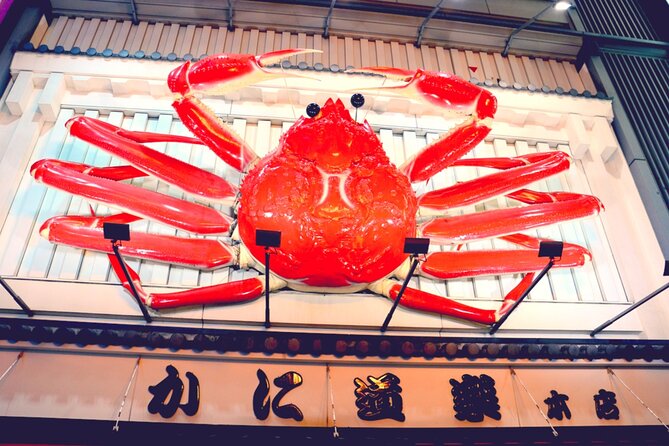
The route ends at 2-chōme-9-19 Motomachi, Naniwa Ward, near Namba Yasaka Shrine. The shrine is said to have been commissioned by Emperor Hanzei in honor of his father, Emperor Nintoku. It was originally located in the area now known as Kawachi Matsubara City, then moved to its present site after Toyotomi Hideyoshi began building Osaka Castle.
The stop adds another layer of history beyond food and entertainment. It also gives the route a clear finish away from its Dotonbori starting point, so you should expect to walk across several areas rather than simply loop around one block. The activity information does not provide a full distance or detailed walking directions, so check the start and end points on a map before setting out.
There are several stops between the named landmarks, including the theater and food businesses, but the route’s central idea stays consistent: find a clue, learn a bit about the place, and move on. The temple, market, shrine, and theater make a useful mix for anyone who wants more than a street-food crawl.
Timing, phone use, and what the price covers
The stated duration is about one hour, but that is best treated as a brisk estimate. One participant completed the route in about two hours while pressed for time and recommended allowing at least three hours for a more relaxed visit. That longer window makes sense if you want to eat, browse Kuromon Market, or spend time at the sights.
At $7.85 per person, the price is modest for a private, self-guided activity with 10 puzzles and a story built around local food and history. You’re paying for the route and interactive content, not a guide, transport, meals, or admission to an attraction. The value is strongest if you enjoy solving clues and would otherwise explore these areas on your own.
You receive a mobile access code, and the activity can be paused and resumed. That flexibility is useful if you want to stop for lunch or split the walk into sections. The quest is listed as available every day at any time, though individual businesses and sights may not be open around the clock.
A practical caution: one person reported a slow app and difficulty figuring out directions, then abandoned the activity. The operator disputed the claim that the quest itself used 3GB of data, saying the quest file was 2.5MB and suggesting other apps may have contributed. That disagreement does not tell you how the app will perform on your phone, so make sure your device is charged and that you can use mobile data or another suitable connection. If the app lags, a map can help you orient yourself, but it may not replace the puzzle prompts.
The activity has a 3.7 rating from six ratings, a small sample that offers limited certainty. The strongest positive points are its flexible pace and its route through Dotonbori’s main sights. The uneven score is a reminder that an app-based outing depends partly on smooth technology, not just on the places it visits.
Booking is often made about 23 days ahead on average, but the quest itself is flexible and does not require a live guide at a fixed hour. Free cancellation is available up to 24 hours before the scheduled start; later cancellations are not refunded. Confirm the access details when booking so you’re ready to begin at the Dotonbori start point.
Should you book the Osaka Food Quest?
Book this if you want an inexpensive, self-directed way to connect Osaka’s food culture with temples, theater, and neighborhood history. It suits curious walkers who like small challenges, want freedom to stop for snacks, and are comfortable using a phone to navigate.
Skip it if you’re looking for a human guide, a planned food tasting, or a tightly timed one-hour tour with guaranteed app performance. I’d also set aside two to three hours, rather than rushing, and keep an alternate map handy. With those expectations, the quest can give a familiar Dotonbori stroll more shape and a few worthwhile stories to carry into your next meal.
FAQ
How long does the Osaka Food Quest take?
The listed duration is about one hour. Allow two to three hours if you want to stop for food or spend more time at the sights.
How many puzzles are included?
The quest includes 10 puzzle-based challenges linked to its food and history storyline.
Is a physical tour guide included?
No. This is a self-guided activity accessed by mobile code, with no physical guide.
Where does the walk start and end?
It starts at 1 Chome-6 Dotonbori, Chuo Ward, and ends at 2-chōme-9-19 Motomachi, Naniwa Ward, near Namba Yasaka Shrine.
Is food included in the price?
No. The $7.85 price covers access to the mobile quest and its story content. Food is not included.
Can I pause the quest and continue later?
Yes. You can pause and resume the activity at your own pace.
Can I cancel for a refund?
You can cancel at least 24 hours before the scheduled start time for a full refund. Cancellations made less than 24 hours beforehand are not refunded.
More history tours around Osaka
- Osaka: Castle History Walking Tour / Castle Tower Admission
★ 4.9 · 230 reviews - Osaka: Osaka Castle & Historical Museum Guided Tour
★ 4.8 · 28 reviews - Osaka Castle & Samurai History Walking Tour
★ 5.0 · 22 reviews - Osaka: Kyoto & Nara & Uji Historical and Scenic One-Day Tour
★ 4.7 · 21 reviews
More food experiences around Osaka
- Osaka Local Foodie Walking Tour in Dotonbori and Shinsekai
★ 5.0 · 985 reviews - Osaka: Kuromon Market Food Walking Tour (6 stops, 6 tastes)
★ 4.6 · 272 reviews - Osaka After Dark: Small-Group Night Food Tour (Max 6)
★ 4.5 · 245 reviews - Eat, Drink & Cycle: Osaka Foodie Bike Tour
★ 5.0 · 224 reviews
Just added around Osaka
- Mount Koya from Osaka: Cultural Small Group Day Tour★ 5.0 · 3 reviews
- Matcha Tea Bowl Experience in Osaka★ 5.0 · 11 reviews
- Manno: Osaka Premium Wagyu BBQ Experience Reservation★ 5.0 · 4 reviews
- Master Washoku: 5 Core Techniques for Authentic Cooking★ 4.7 · 7 reviews
- Learning Shodo with a kimono and Trying Samurai Calligraphy★ 4.2 · 7 reviews
- Katsu Curry OR Bento Making Cooking Class & Local Shop Tour★ 4.9 · 11 reviews
- Himeji: Private Guide Tour of the Castle from Osaka or Kyoto★ 4.5 · 7 reviews
- Osaka and Nara Customized Private tour with English Driver★ 4.7 · 4 reviews
Osaka Food Tours, compared.

Shinsekai Food Tour with 13-15 Dishes at 5 Eateries
Read our review →
Osaka Food Tour: 13 Dishes at 5 Local Eateries
Read our review →
Hungry Osaka Street Food Tour:15 Tastings & 3 Drinks with a Local
Read our review →
Osaka Local Foodie Walking Tour in Dotonbori and Shinsekai
Read our review →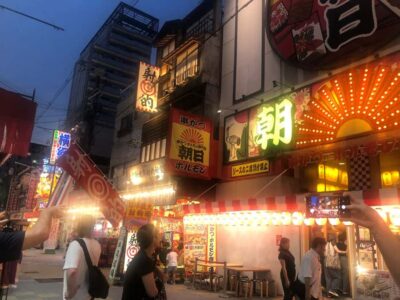
Hungry Osaka Street Food Tour: 15 Dishes & 3 Drinks
Read our review →
Kuromon Market Food Walking Tour in Osaka (6 stops, 6 tastes)
Read our review →
Guided Food Tour with 12 Dishes at 4 Local Eateries
Read our review →
Five Must-See Highlights Walking Tour & Ramen Lunch
Read our review →Browse the lists this tour appears in