
Reviewed · KYOTO DAY TRIPS FROM OSAKA
Osaka: Kyoto Highlights Tour and Pottery Workshop Experience
Kyoto’s big sights make a memorable day trip from Osaka: the gold-leaf pavilion at Kinkaku-ji, the wooden stage at Kiyomizu-dera and the long rows of red torii gates at Fushimi Inari. I like that the route pairs these famous places with a pottery session at a 150-year-old kiln, and that you get time to wander the old lanes around Kiyomizu.
The main trade-off is the tour’s format. This is a driver-guided share tour, not a full-time walking tour with a licensed historian. Expect brief introductions and clear return times, then explore independently. English commentary may be limited, and the bus may drop you some distance from a sight.
Key points to know
- Kinkaku-ji gets about an hour: Enough for a look around and photos, but admission costs extra.
- Kiyomizu’s old lanes get the most time: The temple area, pottery workshop, Sannen-zaka and Ninen-zaka make up the heart of the day.
- Pottery is hands-on: Use an electric wheel at Zuiko-gama, choose a glaze, then arrange and pay separately for international shipping and any customs charges.
- Fushimi Inari is a timed visit: You’ll have about an hour to see the shrine and walk beneath its vermilion torii gates.
- The guide handles transport and timing: For deeper historical context, arrange a licensed guide on-site.
- Budget beyond the $116 fare: Lunch, temple entry and returning your fired pottery from Japan are not included.
A long Kyoto day, with the sights on your own terms
The tour runs for about 10 hours, leaving Osaka at 8:30 and returning around 17:10. You can meet at Nipponbashi Exit 2, where the guide carries a yellow flag, or request pickup from most of the Osaka area in advance. Hotel or BnB pickup within the Osaka Loop Line requires at least two people.
From the meeting point, allow roughly an hour by coach to Kyoto. That transfer is useful: you avoid arranging trains between several far-flung sights and can leave the navigation to someone else. But a shared vehicle also means you follow the group’s schedule. Arrive 10 minutes early, and remember that traffic in peak season can change departure times and the route.
The guide speaks Chinese, English and Japanese. The role is mainly to provide transport, basic introductions and time management. That distinction matters. If you want detailed explanations of temple architecture, Buddhist traditions or Kyoto’s history, this tour does not promise that level of guiding. You can hire a licensed guide at a site if you want more context.
The day is best understood as a convenient shuttle between major sights, with independent time at each stop. That can suit you if you prefer to explore at your own pace, take photos and choose where to spend your minutes. It is less suitable if you expect a guide to accompany you throughout each temple and explain every detail.
More Kyoto day trips around Nara:
- World Heritage Kyoto & Nara Uji Authentic Matcha Experience
★ 5.0 · 1,573 reviews - Nara Early Morning Tour (Kyoto or Osaka Departure Available)
★ 5.0 · 676 reviews - Kyoto/Osaka: Kinkakuji, Bamboo Forest, and Nara Deer Park
★ 4.4 · 265 reviews
Kinkaku-ji: a brief visit to Kyoto’s Golden Pavilion
Kinkaku-ji, the Golden Pavilion, is the first major stop. The gold-leaf-covered Zen temple sits beside a garden pond, and the reflected building is the classic photo many people come to see. The grounds combine architectural styles from different eras, giving you more to look at than the bright exterior alone.
You have about 60 minutes here. That is a practical introduction, but not a leisurely visit if you want to pause often or read every sign. The route is set up for sightseeing and photos, so use your time to take in the pavilion, look around the garden and keep an eye on the agreed meeting time.
Admission is not included. The stated price is ¥500 for adults and ¥300 for children. Add that to your day’s budget before you set off. The tour fare covers transport, but not temple tickets, so the advertised price is not the full cost of the outing.
Kiyomizu-dera and the old streets below it
The longest part of the day is around Kiyomizu-dera and the historic streets nearby. Kiyomizu-dera is one of Kyoto’s oldest landmarks and a UNESCO-listed temple. Its large wooden stage looks out over the city, making this a stop where the setting is as much of the appeal as the building itself.
The schedule gives roughly two hours at the temple, with additional time allocated around the Kiyomizu area and pottery workshop. The exact blocks are described in different ways: the pottery activity itself is about 40 minutes, while the studio stop is allotted 1.5 hours. In practice, expect the old-town portion to combine the workshop, temple visit and free time rather than one uninterrupted guided tour.
Kiyomizu-dera admission is extra, at ¥400 for adults and ¥200 for children. The temple’s paths and approaches can be busy, so keep track of the clock and leave time to return to the vehicle. One practical caution: drop-off points may be some distance from attractions, and a walk of around a kilometre is possible. Wear comfortable shoes and do not assume the coach will pull up at the temple gate.
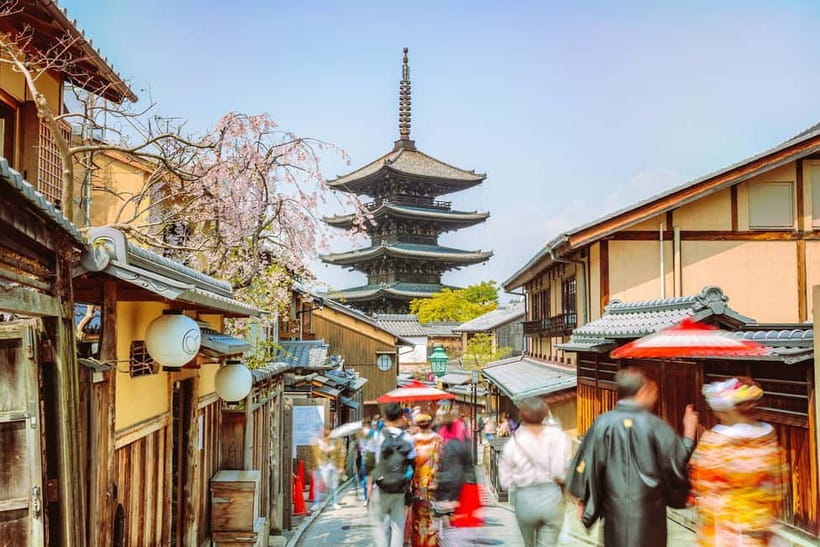
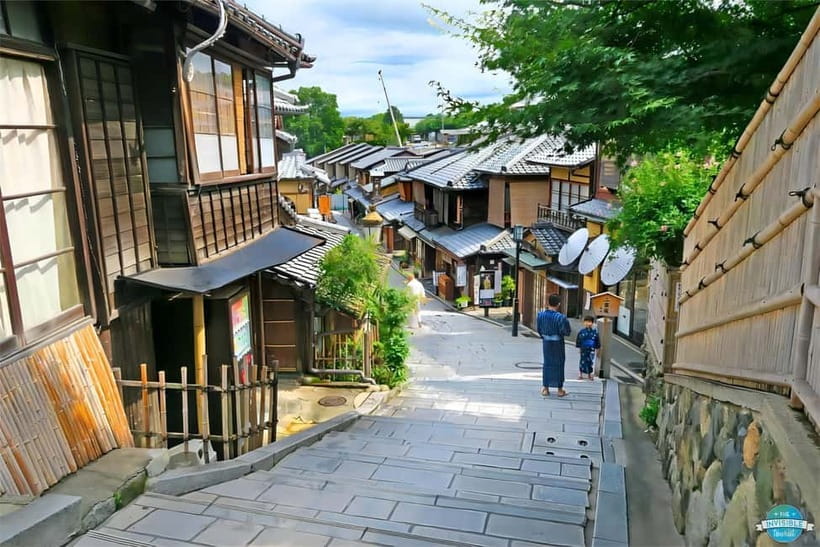
From the temple, Sannen-zaka and Ninen-zaka lead through sloping lanes lined with traditional shops. This is a good place to browse for crafts or stop for matcha snacks, but it is also easy to lose track of time. Lunch is on your own, so you can choose a local meal that suits your appetite and budget. With several stops still ahead, I would keep lunch simple and leave room for a little browsing.
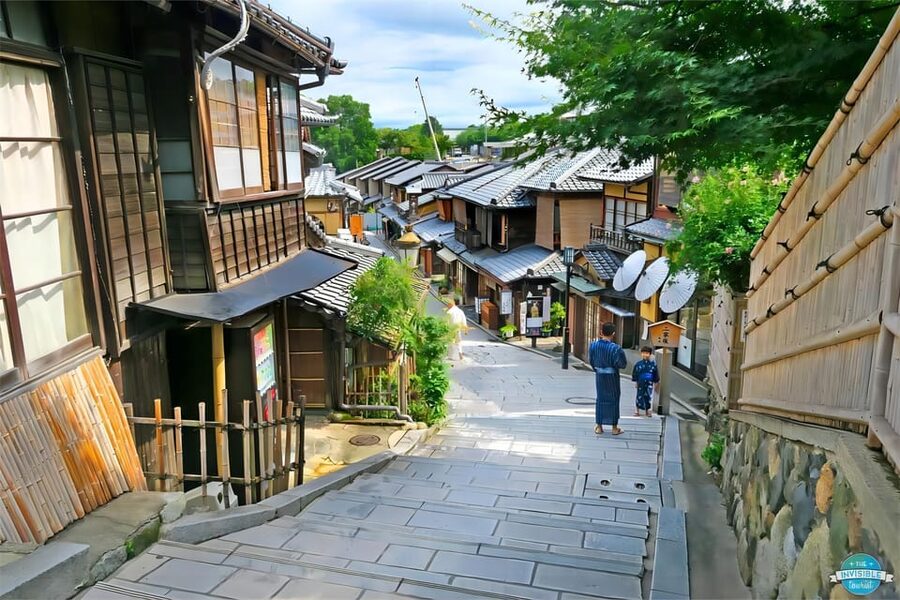
Gion and Yasaka Shrine add another short taste of Kyoto. The itinerary allows about 30 minutes in Gion and 20 minutes around Ninen-zaka, so treat these as quick orientation stops, not a full exploration of the district. Gion is known as Kyoto’s geisha district; be respectful of local customs and avoid treating residents or working performers as photo props.
Making pottery at Zuiko-gama
The workshop is the day’s most personal activity. At Zuiko-gama, a 150-year-old kiln, you try Kiyomizu-yaki pottery using an electric wheel. No previous skill is required, and you can choose from glaze colors including white, lemon and candy shades.
The actual pottery session is about 40 minutes, while the studio visit is given a longer block in the schedule. That should give you time for the workshop and its surrounding stop, but it is not a full ceramics course. You are there to make a small piece under guidance, not to master the craft in an afternoon.
Your finished work needs to be fired before it can be sent to you. The workshop fee covers the session, including wheel use and guidance, but shipping to your home country is extra. Customs taxes and import fees may also apply, and costs vary by destination and the number of pieces. If you are counting on taking your pottery home, ask about shipping arrangements and likely costs before you begin.
This stop adds welcome variety to a day otherwise centered on viewing temples and shrines. It also gives you a souvenir you helped make, rather than another item picked from a shop shelf. The catch is that the souvenir comes with a wait and a separate delivery bill.
More craft workshops around Nara:
- Hammer a Pattern on Your Ring Workshop
★ 5.0 · 57 reviews - Nara – Craft Beer, Sake, and Food Walking Tour
★ 3.5 · 9 reviews - Nara: Write Your Own Name in Kanji (Japanese Calligraphy)
★ 4.4 · 3 reviews - Osaka: Private Japanese Calligraphy Experience
★ 5.0 · 66 reviews
Fushimi Inari: torii gates and fox symbols
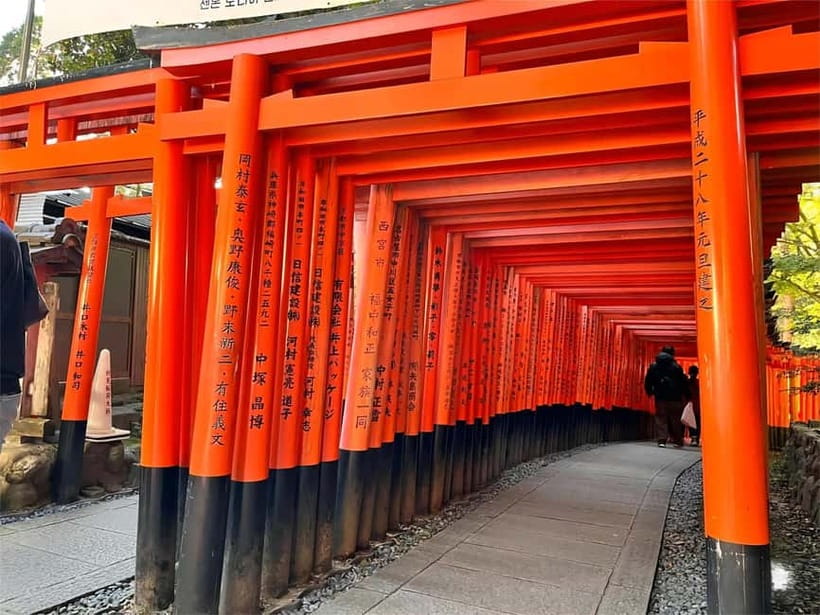
Fushimi Inari Taisha is the final major Kyoto stop. The shrine is famous for its thousands of vermilion torii gates, which form a striking path through the grounds. With about an hour here, you can see part of the route, take in the shrine complex and learn about its fox deities.
You do not need to walk the entire gate-lined route to get a sense of the place. The time limit makes it sensible to explore at a comfortable pace, then turn back while you still have time to meet the group. You can also write a wish on a fox-shaped ema plaque, a distinctive way to take part in a shrine custom.
Fushimi Inari’s extensive grounds invite a longer visit, so an hour may feel short if you want to walk far beyond the main areas. Think of this stop as an introduction rather than an exhaustive visit. If it becomes your favorite place, you may want to return on another day with more time.
The return to Osaka and the real value of the fare
After Fushimi Inari, the coach heads back to Osaka. The tour is scheduled to return around 17:10, with drop-off in Shinsaibashi. That makes it easy to continue your evening with shopping along Shinsaibashi-suji or dinner around Dotonbori. If you use hotel pickup, the tour also concludes at Shinsaibashi.
At $116 per person, the fare is most useful if you value having transport arranged between several Kyoto sights. It includes round-trip transport in an air-conditioned vehicle, tolls and parking fees, a multilingual driver-guide and the pottery workshop entrance. Doing all those stops independently from Osaka would require planning several transfers and keeping a close watch on connections.
Still, compare the fare with the full day’s costs. You pay separately for lunch and admission to Kinkaku-ji and Kiyomizu-dera. International pottery shipping and possible customs charges are additional too. The tour’s value depends on whether the convenience of a direct route and workshop is worth more to you than the flexibility of traveling by train and choosing your own pace.
The vehicle itself deserves a realistic expectation. The experience is shared, and one account described an older bus with limited space between seats. Comfort can vary, so pack light and do not count on a roomy coach. Food and drinks are not allowed in the vehicle.
Who should book this Kyoto day trip?
I would choose this tour if you have one day for Kyoto, are staying in Osaka and want a driver to connect the main sights without arranging each leg yourself. The pottery stop is a strong reason to consider it, especially if you like making things and do not mind paying later to have your piece shipped.
It suits independent sightseers who are happy with short introductions and self-guided visits. It is not the best match if you want extended lectures, close attention from a historian or long, unhurried walks at every stop. You should also be comfortable with a fixed timetable and the possibility of walking from a coach drop-off to the attraction.
For the smoothest day, arrive early, wear shoes suited to sloping streets, keep some yen handy for admissions and lunch, and check the pottery delivery cost before you start. Book it for the combination of transport, famous Kyoto sights and a hands-on craft session, not for a fully guided historical tour.
FAQ
Where does the tour meet in Osaka?
The meeting point is Nipponbashi Exit 2, at 1-chome-3-6 Nipponbashi, Chuo Ward, Osaka. Look for the guide holding a yellow flag and arrive 10 minutes early.
Is Osaka hotel pickup available?
Pickup is optional in most of the Osaka area, but you should ask in advance. Hotel or BnB pickup within the Osaka Loop Line requires at least two people.
What languages does the guide speak?
The multilingual guide and driver speak Chinese, English and Japanese. The tour provides basic attraction introductions and manages transport and timing.
Are temple admission tickets included?
No. Kinkaku-ji admission is listed as ¥500 for adults and ¥300 for children. Kiyomizu-dera admission is ¥400 for adults and ¥200 for children.
Is lunch included?
No. Lunch is free time, and you pay for your own meal.
Does the pottery fee include shipping?
No. The pottery fee covers the session, wheel use and guidance. Shipping the finished piece internationally, along with any customs or import charges, is extra.
Can children under three join the tour?
Yes. Children under three can join for free if they do not occupy a seat.
More hands-on workshops around Nara
- Nara: Cooking class, learning how to make authentic sushi
★ 5.0 · 5 reviews - Sushi Making Osaka Roll and Authentic Japanese Sushi Class
★ 5.0 · 1,220 reviews - Matcha Making Class in Osaka with Authentic Japanese Sweets Set
★ 5.0 · 509 reviews - Osaka: Ramen and Gyoza Cooking Class in Dotonbori
★ 5.0 · 378 reviews
More city tours around Nara
- E-Bike Nara Highlights – Todaiji, Knives, Deer, Shrine
★ 4.8 · 186 reviews - Nara – Highlights Bike Tour
★ 4.5 · 89 reviews - Nara: City Highlights Shared Group or Private Bike Tour
★ 4.9 · 34 reviews - E-Bike Nara Highlights – Todaiji, Knives, Deer, Shrine, and Gems
★ 4.5 · 34 reviews
Just added around Nara
- Nara: Write Your Own Name in Kanji (Japanese Calligraphy)★ 4.4 · 3 reviews
- Nara: Private City Tour With A Local Guide★ 4.2 · 8 reviews
- Nara Heritage Walkabout from Nara Park to Todaji-ji temple★ 5.0 · 5 reviews
- Nara: Sake Tasting Tour at the Birthplace of Japanese Sake★ 4.9 · 8 reviews
- Nara: Half-Day Private Tour of 4 Must-See Spots & Deer Park★ 5.0 · 3 reviews
- Nara: Full-Day Private Guided Tour★ 5.0 · 4 reviews
- Nara: Cultural Heritage Tour by Rickshaw★ 5.0 · 5 reviews
- Nara: Cooking class, learning how to make authentic sushi★ 5.0 · 5 reviews
Kyoto Day Trips from Osaka, compared.
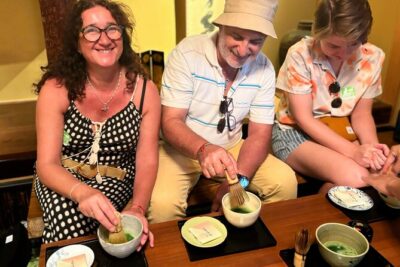
World Heritage Kyoto & Nara Uji Authentic Matcha Experience
Read our review →
Hiroshima Miyajima Bus Tour & Shinkansen Ticket
Read our review →
Nara Early Morning Tour (Kyoto or Osaka Departure Available)
Read our review →
Ancient Capital Tour: Kyoto and Nara Highlights from Kyoto/Osaka
Read our review →
Browse the lists this tour appears in