
Reviewed · DOTONBORI TOURS
Osaka: Ramen and Gyoza Cooking Class in Dotonbori
Making ramen here starts well before the bowl reaches the table: you knead wheat dough, shape noodles with a machine, and prepare a broth built from chicken bones and dried sardines. Then you fold minced-chicken gyoza and sit down to eat what you made. It’s a practical look at two Japanese staples, not just a demonstration.
I like that you work with the food at each stage, and that instructors such as Miki and June explain the steps in clear English. I also like the chance to adjust your ramen with toppings or miso, and to take home recipes so the class can carry on in your own kitchen.
The main consideration is time: this is a cooking session, not a quick tasting, and one class may take around two to three hours. The meeting point can also be tricky to find, so check the address and room instructions before setting out.
What makes this class worth your time
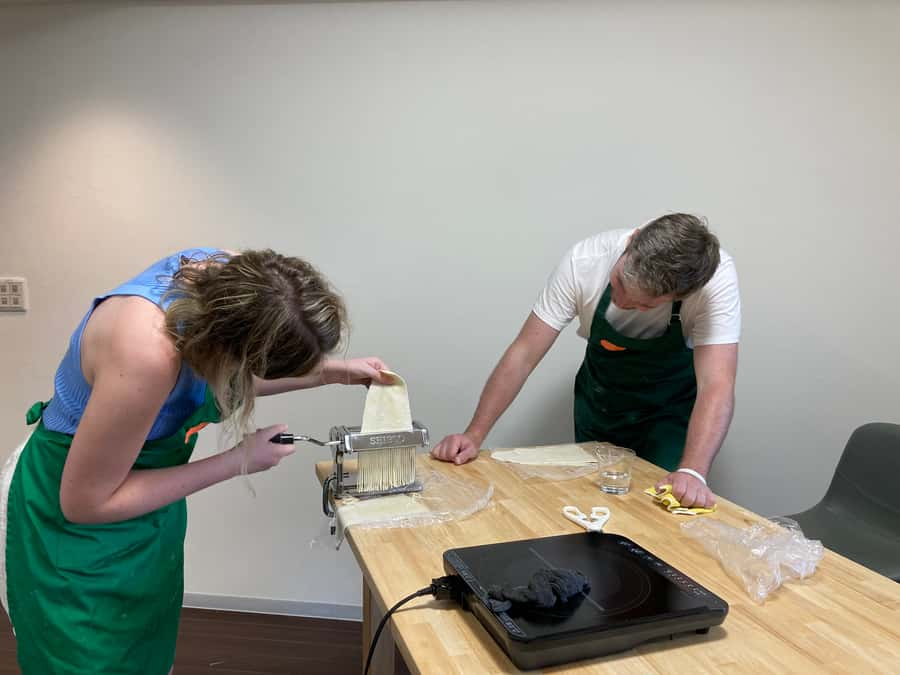
- Knead and cut your own noodles: Make ramen dough from wheat and use a noodle machine to cut it into strands.
- Build a soy sauce ramen bowl: Learn a standard style made with chicken bones and dried sardines, then add toppings or miso.
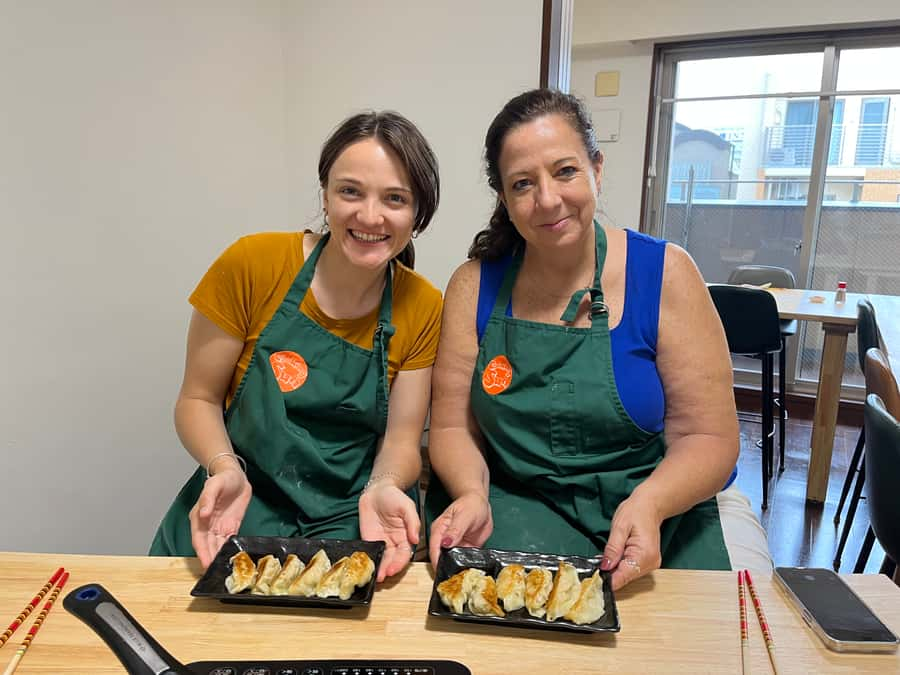
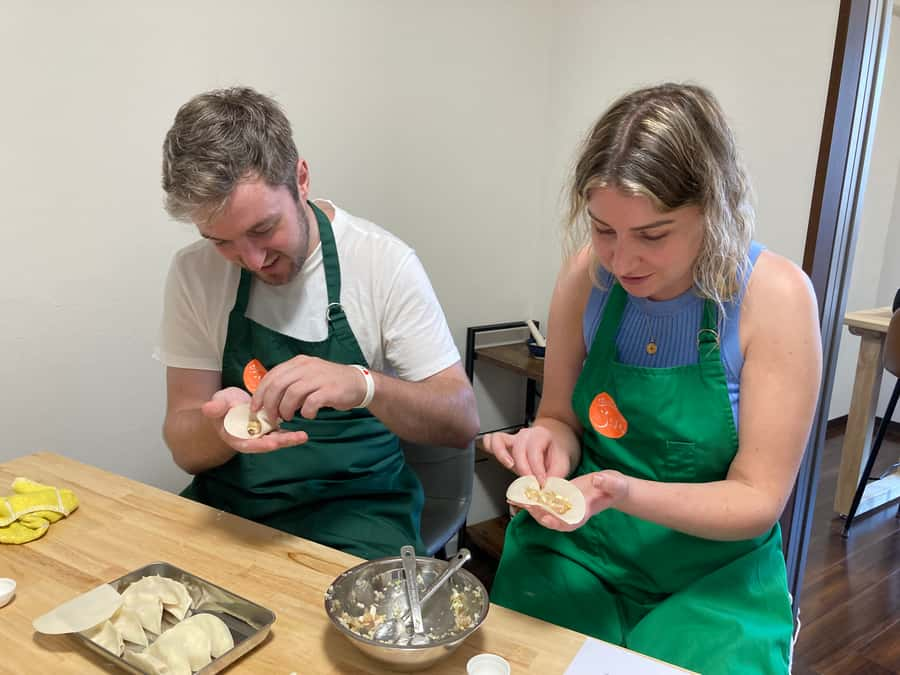
- Fold minced-chicken gyoza: Prepare the dumpling filling and make the gyoza yourself, rather than watching a cook do it.
- Get hands-on English instruction: The instructors explain each step, answer questions, and help if you fall behind.
- Sit down to eat what you made: The class ends with a full meal of your ramen and gyoza.
- Plan for a small-group setting: Classes have been described as intimate, with one group of seven and a maximum of eight reported.
From the room 807 entrance to the kitchen
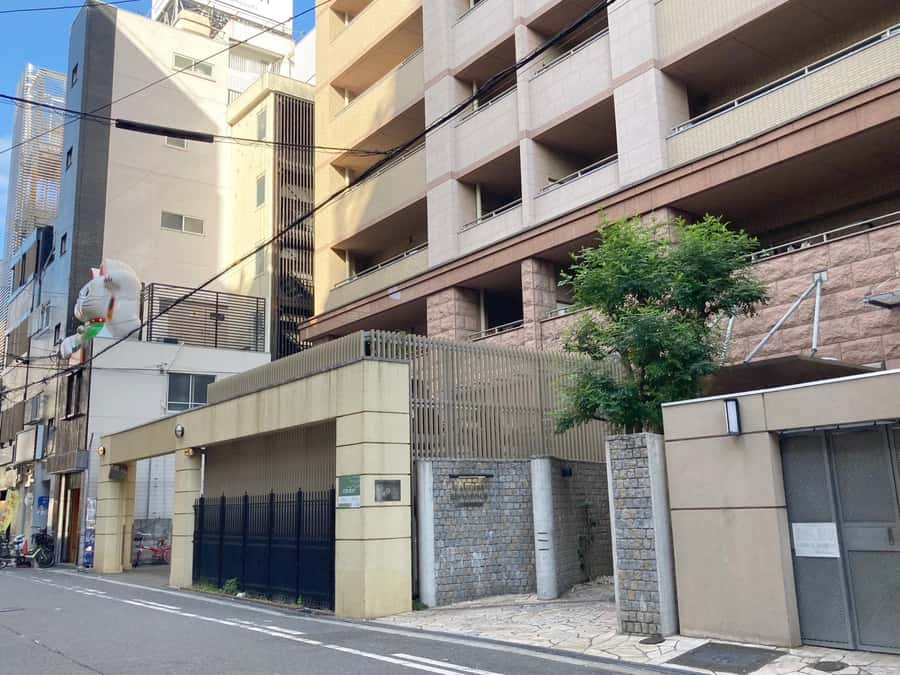
The class meets at Cooking Sun Osaka, in room 807. At the entrance, press 807 and then the 呼出 button, which means call. The building is not always easy to spot, so allow time to find it rather than arriving at the last minute.
The experience is in English, which matters when you are learning a sequence of cooking steps and handling unfamiliar ingredients. Instructors such as Miki, June, Yoshi, and Kasa have led classes, though the teaching team may vary. The teaching style described is patient and clear, with help available if you fall behind.
Expect a small group rather than a lecture hall. One class had seven people, and another was described as having no more than eight, which gives you room to work and makes it easier to ask questions. Group size may vary, so don’t treat that number as a guaranteed limit.
There is no hotel pickup or drop-off. You make your own way to the meeting point, and the activity ends back there. Once inside, ingredients for the class are included, so you don’t need to shop for anything beforehand.
More Dotonbori and Namba tours around Osaka:
- Osaka Local Foodie Walking Tour in Dotonbori and Shinsekai
★ 5.0 · 985 reviews - Osaka Bar Hopping Night Walking Tour in Namba (3 bars, 6 tastes)
★ 5.0 · 958 reviews - Osaka: Dotonbori District River Cruise with Drink Discount
★ 4.2 · 876 reviews
Start with ramen dough, not a packet
Ramen is often served as a finished bowl, which can make the work behind it easy to overlook. Here, you start with wheat and knead the dough yourself. That hands-on step gives you a feel for the texture and effort involved before the noodles ever reach the broth.
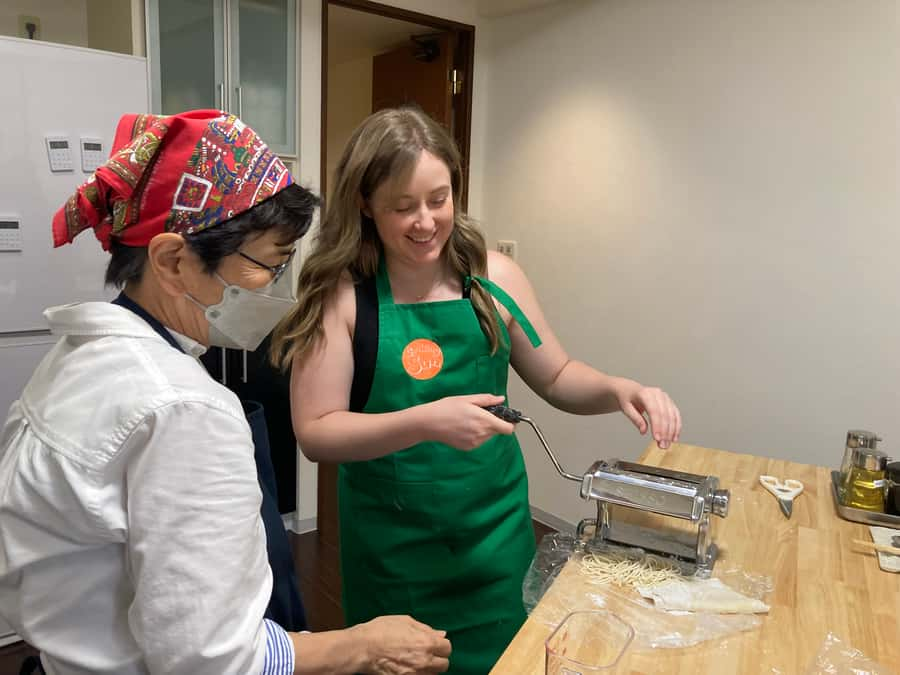
Next comes cutting the noodles with a machine. It’s a useful contrast: you make the dough by hand, then use a tool to turn it into more even strands. If you have only cooked instant ramen, this is the part that most clearly changes how you think about the dish.
The instructions are paced so the group can work through the process together. The instructors explain what to do and step in to help if you get behind. That support is valuable in a cooking class, where one missed step can leave you trying to catch up while everyone else moves on.
You are not only following a recipe. The class also covers ingredients and Japanese food culture, including details about miso and how different kinds are used. That context helps you understand why a bowl tastes the way it does, and gives you more to take home than a set of instructions.
Prepare broth and make the ramen your own
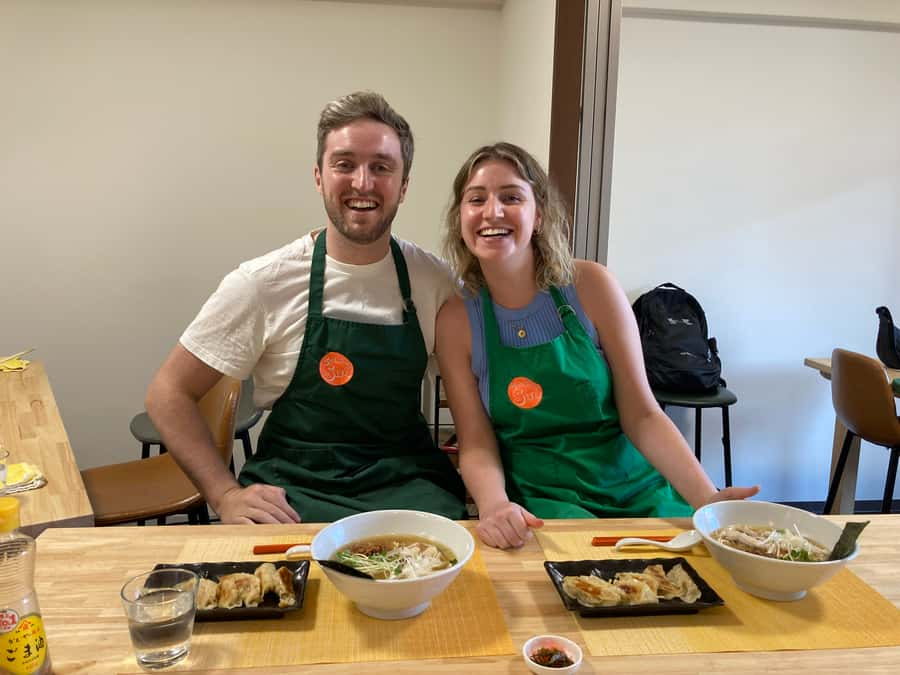
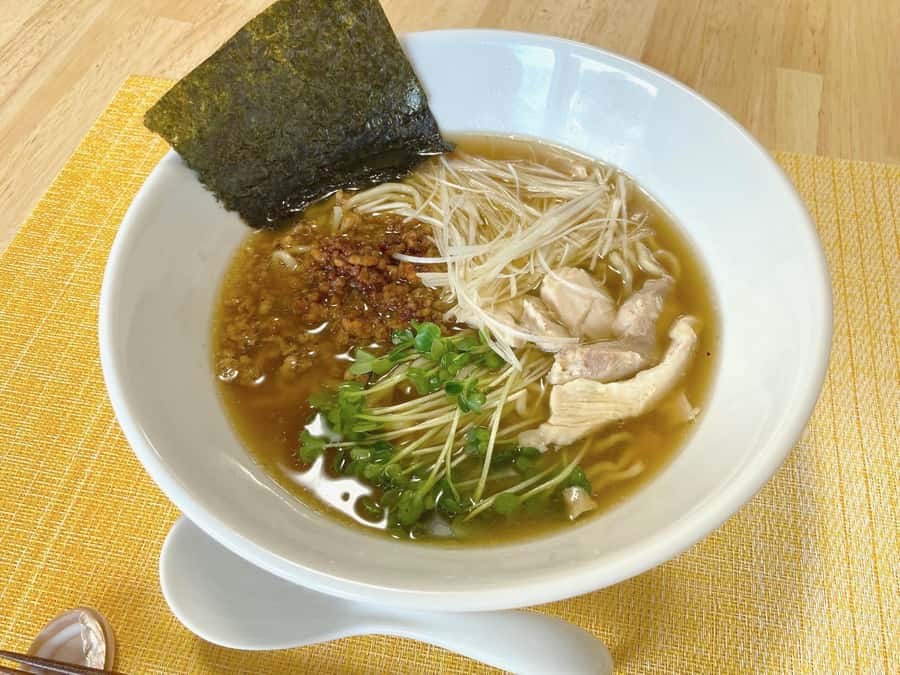
The ramen is made in a standard soy sauce style, with broth based on chicken bones and dried sardines. The combination gives you a useful introduction to the savory foundations of the dish. The class focuses on a familiar style rather than trying to cover every kind of ramen in one sitting.
Once the basic bowl is ready, you can add toppings to suit your taste. You can also add miso to the soup to make a miso-style ramen. That small choice gives the meal a personal touch without turning the class into an open-ended cooking project.
The point is not to reproduce a restaurant bowl exactly. You are learning the building blocks, then eating a version that you shaped yourself. That makes the meal a good fit for curious cooks who want to understand how ramen comes together, not just tick off another food tasting.
Broth is one part of the class where dietary needs deserve advance thought. A substitution was made for a couple who did not like fish broth, and one vegan participant described the recipes being adapted on arrival. Those examples suggest some flexibility, but they do not guarantee every request can be met. If you have dietary restrictions, contact the provider before booking and confirm what is possible.
Fold gyoza while the dough rests
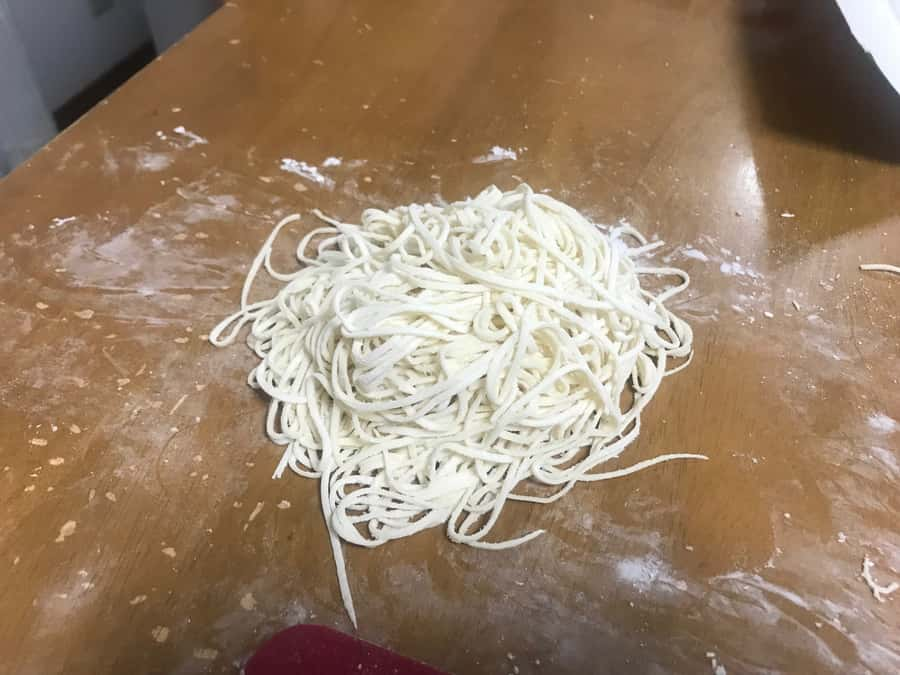
The gyoza bring a different kind of kitchen work. You make a filling using minced chicken, then shape the dumplings yourself. The dough-resting time for the noodles gives the class a natural moment to turn to this second dish, so the session stays active rather than leaving you waiting around.
Folding gyoza takes a little care, but the instructors can help you through it. The process is part of the pleasure: you see how the filling and wrapper come together, then get to taste the result at the meal. If your first dumpling looks less tidy than the instructor’s, that is part of learning, not a reason to worry.
Together, ramen and gyoza make a substantial meal. In Japan, ordering them as a set at a ramen shop is common, and this class explains that pairing by letting you prepare both. Come hungry. One participant specifically recommends it, and the class is built around cooking and eating a full meal rather than sampling a bite or two.
More cooking classes around Osaka:
- Sushi Making Osaka Roll and Authentic Japanese Sushi Class
★ 5.0 · 1,220 reviews - Osaka Sushi Making Experience
★ 5.0 · 400 reviews - Osaka Sushi Making Class – Hands-On Nigiri & Rolls (Same-Day OK)
★ 5.0 · 352 reviews - Osaka Cooking Class: Okonomiyaki &Japanese cuisines experience
★ 5.0 · 261 reviews
Learn practical cooking habits, not just recipes
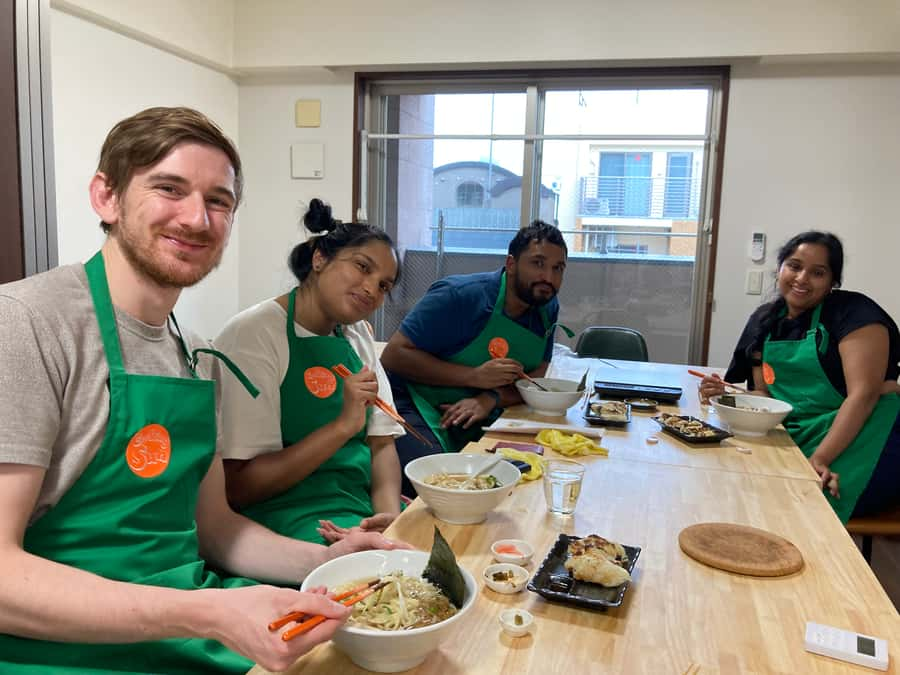
Good instruction can make the difference between a fun activity and a frustrating one. The teachers are described as friendly, patient, and clear, and they check in with people who need help. Some also take photos when asked, which is a thoughtful extra if you want a record of the cooking without putting your own process on hold.
You’ll hear about ingredients as well as technique. That can include different kinds of miso, how they are used, and tips for buying fresh ingredients. It is useful detail for anyone hoping to cook Japanese food at home, especially if a supermarket aisle of unfamiliar labels has ever made you hesitate.
Recipes are available to take home. That matters because ramen has several stages, and it is easy to forget a ratio or sequence once you leave the kitchen. With a recipe and the instructor’s tips, you have a better chance of making the dishes again, though your home kitchen and ingredients may not match the class setup exactly.
Some participants have been families, including one with an 11-year-old and another with a 14-year-old. The activity can suit children who enjoy cooking and can follow instructions, but the provided details do not set a minimum age. If you are booking with a child, confirm any age requirements with Cooking Sun.
What $70 buys you
At $70 per person, this is more than a meal and less than a full-day food tour. The price covers the ingredients and guided time to make two dishes from scratch, followed by the meal. You are also paying for instruction, equipment use, and the chance to ask questions while you cook.
The value is strongest if you enjoy participating. If you mainly want a bowl of ramen, a shop will be quicker and cheaper. But if you want to learn how noodles are made, see how the broth is built, and practice folding gyoza, the class offers something a restaurant meal cannot.
The class takes time. Accounts of the session range from about two hours to three, so allow a generous window rather than scheduling a tight transfer or another fixed activity immediately afterward. The slower pace is part of the value: you get time to work through each stage without feeling rushed.
The activity has a five-star rating based on 378 reviews. That is a strong signal of consistent satisfaction, especially alongside repeated praise for the instruction, organization, and food. Still, the class is a hands-on cooking lesson, so it will not suit everyone. If you would rather be served than cook, your money is better spent elsewhere.
Who should book this Osaka cooking class
I’d put this class high on the list for first-time visitors who want to learn about Japanese cooking in a practical way. You do not need to arrive with ramen-making experience. The steps are explained, and instructors can help when you need it.
It also suits couples, families, and solo visitors who like sharing an activity with a small group. Because you cook and eat together, it gives the day a social shape without requiring you to know anyone beforehand. The small-group format is especially useful if you want to ask questions or need a little extra help.
Vegetarians and vegans should check directly with the provider before booking. One vegan option was accommodated, and a fish-broth substitution was made in another instance, but the standard dishes described here use chicken and fish-based ingredients. Do not assume the usual recipe will meet your needs without confirmation.
If you are in Osaka for a short stay, this is a worthwhile way to spend a few hours when you want more than a restaurant meal. Just leave enough time to find room 807, and plan to arrive hungry.
FAQ
How much does the class cost?
The listed price is $70 per person. Ingredients for the cooking class are included.
Where does the class meet?
It meets at Cooking Sun Osaka, room 807. At the entrance, press 807 and then the 呼出 call button.
Where does the activity end?
It ends back at the meeting point, Cooking Sun Osaka.
What dishes will I make?
You make ramen and gyoza. The ramen uses wheat noodles and a soy sauce broth made with chicken bones and dried sardines, while the gyoza filling uses minced chicken.
Is the class taught in English?
Yes. English is the listed class language.
How long does the class take?
The duration is not fixed in the supplied details. Class accounts describe sessions of about two to three hours, so leave a flexible window.
Are ingredients included?
Yes. All ingredients used in the cooking class are included.
Is hotel pickup included?
No. Hotel pickup and drop-off are not included, and you need to make your own way to the meeting point.
More hands-on workshops around Osaka
- Matcha Making Class in Osaka with Authentic Japanese Sweets Set
★ 5.0 · 509 reviews - Osaka: Roll and Authentic Sushi Making Class in Dotonbori
★ 4.9 · 239 reviews - Ramen and Gyoza Cooking Class in Osaka
★ 5.0 · 202 reviews - Osaka: Sushi Class in Dotonbori
★ 4.9 · 160 reviews
More food tours around Osaka
- Osaka: Shinsekai Food Tour with 13-15 Dishes at 5 Eateries
★ 4.8 · 2,204 reviews - Osaka Food Tour: 13 Dishes at 5 Local Eateries
★ 5.0 · 2,149 reviews - Hungry Osaka Street Food Tour:15 Tastings & 3 Drinks with a Local
★ 5.0 · 1,727 reviews - Hungry Osaka Street Food Tour: 15 Dishes & 3 Drinks
★ 4.9 · 694 reviews
Just added around Osaka
- Matcha Tea Bowl Experience in Osaka★ 5.0 · 11 reviews
- Mount Koya from Osaka: Cultural Small Group Day Tour★ 5.0 · 3 reviews
- Master Washoku: 5 Core Techniques for Authentic Cooking★ 4.7 · 7 reviews
- Manno: Osaka Premium Wagyu BBQ Experience Reservation★ 5.0 · 4 reviews
- Learning Shodo with a kimono and Trying Samurai Calligraphy★ 4.2 · 7 reviews
- Katsu Curry OR Bento Making Cooking Class & Local Shop Tour★ 4.9 · 11 reviews
- Himeji: Private Guide Tour of the Castle from Osaka or Kyoto★ 4.5 · 7 reviews
- Osaka and Nara Customized Private tour with English Driver★ 4.7 · 4 reviews
Dotonbori Tours, compared.
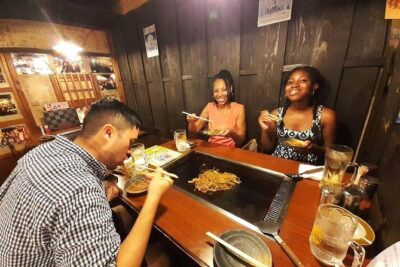
Osaka Local Foodie Walking Tour in Dotonbori and Shinsekai
Read our review →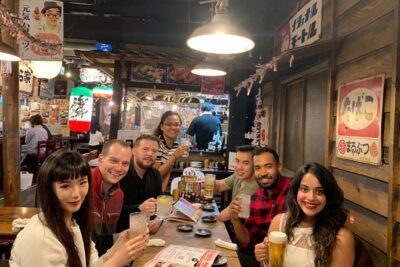
Osaka Bar Hopping Night Walking Tour in Namba (3 bars, 6 tastes)
Read our review →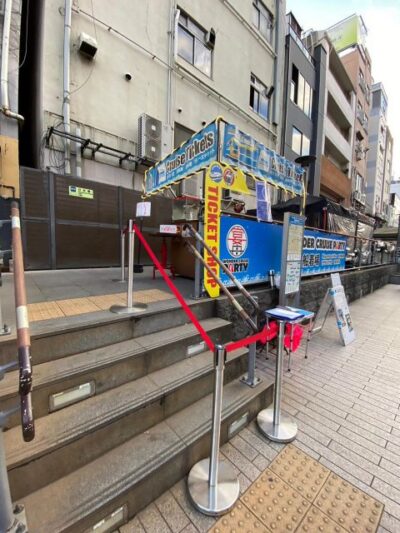
Dotonbori District River Cruise with Drink Discount
Read our review →
Ultimate Osaka Walking Tour: Castle, Dotonbori & Hidden Gems
Read our review →

Roll and Authentic Sushi Making Class in Dotonbori
Read our review →
Browse the lists this tour appears in