
Reviewed · OSAKA FOOD TOURS
Osaka: 2-Hour Nightlife District Walking & Local Food Culture
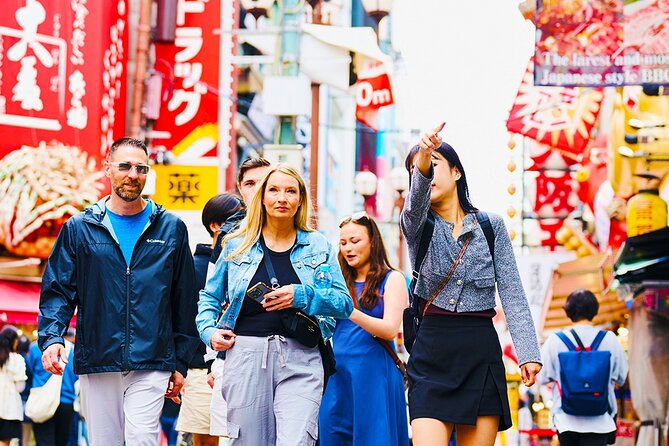
Dotonbori’s famous Glico sign is only the opening act. This two-hour walk takes you from the bright streets of Namba to a quiet temple, a lane of professional cooking tools, and Kuromon Market, where Osaka’s food culture is on display at close range.
I like the mix of well-known sights and everyday food stops, and the small-group size, capped at 15, gives you room to ask questions. Guides have included Kaz, Nako, and Sayaka, with Sayaka’s tour covering local food, sights, history, and even a turn at pachinko.
One thing to plan for: food is not included, and there is no sit-down meal during the walk. Treat vendor snacks as an extra expense, and don’t expect this short tour to replace a full dinner.
At a glance
- Four distinct stops: Dotonbori, Hozenji Yokocho, Doguyasuji, and Kuromon Market.
- About two hours on foot: The listed stops add up to roughly 100 minutes, with the remaining time for walking between them.
- Street food costs extra: Takoyaki and gyoza are examples of foods you may try, but purchases are not included.
- A small group: The maximum group size is 15, and an English-speaking guide leads the walk.
- Daytime or nighttime options: Tour times are offered throughout the day, so check the time that suits your plans.
- A practical first walk in Namba: The route mixes famous sights with places that can be easy to miss when you explore on your own.
Dotonbori sets the scene
The walk begins near the Don Quijote Dotonbori Midosuji store, then heads toward the Glico sign, one of Osaka’s best-known landmarks. The area is loud, bright, and full of food stalls and signs competing for your attention. It gives you an immediate feel for the city’s playful, food-first side.
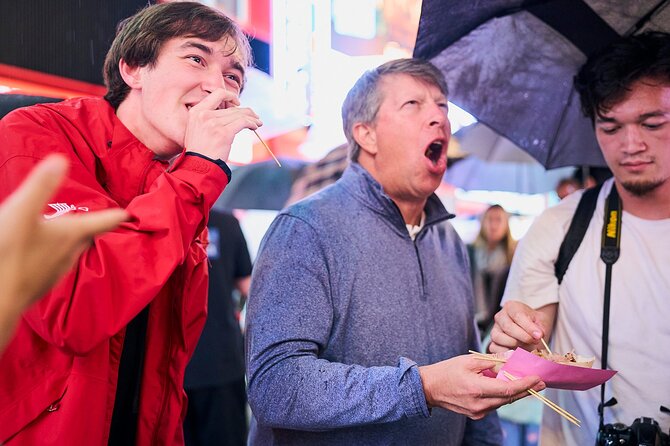
You have about 30 minutes here. That is enough to get a sense of the neighborhood, ask your guide what is worth trying, and sample a street snack if you want one. Takoyaki, savory batter balls commonly associated with Osaka, and gyoza are among the foods highlighted for the experience. You pay for anything you buy.
The food stop is not a guided tasting with set portions, and the tour does not pause for a sit-down meal. That distinction matters. If you want to try several things, bring extra money and be prepared to eat as you walk. If you prefer a full dinner, eat before or after the tour.
The guide’s role is useful here. Dotonbori has plenty of places to choose from, but a local can help you make sense of the options and point out nearby spots you might otherwise walk past. You can also ask for restaurant recommendations for later in your stay, a helpful bonus if this is your first time in Osaka.
More food tours around Osaka:
- Osaka: Shinsekai Food Tour with 13-15 Dishes at 5 Eateries
★ 4.8 · 2,204 reviews - Osaka Food Tour: 13 Dishes at 5 Local Eateries
★ 5.0 · 2,149 reviews - Hungry Osaka Street Food Tour:15 Tastings & 3 Drinks with a Local
★ 5.0 · 1,727 reviews
A quieter pause at Hozenji Yokocho
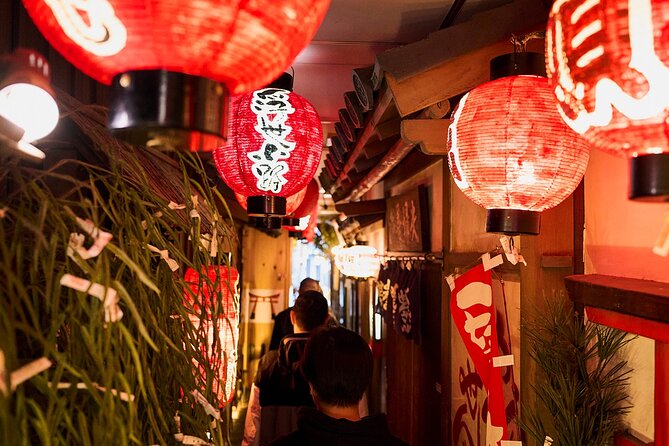
From the bright main streets, the route reaches Hozenji Yokocho and Hozenji Temple. The contrast is part of the appeal: the temple sits in the middle of the city, but its small scale and quieter mood offer a pause from the surrounding crowds and signs.
You have about 20 minutes here. The temple is known for its moss-covered statue of Fudo Myo-o. Visitors often splash water on the statue while making a wish, a simple ritual that gives this stop a more personal feel than a quick photo break. Your guide can help explain what you are seeing and how the temple fits into the neighborhood.
This is not a long temple visit, and you should not expect a broad tour of religious sites. Its value is in the small details: the statue, the custom, and the sudden change in atmosphere. I like that the route gives you this brief quiet moment between food-focused stops.
Doguyasuji’s tools for working kitchens
Next comes Sennichimae Doguyasuji Shopping Street, a 20-minute stop known for kitchen equipment used by professionals. Instead of another food counter, this stretch offers a look at the tools behind the dishes: the practical side of a city famous for eating well.
Even if you are not shopping for a knife or a kitchen utensil, the street is worth a look. You can see equipment that most visitors would not think to seek out, and the guide can help explain why this area matters to people who cook for a living. It is a good reminder that food culture is not just what lands on the plate. It also includes the craft and gear used to prepare it.
The short visit is best for browsing and asking questions rather than planning a major shopping trip. If you spot something you want to buy, keep in mind that the tour continues on foot. It may be more practical to note the shop and return later, especially if the item is bulky.
Kuromon Market, Osaka’s Kitchen
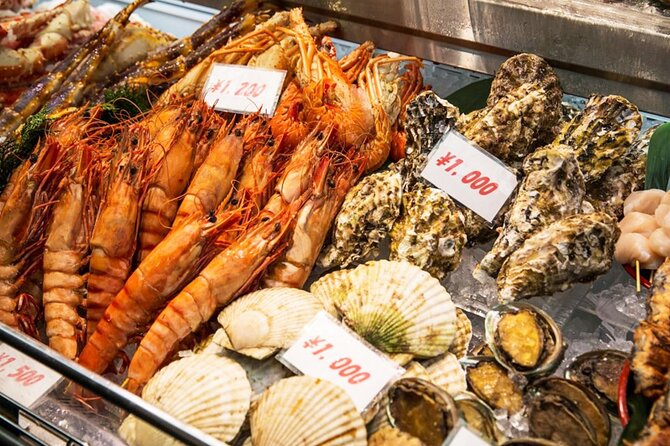
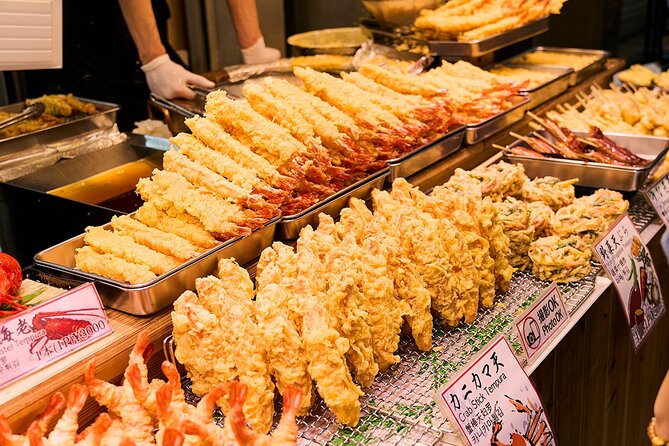
The final major stop is Kuromon Market, often called Osaka’s Kitchen. You have about 30 minutes to see a lively stretch of stalls selling fresh seafood, wagyu beef, fruit, sushi, and other foods. The market makes a strong finish because it brings together ingredients and ready-to-eat specialties in one place.
This is where the food part of the tour can become personal. You can choose whether to spend extra on a snack, browse the stalls, or focus on the sights and sounds. The tour cost does not cover food or drinks, so budget separately if tasting is a priority. Since there is no dining-in stop, think of this as a chance to try something small rather than settle in for a meal.
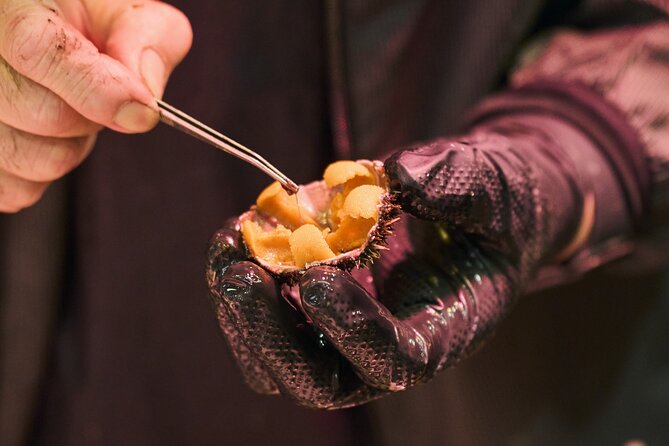
The guide also helps you navigate a busy market, which can be useful when you are deciding what to look at and how to approach the stalls. You may see seafood being prepared and displayed alongside produce and cooked foods. That mix gives you a closer look at Osaka’s food trade than a restaurant visit alone.
Kuromon can be crowded, and 30 minutes goes quickly. You will not have time to explore every stall or linger over a long meal. If you find a dish you want to try at length, make a note of the place and return after the tour.
More night outings around Osaka:
- Osaka Bar Hopping Night Walking Tour in Namba (3 bars, 6 tastes)
★ 5.0 · 958 reviews - Osaka Pub Crawl and Nightlife Tour
★ 5.0 · 293 reviews - Osaka After Dark: Small-Group Night Food Tour (Max 6)
★ 4.5 · 245 reviews - OSAKA NIGHT FUSION Japanese Taiko Kabuki Samurai Dance Show
★ 4.8 · 155 reviews
What the two-hour format gives you
This is a compact neighborhood walk, not a full-day food tour. The four stops have listed visit times of 30, 20, 20, and 30 minutes, adding up to about 100 minutes. The remaining time in the roughly two-hour experience allows for walking between them.
That pace gives you a useful introduction without taking over your day. You see several sides of Namba and its surroundings: the famous Dotonbori sign, a tucked-away temple, a specialist shopping street, and a market. The stops are varied enough to keep the walk from feeling like one long food crawl.
The trade-off is limited time at each place. You will get a first look rather than an in-depth visit, and food purchases can eat into your time. If you want to sample several dishes, make the walk itself your priority and be selective about what you buy. You can return to the market or nearby food streets later.
The tour is offered at different times throughout the day, despite its nightlife-district theme. That flexibility can help you fit it around other plans, but the precise mood of Dotonbori and the market will depend on when you go. Check the available start times before booking, especially if you are aiming for a particular atmosphere.
The guide makes the route more useful
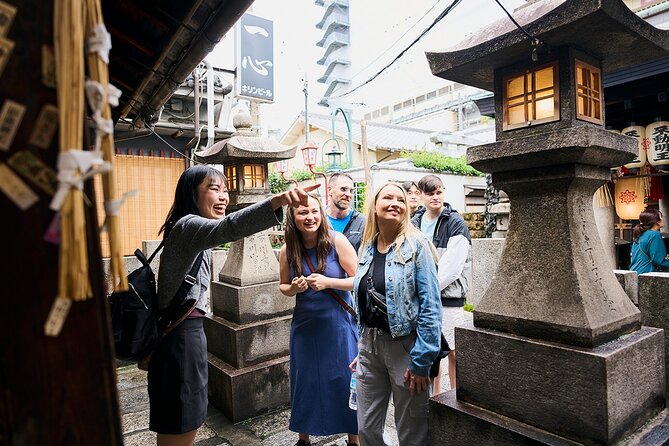
The experience includes an English-speaking guide and is limited to 15 people. That is a manageable group size for walking through market lanes and stopping at shops. It also gives you a chance to ask for local food suggestions and more restaurant ideas for the rest of your stay.
Guides who have led the walk include Kaz, Nako, and Sayaka. Their tours have been described as friendly and informative, with the experience sometimes tailored to what the group wants to eat. Sayaka, in particular, has been associated with a route that included local food, sights, history, and a try at pachinko. That kind of flexibility can make the walk feel less like a checklist, though the exact guide and activities may vary.
It is sensible to keep expectations tied to the stated route. The tour promises a walk through these neighborhoods and an introduction to local food culture, not a guaranteed pachinko stop or a fixed menu. Ask your guide about food preferences and recommendations, but plan for the core experience to be the four scheduled areas.
Is $31.84 a fair price?
At $31.84 per person, the main value is the guide and the structure of the walk, not included food. You are paying for about two hours of local orientation, help navigating a market, and context at places that might otherwise feel like a collection of shops and stalls.
That can be a good trade if you are new to Osaka, want a first introduction to Namba, or prefer having someone help you choose where to look and what to ask about. The walk brings together a temple, a specialist street, a market, and a famous entertainment district without asking you to plan the route yourself.
It is less compelling if your main goal is a generous food tasting. Meals and drinks are extra, and the tour does not include dining in. If you would rather spend two hours sitting down to eat or follow your own list of restaurants, you may get more from exploring independently.
The tour is commonly booked about 21 days ahead. That gives you a useful planning reference, not a requirement to book exactly three weeks out. A mobile ticket is provided, and the activity ends back at the starting point. It is near public transportation, and most people can participate.
Who should book this walk?
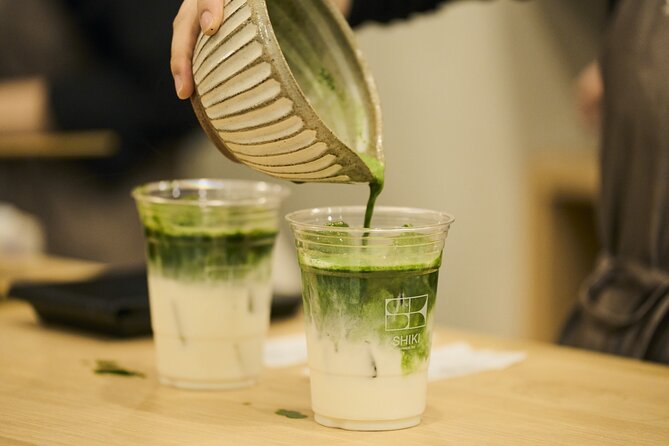
I’d put this tour high on the list for a first visit to Osaka, especially if you are staying near Namba and want a quick orientation before exploring on your own. The route gives you landmarks and local details in one outing, while the guide can point you toward restaurants to try later.
It also suits curious eaters who like to browse and sample as they go, provided they are comfortable paying for food separately. The tour is a better fit for small bites and a look at the market than for anyone expecting a full meal.
You may want to skip it if you already know the area well, want a longer food-focused experience, or need a slow pace with extended time at each stop. The schedule is compact, and the group walks between several locations in two hours.
For the best use of the time, arrive ready to walk, bring money for any snacks or drinks you want, and decide whether food or sightseeing matters more to you. This is a practical, friendly introduction to Namba’s food culture, with enough variety to help you choose where to return.
FAQ
How long does the tour last?
The tour lasts about two hours.
Where does the tour start and end?
It starts at Don Quijote Dotonbori Midosuji, at 2-chōme-5-9 Nishishinsaibashi, Chuo Ward, Osaka. It ends back at the meeting point.
What places does the walk visit?
The stops include the Dotonbori Glico sign, Hozenji Yokocho and Hozenji Temple, Sennichimae Doguyasuji Shopping Street, and Kuromon Market.
Is food included in the price?
No. Food and drinks from street vendors are not included, and the tour does not stop for a sit-down meal.
What foods might I try?
Takoyaki and gyoza are mentioned as street-food examples. Kuromon Market also has seafood, wagyu beef, fruit, sushi, and other foods for sale.
How large is the group?
The maximum group size is 15 people.
Is the tour only available at night?
No. Tours are offered at different times throughout the day, so you can choose a time that fits your schedule.
More food and drink stops around Osaka
- Hungry Osaka Street Food Tour: 15 Dishes & 3 Drinks
★ 4.9 · 694 reviews - Kuromon Market Food Walking Tour in Osaka (6 stops, 6 tastes)
★ 5.0 · 550 reviews - Osaka: Guided Food Tour with 12 Dishes at 4 Local Eateries
★ 5.0 · 533 reviews - Absolute Osaka Food Tour
★ 5.0 · 309 reviews
More walking tours around Osaka
- Osaka Local Foodie Walking Tour in Dotonbori and Shinsekai
★ 5.0 · 985 reviews - Osaka: Deep Backstreets Walking Tour with Dinner Option
★ 4.9 · 902 reviews - Ultimate Osaka Walking Tour: Castle, Dotonbori & Hidden Gems
★ 5.0 · 862 reviews - Osaka: Main Sights and Hidden Spots Guided Walking Tour
★ 4.9 · 702 reviews
Just added around Osaka
- Mount Koya from Osaka: Cultural Small Group Day Tour★ 5.0 · 3 reviews
- Matcha Tea Bowl Experience in Osaka★ 5.0 · 11 reviews
- Master Washoku: 5 Core Techniques for Authentic Cooking★ 4.7 · 7 reviews
- Manno: Osaka Premium Wagyu BBQ Experience Reservation★ 5.0 · 4 reviews
- Learning Shodo with a kimono and Trying Samurai Calligraphy★ 4.2 · 7 reviews
- Katsu Curry OR Bento Making Cooking Class & Local Shop Tour★ 4.9 · 11 reviews
- Himeji: Private Guide Tour of the Castle from Osaka or Kyoto★ 4.5 · 7 reviews
- Osaka and Nara Customized Private tour with English Driver★ 4.7 · 4 reviews
Osaka Food Tours, compared.
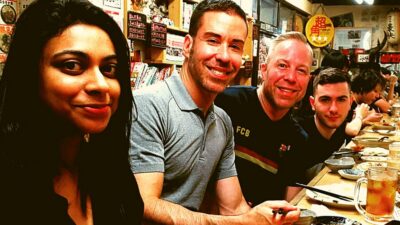
Shinsekai Food Tour with 13-15 Dishes at 5 Eateries
Read our review →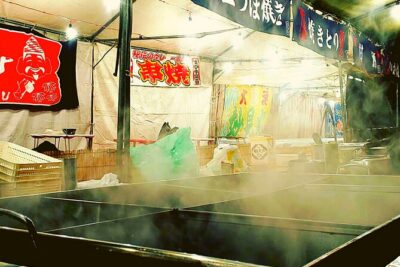
Osaka Food Tour: 13 Dishes at 5 Local Eateries
Read our review →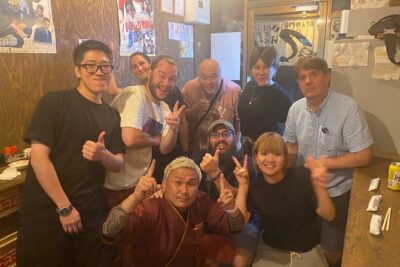
Hungry Osaka Street Food Tour:15 Tastings & 3 Drinks with a Local
Read our review →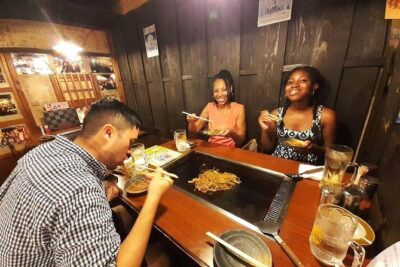
Osaka Local Foodie Walking Tour in Dotonbori and Shinsekai
Read our review →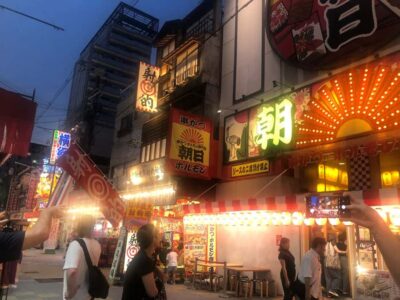
Hungry Osaka Street Food Tour: 15 Dishes & 3 Drinks
Read our review →
Kuromon Market Food Walking Tour in Osaka (6 stops, 6 tastes)
Read our review →
Guided Food Tour with 12 Dishes at 4 Local Eateries
Read our review →
Five Must-See Highlights Walking Tour & Ramen Lunch
Read our review →Browse the lists this tour appears in