
Reviewed · OSAKA SAMURAI EXPERIENCES
Osaka: Learn Bushido – Trial Slashing with Samurai Sword
A real Japanese sword is the final test here, not a prop for a quick costume photo. At Bushi no Homare, you dress in samurai clothing, learn how to handle and move with a sword, then try cutting a rolled target under a certified instructor’s guidance.
I like two things especially: the lesson gives the sword a context through etiquette and samurai customs, and you get a chance to practise before the real-blade cut. The small group, capped at four, also leaves room for individual instruction and photos.
One consideration: the activity is advertised as one hour, but one participant’s session ran close to two hours. Allow extra time, particularly since you’re asked to arrive 30 minutes before your reserved start to change and receive instructions.
- You wear dogi and hakama, traditional training clothes that make this feel more like a lesson than a photo stop.
- The practice sword comes first, with instruction in stances, swings, drawing, and returning the blade to its sheath.
- The final cut uses a real Japanese sword and a rolled target described as straw or tatami.
- The instructor covers manners and history, including why the sword held such a serious place in samurai life.
- Photos are included, with the finished images sent to an email address you provide.
- The address is easy to mix up on map apps: use Google Maps, not Apple Maps, for the listed location.
From Osaka Castle sightseeing to the dojo
This is a hands-on change of pace after a morning among Osaka’s castle grounds. Rather than only seeing a sword behind glass or watching a staged performance, you learn a few basic movements and get a supervised chance to make a cut yourself.
The activity takes place at Bushi no Homare, also called Samurai Honor, at Excellence Takayama 1F, 2-3-19 Shiginonishi, Joto-ku, Osaka. The meeting landmark is a wooden sign reading Honor of the Samurai. A rack of activity pamphlets and drying kimono and hakama outside the shop can help you spot it.
Osakajokoen Station is described as easy to find from the location, just across the river. You need to arrange your own transport, though: hotel or station pickup and drop-off, transportation, and personal expenses are not included. Use the provided Google Maps location rather than Apple Maps, which may give the wrong address.
The instructor speaks English and Japanese. Other interpreter languages, including Italian, Spanish, French, Chinese, Thai, and Indonesian, may be available, but staffing is limited. Ask about availability before booking if you need one of those languages.
Changing into training clothes
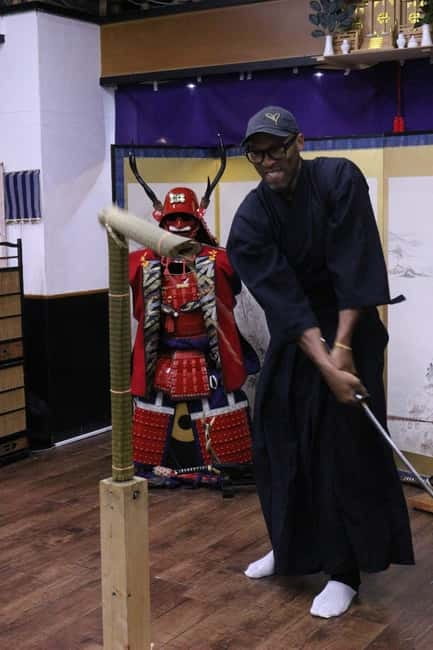
You begin by changing into dogi and hakama, the clothing worn for the lesson. Bring a T-shirt to wear underneath. It is a small detail, but changing helps mark a shift from sightseeing into practice, and it makes for better photos than ordinary street clothes.
Arrive 30 minutes before your booked start. That time is for instructions and changing, not an optional extra to squeeze into a tight itinerary. The experience is listed as one hour, but allow a generous window afterward too. One participant reported that the lesson took almost two hours, so avoid scheduling a train departure or another timed activity immediately after.
The room may also be used for calligraphy, and the provider offers martial arts, calligraphy, and tea ceremony activities. The sword lesson is not described as a theatrical show. Expect instruction and practice, with the focus on learning basic form and handling the weapon with care.
More samurai and ninja experiences around Osaka:
- Samurai Training Experience KENDO in Osaka
★ 5.0 · 515 reviews - OSAKA NIGHT FUSION Japanese Taiko Kabuki Samurai Dance Show
★ 4.8 · 155 reviews - Osaka: Samurai Training Experience KENDO in Osaka
★ 5.0 · 111 reviews
Bowing before the shrine
The lesson begins and ends with a bow before a shrine in the dojo. That ritual sets the tone: this is presented as a martial art rooted in courtesy, discipline, and character, not simply a chance to swing a blade.
The instructor explains how the sword was connected to samurai identity and responsibility. In the lesson’s account of the tradition, boys learned sword use from an early age, and a serious sword belt became part of a young samurai’s life around age 15. The sword was treated as an extension of the person, not an accessory to sell casually.
You also hear about the practical side of carrying a sword in daily life. Samurai were expected to keep their weapons close even in peaceful times, and their manners reflected the responsibility of carrying a deadly object. These details make the later practice more meaningful: the point is not just to swing hard, but to handle the sword with control and respect.
The activity includes samurai language and an explanation of the values associated with it, such as loyalty, discipline, and honor. This context is brief enough to fit a short class, but it helps connect the physical movements to the customs around them.
Learning the walk, draw, and return
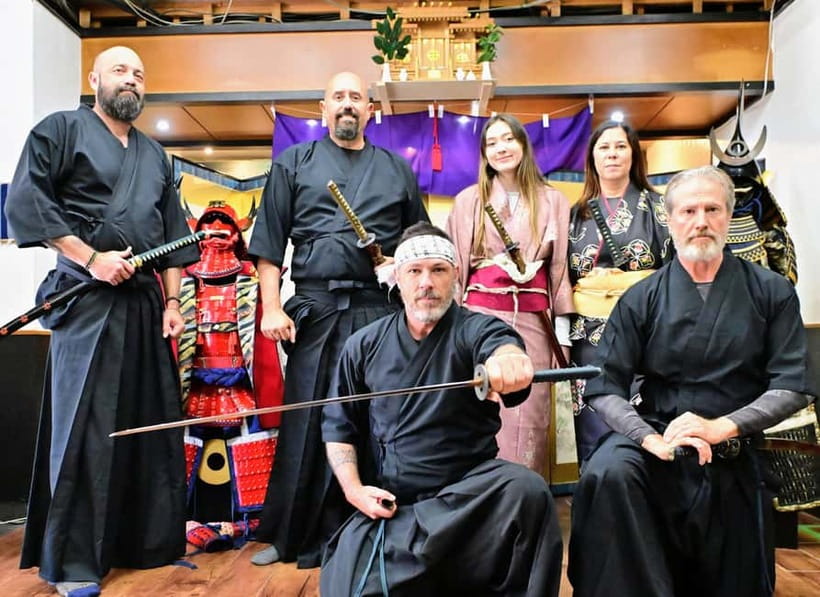
Before you practise cutting, you learn how to move with a sword belt and how a samurai’s walk differs from an ordinary stride. This may sound like a minor detail, but it teaches you that sword handling is not confined to the moment of a swing. Even standing and walking call for awareness of the weapon.
Then you work with an iai practice sword. The instructor introduces movements including battou, drawing the sword from its scabbard; chiburui, the symbolic motion of removing blood after a cut; and nottou, returning the blade to its sheath. The names are useful, but the value is in learning the sequence and seeing how each action fits into a controlled practice.
You practise basic stances, including middle, upper, lower, eight-phase, and side positions. The instructor demonstrates the movements and has you repeat them, starting with straightforward swings and progressing to more involved actions when your form is ready. A participant described the teacher correcting the basic motion before moving on to harder movements, which is the right approach for an activity involving a blade.
The instruction emphasizes letting the sword’s weight do the work rather than forcing each swing with arm strength. When the motion is right, the blade can make a distinctive sound called hi-nari. You may not master it in one session, but listening for the sound gives you a concrete way to notice how technique changes the swing.
Making the cut with a real sword
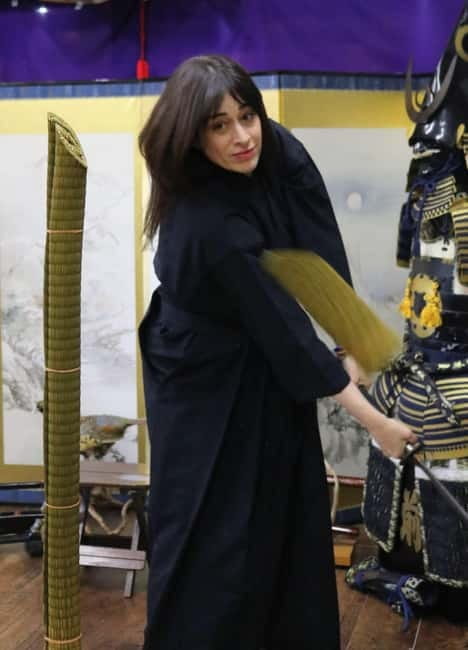
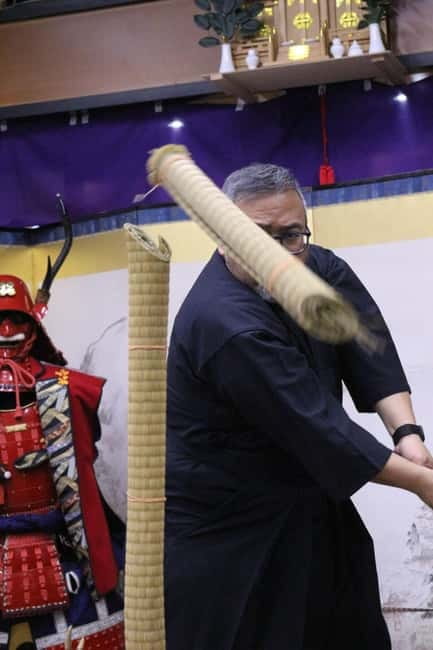
The final section is the part most people will be anticipating: a chance to cut a rolled target with a real Japanese sword. The activity describes the target as rolled straw. Participants have also described it as tatami, so think of it as a prepared practice target rather than a piece of bamboo.
You do not begin with the real blade. The lesson first covers basic techniques, stances, and swings with a practice sword, then moves to the cutting attempt. That progression is important. It gives you a chance to understand the motion before applying it to a real target, under the instructor’s supervision.
A master swordsman also demonstrates cutting technique. The experience is presented as a chance to see the blade’s cutting ability up close, then try a cut yourself. The moment is photographed, and the image files are sent to the email address you designate. Staff may also be able to take photos on your phone, which is worth asking about at the start if you want an extra set of pictures.
Do not expect a long course in swordsmanship. In an hour, or possibly longer depending on the session, you get an introduction and a memorable practical finish. The cut is a high point, but it works best because the lesson has already established some basic control and respect for the sword.
More trips and experiences around Osaka:
- Osaka Go Karting Tour with Funny Costume
★ 5.0 · 2,658 reviews - Osaka Castle: Museum and Tower Entry Ticket
★ 4.5 · 2,380 reviews - Osaka: Shinsekai Food Tour with 13-15 Dishes at 5 Eateries
★ 4.8 · 2,204 reviews - Osaka Food Tour: 13 Dishes at 5 Local Eateries
★ 5.0 · 2,149 reviews
What $92 buys you
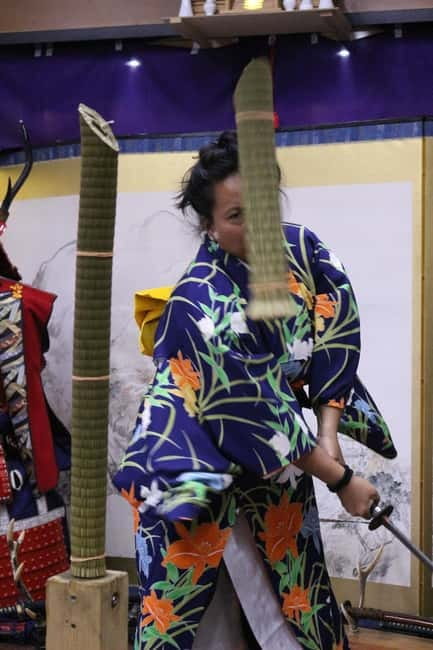
At $92 per person, this costs more than a museum visit or a short costume rental. But the fee includes samurai clothing, a certified professional instructor, the lesson, tax, tips, and photos sent by email. You are paying for individual participation and instruction, not just admission to watch someone else use a sword.
The group limit of four matters to the value. A small class gives the instructor a better chance to see your stance and adjust your swing, and it makes the cutting moment less like waiting in a queue. If you are travelling as a family or with friends, the group size also keeps the session intimate, though the listed minimum age is 10.
For someone who has long wanted to handle a katana, the mix of history, manners, practice, and a real cut makes the price easier to justify. If you are mainly after a quick samurai costume photo, it may feel expensive for an hour. The activity is most worthwhile if you are curious about how the sword is used and willing to listen, repeat movements, and take the etiquette seriously.
Photos are part of the package, but movie shooting is a paid option. Transport and personal purchases are not included. Factor those costs and the time needed to reach the location into your plans.
Who will get the most from the lesson
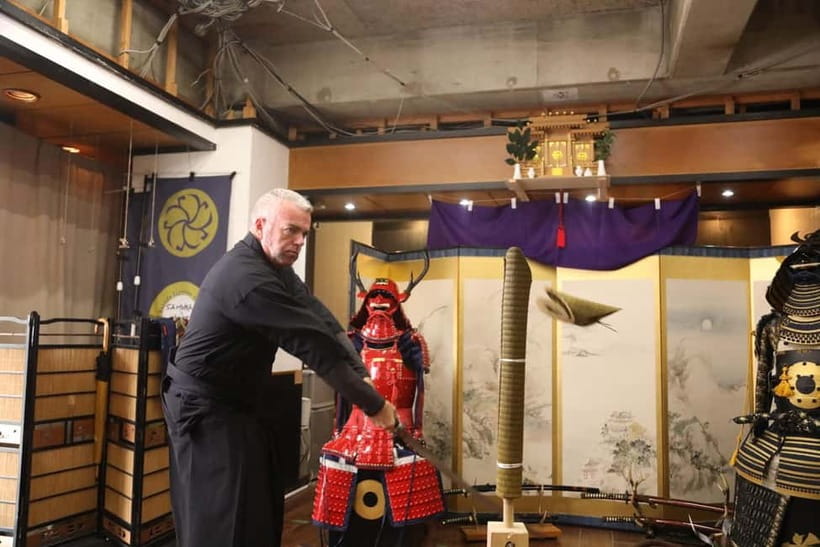
This suits curious first-timers, martial arts fans, and visitors who want an activity that offers more than a staged demonstration. You do not need prior sword experience, based on the lesson’s beginner-level stances and practice, but you should be ready to follow instructions closely.
Families may find it appealing if their children meet the age requirement. The activity is not suitable for children under 10, and the minimum age does not remove the need for a child to listen carefully around a real blade. It is also listed as unsuitable for people over 95 and people with altitude sickness.
The experience will be less appealing if you want a long, technical course or a purely historical lecture. It gives you a short introduction, a few practical movements, and a supervised cut, with the cultural background woven around the lesson. That is a satisfying format for a spare hour, but it is not a substitute for sustained martial arts training.
Timing, booking, and small practical details
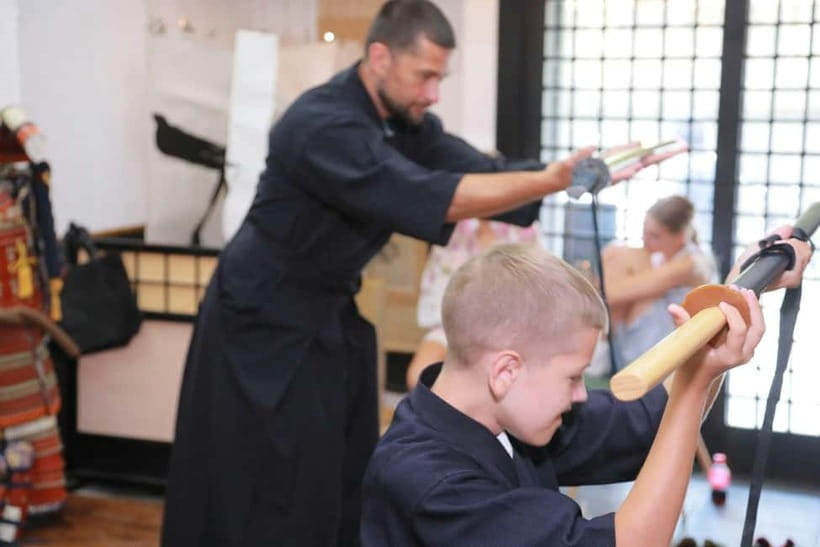
The class is listed as one hour, with starting times shown through availability. Arrive 30 minutes early for changing and instructions, and leave room in your schedule in case the session runs longer. One participant’s experience approached two hours, so treat the advertised duration as a guide rather than a guarantee.
Booking allows you to reserve now and pay later, and cancellation is free up to 24 hours beforehand for a full refund. The group is limited to four participants. Bring a T-shirt, and leave food and drinks, alcohol, and party plans out of the dojo; bachelor and bachelorette groups are not allowed.
Should you book the samurai sword lesson?
Book it if you want to move beyond looking at samurai history and try a carefully guided version of sword practice for yourself. The combination of clothing, etiquette, basic forms, and a real-blade cut gives the hour a clear arc, and the included photos preserve the moment without making the class feel like a photo session.
I would skip it if your schedule is packed tightly, if you only want a costume picture, or if you are uncomfortable following close instructions around a real sword. For everyone else, this is a distinctive Osaka activity with more substance than its dramatic final cut might suggest. Reserve extra time, use Google Maps, and arrive early.
FAQ
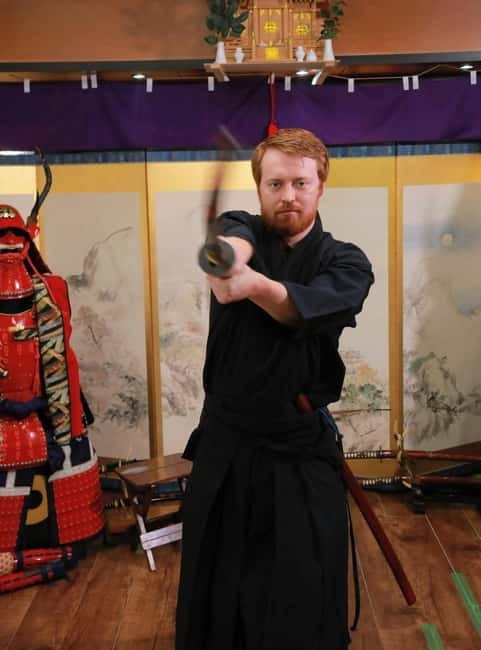
How long does the experience take?
It is listed as one hour. Arrive 30 minutes early for instructions and changing, and allow extra time afterward because a session may run longer.
How much does the activity cost?
The listed price is $92 per person. Tax, tips, samurai clothing, instruction, and photos are included.
Where does the lesson take place?
It takes place at Bushi no Homare, Excellence Takayama 1F, 2-3-19 Shiginonishi, Joto-ku, Osaka. Use the Google Maps location because the Apple Maps address is described as incorrect.
What is the meeting point landmark?
Look for a wooden sign that reads Honor of the Samurai. A pamphlet rack and kimono and hakama hanging outside may also help you identify the place.
What should I bring?
Bring a T-shirt to wear under the samurai clothing.
What languages are available?
The instructor speaks English and Japanese. Interpreters for Italian, Spanish, French, Chinese, Thai, and Indonesian may be available, but you should ask about staff availability before booking.
Is the activity suitable for children?
It is not suitable for children under 10. The listed minimum age is 10.
Do I get to use a real Japanese sword?
Yes. After practising basic techniques, you can try cutting a prepared rolled target with a real Japanese sword under instruction.
Are photos included?
Yes. Photos of the cutting moment are included and sent to the email address you provide. Movie shooting is a paid option.
Can I cancel my reservation?
Yes. You can cancel up to 24 hours in advance for a full refund.
Just added around Osaka
- Mount Koya from Osaka: Cultural Small Group Day Tour★ 5.0 · 3 reviews
- Matcha Tea Bowl Experience in Osaka★ 5.0 · 11 reviews
- Manno: Osaka Premium Wagyu BBQ Experience Reservation★ 5.0 · 4 reviews
- Master Washoku: 5 Core Techniques for Authentic Cooking★ 4.7 · 7 reviews
- Learning Shodo with a kimono and Trying Samurai Calligraphy★ 4.2 · 7 reviews
- Katsu Curry OR Bento Making Cooking Class & Local Shop Tour★ 4.9 · 11 reviews
- Himeji: Private Guide Tour of the Castle from Osaka or Kyoto★ 4.5 · 7 reviews
- Osaka and Nara Customized Private tour with English Driver★ 4.7 · 4 reviews
Osaka Samurai Experiences, compared.
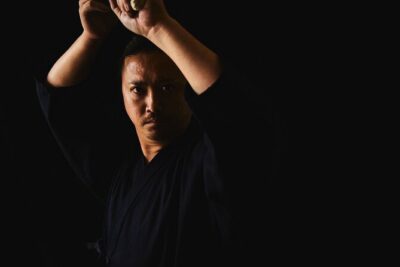

OSAKA NIGHT FUSION Japanese Taiko Kabuki Samurai Dance Show
Read our review →
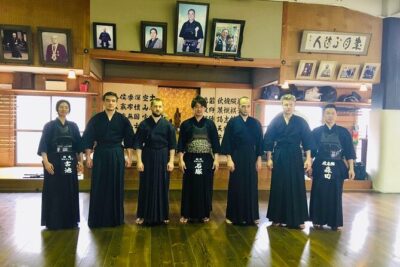
Osaka 2-Hour Genuine Kendo / Samurai Experience In Japan
Read our review →
Samurai Show, Tea Ceremony, Japanese Traditional Activities
Read our review →
Private Samurai Experience – Train with Sword Master
Read our review →
Honor – Experience Samurai & traditional Culture to the fullest
Read our review →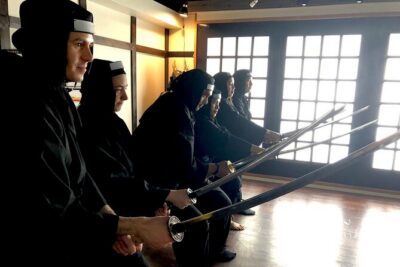
Browse the lists this tour appears in