
Reviewed · OSAKA CASTLE TOURS
Samurai Armor & Sword experience with phot near Osaka Castle
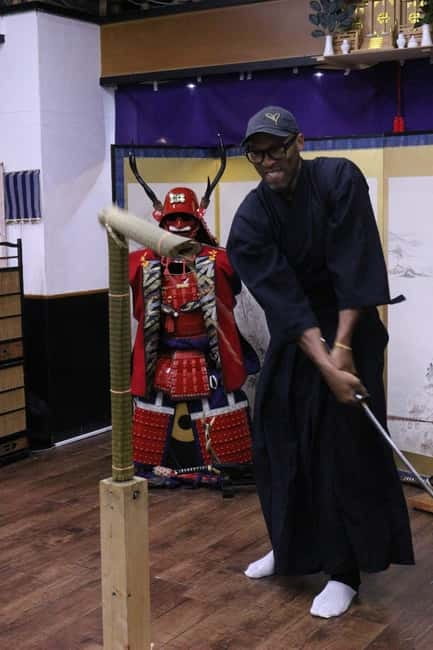
The striking part of this 90-minute session is the shift from learning how a samurai carried a sword to handling one yourself. At Bushi no Homare, a certified instructor guides you through sword etiquette, basic forms and a supervised cut with a real sword, then you put on armor for photos.
I like two things in particular: the instruction gives the sword customs context, not just a few showy swings, and the armor and emailed photos give you a keepsake from an activity that is hard to replicate with ordinary sightseeing. English instruction is available, and the session is private.
One consideration: this is a small indoor activity, not a tour of Osaka Castle, and the address is in Joto-ku. Arrive 30 minutes early to change, and check the location carefully because Apple Maps may point to the wrong address.
- Start with samurai clothing: Change into a dogi and hakama before the instruction begins.
- Learn the manners behind the sword: Bow at the dojo shrine and practise how to carry, draw and return a sword.
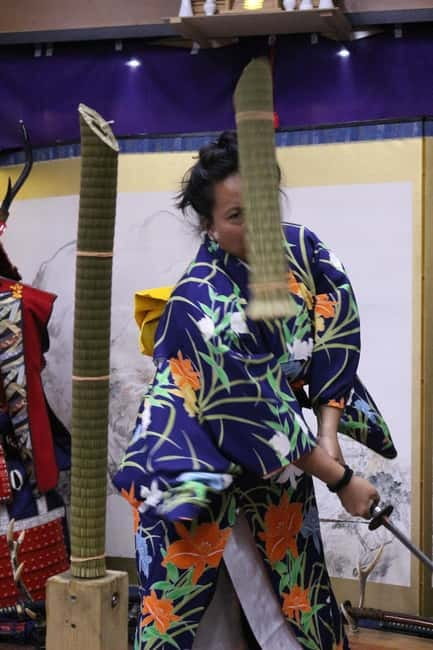
- Try a real cut: The instructor guides you through a supervised cutting exercise with a real samurai sword.
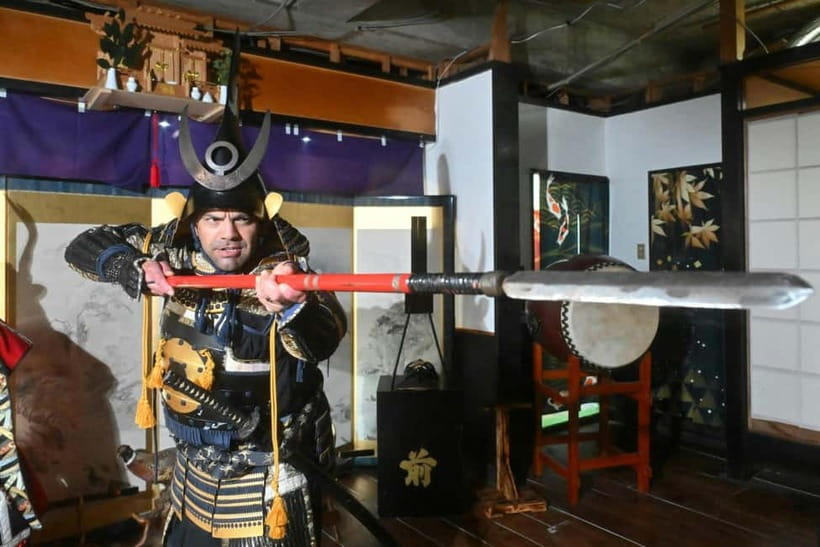
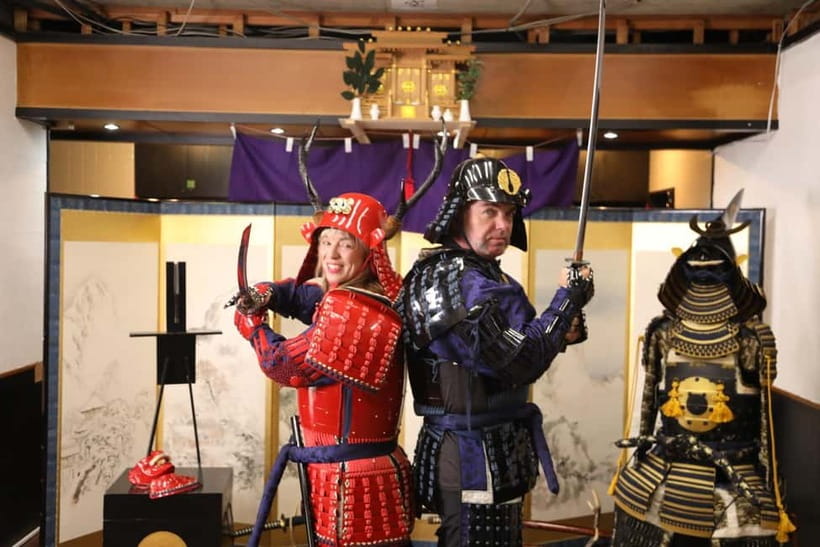
- Wear armor indoors: Finish in samurai armor and a helmet, with a commemorative photo session.
- Book for the hands-on format: The 90-minute session is private, with English or Japanese instruction.
From street clothes to samurai dress
The experience begins with a change into traditional training clothes: a dogi and hakama. Bring a T-shirt to wear underneath. Getting dressed is more than a photo-op warm-up. It gives the session a clear transition from ordinary Osaka sightseeing to a lesson built around samurai customs and practice.
The activity is held at Bushi no Homare, also called Samurai Honor, at Excellence Takayama 1F, 2-3-19 Shiginonishi, Joto-ku, Osaka. Look for the wooden sign marked Honor of the Samurai, pamphlets outside, or kimonos and hakama hanging near the shop. The supplied directions caution that the Apple Maps address is incorrect, so use the Google Maps location instead.
Plan to arrive 30 minutes before your booked start time. That buffer is for instructions and changing, not extra practice time, so do not cut it close. The session itself lasts 90 minutes, and starting times depend on availability.
A bow sets the tone
Before handling swords, you bow at a shrine inside the dojo. The practice begins and ends with a bow, a simple ritual that makes the session feel more considered than a costume fitting followed by a few swings.
The instructor introduces the dojo’s training approach and the samurai ideals that frame the lesson. The experience describes honor and responsibility as central to carrying a sword. That context matters: a sword is not treated as a prop, but as a weapon that requires care and discipline.
You will hear a brief explanation of how young samurai learned with wooden swords and later carried real blades. The lesson also covers how a sword stayed close at home and in public. This is a compact introduction rather than a full history seminar, but it gives useful meaning to the gestures you practise next.
More Osaka Castle tours around Osaka:
- Osaka Castle: Museum and Tower Entry Ticket
★ 4.5 · 2,380 reviews - Osaka Castle Walking Tour and Castle Tower Admission
★ 5.0 · 561 reviews - 5-Hour Osaka Bike Tour to the Neighborhood of Osaka Castle
★ 5.0 · 319 reviews
Sword etiquette, from belt to ready position
A samurai did not simply carry a sword in any direction. You practise placing it in the belt with the blade facing up, then learn the custom of walking on the left so that scabbards would not knock together. The details make the exercise memorable because they turn posture and movement into a lesson about daily conduct.
You also learn about the koiguchi, the scabbard opening, and the idea of keeping a sword ready to draw. These are taught as part of samurai manners and technique, not as encouragement to use a weapon. The emphasis is on controlled movement and respect for what you are holding.
I like this part because it slows the session down before the more theatrical moments. You get a sense of how the sword shaped a samurai’s habits, instead of treating it as a dramatic accessory. If you are mainly looking for fast action, this careful groundwork may feel less exciting, but it is what makes the later practice more legible.
Practising the draw, cut and return
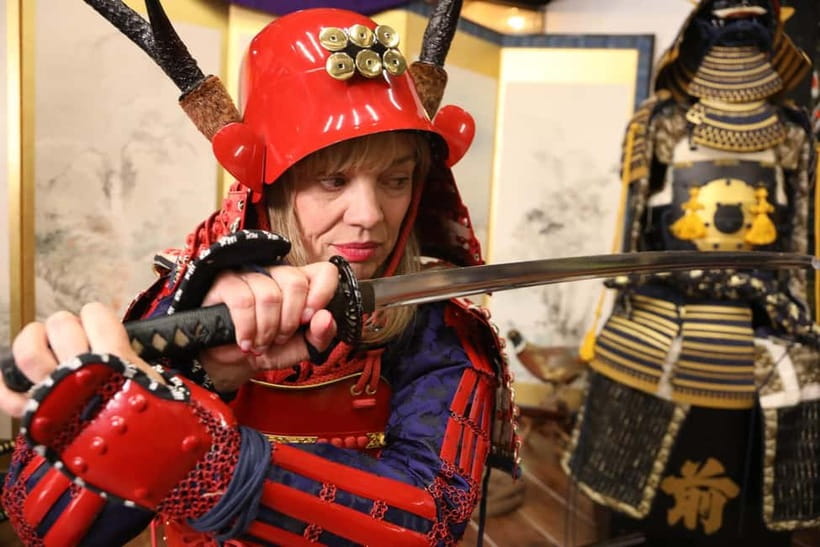
Next comes practice with an iai training sword. You learn the basic sequence: battou, drawing the sword from its scabbard; chiburui, a symbolic motion associated with removing blood from the blade after a cut; and nottou, returning the sword to its sheath. The movements are taught in order, giving you a short routine to follow rather than a jumble of unfamiliar gestures.
The instructor then works through basic stances, kata and sword swings. One teaching point is to let the sword’s weight carry the downward swing rather than forcing it with arm strength. When the movement is done correctly, the sword can make a distinct hi-nari sound. That sound is a practical cue to pay attention to your technique, not just the pose.
Expect close instruction and repetition. This is a guided introduction, not a test of athletic ability, but the lesson does ask you to focus on balance, timing and control. The private-group format helps keep attention on your own practice rather than a large crowd’s schedule.
The real sword cutting exercise
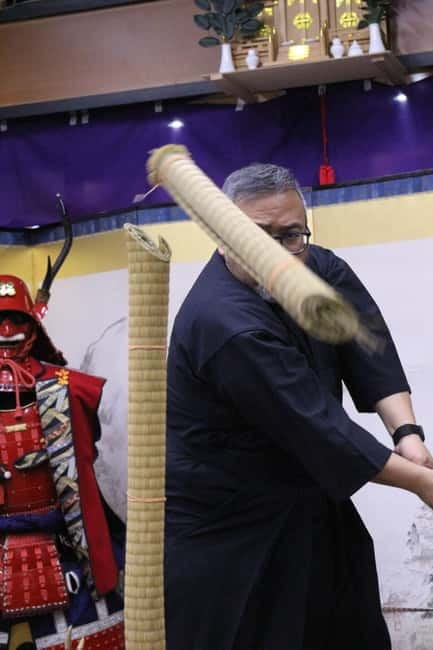
The most unusual part is the chance to try cutting with a real samurai sword under the instructor’s guidance. That is a different proposition from swinging a wooden practice sword, and it is the activity’s clearest draw for anyone curious about traditional sword technique.
The cutting is presented as a supervised exercise, not an unscripted demonstration. Follow the instructor’s directions closely and treat the blade with care. The experience’s emphasis on manners and basic forms is useful preparation for this moment, but the provided details do not specify the cutting target or how many attempts are included.
This activity suits adults and children aged 10 or older who want a structured, hands-on cultural experience. It is not suitable for children under 10, people over 80, babies under one, or people with altitude sickness. If you have concerns about handling a real blade or participating in physical practice, check with the provider before booking.
More samurai and ninja experiences around Osaka:
- Samurai Training Experience KENDO in Osaka
★ 5.0 · 515 reviews - OSAKA NIGHT FUSION Japanese Taiko Kabuki Samurai Dance Show
★ 4.8 · 155 reviews - Osaka: Samurai Training Experience KENDO in Osaka
★ 5.0 · 111 reviews - Osaka: A Modern Samurai, Kabuki, Taiko, & Dance Show
★ 4.5 · 66 reviews
Armor, helmet and a photo to take home
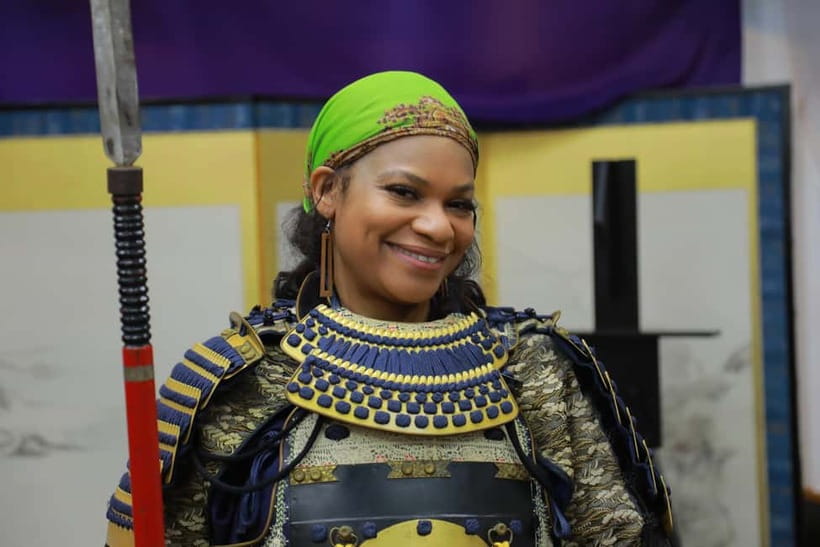
After sword practice, you can put on samurai armor and a helmet indoors. The armor is a change of pace from the close, technical work with the sword. It gives you a chance to see how the clothing and protective equipment alter your posture and presence, while making for a more distinctive souvenir than another castle snapshot.
A photo session is included, and the image data is sent to a designated email address. That is a useful detail if you want a record of the experience without needing to manage your own camera during the session. Movie shooting is not included, but is available as a paid option.
The armor is worn indoors, so this is not a chance to parade around Osaka Castle in a full suit. Keep that expectation clear: you get a guided indoor experience and a commemorative photograph, not a public reenactment.
What $106 buys you
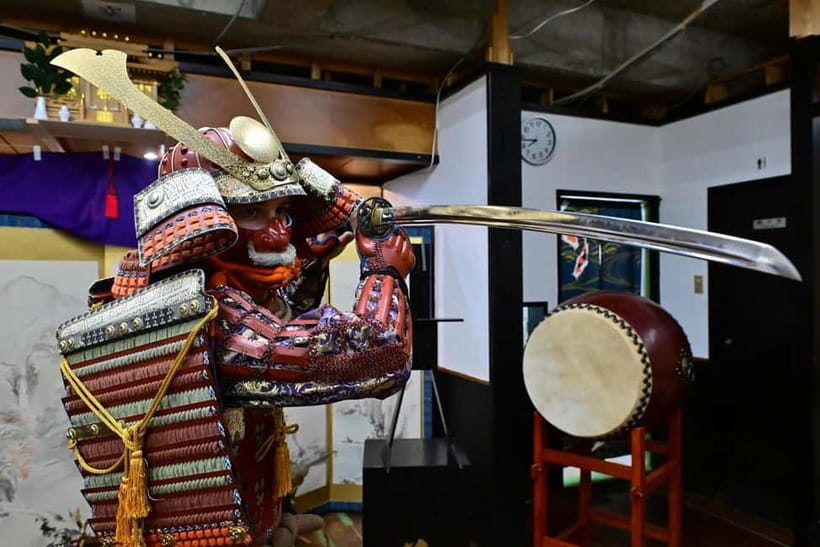
At $106 per person, this is a premium activity for 90 minutes. The price includes samurai clothing, indoor armor, instruction from a certified professional, English-speaking staff, taxes, tips and the photo session with emailed images. The private format also means you are not joining a large mixed group.
The value depends on what you want from your Osaka visit. If you only want a quick costume photo, the price may feel steep. If you want a guided sequence that combines sword etiquette, basic technique, a real-sword cutting exercise and armor, the session offers more than a dress-up stop.
There is no transport or pickup from a station or hotel included, and you will need to arrange your own way there. English and Japanese are the stated languages. Interpreters may be available in Italian, Spanish, French, Chinese, Thai or Indonesian, but availability is limited, so ask about the schedule before booking rather than assuming you can secure one.
The experience has a listed rating of 4.6 from 16 ratings. The strongest recurring qualities in the available feedback are clear instruction, friendly and helpful hosts, an enjoyable learning format and good photos. One practical warning also matters: two bookings were reportedly cancelled for overbooking, including one on the morning of the session. That is a serious disappointment if you have built a tight day around it, so keep your plans flexible and confirm details close to the date.
Getting there and planning your visit
The activity is described as near Osaka Castle, but its stated address is in Joto-ku, not inside the castle grounds. Treat it as a separate appointment rather than something you can simply join while wandering through the castle. Check the route from your other plans and allow time to find the storefront.
The meeting landmark is a wooden sign reading Honor of the Samurai. A rack of activity pamphlets and drying kimonos or hakama may help you spot it. Because the address shown in Apple Maps is said to be incorrect, follow the supplied Google Maps pin.
The session is private, which makes it a good fit for a couple, family or small party wanting direct instruction. Party groups and bachelor or bachelorette groups are not allowed. Pets, food, alcohol and drugs are also prohibited; assistance dogs are allowed. Strollers and baby carriages are not permitted.
Cancellation is free up to 24 hours in advance for a full refund, and you can reserve now and pay later. Those terms are helpful if your Osaka itinerary is still shifting, though they do not remove the need to verify your session, given the overbooking concern.
Should you book the samurai experience?
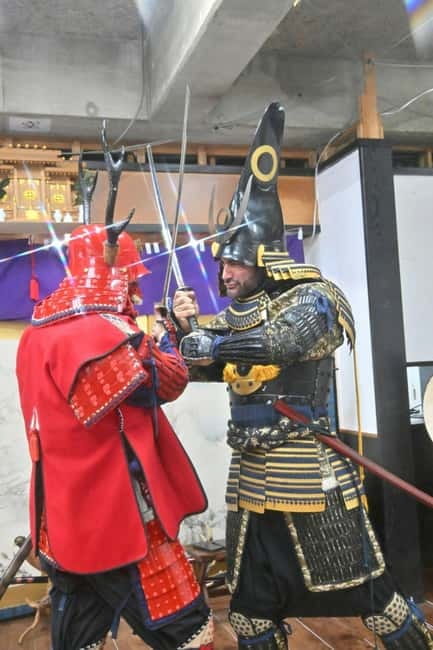
Book it if you want more than a costume photo and are curious about the discipline behind samurai sword practice. The strongest case is the mix of etiquette, basic forms, supervised real-sword cutting and indoor armor, all within a private 90-minute session. The clear instruction and emailed photos make it easier to enjoy without juggling your own camera.
Skip it if you expect an outdoor activity at Osaka Castle, a long historical tour, or a casual party-style sword show. The price is substantial for the duration, the address takes some planning, and the real blade calls for focused participation. For the right visitor, though, it is a memorable change of pace from temples, museums and castle corridors.
FAQ
How long does the experience last?
The session lasts 90 minutes. You should arrive 30 minutes before your reserved time for instructions and changing.
What is the address?
The activity is at Excellence Takayama 1F, 2-3-19 Shiginonishi, Joto-ku, Osaka-shi, Osaka 536-0014. Use the provided Google Maps location because the Apple Maps address is stated to be incorrect.
What should I bring?
Bring a T-shirt to wear under the samurai clothing.
Is the instruction available in English?
Yes. English and Japanese are available. Interpreters for Italian, Spanish, French, Chinese, Thai and Indonesian may be available, but you should ask about staff schedules before booking.
Is the samurai armor included?
Yes. Samurai armor and a helmet are included for indoor wear, along with a photo session. Photo data is sent to a designated email address.
Can I try a real sword?
Yes. The session includes a supervised sword-cutting exercise with a real samurai sword, as well as practice with an iai training sword.
Can I cancel, and is transportation included?
You can cancel up to 24 hours in advance for a full refund, and reserve now with payment later. Transportation and pickup from a station or hotel are not included.
Just added around Osaka
- Mount Koya from Osaka: Cultural Small Group Day Tour★ 5.0 · 3 reviews
- Matcha Tea Bowl Experience in Osaka★ 5.0 · 11 reviews
- Master Washoku: 5 Core Techniques for Authentic Cooking★ 4.7 · 7 reviews
- Manno: Osaka Premium Wagyu BBQ Experience Reservation★ 5.0 · 4 reviews
- Learning Shodo with a kimono and Trying Samurai Calligraphy★ 4.2 · 7 reviews
- Katsu Curry OR Bento Making Cooking Class & Local Shop Tour★ 4.9 · 11 reviews
- Himeji: Private Guide Tour of the Castle from Osaka or Kyoto★ 4.5 · 7 reviews
- Osaka and Nara Customized Private tour with English Driver★ 4.7 · 4 reviews
Osaka Castle Tours, compared.

Osaka Castle Walking Tour and Castle Tower Admission
Read our review →
5-Hour Osaka Bike Tour to the Neighborhood of Osaka Castle
Read our review →

PRIVATE 6hr, Food tour from Osaka Castle, Kuromon, Dotonbori.
Read our review →
A Tour to Explore the Symbol of Osaka: Osaka Castle
Read our review →
Learning Zen of Japanese Calligraphy in kimono near Osaka Castle
Read our review →Browse the lists this tour appears in