
Reviewed · DOTONBORI TOURS
Osaka: Sushi Class in Dotonbori
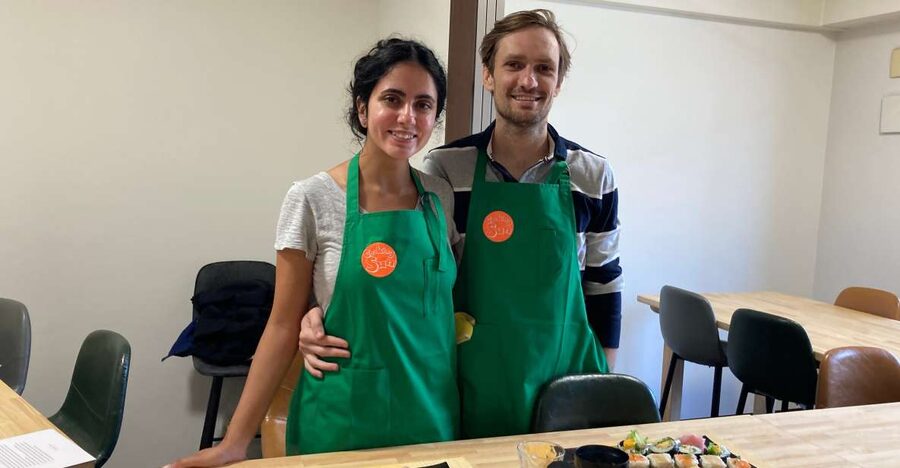
In this Dotonbori-area class, you make three distinct kinds of sushi, including oshizushi, Osaka’s pressed, square-shaped specialty. It’s a useful way to get beyond eating sushi and learn how rice, fillings, and technique shape the finished dish.
I like that the class pairs familiar nigiri with a Kansai regional style you may not encounter as often. I also like the small group of up to eight and the three-hour format, which leaves room for clear instruction and questions rather than a quick demonstration.
One consideration: this is a sushi-making class, not a fish-cutting lesson. You work with the supplied ingredients, and one participant wished there had been a chance to slice the fish. If that hands-on skill is your main goal, check before booking.
- Three styles, one class: Make nigiri, a salad roll, and Osaka-style pressed sushi.
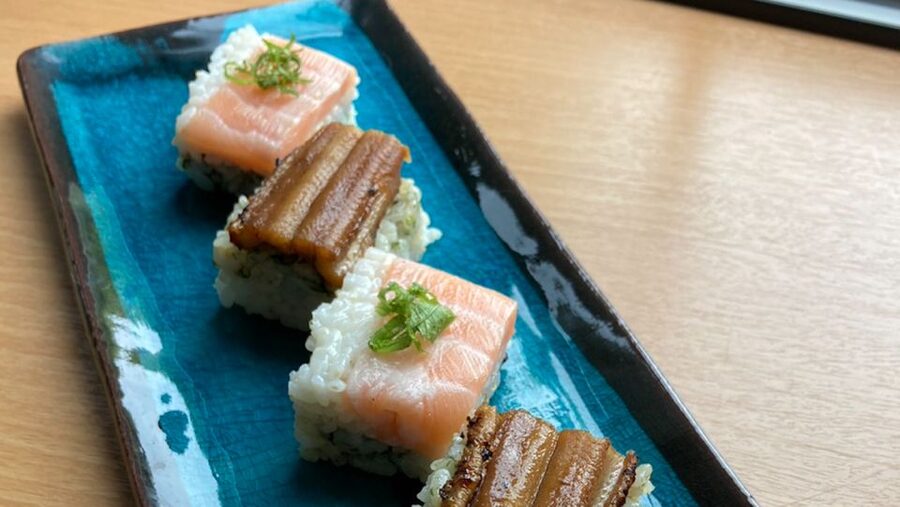
- A local specialty: Oshizushi is packed in a square wooden frame and pressed into a firm, sliceable shape.
- English instruction: Instructors guide the class in English. Past teachers have included Yoshi, Yoko, Ami, Eriko, and Naomi.
- A meal at the end: You eat the sushi you prepare, and the portions have been described as generous.
- Small group setting: The class is limited to eight participants, with ingredients included in the $67 price.
- Plan dietary needs early: Request a vegetarian or gluten-free option when you book.
Three sushi styles, not just a roll
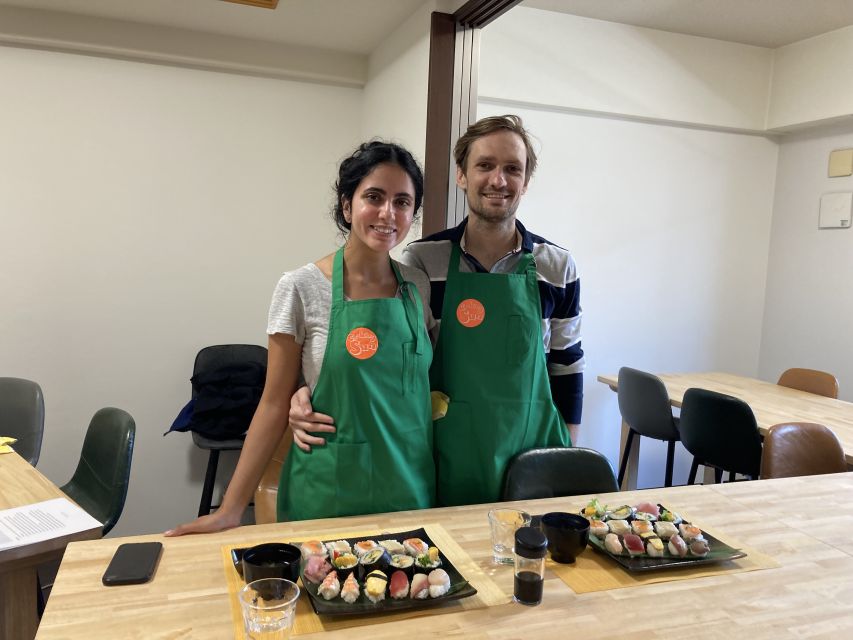
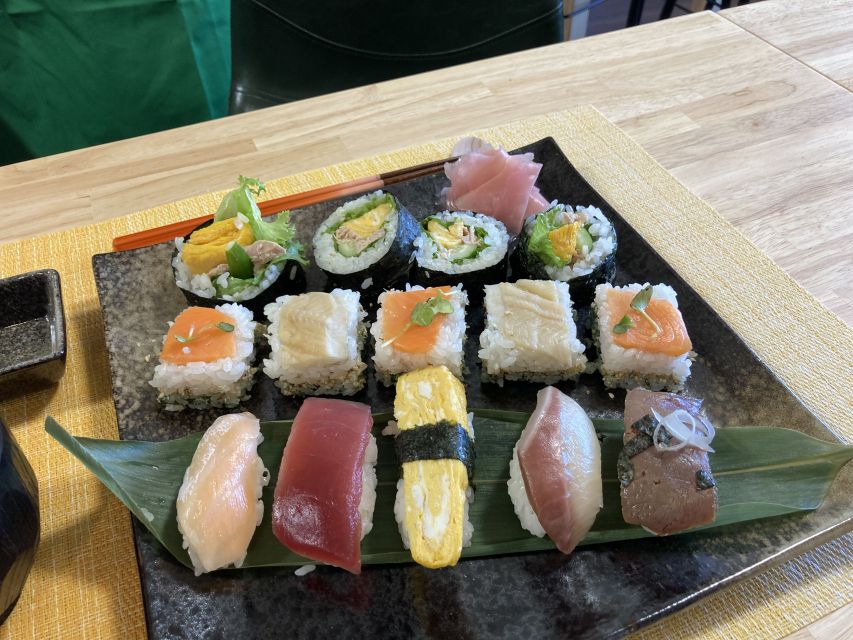
The appeal here is variety. In three hours, you make a salad roll, nigiri, and oshizushi, three forms that ask you to handle rice and fillings differently. That gives you more than a single recipe to take home in your head.
The class is in Dotonbori, an area known for food and central to many Osaka itineraries. It makes a practical change of pace from eating your way through restaurants: you spend time learning how a few familiar ingredients become different kinds of sushi. The experience is based at Cooking Sun Osaka, in room 202.
The group is capped at eight, and instruction is in English. Those details matter if you are new to sushi-making. A small class gives you a better chance to follow demonstrations closely, ask questions, and get help as you work. The teachers’ names can vary, but instructors mentioned by name include Yoshi, Yoko, Ami, Eriko, and Naomi.
Starting with the salad roll
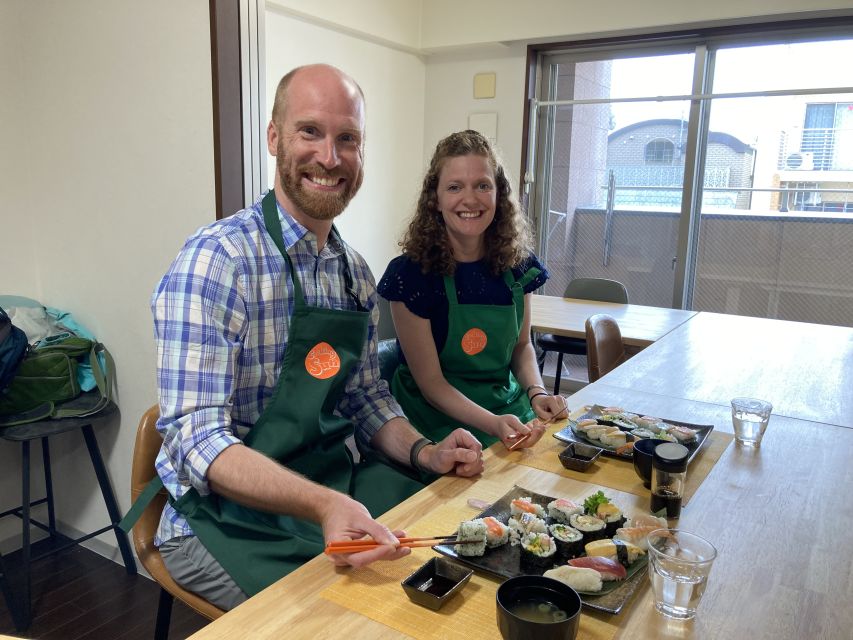
The first style is a rolled sushi with a mix of textures and flavors. Its ingredients include crab-flavored kamaboko, lettuce, cucumber, tuna mixed with mayonnaise, nori, and a center of tamagoyaki, or Japanese egg roll.
This is likely the most familiar format if you have made or eaten sushi rolls before, but the filling combination gives you a specific recipe to practice. The crisp vegetables, creamy tuna, and sweet egg make for a fuller roll than a simple vegetable maki. Nori wraps the ingredients around the rice and holds the roll together.
The class description calls this a healthy option with fresh vegetables. More practically, it is a good style for learning how to arrange several fillings in a roll without losing the shape. You make the roll yourself, then get to eat it as part of the meal at the end.
If you do not eat fish or have dietary restrictions, do not assume the listed recipe will suit you as written. Vegetarian and gluten-free options are available by request, but you need to leave a note when booking. The ingredient list includes tuna and crab-flavored kamaboko, so be clear about what you can and cannot eat.
More Dotonbori and Namba tours around Osaka:
- Osaka Local Foodie Walking Tour in Dotonbori and Shinsekai
★ 5.0 · 985 reviews - Osaka Bar Hopping Night Walking Tour in Namba (3 bars, 6 tastes)
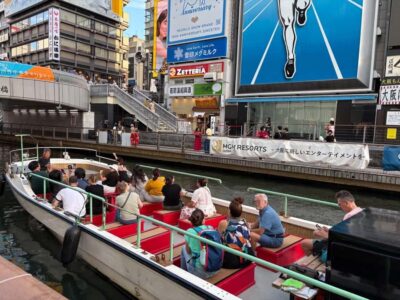
★ 5.0 · 958 reviews - Osaka: Dotonbori District River Cruise with Drink Discount
★ 4.2 · 876 reviews
Shaping nigiri by hand
Nigiri is the best-known form on the menu: a bite-sized mound of vinegared rice topped with an ingredient such as fish, shellfish, or omelet. Its apparent simplicity is part of the challenge. The rice and topping need to sit together neatly, without turning the piece into a compact block.
The class gives you a chance to make nigiri yourself rather than only watch someone else shape it. That makes this a useful introduction for beginners, and the teaching style is described as step-by-step and clear. You do not need prior experience to take part.
There is one limit worth knowing. The experience is not advertised as a fish preparation or knife-skills lesson, and you should not count on slicing the fish yourself. If cutting fish is the particular technique you want to learn, ask the provider before you book. If your main interest is shaping and assembling sushi, the class still covers the central skill.
Specific toppings can depend on what is supplied for the class. The general method allows for fish, shellfish, or omelet, but no fixed fish selection is promised. Think of this as a lesson in sushi forms and assembly, not a guaranteed tasting of a particular species.
Pressing Osaka’s box sushi
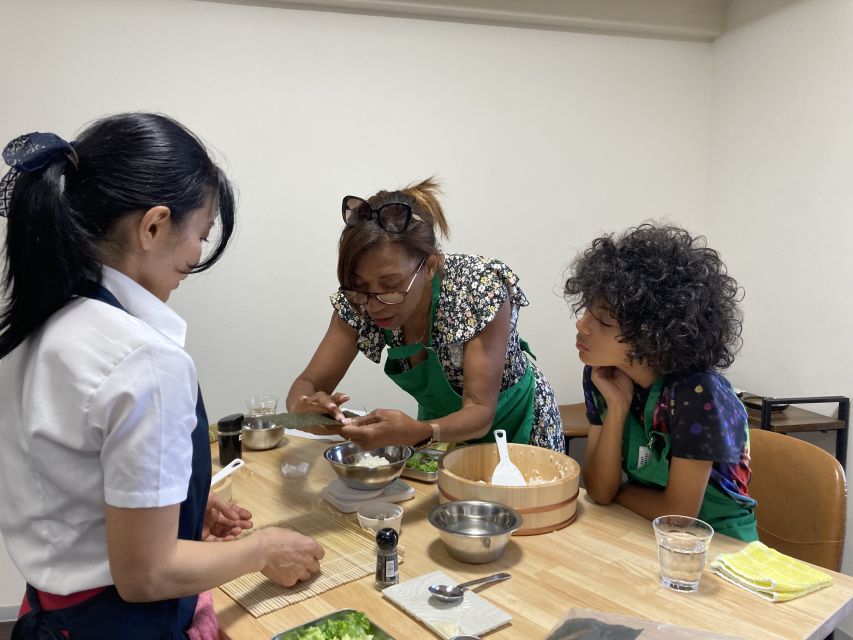
The regional highlight is oshizushi, a traditional sushi style from the Kansai region. It is also called box sushi in Osaka. Rather than shaping each piece by hand like nigiri, you fill a square wooden frame with sushi rice, add toppings, and press the layers together.
The pressure helps the rice adhere to the toppings. The finished sushi is square, then cut into pieces just before eating. This creates a different look and feel from the roll and nigiri, and it gives the class a clear connection to Osaka’s local food traditions.
I like this part of the class because it adds something place-specific. Nigiri is familiar across Japan and abroad, while pressed sushi offers a chance to make a style tied to Kansai. You leave having tried a regional technique, not just a standard sushi set.
The wooden frame also changes the work. You are building and pressing a larger shape rather than forming one bite at a time. That contrast helps make the three-hour session feel varied, though anyone expecting elaborate fish carving or restaurant-level knife practice should keep expectations in check.
Following the instructor and eating what you make
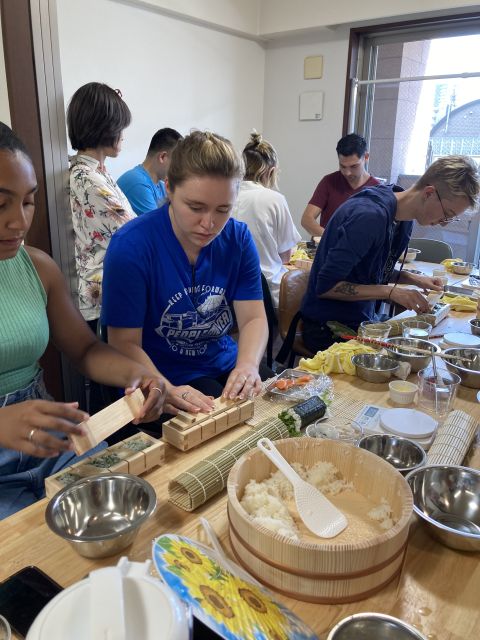
The instructor leads the process in English, explaining the methods and guiding you through each style. Past classes have been led by teachers including Yoshi, Yoko, Ami, Eriko, and Naomi. The exact instructor for your session is not specified, but the English-language format is.
The teaching is described as interactive, with time for questions and conversation. Some instructors have also shared information about Japanese food customs and cooking traditions. That context can make the class more useful than following a recipe alone, especially if you are curious about how different sushi styles fit into local food culture.
You make the food yourself and eat it at the end. The amount has often been enough for a substantial meal, so it is sensible not to schedule a large lunch immediately beforehand. The ingredients are included in the price, and the class is designed around preparing and sharing the finished sushi.
Do not expect every session to include exactly the same additional dishes. Some people have also made items such as dashi or miso soup in their class, but the core experience described here is the three sushi styles. If a particular extra dish matters to you, check with Cooking Sun Osaka rather than assuming it is part of every session.
More hands-on workshops around Osaka:
- Sushi Making Osaka Roll and Authentic Japanese Sushi Class
★ 5.0 · 1,220 reviews - Matcha Making Class in Osaka with Authentic Japanese Sweets Set
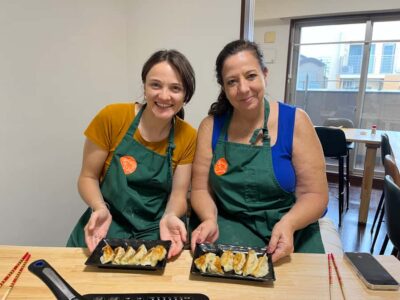
★ 5.0 · 509 reviews - Osaka: Ramen and Gyoza Cooking Class in Dotonbori
★ 5.0 · 378 reviews - Osaka Sushi Making Class – Hands-On Nigiri & Rolls (Same-Day OK)
★ 5.0 · 352 reviews
What $67 buys you
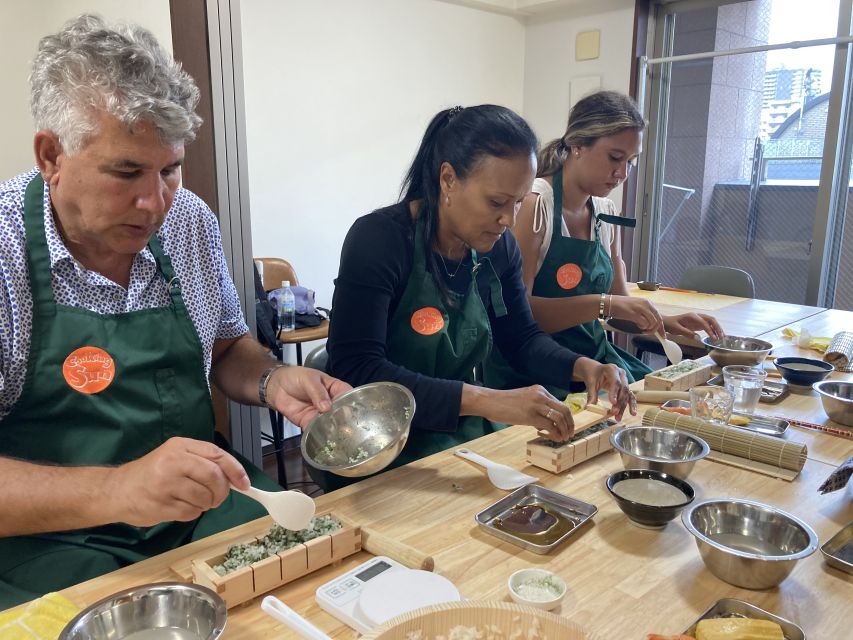
At $67 per person, the class is more than a quick demonstration. You get three hours of instruction, ingredients for the sushi, the chance to make three distinct styles, and a meal made from your work. For someone who likes Japanese food and wants a practical activity in Osaka, that is a solid use of part of a day.
The value depends on what you want from the experience. If you are mainly looking for the cheapest way to eat sushi, a restaurant will be simpler. If you want guided practice, a small-group setting, and a regional style alongside familiar nigiri, the class offers more than a meal alone.
The group limit of eight is a useful part of the equation. It keeps the session small enough for individual help without making the activity feel like private instruction. The class is also listed as wheelchair accessible, which may help with planning, though you should contact the provider about any specific access needs.
Finding room 202 and planning ahead
The meeting point is Cooking Sun Osaka, room 202. At the entrance, press 202 and then the 呼出 call button. The address is not included in the activity details, so use the meeting-point information provided with your booking and allow time to locate the entrance.
One person had trouble finding the venue, even with a taxi, and described walking along the street until the instructor came out to meet them. The tree outside was a helpful landmark once spotted. I would save the meeting details in advance and avoid relying on a driver to know the cooking school by name.
The class lasts three hours, and starting times depend on availability. It is a good fit for a morning or afternoon when you can focus on the lesson and then enjoy the sushi you have made. The activity is offered in English and can be booked with free cancellation up to 24 hours in advance. A reserve-now, pay-later option is also available.
Who should book this class
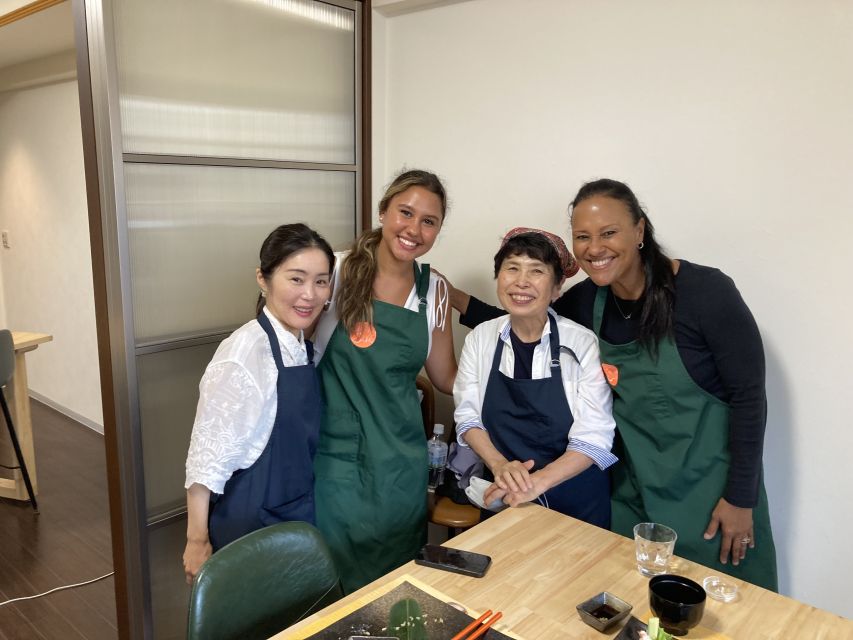
This class suits sushi fans who want to try making food themselves, beginners who appreciate clear guidance, and anyone curious about Osaka’s pressed sushi. It also works well if you want a cultural activity with a meal built in, rather than another stop where you simply order from a menu.
It is less suited to someone whose main goal is fish butchery, advanced knife practice, or a guaranteed menu of specific fish. The class focuses on making three sushi forms from supplied ingredients. The exact ingredients and any extra dishes are not fully specified.
If you have dietary needs, leave a note at booking for a vegetarian or gluten-free option. Since the standard roll includes tuna and crab-flavored kamaboko, spelling out your requirements is better than waiting until class begins.
Should you book?
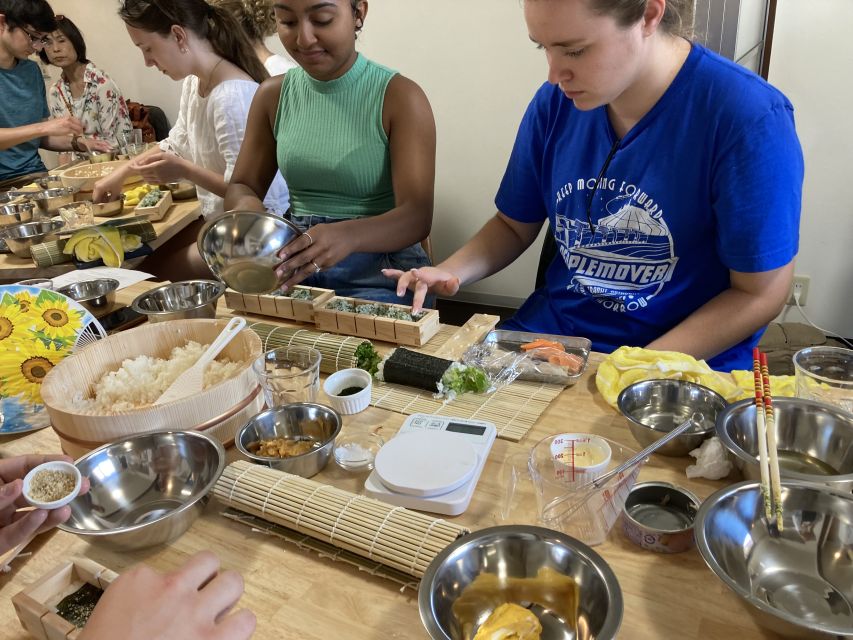
Book it if you want a guided, hands-on introduction to three sushi styles and like the idea of making Osaka’s box sushi alongside nigiri and a roll. The combination of English instruction, a group capped at eight, included ingredients, and a meal at the end makes the $67 price reasonable for a three-hour activity.
Skip it if you mainly want to cut fish or need a fixed selection of ingredients that has not been confirmed. For most first-time sushi makers, though, this class offers a useful mix of technique, local food context, and a lunch you helped prepare.
FAQ
How long is the sushi class?
The class lasts three hours. Starting times vary, so check availability for your preferred date.
How much does it cost?
The listed price is $67 per person, with sushi-making ingredients included.
What kinds of sushi will I make?
You will make a salad roll, nigiri, and oshizushi, also known as pressed or box sushi.
Is the class taught in English?
Yes. The instructor language is English.
How many people can join?
The class is limited to eight participants.
Where is the meeting point?
Meet at Cooking Sun Osaka, room 202. At the entrance, press 202 and the 呼出 call button.
Are ingredients included?
Yes. All ingredients for making sushi are included.
Can I request a vegetarian or gluten-free option?
Yes. Leave a note when you book to request a vegetarian or gluten-free option.
Is the class wheelchair accessible?
Yes. The activity is listed as wheelchair accessible.
Can I cancel for a refund?
You can cancel up to 24 hours in advance for a full refund. A reserve-now, pay-later option is also available.
Just added around Osaka
- Mount Koya from Osaka: Cultural Small Group Day Tour★ 5.0 · 3 reviews
- Matcha Tea Bowl Experience in Osaka★ 5.0 · 11 reviews
- Master Washoku: 5 Core Techniques for Authentic Cooking★ 4.7 · 7 reviews
- Manno: Osaka Premium Wagyu BBQ Experience Reservation★ 5.0 · 4 reviews
- Learning Shodo with a kimono and Trying Samurai Calligraphy★ 4.2 · 7 reviews
- Katsu Curry OR Bento Making Cooking Class & Local Shop Tour★ 4.9 · 11 reviews
- Himeji: Private Guide Tour of the Castle from Osaka or Kyoto★ 4.5 · 7 reviews
- Osaka and Nara Customized Private tour with English Driver★ 4.7 · 4 reviews
Dotonbori Tours, compared.
Osaka Local Foodie Walking Tour in Dotonbori and Shinsekai
Read our review →
Osaka Bar Hopping Night Walking Tour in Namba (3 bars, 6 tastes)
Read our review →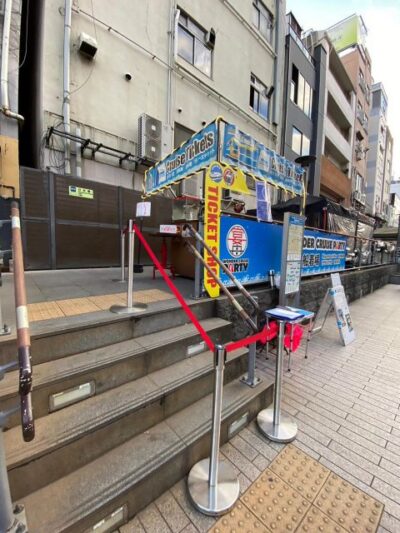
Dotonbori District River Cruise with Drink Discount
Read our review →
Ultimate Osaka Walking Tour: Castle, Dotonbori & Hidden Gems
Read our review →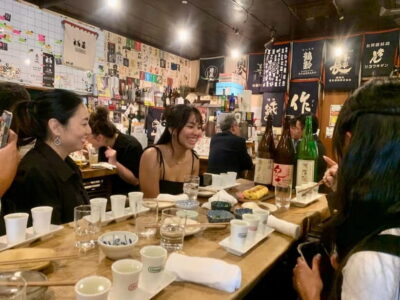
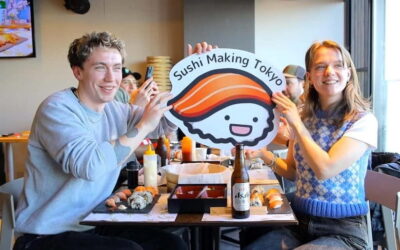
Roll and Authentic Sushi Making Class in Dotonbori
Read our review →Browse the lists this tour appears in