
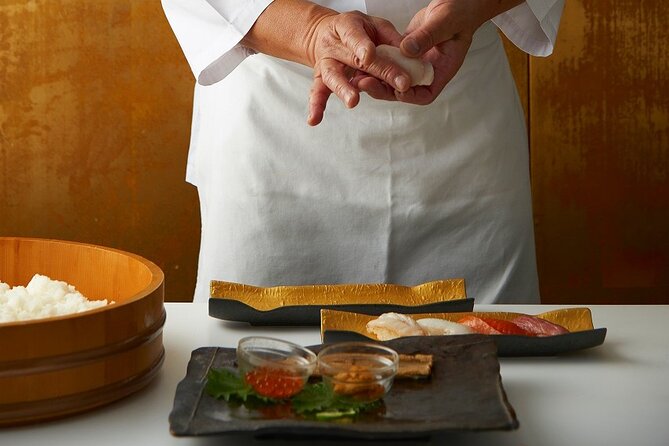
Reviewed · OSAKA COOKING CLASSES
Sushi Making Experience Luxury Course in Nara
The heart of this Nara class is the work behind the sushi: you season the rice, grate fresh wasabi and learn to cut sushi-grade fish before shaping your own pieces. It’s a practical way to understand how several simple steps come together in a meal you may usually take for granted.
I like two things in particular: the class covers the process from start to finish, and you get to wear traditional Japanese clothing rather than just watch a demonstration. You also leave with a certificate, a photo and techniques you can try at home.
One point to weigh is the price: $115.96 per person is a substantial cost for a 90-minute activity. It includes eight pieces of sushi and several extras, but drinks and other Japanese dishes cost extra. The advertised maximum group size is 200, so ask the school about the size of your session if personal attention is a priority.
- Season the sushi rice yourself: The class starts with shari, the seasoned rice at the base of sushi.
- Grate fresh wasabi: You’ll get to prepare it yourself and take in its aroma.
- Cut and shape sushi: Work with sushi-grade seafood, then assemble your pieces with guidance.
- Choose your clothing and toppings: Rental clothing is included, and you can select from toppings such as green onion and ginger.
- Leave with more than lunch: Eight pieces of premium sushi, a completion certificate and a souvenir photo are included.
Start with shari, the foundation of sushi
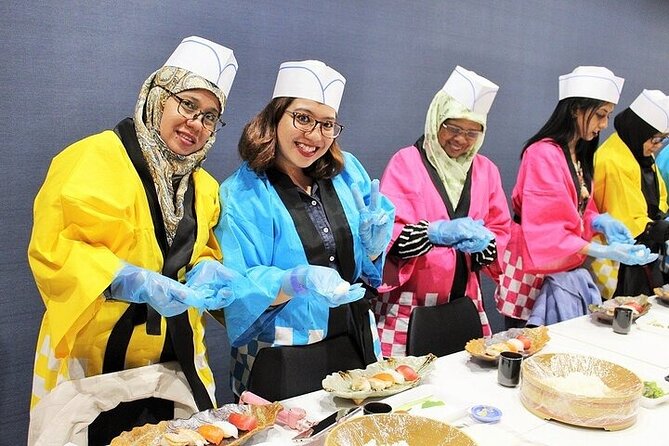
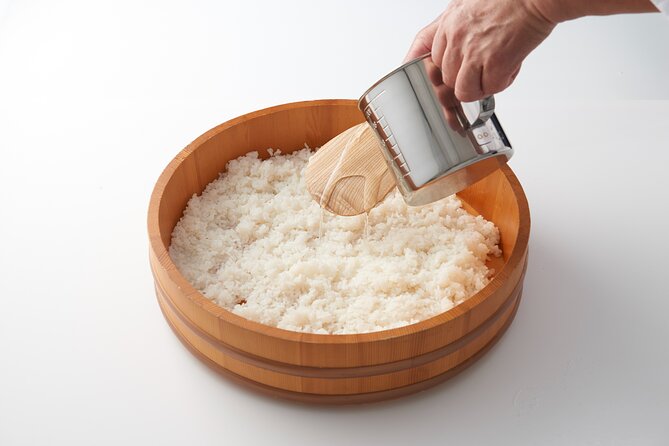
The class begins with shari, or sushi rice. You’ll learn how to prepare and season it, a step that matters because rice is not just a bed for fish. Its texture and seasoning help define each piece, and getting a feel for it gives you a useful base for making sushi again at home.
This is a good starting point for beginners. Rather than being asked to shape sushi right away, you first work through one of the core preparations. The class is meant to cover the process from start to finish, so you can see how rice preparation connects to the later steps.
Grate wasabi and prepare the fish
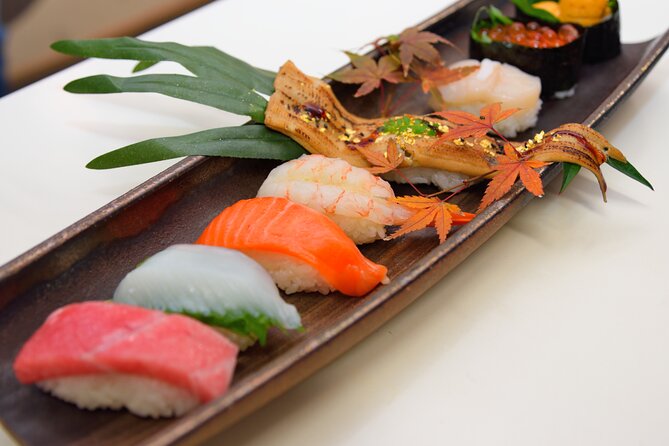
Next comes fresh wasabi. You’ll grate it yourself and notice its aroma, a small but memorable part of the class that turns a familiar condiment into something you have handled and prepared.
Then you’ll work with sushi-grade seafood and learn how to cut it for sushi. The activity describes this as a chance to master fish preparation, though the class lasts about 90 minutes, so think of it as a guided introduction rather than a promise of professional-level knife skills by the end.
Ingredients and toppings can change with the season. You may also choose from toppings such as green onion and ginger, which gives you some room to adapt the finished pieces to your taste. If you have a food allergy or need a non-raw, gluten-free or other option, contact the school before class so it can discuss arrangements with you.
More cooking classes around Nara:
- Nara: Cooking class, learning how to make authentic sushi
★ 5.0 · 5 reviews - Sushi Making Osaka Roll and Authentic Japanese Sushi Class
★ 5.0 · 1,220 reviews - Osaka Sushi Making Experience
★ 5.0 · 400 reviews
Shape your pieces, then sit down to eat
After preparing the rice and fish, you’ll form and assemble sushi. This is where the earlier steps come together: rice needs shaping, fish needs cutting to suit the piece, and toppings can finish it off. The class is designed for both beginners and people who already enjoy sushi, so you do not need cooking experience to take part.
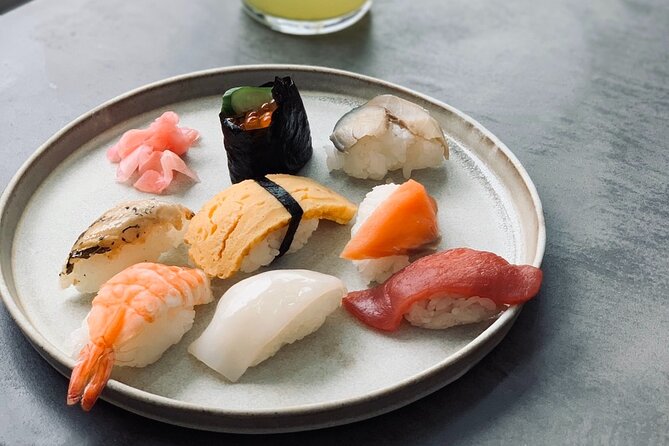
Eight pieces of premium sushi are included. That gives you a chance to eat what you make, though the class does not include drinks or other Japanese foods such as tempura, tofu or pork shabu-shabu. If you want a larger meal, plan to eat elsewhere before or after the session rather than assuming the sushi portion will be enough for you.
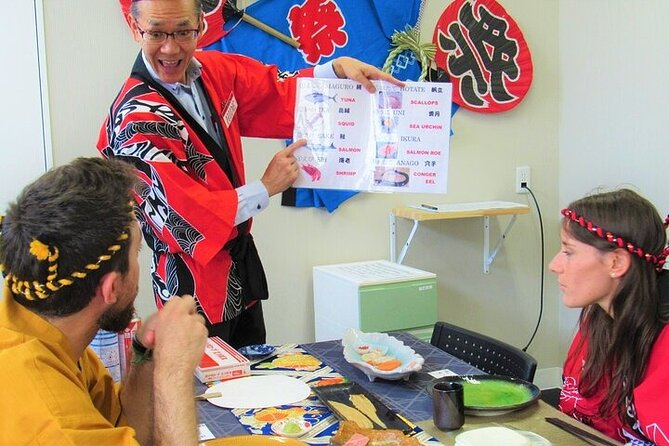
The format is hands-on, not just a talk with a quick photo at the end. You’ll have a series of tasks to try, while the instructors guide you through them and answer questions. One account names Okashi as a teacher who made the class fun. Another describes instructors who spoke enough English to guide the group and respond to questions. English ability may vary by instructor, so if detailed explanations are important to you, you can check with the school when booking.
Traditional clothing adds a cultural touch
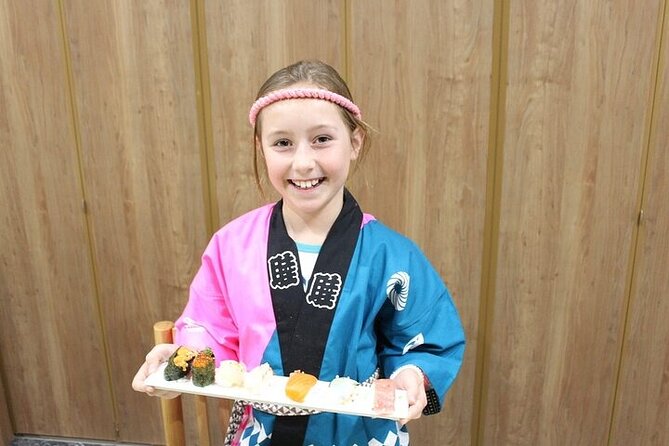
Rental clothing is included, and you can choose from the options available at the school. Putting it on makes the class feel more like a cultural activity than a standard cooking lesson, and it offers a fun change of pace for couples, families or solo visitors.
The cultural element is not limited to dressing up. The class also covers the meaning and tradition behind sushi, as well as the practical steps of making it. That mix is useful if you want more context than a recipe alone can offer, though the session is short, so expect an introduction rather than an extended lesson in Japanese food culture.
A certificate, photo and skills to take home
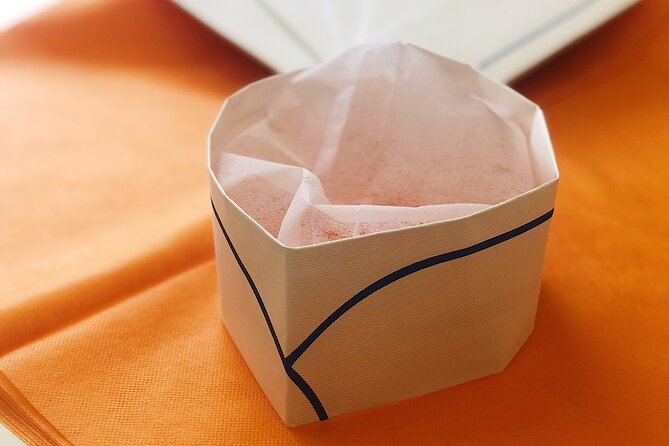
At the end, you receive a certificate of completion and a souvenir photo. These are lighthearted mementos, not culinary credentials, but they help mark the activity as a shared event rather than simply a meal.
The more useful souvenir is what you learn along the way. You’ll have seen the stages involved in making sushi, from rice preparation to shaping, and can take home techniques and recipes for another try. It’s a practical skill to share with friends or family, even if your first homemade pieces are less tidy than the ones you see at a sushi counter.
Same city, a different kind of day:
- World Heritage Kyoto & Nara Uji Authentic Matcha Experience
★ 5.0 · 1,573 reviews - Nara Half Day Trip Walking Tour (Private Option Available)
★ 5.0 · 937 reviews - Nara Early Morning Tour (Kyoto or Osaka Departure Available)
★ 5.0 · 676 reviews - Osaka: Nara and Uji Day Trip with Deer Park and Hot Spring
★ 4.4 · 302 reviews
Is $115.96 a fair price for 90 minutes?
This is a premium-priced short class. At $115.96 per person for roughly an hour and a half, the cost works out to about $77 per hour. That is not a bargain cooking lesson, so the value depends on how much you want the full package: instruction, hands-on preparation, eight pieces of premium sushi, clothing rental, selected toppings, a photo and a certificate.
I would see it as a cultural activity with a meal included, not simply as a way to get lunch. If you mainly want a low-cost meal, this is not the right use of your budget. If you want to learn a new skill and spend part of your Nara visit doing something interactive, the added instruction and cultural context make the price easier to justify.
The class is popular enough that it is booked an average of 40 days ahead. That does not guarantee every date will fill, but it is a good reason to reserve early if you have a fixed schedule.
Getting to the school and planning your timing
The meeting point is 221 Hokkejichō, Nara, 630-8001, Japan, and the activity ends back there. The location is described as being near public transportation, and clear directions have helped participants find it. Check the directions provided with your booking rather than relying on a last-minute guess.
Arrive on time. If you are delayed by up to 15 minutes, contact the school at +81-742-34-5789. The class cannot shift its schedule around late arrivals, and you may miss some activities. Arriving more than 30 minutes late is treated as a cancellation, with no refund.
There is no elevator, but staff can help you up the stairs. If that may affect your visit, contact the school ahead of time to discuss your needs. The ticket is mobile, and confirmation is provided at booking. Free cancellation is available up to 24 hours before the start time; changes or cancellations inside that window are not accepted for a refund.
Who will enjoy this class most?
This is a good fit if you like learning by doing, want an activity that works for beginners, or are curious about the steps behind sushi. The class can suit solo visitors, couples and groups, and its mix of food preparation, clothing and cultural context gives people with different interests something to engage with.
It may be less appealing if you already make sushi confidently and want an advanced technical course, if you need a long class, or if your main goal is a full Japanese meal. The school offers options for vegetarians, vegans and Muslims, and says it can accommodate allergies and other dietary needs, but you should inform it before the class rather than assume a particular ingredient substitution will be available.
The stated maximum is 200 participants, which is unusually high for a class described as personalized. That figure may refer to the activity’s overall capacity rather than the size of one session, but the details do not clarify this. If close, individual coaching is important to you, ask the school what group size to expect on your chosen date.
Should you book the Nara sushi class?
Book it if you want a compact, hands-on activity that combines sushi preparation with a bit of cultural context. The strongest reasons are the full sequence of tasks, the chance to work with rice, wasabi and fish yourself, and extras such as traditional clothing and a keepsake photo.
Think twice if $115.96 feels steep for a 90-minute class, or if you expect a full meal or an advanced course. For the right visitor, though, it’s a memorable way to spend part of a Nara day and take home a skill as well as a souvenir.
FAQ
How long does the sushi class last?
It lasts about 1 hour and 30 minutes.
Where does the class meet?
The meeting point is 221 Hokkejichō, Nara, 630-8001, Japan. The activity ends back at the meeting point.
What food is included?
The class includes eight pieces of premium sushi. Drinks and other Japanese dishes, such as tempura, tofu and pork shabu-shabu, are not included.
What will I learn to make?
You’ll learn to prepare and season sushi rice, grate wasabi, prepare sushi-grade seafood, and shape and assemble sushi.
Do I need previous cooking experience?
No. The class is presented as suitable for beginners as well as people who already enjoy sushi.
Can I request vegetarian, vegan or other dietary options?
The school offers options for vegetarians, vegans and Muslims. It also says it can accommodate allergies, non-raw, gluten-free and other needs. Inform the school before the class.
Is clothing provided?
Yes. Rental clothing is included, and you can choose from the available options.
What happens if I arrive late?
If you expect to be up to 15 minutes late, contact the school at +81-742-34-5789. Late arrivals may miss activities, and arrivals more than 30 minutes late are treated as cancellations without a refund.
Can I cancel for a refund?
You can cancel for a full refund up to 24 hours before the start time. Cancellations and changes made less than 24 hours before the activity are not accepted for a refund.
Just added around Nara
- Nara: Write Your Own Name in Kanji (Japanese Calligraphy)★ 4.4 · 3 reviews
- Nara: Private City Tour With A Local Guide★ 4.2 · 8 reviews
- Nara Heritage Walkabout from Nara Park to Todaji-ji temple★ 5.0 · 5 reviews
- Nara: Sake Tasting Tour at the Birthplace of Japanese Sake★ 4.9 · 8 reviews
- Nara: Full-Day Private Guided Tour★ 5.0 · 4 reviews
- Nara: Half-Day Private Tour of 4 Must-See Spots & Deer Park★ 5.0 · 3 reviews
- Nara: Cultural Heritage Tour by Rickshaw★ 5.0 · 5 reviews
- Nara: Cooking class, learning how to make authentic sushi★ 5.0 · 5 reviews
Osaka Cooking Classes, compared.

Sushi Making Osaka Roll and Authentic Japanese Sushi Class
Read our review →
Osaka Sushi Making Class – Hands-On Nigiri & Rolls (Same-Day OK)
Read our review →
Osaka Cooking Class: Okonomiyaki &Japanese cuisines experience
Read our review →
Roll and Authentic Sushi Making Class in Dotonbori
Read our review →
Browse the lists this tour appears in