
Reviewed · DOTONBORI TOURS
Nostalgic Osaka walk, totally different from Dotonbori
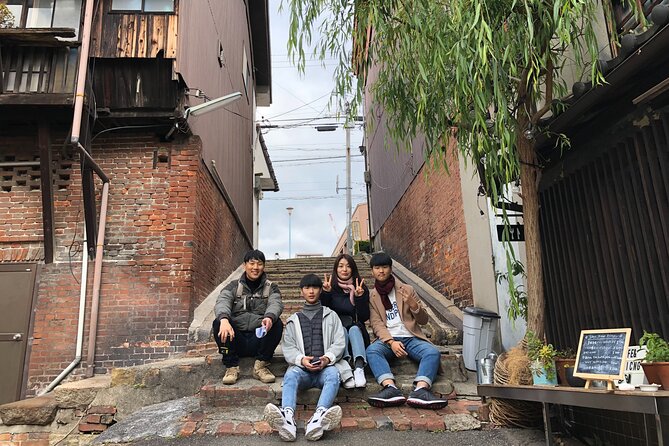
Karahori offers a quieter, more lived-in side of Osaka: narrow lanes, old wooden houses, and shops that serve the neighborhood rather than the sightseeing crowds. With local guide Chieko, you’ll explore on foot and hear how the area’s streets and buildings connect to Osaka’s past.
I like the chance to see how tatami mats are made, and the walk through Karahori Shopping Street, where everyday shopping sits alongside century-old machiya houses. The main consideration is the walking: expect about two hours on foot, with some gentle uphill and downhill stretches.
At a glance
- A small group of no more than six lets you ask Chieko questions and keep the walk personal.
- A tatami workshop visit offers a close look at traditional flooring materials and the machine used to make the mats.
- Karahori Shopping Street is a working local shopping street, not a set of shops built just for visitors.
- Historic details are woven into the walk, including old machiya houses and a surviving stretch of Osaka Castle’s original moat wall.
- You choose a morning or afternoon departure, and the tour lasts about two hours.
Karahori, a different Osaka from Dotonbori
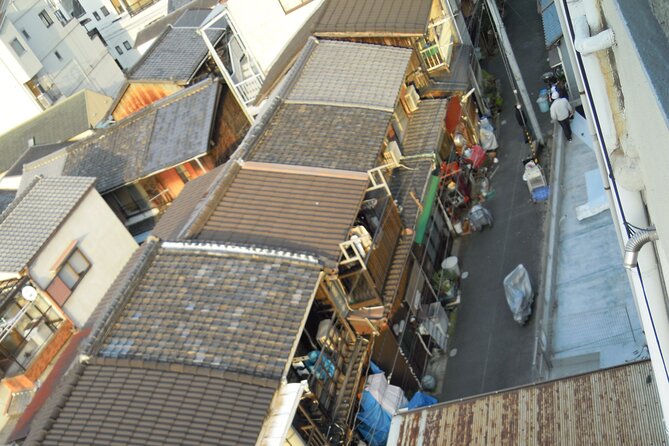
Osaka is often introduced through the bright signs and packed lanes of Dotonbori. Karahori gives you another picture: a historic neighborhood where daily errands, small businesses, and older houses share the same streets. The point is not to replace Osaka’s famous sights, but to add a quieter, more local view of the city.
This is a guided walk, not a parade of major monuments. The interest comes from noticing details you could easily pass by on your own: the shape of a lane, the age of a building, or the way a long-standing shop fits into modern neighborhood life. Chieko’s local ties are a large part of that experience. She knows the area and its shopkeepers, and the walk gives you a chance to ask about both history and everyday life in Japan.
The group limit of six suits this kind of route. In narrow streets, a small group can move more easily and is less likely to intrude on residents. It also makes conversation simpler, though you should not expect a large-scale tour with a microphone or elaborate presentation.
More Dotonbori and Namba tours around Osaka:
- Osaka Local Foodie Walking Tour in Dotonbori and Shinsekai
★ 5.0 · 985 reviews - Osaka Bar Hopping Night Walking Tour in Namba (3 bars, 6 tastes)
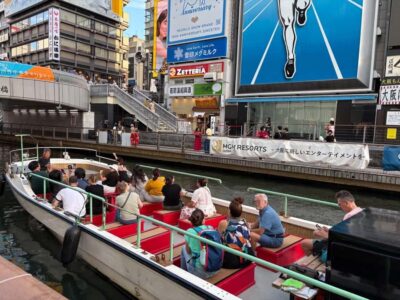
★ 5.0 · 958 reviews - Osaka: Dotonbori District River Cruise with Drink Discount
★ 4.2 · 876 reviews
A tatami workshop and the feel of the craft
The walk begins at Inoue Seijosho, where the shop master shows how tatami mats are made. You can see the materials and the machine used in production. The visit is listed at around ten minutes, so think of it as a brief introduction rather than a long hands-on workshop.
Tatami is a familiar feature of traditional Japanese interiors, but it is more meaningful when you can see the materials and tools behind it. This stop helps put a practical craft in view, rather than treating the neighborhood only as a collection of old buildings. If you are curious about how everyday traditions continue in a modern city, it is a useful start.
The short visit also sets the tone for the rest of the tour: small businesses and local knowledge, not only photo stops. Keep in mind that the time at each shop is limited. You are getting an introduction to the craft and the area, not an extended class.
Karahori Shopping Street and its old machiya
The longest stop is Karahori Shopping Street, with about an hour set aside for the area. This is where the walk’s contrast with Dotonbori becomes clearest. The street serves local daily life, and the surrounding Karahori district has old houses, including machiya that are more than a century old.
Some of these traditional houses have been repurposed, while others remain part of the neighborhood’s ordinary fabric. The walk takes you through side lanes as well as the shopping street, so you can see how the old and newer parts of the area sit close together. The route is not just about looking at façades. Chieko can explain what you are seeing and point out details that give the streets their character.
That local context is a real reason to book with a guide. You could walk through Karahori by yourself, but it would be harder to know which alleys have historical significance or what lies behind a shop’s unassuming front. Chieko also greets people in the neighborhood and is careful about residents’ privacy. Follow her lead, keep voices down in the residential lanes, and avoid photographing or disturbing people who live there.
The walk involves a fair amount of walking, with some slight uphill and downhill sections. Comfortable shoes are a good idea, especially if you have already spent the day on your feet. The route is not described as strenuous, but it is not a seated tour or a quick stroll between nearby sights.
A renovated house, a long-running bonito shop, and chocolate
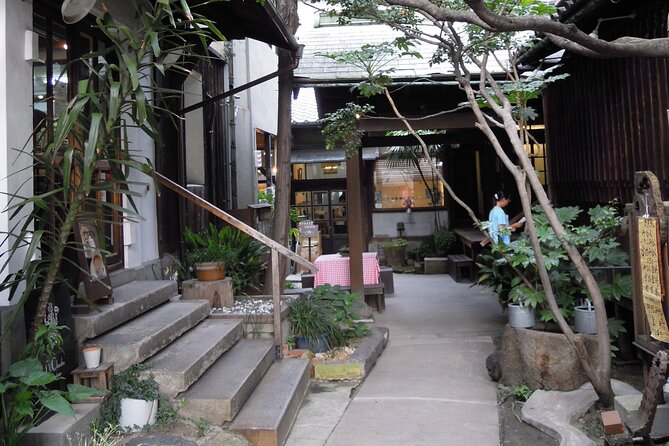
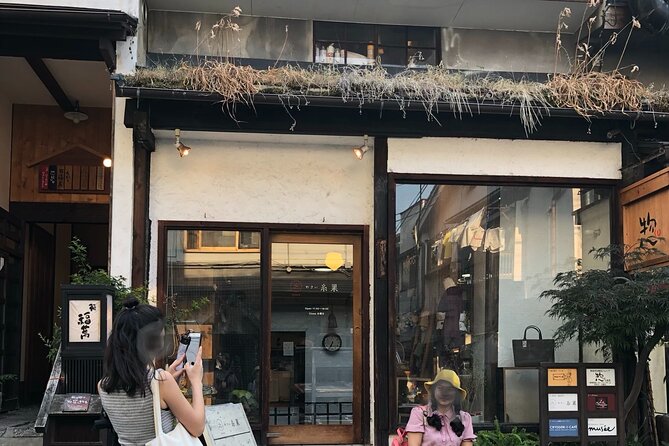
At クーデリーカフェ, you visit a café set in a renovated old house. There is time to browse for items you are unlikely to find in standard airport souvenir shops. The stop is about 15 minutes, making it a chance to look around rather than settle in for a long café break. Food and drinks are not included, so bring money if you want to buy something.
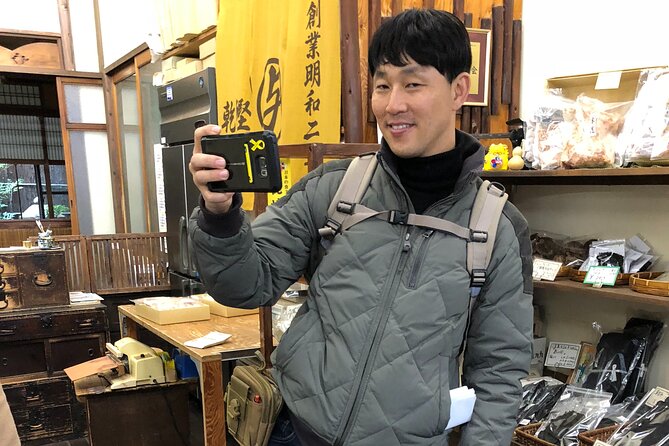
Maruyo-shoten is a bonito shop with a history dating to 1765. The brief visit introduces you to what the shop describes as authentic bonito. It is a small stop, about five minutes, but it offers a glimpse of a specialty food business with deep local roots. You may find this more interesting if you enjoy seeing how traditional ingredients are sold and used, even if you do not plan to buy anything.
The next stop is chocolatier Ek Chuah’s Karahori Kura main shop. The guide’s enthusiasm for the chocolate is clear, and the stop offers a pleasant change of pace from the historical details. Allow about five minutes. If you want to purchase chocolate or another treat, that cost is your own.
These short visits are best understood as introductions to the neighborhood’s independent shops. You will not have a long shopping session at every stop, and purchases are optional. The value is in seeing businesses that are part of Karahori’s local character, while having a guide explain why they are worth noticing.
More walking tours around Osaka:
- Osaka: Deep Backstreets Walking Tour with Dinner Option
★ 4.9 · 902 reviews - Ultimate Osaka Walking Tour: Castle, Dotonbori & Hidden Gems
★ 5.0 · 862 reviews - Osaka: Main Sights and Hidden Spots Guided Walking Tour
★ 4.9 · 702 reviews - Private Osaka Walking Tour: Highlights & Hidden Gems
★ 5.0 · 569 reviews
Len and an old house given a new purpose
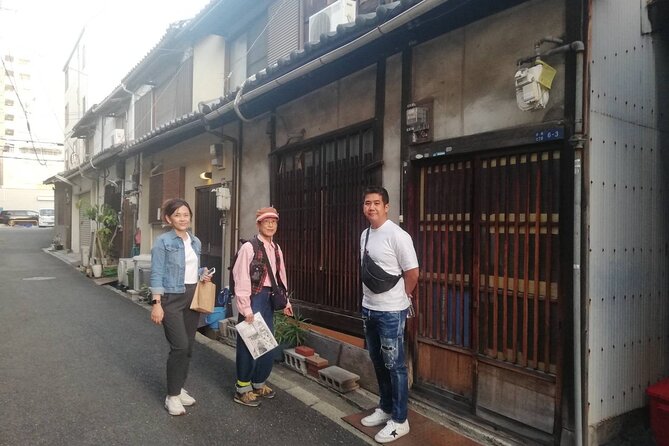
Len is a renovated traditional house turned into a small commercial complex. You have about ten minutes to look around and perhaps find a distinctive souvenir. Like the café stop, it shows one way older buildings can remain useful: rather than disappearing, a traditional house can be adapted for new businesses.
This is a practical stop if you want a memento with more connection to the neighborhood than a mass-produced souvenir. Still, the tour does not include shopping credit, and you should not count on a particular item being available. Think of it as browsing time, not a guaranteed purchase opportunity.
A narrow lane and a surviving moat wall
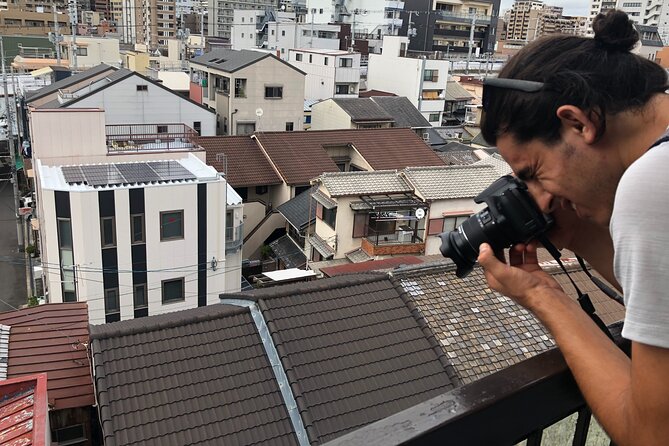
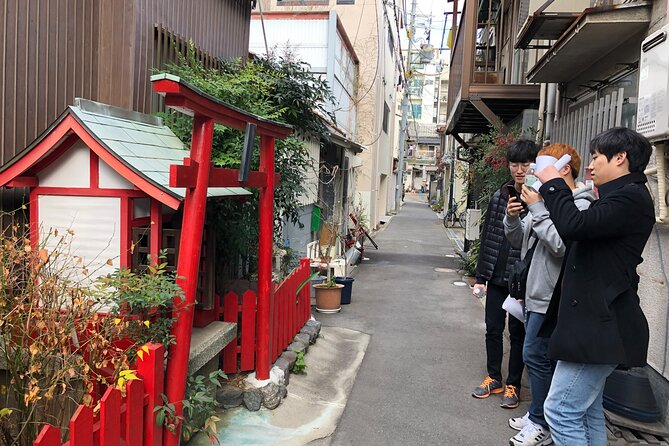
The walk also takes in a tucked-away café in an alley and a nearby section of Osaka Castle’s original moat wall, said to have remained since the 15th century. The wall is a striking detail because it brings a much older layer of Osaka into an ordinary neighborhood setting. You are not visiting Osaka Castle itself; this is a remnant encountered along the Karahori route.
It is a good example of why local guidance can change how a walk feels. A wall tucked beside a café might be easy to overlook, but with the right context it becomes a clue to the area’s past. The café is described as a stop, but the tour information does not specify how long you spend there or include a drink. Coffee and tea, like meals and other purchases, are at your own expense.
What the two-hour format means for you
The tour lasts about two hours and offers morning or afternoon options. That gives you room to fit it around other plans, while the compact duration makes it easier to add to a day in Osaka than a full-day excursion. Because the route is on foot and includes several shops and lanes, allow a little flexibility afterward rather than scheduling another activity that begins immediately across town.
The meeting point is 6-chōme-2-24 Tanimachi, Chuo Ward, Osaka, and the walk ends back there. The activity uses a mobile ticket. Public transportation is nearby, though the tour information does not name a particular station or provide detailed transit directions, so check the route before setting out.
Arrive on time. If you are more than 15 minutes late, you cannot join, a firm rule intended to respect the rest of the group. The maximum group size is six. Bottled water is included; meals, coffee, tea, and anything you buy along the way are not.
Is $36.13 good value?
At $36.13 per person, this is not the cheapest way to walk around a neighborhood. The price makes more sense if you value Chieko’s local knowledge, the small group, and access to places that are easy to miss when exploring alone. The tour combines a craft visit, a local shopping street, several independent shops, historic houses, and the moat wall in one guided route.
The price does not cover refreshments or purchases, so budget extra if you like to shop or stop for a drink. The tour’s value is less about included food and more about having someone connect the stops and explain the neighborhood. If you are content to wander without context, you may prefer to explore Karahori independently. If you want the stories and the local introductions, the guide is the main reason to pay.
Who should book this Karahori walk?
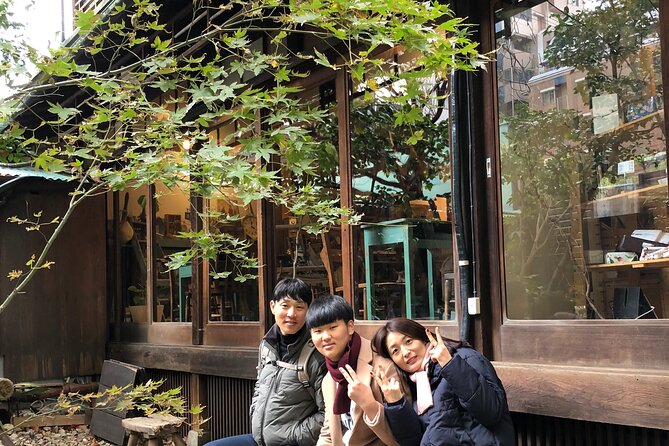
I’d choose this tour if you have already seen Osaka’s best-known central sights, or if you want a slower counterpoint to them. It suits anyone curious about neighborhood history, traditional houses, Japanese crafts, local shops, and the small exchanges that make a place feel lived in. The opportunity to ask Chieko about local life is especially useful if you enjoy conversation as much as sightseeing.
It may be less suitable if you want a major landmark tour, a food-focused experience with tastings included, or a route with little walking. Shopping is part of the appeal, but buying anything is optional and at your own cost. The pace is built around a series of brief visits and a longer walk through the area, not a long stop at each business.
The tour requires good weather. If poor weather cancels it, you are offered another date or a full refund. You can cancel for a full refund up to 24 hours before the start time; changes or cancellations inside that window are not accepted.
Should you book it?
Book this walk if you want to see a side of Osaka beyond its headline districts and are happy to spend two hours on foot. Karahori’s combination of old houses, working shops, traditional craft, and a surviving moat wall gives the route a distinct sense of place, while Chieko’s local connections help bring its details into focus.
Skip it if you mainly want famous sights, a long meal, or a tour with everything included in the price. For a small-group introduction to everyday Karahori, though, it offers a thoughtful way to see how Osaka’s past and present share the same lanes.
FAQ
How long is the tour?
The walk lasts about two hours.
Are morning and afternoon departures available?
Yes. You can choose a morning or afternoon tour.
How many people can join?
The group is limited to a maximum of six travelers.
Where does the tour start and end?
It starts at 6-chōme-2-24 Tanimachi, Chuo Ward, Osaka, and ends back at the meeting point.
What is included in the price?
Bottled water is included. Meals, coffee, tea, and purchases from shops are not.
Is the tour a lot of walking?
Yes. It is a walking tour, and the route includes some slight uphill and downhill stretches.
Can I buy food, drinks, or souvenirs during the tour?
You can buy items at local shops or cafés, but these purchases are at your own expense.
What happens if I arrive more than 15 minutes late?
You cannot join the tour if you are more than 15 minutes late.
What happens if bad weather cancels the tour?
You will be offered a different date or a full refund.
Just added around Osaka
- Mount Koya from Osaka: Cultural Small Group Day Tour★ 5.0 · 3 reviews
- Matcha Tea Bowl Experience in Osaka★ 5.0 · 11 reviews
- Master Washoku: 5 Core Techniques for Authentic Cooking★ 4.7 · 7 reviews
- Manno: Osaka Premium Wagyu BBQ Experience Reservation★ 5.0 · 4 reviews
- Learning Shodo with a kimono and Trying Samurai Calligraphy★ 4.2 · 7 reviews
- Katsu Curry OR Bento Making Cooking Class & Local Shop Tour★ 4.9 · 11 reviews
- Himeji: Private Guide Tour of the Castle from Osaka or Kyoto★ 4.5 · 7 reviews
- Osaka and Nara Customized Private tour with English Driver★ 4.7 · 4 reviews
Dotonbori Tours, compared.

Osaka Local Foodie Walking Tour in Dotonbori and Shinsekai
Read our review →
Osaka Bar Hopping Night Walking Tour in Namba (3 bars, 6 tastes)
Read our review →
Dotonbori District River Cruise with Drink Discount
Read our review →
Ultimate Osaka Walking Tour: Castle, Dotonbori & Hidden Gems
Read our review →


Roll and Authentic Sushi Making Class in Dotonbori
Read our review →Browse the lists this tour appears in