
Reviewed · OSAKA COOKING CLASSES
Osaka Cooking Class: Okonomiyaki &Japanese cuisines experience
In Osaka, the lesson is as much about being welcomed into a local home as it is about cooking. With host Yayo, you make familiar dishes from scratch, learn how small technique changes affect flavor, then sit down to eat the results.
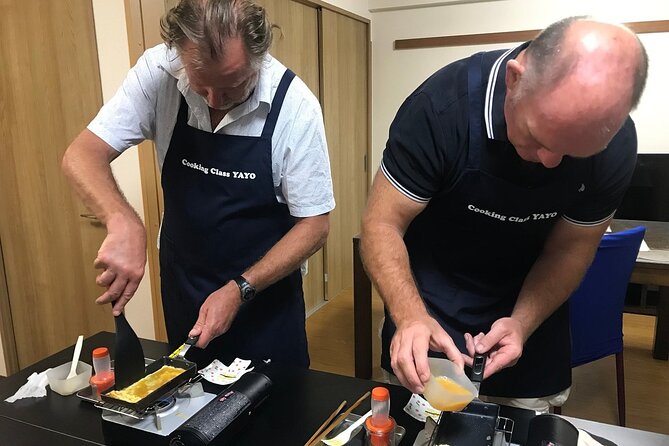
I like two things in particular: the hands-on instruction makes Japanese home cooking feel doable, and the small group cap of eight leaves room for questions and conversation. The class can also include thoughtful extras, such as matcha, taiyaki and, in some sessions, dashimaki tamago, a rolled egg omelet.
One point to consider: this is a substantial meal, not a quick demonstration. You may leave with leftovers, and the class is held in a home setting, so expect an intimate experience rather than a large, fully equipped cooking school.
Key points before you book
- You cook Osaka favorites: Make okonomiyaki, takoyaki and miso soup, then enjoy the meal you prepared.
- Yayo teaches in English: Expect demonstrations, practical guidance and explanations of ingredients and food traditions.
- The class is capped at eight: A small group means more direct help, and some sessions may be private if few people book.
- There are sweet finishes: Taiyaki, a fish-shaped cake, and matcha are served before you leave.
- You meet at Noda Station: Hotel pickup is not included, and arriving more than 10 minutes late can mean missing the class without a refund.
Cooking Japanese staples with Yayo
Osaka is a fine place to learn about food, and this class gives you a seat at the counter rather than just another meal at a restaurant. You follow Yayo to her cooking space, which is described as her home, and work through several dishes with her guidance.
The class lasts about two and a half hours. That is enough time to hear what you are doing, try the techniques yourself and eat a full meal, though it is not a long course in Japanese cuisine. The aim is practical: learn some dishes you can try again at home, with explanations of the ingredients and the ways they fit into Japanese cooking.
You do not need to arrive with professional cooking skills. Yayo demonstrates and prepares parts of the process so the class stays manageable, while still giving you a chance to take part. If you are nervous around unfamiliar ingredients or tools, this guided format should make the first attempt less daunting.
More cooking classes around Osaka:
- Sushi Making Osaka Roll and Authentic Japanese Sushi Class
★ 5.0 · 1,220 reviews - Osaka Sushi Making Experience
★ 5.0 · 400 reviews - Osaka: Ramen and Gyoza Cooking Class in Dotonbori
★ 5.0 · 378 reviews
Miso soup: small steps, big difference
The class begins with miso soup, a useful first lesson because it shows how a simple dish can depend on technique and ingredients. Rather than treating it as a packet to stir into hot water, Yayo walks you through its preparation and explains the choices that affect the final taste.
You may also learn about dashi, the stock used in many Japanese dishes. One of the practical benefits of the class is that it can make a staple such as dashi seem less mysterious. Knowing how to prepare a basic stock gives you a starting point for more than one recipe.
This part of the lesson is also a good chance to ask about ingredients. Yayo explains what is going into the food and can discuss the background of dishes and regional differences. The class is not only about copying steps; it helps you understand why those steps matter.
Takoyaki: Osaka’s round street-food classic
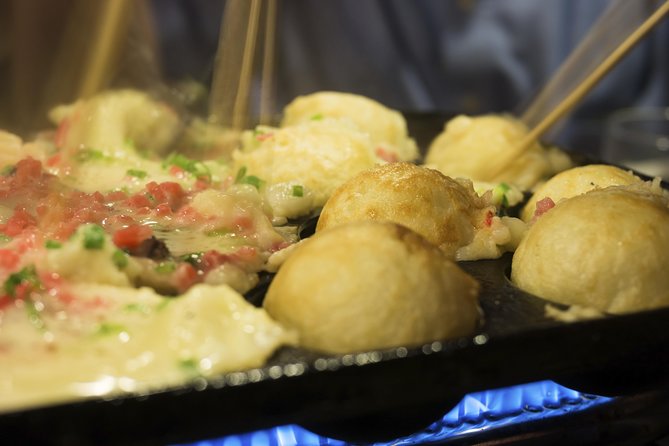
Next comes takoyaki, wheat-flour batter cooked into small balls with octopus inside. The cooking is hands-on, and the shape is part of the fun. It takes more than pouring batter and hoping for the best, so having an instructor nearby is useful when you are learning how to handle the dish.
Takoyaki is closely associated with Osaka, making it a particularly apt choice here. You get to work with a local favorite in the place where it is part of everyday food culture, rather than only ordering it from a stall. The class gives you a closer look at how the snack is made and what goes into it.
Keep in mind that several dishes are packed into one session. You will have time to participate, but this is not likely to be an extended workshop devoted solely to perfecting takoyaki. If your main goal is intensive technique practice, ask the host what the session covers before booking.
Okonomiyaki: the filling main event
Okonomiyaki is a savory pancake made with ingredients such as egg, flour, cabbage, pork and dried bonito flakes. It is one of the most satisfying dishes in the class, and the recipe is well suited to home cooking: the ingredients are familiar enough to adapt, while the cooking method gives you something new to practice.
The name is often loosely understood as cooking to your liking, which is a useful way to think about the dish. The class gives you a chance to see how the ingredients come together and how to cook a Japanese-style pancake rather than simply taste one in a restaurant.
Some class accounts also include dashimaki tamago, a rolled egg omelet. Since the stated core menu focuses on miso soup, takoyaki and okonomiyaki, treat the omelet as a possible extra rather than a guaranteed part of every session. The same good advice applies to the rest of the menu: ask about any must-have dish when arranging your booking.
More food tours around Osaka:
- Osaka: Shinsekai Food Tour with 13-15 Dishes at 5 Eateries
★ 4.8 · 2,204 reviews - Osaka Food Tour: 13 Dishes at 5 Local Eateries
★ 5.0 · 2,149 reviews - Hungry Osaka Street Food Tour:15 Tastings & 3 Drinks with a Local
★ 5.0 · 1,727 reviews - Osaka Local Foodie Walking Tour in Dotonbori and Shinsekai
★ 5.0 · 985 reviews
Sit down to eat, then finish with taiyaki and matcha
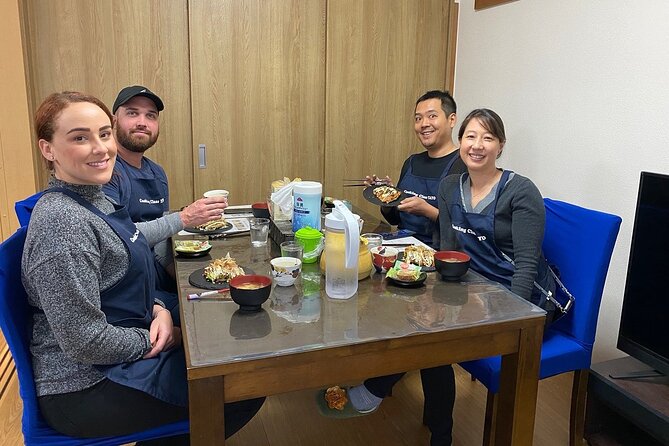
Once the cooking is done, you eat what you have made. The meal is included in the price, and the portions can be generous. Plan to arrive hungry. You might not finish everything, and some people have found themselves with leftovers.
The meal is also the natural social part of the class. With no more cooking tasks to concentrate on, you can talk with Yayo and the other people at the table. Since the class has a maximum of eight participants, the mood is likely to be more personal than a large group lesson, though the actual number can vary.
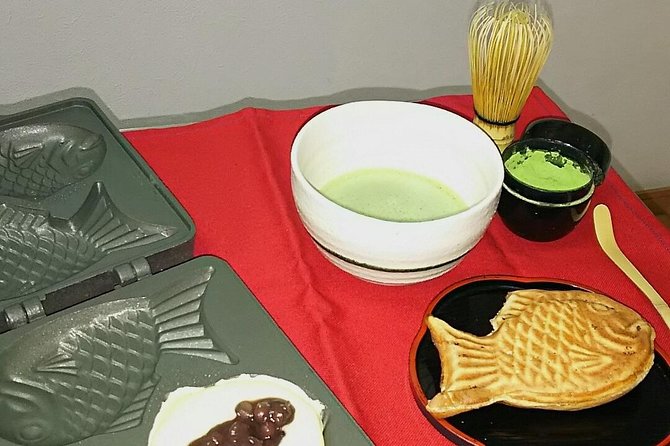
Before you leave, the class includes taiyaki, a fish-shaped cake, and matcha tea. These make a pleasant close to a filling meal and give you a taste of a sweet treat alongside the savory dishes. The optional sake and beer pairing can add another dimension, but check what is included in your chosen booking. The listed inclusion specifies local sake tasting when selected, while the pairing is presented as an add-on.
The personal touch is part of the lesson
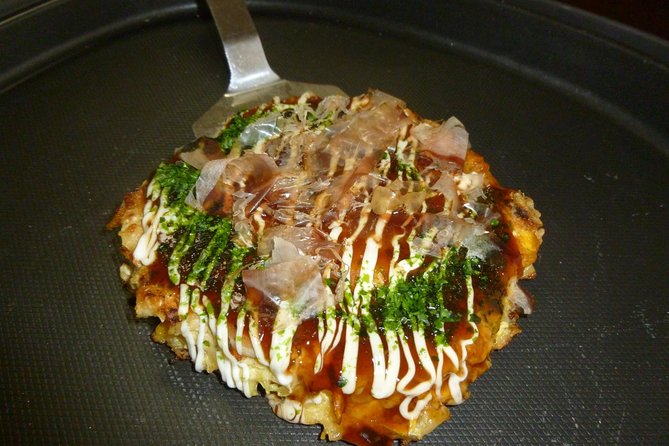
Yayo’s role is central to what makes this class different from following a recipe video. She gives instructions in English, demonstrates the cooking, answers questions and shares context about the ingredients and dishes. Her warm approach helps make a home setting comfortable, especially if you are meeting the host and other participants for the first time.
The home location is worth understanding before you book. This is not a commercial kitchen built for a large class. The small setting can make the lesson feel close and personal, but it also means only people with confirmed bookings can join. If you prefer a formal school environment or want room to move around a larger kitchen, this may not be your ideal format.
The personal setting can be especially appealing if you travel solo, as the class offers an easy way to share a meal and conversation. Couples and families can also enjoy working together, and the small group limit means you are not lost in a crowd. Some sessions may have only one booking, so the format can feel almost private, though you should not count on having a one-to-one lesson.
Is $104.13 good value?
At $104.13 per person, this costs more than simply ordering okonomiyaki and takoyaki at a restaurant. The value is in the combination: a roughly 2.5-hour cooking lesson, an English-speaking instructor, ingredients and utensils, and the meal you prepare. You also get practical instruction that can help you repeat the dishes after your trip.
The price makes the most sense if you enjoy taking part, asking questions and learning how a dish is made. If you only want a large meal, Osaka has plenty of places to eat without booking a class. If you value a personal introduction to home cooking, the time with Yayo is a substantial part of what you are paying for.
The optional sake and beer pairing should be treated as an extra unless your selected booking says otherwise. Extra food and drinks are not included, and gratuities are optional. Group discounts may be available, but check the current booking details for the price that applies to your party and any add-ons.
Getting to Noda Station and planning your visit
The meeting point is outside Noda Station at 1 Chome-1 Ohiraki, Fukushima Ward, Osaka, 553-0007. The activity ends back at the meeting point, and hotel pickup and drop-off are not included. Check your route before the day, and leave enough time to find the station exit and meeting place.
Arrive on time. Participation cannot be guaranteed if you are more than 10 minutes late, and a late arrival does not qualify for a refund. The cooking space is small, so only people with confirmed bookings can join.
Vegetarian and pescatarian options are available if requested at the time of booking. Make that request in advance rather than assuming the standard menu will suit you. Adult pricing applies to all participants except children aged two and under.
The booking includes mobile tickets, and confirmation is received at the time of booking. Free cancellation is available up to 24 hours before the experience starts. Changes or cancellations made later are not accepted for a refund, so check the local start time when planning.
Who will enjoy this class most?
Book this if you want more than a restaurant meal and like learning by doing. It suits curious cooks, solo visitors looking for a friendly shared activity, couples and families who enjoy preparing food together. You do not need advanced cooking ability, and the English instruction makes the lesson accessible to people who do not speak Japanese.
It is a weaker fit if you are short on time, do not want a filling meal, or prefer to watch rather than cook. The home setting is intimate by design, and the group is small. That closeness is a benefit for many people, but it is not the same as a spacious cooking studio with separate workstations.
Should you book Yayo’s Osaka cooking class?
If you want to learn a few useful Japanese dishes while sharing a meal in a local home, this is a strong choice. The best reasons to book are the hands-on guidance, the chance to ask Yayo about ingredients and technique, and a menu that includes Osaka favorites as well as a sweet finish.
I would book it early in a trip if you want ideas to carry into later meals, or near the end if you want a relaxed food-centered sendoff. Before confirming, check the exact menu, pairing option and dietary request details. Go hungry, arrive on time and come ready to cook.
FAQ
How long is the cooking class?
The class lasts approximately two hours and 30 minutes.
Where does the class meet?
Meet outside Noda Station at 1 Chome-1 Ohiraki, Fukushima Ward, Osaka, 553-0007, Japan. The activity ends at the meeting point.
What dishes will I make?
The class covers okonomiyaki, takoyaki and miso soup. Taiyaki and matcha are served before you leave. Dashimaki tamago is also mentioned as part of some class experiences, so ask if it is important to you.
Is the class taught in English?
Yes. The instructor speaks English and provides hands-on guidance.
How many people can join?
The class has a maximum of eight participants. Only people with confirmed bookings can enter the small cooking space.
Are vegetarian or pescatarian options available?
Yes. Request a vegetarian or pescatarian option when booking.
Is sake or beer included?
A sake and beer pairing is available as an optional add-on. Local sake tasting is included if selected. Check your booking details to confirm which option you have chosen.
What happens if I arrive more than 10 minutes late?
Participation cannot be guaranteed if you arrive more than 10 minutes late, and you will not receive a refund for missing the class.
More hands-on workshops around Osaka
- Matcha Making Class in Osaka with Authentic Japanese Sweets Set
★ 5.0 · 509 reviews - Osaka Sushi Making Class – Hands-On Nigiri & Rolls (Same-Day OK)
★ 5.0 · 352 reviews - Osaka: Roll and Authentic Sushi Making Class in Dotonbori
★ 4.9 · 239 reviews - Ramen and Gyoza Cooking Class in Osaka
★ 5.0 · 202 reviews
Just added around Osaka
- Mount Koya from Osaka: Cultural Small Group Day Tour★ 5.0 · 3 reviews
- Matcha Tea Bowl Experience in Osaka★ 5.0 · 11 reviews
- Master Washoku: 5 Core Techniques for Authentic Cooking★ 4.7 · 7 reviews
- Manno: Osaka Premium Wagyu BBQ Experience Reservation★ 5.0 · 4 reviews
- Learning Shodo with a kimono and Trying Samurai Calligraphy★ 4.2 · 7 reviews
- Katsu Curry OR Bento Making Cooking Class & Local Shop Tour★ 4.9 · 11 reviews
- Himeji: Private Guide Tour of the Castle from Osaka or Kyoto★ 4.5 · 7 reviews
- Osaka and Nara Customized Private tour with English Driver★ 4.7 · 4 reviews
Osaka Cooking Classes, compared.
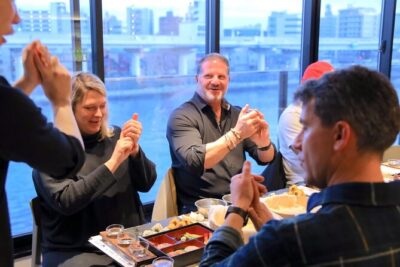
Sushi Making Osaka Roll and Authentic Japanese Sushi Class
Read our review →
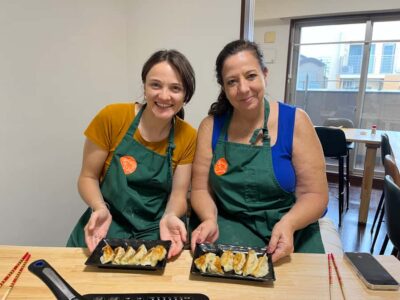
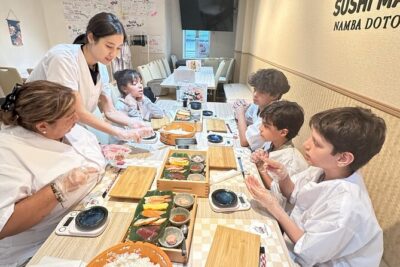
Osaka Sushi Making Class – Hands-On Nigiri & Rolls (Same-Day OK)
Read our review →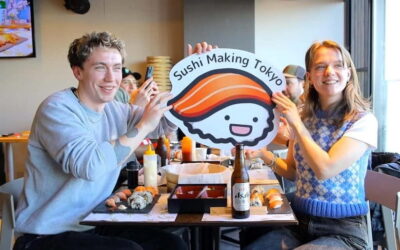
Roll and Authentic Sushi Making Class in Dotonbori
Read our review →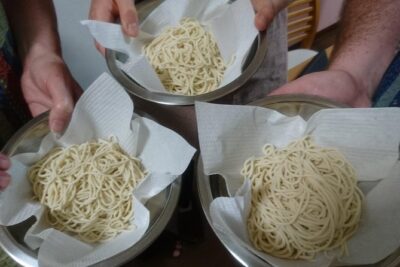
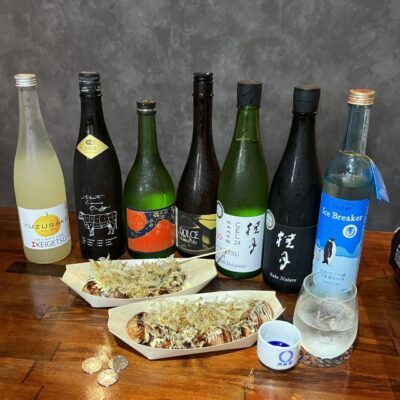
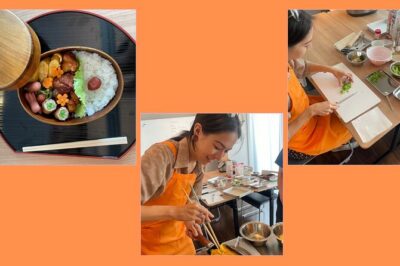
Cooking Ramen&Gyoza/KatsuCurry/Bento/Okonomiyaki+Store Tour@Osaka
Read our review →Browse the lists this tour appears in