
Reviewed · OSAKA COOKING CLASSES
Authentic SUSHI Course Cooking Class
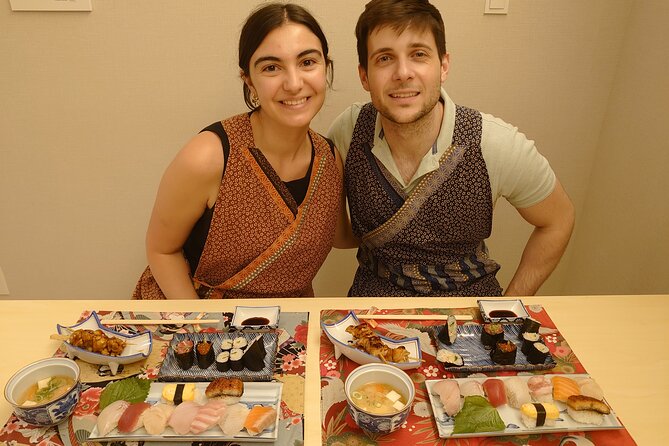
Sushi is the star here, but you do not stop at rolling rice and fish. You make three kinds of sushi, cook miso soup from dashi, prepare Japanese rolled omelette, and skewer yakitori chicken before sitting down to eat the meal you have made.
I like the hands-on range: you handle the rice, work with a rectangular pan, and learn how several familiar dishes fit together. I also like the chance to learn from Fumi, whose patient, step-by-step teaching and cultural explanations are often part of the experience.
One point to check before booking: the group-size information gives two different limits, 14 in one place and 8 in another. The listed start time is 5:30 pm, though lunch and dinner classes are also mentioned, so confirm the session details that suit your plans.
The useful details at a glance
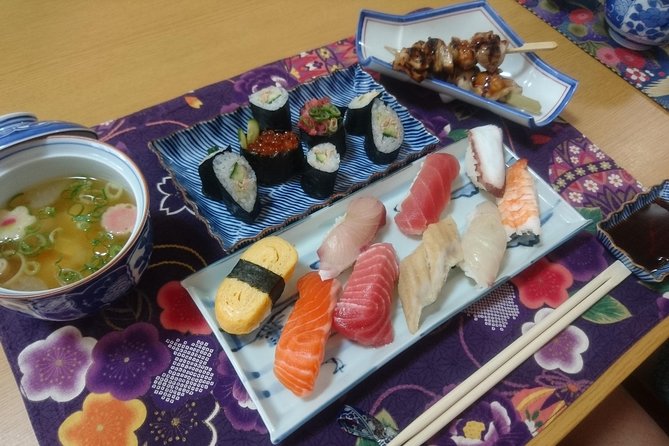
- A full Japanese menu: Make 9 nigiri, 2 gunkan-maki, 1 sushi roll, miso soup, and yakitori chicken.
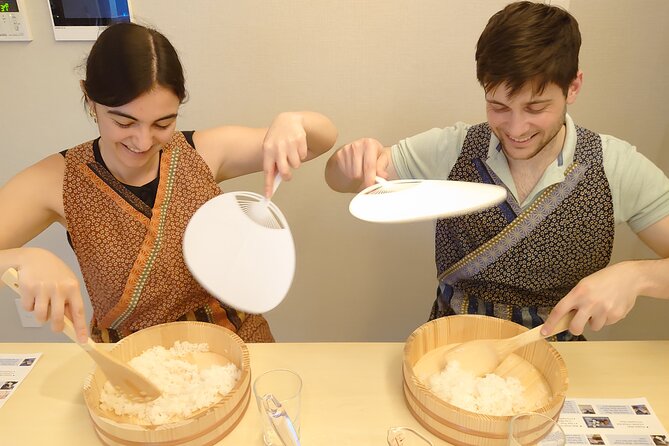
- Rice is part of the lesson: Each participant gets a wooden tub and paddle to season and mix their own sushi rice.
- Tamagoyaki takes practice: You make the layered rolled omelette in a small rectangular pan, a useful technique beyond sushi.
- The meal is included: Sit down to eat your dishes with chopsticks, followed by a seasonal dessert.
- Plan for about two and a half hours: The listed start time is 5:30 pm, with lunch or dinner options also described.
- Check the group limit: The details give both an 8-person and a 14-person maximum.
More than a sushi-rolling lesson
This class is designed around making a meal, not simply assembling a few pieces of sushi for a photograph. The menu covers rice preparation, several sushi styles, soup, egg, and grilled chicken. That breadth gives you a better sense of how a Japanese meal comes together, and it makes the class a good choice if you want more than one new kitchen skill.
The format also has a practical advantage: you do the work yourself, but an instructor guides each stage. Reviews name Fumi and Sakura as instructors, and describe patient demonstrations that keep the steps manageable. Some classes may be led by a team, so you should not assume a particular instructor is guaranteed unless you confirm that when booking.
The experience is based at a restaurant in Osaka’s Nishi Ward, in Kitahorie. The address provided is Banix北堀江Japan, 3-chōme 6-2, Sistema Gallery, Kitahorie. The class ends back at the meeting point, which means you can plan your evening without needing to arrange a separate return transfer.
More cooking classes around Osaka:
- Sushi Making Osaka Roll and Authentic Japanese Sushi Class
★ 5.0 · 1,220 reviews - Osaka Sushi Making Experience
★ 5.0 · 400 reviews - Osaka: Ramen and Gyoza Cooking Class in Dotonbori
★ 5.0 · 378 reviews
Start with rice, the foundation of sushi
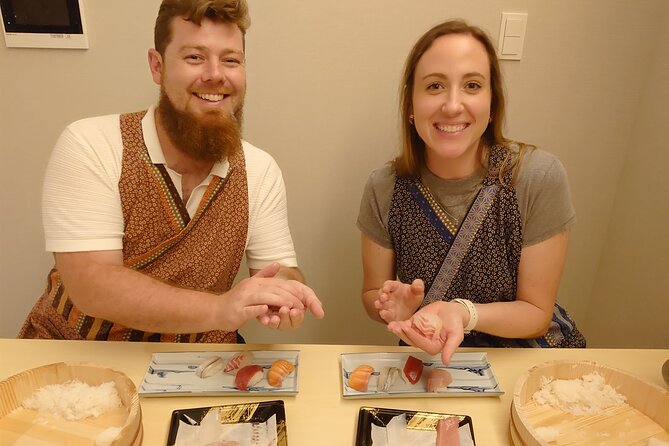
The lesson begins with aprons and sushi rice. Each participant receives a wooden tub and paddle to prepare a portion separately. That is a small but meaningful detail: rice is not just filler in sushi. Its texture and seasoning shape the finished piece, so learning how to handle it gives you a useful foundation for making sushi at home.
You season and mix the rice by hand, then move on to shaping and assembling. One participant described learning to work the rice with bare hands, a tactile part of the process that can feel unfamiliar at first. Expect the instructor to demonstrate and guide you rather than simply hand over a recipe and leave you to guess.
This is also where the class’s step-by-step pace matters. Sushi can look simple when it arrives neatly arranged at a restaurant, but getting the rice and shape right takes practice. You will not become a sushi master in one evening, but you should leave with a clearer understanding of the movements and proportions involved.
Make three styles of sushi
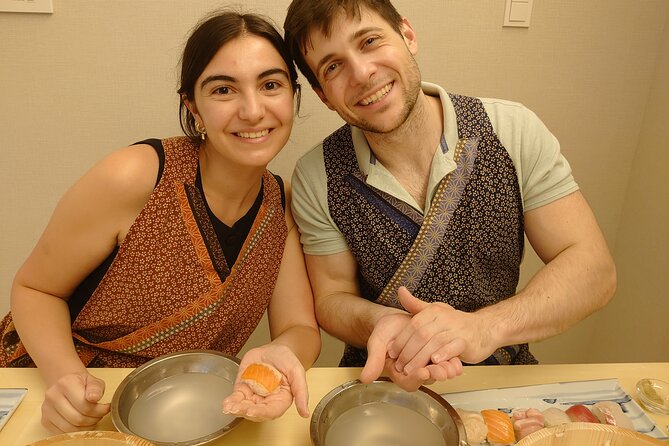
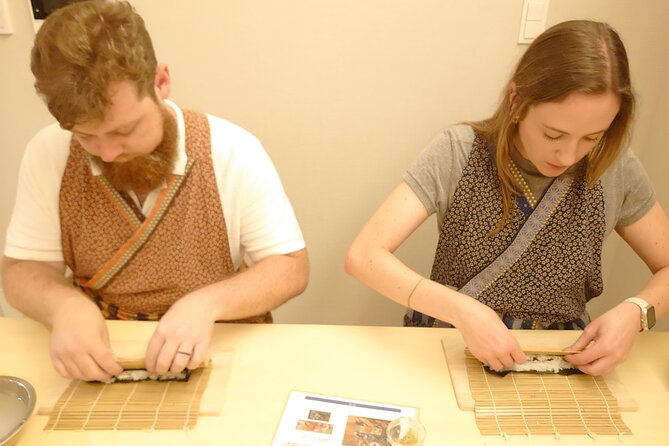
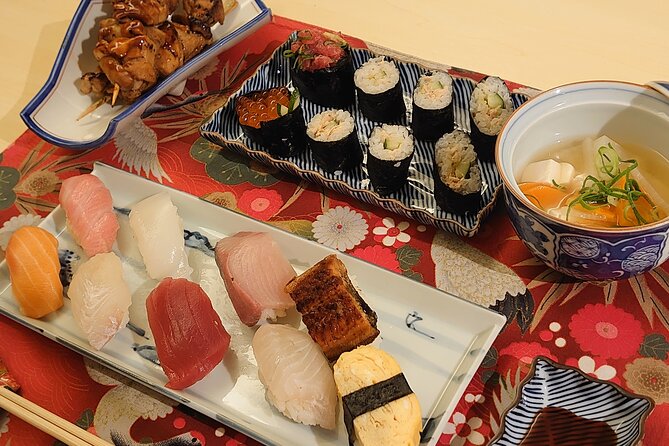
The sushi portion includes 9 nigiri, 2 gunkan-maki, and 1 rolled sushi. Nigiri gives you practice forming rice and placing toppings; gunkan-maki and the roll introduce different ways to shape and wrap the ingredients. The class includes all ingredients, so you can focus on technique rather than shopping for unfamiliar items before you begin.
The variety is a strength. A lesson focused only on rolling maki can leave you with a narrow idea of sushi. Here, you get to make several forms and see how the same prepared rice can be used in different ways. The stated quantities also mean there is enough to make a satisfying plate for the meal afterward.
The class is not described as a specialist fish-cutting course, so do not book expecting advanced knife work or a lesson in sourcing seafood. The emphasis is on making sushi and the other dishes on the menu under an instructor’s guidance. If you want to recreate the meal at home, pay close attention to the rice seasoning and shaping instructions, not only the finished look.
Roll tamagoyaki in a rectangular pan
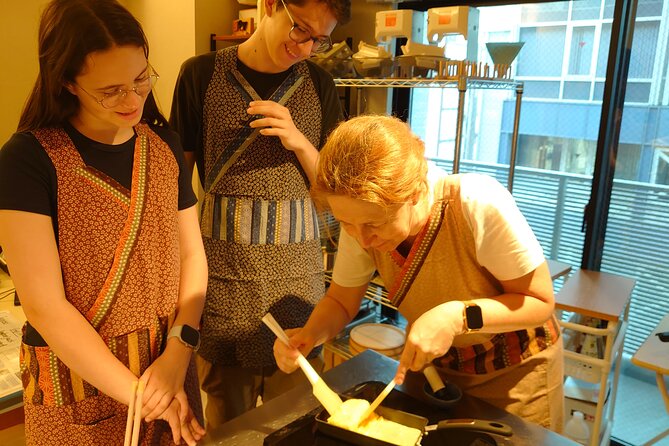
Next comes tamagoyaki, the Japanese rolled omelette used for egg sushi. You make it together using a small rectangular frying pan, a tool that helps produce the neat layered shape. The process adds a different kind of kitchen skill to the class: instead of forming rice, you build the omelette in layers and roll it as it cooks.
This part can be especially useful if you enjoy learning techniques that are hard to pick up from a finished dish alone. The pan’s shape makes sense once you see how it helps form the omelette, and the result is used as part of the sushi meal. It is a hands-on step, not a demonstration to watch from the sidelines.
Do not expect every dish to be an individual project from start to finish. Some parts, including making the rolled eggs, are done by the group together. That shared format can make the room feel lively, though anyone hoping to work alone at their own pace may prefer a private lesson.
More hands-on workshops around Osaka:
- Matcha Making Class in Osaka with Authentic Japanese Sweets Set
★ 5.0 · 509 reviews - Osaka Sushi Making Class – Hands-On Nigiri & Rolls (Same-Day OK)
★ 5.0 · 352 reviews - Osaka Cooking Class: Okonomiyaki &Japanese cuisines experience
★ 5.0 · 261 reviews - Osaka: Roll and Authentic Sushi Making Class in Dotonbori
★ 4.9 · 239 reviews
Build dashi into miso soup
The soup begins with dashi, a traditional Japanese broth, before you add miso, tofu, and vegetables cut into decorative shapes. Some explanations also touch on umami and ingredients such as bonito. That context helps connect a simple bowl of soup to the ingredients and flavors that underpin many Japanese dishes.
Making dashi from scratch is a useful contrast to opening a packet or adding miso to plain water. You get to see how the broth forms the base of the soup, then finish it with tofu and vegetables. It is a small part of the menu, but one of the most instructive if you want to understand why homemade miso soup tastes different from a quick version.
The vegetable shapes add a playful visual touch, but the main value is learning the sequence and ingredients. A participant who recreated the dishes at home found the lesson useful for making the meal again. If you want to do the same, take notes as you go: one person found the recipe supplied afterward a little light on details.
Skewer chicken for yakitori
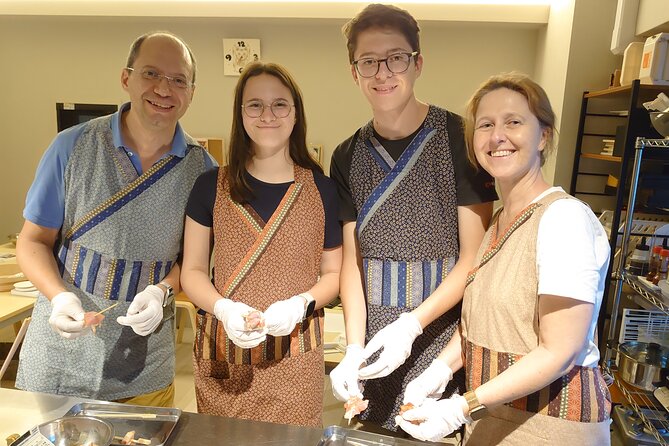
The menu also includes chicken yakitori. You skewer the chicken and prepare it for cooking, adding a savory grilled dish to balance the sushi and soup. That makes the class feel more like preparing dinner than attending a narrowly focused sushi workshop.
The yakitori step is another chance to learn by doing, and it gives the final meal a mix of textures and flavors. The class information describes skewering the chicken; a participant also recalls marinating it before grilling. The exact cooking sequence may depend on the class, so follow the instructor’s directions rather than relying on a particular method in advance.
For families, this variety can help keep the session engaging. The class has been enjoyed by a family with two teenagers, and children must be accompanied by an adult. It is a shared cooking activity, not a children-only lesson, so younger children may need help with the kitchen tasks.
Sit down to eat what you made
At the end, you arrange the dishes with chopsticks and eat together. The meal includes the sushi, miso soup, and yakitori you have prepared, followed by a complimentary seasonal dessert. The food is not an extra restaurant stop after class; it is the payoff for the work you have just done.
The meal is described as filling, which matters when you are planning the rest of your evening. A 5:30 pm class that runs about two and a half hours will take up a substantial part of dinner time. If you are choosing this experience as an evening activity, you can treat it as both a cooking lesson and dinner rather than scheduling another full meal immediately afterward.
The shared meal also makes the class suitable for solo visitors. One solo participant described feeling nervous at first, then finding the class friendly and comfortable. You are there to cook alongside others, so you do not need to arrive as part of a couple or family to take part.
Is $99.08 good value?
At $99.08 per person, this is more than a quick demonstration, but you are paying for roughly two and a half hours of instruction, all ingredients, several dishes, and the meal at the end. The menu is substantial: sushi in three styles, tamagoyaki, dashi-based miso soup, yakitori, and dessert. If you value learning practical skills as well as eating dinner, the price is easier to justify.
The value is strongest for people who will use the techniques again. You can learn how to season and handle sushi rice, shape different sushi, cook a rolled omelette, and make soup from dashi. A few participants have successfully recreated the menu at home, though the written recipe may not provide every step in full detail. Take your own notes if cooking the dishes again is a priority.
If you mainly want a cheap meal, this is not the right comparison. The class is a paid activity with an instructional element, and its worth depends on whether you want the process as much as the food. If you are curious about Japanese cooking and like a guided, participatory evening, you get a lot more than a plate of sushi.
Who will enjoy this Osaka class?
This class suits first-time sushi makers, food-minded visitors, families with older children, and solo participants who enjoy joining a small group activity. The instruction covers several dishes, so you do not need prior cooking experience to follow along. The class is also a good fit if you want a scheduled evening activity that combines learning and dinner.
It may be less appealing if you want a quiet, private lesson, need a very detailed printed recipe, or are looking for advanced sushi techniques. The group format involves making some items together, and the information about group size is inconsistent. Ask which maximum applies to your session if a small group is important to you.
You can advise the organizer of specific dietary requirements at booking. The class includes a set menu with sushi, soup, and chicken, but the available information does not specify which substitutions can be made. Ask before you pay if you have a significant allergy or dietary restriction.
The class is near public transportation, but no exact station or walking directions are provided here. Give yourself enough time to find the meeting point at Sistema Gallery in Kitahorie, and confirm your session’s start time: the stated time is 5:30 pm even though lunch and dinner options are also mentioned. Confirmation is subject to availability and is expected within 48 hours of booking.
Should you book it?
Book this class if you want to learn by making a complete Japanese meal, not just watch someone shape sushi. The strongest reasons are the mix of sushi styles, the chance to make dashi and tamagoyaki, and the meal you eat at the end. Fumi’s patient teaching is a particular draw if she is leading your session, though the specific instructor is not guaranteed.
Before booking, confirm the session time, which instructor will teach it if that matters to you, and the applicable group-size limit. At about $99 per person, it is best value when you are interested in carrying the skills home. If that sounds like your kind of evening, this is a practical and tasty way to spend part of your Osaka visit.
FAQ
How long does the cooking class last?
The class lasts approximately two hours and 30 minutes.
What is the listed price?
The listed price is $99.08 per person.
What dishes will I make?
You make 9 nigiri sushi, 2 gunkan-maki, 1 rolled sushi, tamagoyaki, dashi-based miso soup, and yakitori chicken.
Are ingredients included?
Yes. All ingredients for the activity are included.
Is dessert included?
Yes. The meal ends with a complimentary seasonal dessert.
Where does the class meet?
It meets at Banix北堀江Japan, Sistema Gallery, 3-chōme 6-2, Kitahorie, Nishi Ward, Osaka, 550-0014.
Where does the activity end?
It ends back at the meeting point.
What time does the class start?
The stated start time is 5:30 pm. Lunch and dinner class options are also described, so confirm the time of the session you plan to book.
How many people can join?
The class is described as having a maximum of 14 in one place and a maximum of 8 in another. Confirm the limit for your session.
Can I share dietary requirements?
Yes. You should advise the organizer of specific dietary requirements at the time of booking.
Just added around Osaka
- Mount Koya from Osaka: Cultural Small Group Day Tour★ 5.0 · 3 reviews
- Matcha Tea Bowl Experience in Osaka★ 5.0 · 11 reviews
- Master Washoku: 5 Core Techniques for Authentic Cooking★ 4.7 · 7 reviews
- Manno: Osaka Premium Wagyu BBQ Experience Reservation★ 5.0 · 4 reviews
- Learning Shodo with a kimono and Trying Samurai Calligraphy★ 4.2 · 7 reviews
- Katsu Curry OR Bento Making Cooking Class & Local Shop Tour★ 4.9 · 11 reviews
- Himeji: Private Guide Tour of the Castle from Osaka or Kyoto★ 4.5 · 7 reviews
- Osaka and Nara Customized Private tour with English Driver★ 4.7 · 4 reviews
Osaka Cooking Classes, compared.
Sushi Making Osaka Roll and Authentic Japanese Sushi Class
Read our review →
Osaka Sushi Making Class – Hands-On Nigiri & Rolls (Same-Day OK)
Read our review →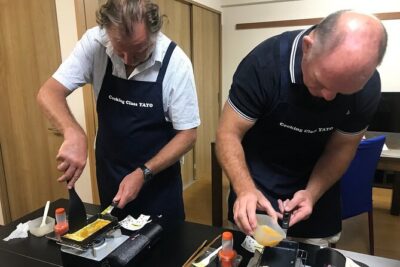
Osaka Cooking Class: Okonomiyaki &Japanese cuisines experience
Read our review →
Roll and Authentic Sushi Making Class in Dotonbori
Read our review →
Browse the lists this tour appears in