
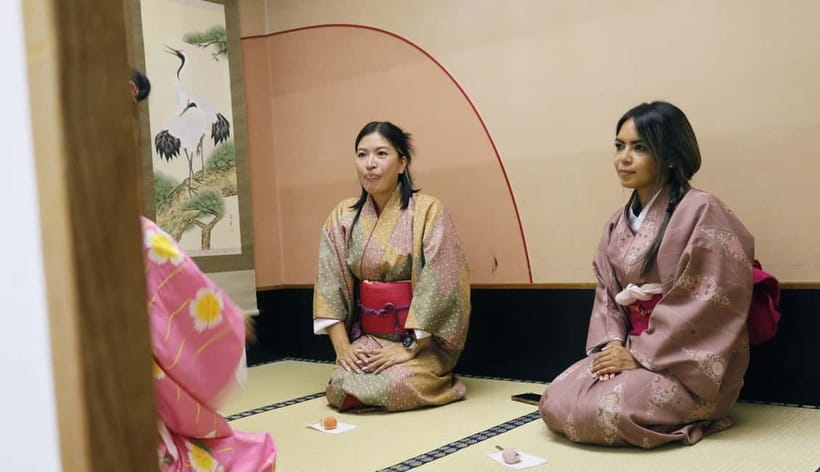
Reviewed · OSAKA CASTLE TOURS
Learn Zen in a class of making Matcha tea near Osaka Castle
The appeal here is the chance to take part in a Japanese tea ceremony, not just watch one. You change into traditional clothing, learn the gestures and etiquette, and taste matcha with wagashi, the small seasonal sweets served with tea.
I like two things in particular: the small group size, which gives you a turn at preparing tea, and the mix of cultural context with practical instruction. The included photos also let you focus on the ceremony instead of trying to document every moment yourself.
One consideration: the session lasts only an hour, and you need to arrive 30 minutes early to change. Hair styling and outdoor kimono photography may cost extra, so check what is included for your booking if those details matter.
- A small class of up to six makes room for individual turns and questions.
- Traditional clothing is included, with men dressed in hakama and dogi and women in kimono.
- Matcha and wagashi are part of the session, linking tea practice with seasonal Japanese sweets.
- The ceremony includes hands-on practice, including preparing tea for another participant.
- Photos are included and sent to a designated email address.
- The venue is Samurai Honor in Joto-ku, not an unspecified tea room near the castle.
A tea ceremony you take part in
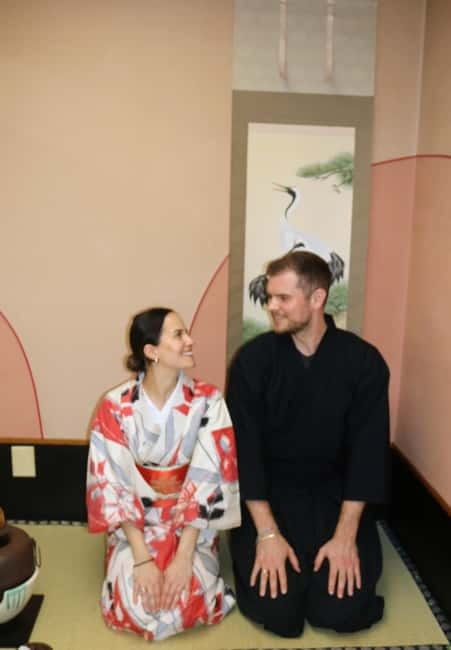
This is a compact introduction to chanoyu, the Japanese tea ceremony, at Samurai Honor in Osaka. Rather than sitting through a demonstration from the sidelines, you learn how the ceremony works, practice its manners, and have a chance to prepare matcha yourself.
The experience is framed around an old idea: tea is not a one-way performance by the person serving it. The host offers care and hospitality, while the person receiving the tea responds with attention and respect. That exchange is central to the ritual, and it gives the etiquette a purpose beyond memorizing which way to turn a bowl.
The room’s entrance, the nijiriguchi, makes this idea especially clear. Traditionally, people pass through it in a low posture, leaving rank and status outside. At the ceremony, participants are treated equally regardless of nationality, age, gender, or social standing. You do not need prior knowledge of tea customs to take part.
The activity is listed as near Osaka Castle, but the actual venue is Samurai Honor, at Excellence Takayama 1F, 2-3-19 Shiginonishi, Joto-ku, Osaka. Use Google Maps for directions: the supplied information warns that the Apple Maps address is incorrect. A wooden sign reading Honor of the Samurai and a rack of activity pamphlets mark the entrance.
Changing into kimono or hakama
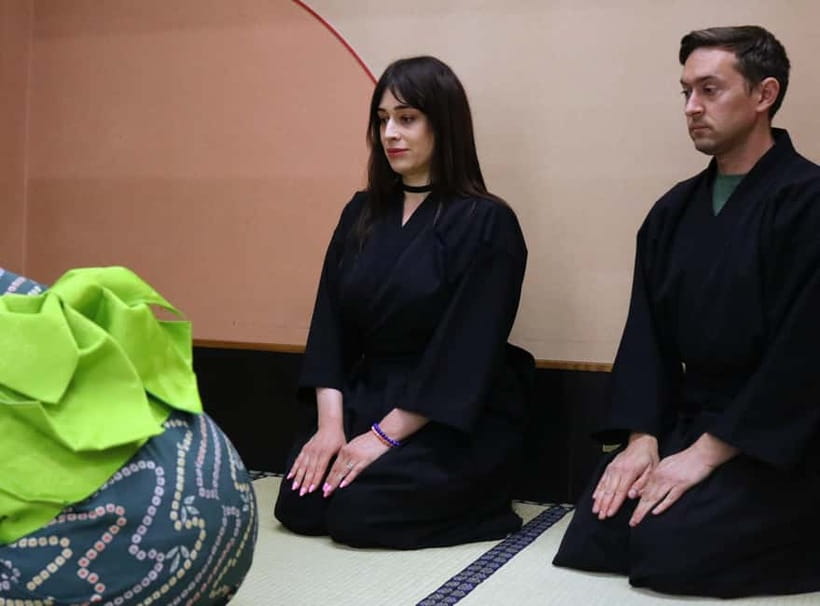
Before the tea portion begins, you change into traditional Japanese clothing. Women wear kimono, while men wear hakama and dogi, traditional garments that give the session a samurai theme. The clothing is included in the $40 price, so you do not need to arrange a rental separately.
This change of dress is more than a photo opportunity. It helps set the mood and makes the ceremony’s formal gestures feel distinct from ordinary sightseeing. That said, the session is short, so expect a focused introduction rather than a full-day cultural program.
Some people have had their hair styled and decorated with flowers as part of the experience. However, collected hair and kanzashi, traditional hair ornaments, are also listed as a paid option. If hairstyle is important to you, ask what is included on your date rather than assuming it comes with the standard price.
Outdoor photo options and additional clothing items are also paid extras. Women’s options list kimono, obi, tabi socks, zori sandals, a basket bag, and an outdoor photo shoot. Men’s options list kimono, obi, tabi, geta wooden clogs, and an outdoor photo shoot. These extras are separate from the included ceremony photography.
More Osaka Castle tours around Osaka:
- Osaka Castle: Museum and Tower Entry Ticket
★ 4.5 · 2,380 reviews - Osaka Castle Walking Tour and Castle Tower Admission
★ 5.0 · 561 reviews - 5-Hour Osaka Bike Tour to the Neighborhood of Osaka Castle
★ 5.0 · 319 reviews
Learning the gestures, not just the history
Once you are dressed, the instructor guides you through tea ceremony manners. You learn how to sit, bow, stand, walk, and handle the tea. These are practiced rules, but the point is not to get every movement perfect on your first try. The lesson gives you enough structure to understand why a ceremony unfolds at a measured pace.
An English interpreter guide is included, and the instructor speaks English and Japanese. Kaori has led sessions that explained the history and cultural setting step by step, but instructor assignments can vary. The experience is also praised for its warm, patient teaching, which matters in a class where unfamiliar gestures might otherwise feel daunting.
The class is limited to six participants. That is a useful size for an activity with individual instruction: you should have room to follow the sequence and, as time allows, take a turn making tea. One participant described preparing tea for another person, a lovely way to experience the reciprocal nature of the ceremony.
The lesson is not a certification course, nor does the one-hour format promise mastery. Think of it as a hands-on introduction with enough etiquette, context, and practice to make a later tea ceremony easier to appreciate.
Matcha, wagashi, and the seasons
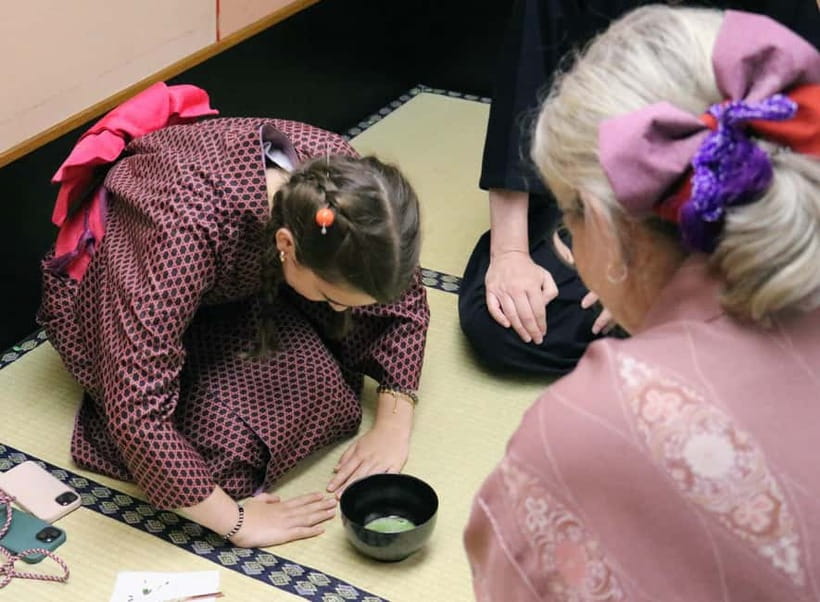
Matcha is powdered green tea, whisked and served as part of the ceremony. The instructor introduces the preparation process and its associated manners. You are not simply handed a cup: the sequence around serving and receiving the tea is part of what you learn.
Wagashi, the Japanese sweets served with tea, add another layer. Their shapes, colors, and hand-finished details often reflect the seasons. In this setting, the sweet is not just a snack to balance the tea. It offers a small lesson in Japanese ideas of beauty, including wabi and sabi, a sensibility that values simplicity, imperfection, and the passage of time.
The ceremony has a long cultural relationship with wagashi. These sweets developed alongside tea traditions and express a close attention to spring, summer, autumn, and winter. Looking at one before eating it helps you notice how seasonal reference and careful craft can be part of an everyday food.
You will not need to know the names of every sweet or season in advance. The value is in learning to look more closely: the color, shape, and handwork all contribute to the experience. For children old enough to join, this visual element can make the cultural lesson easier to connect with, though the activity is not suitable for children under 10.
Photos without losing the moment
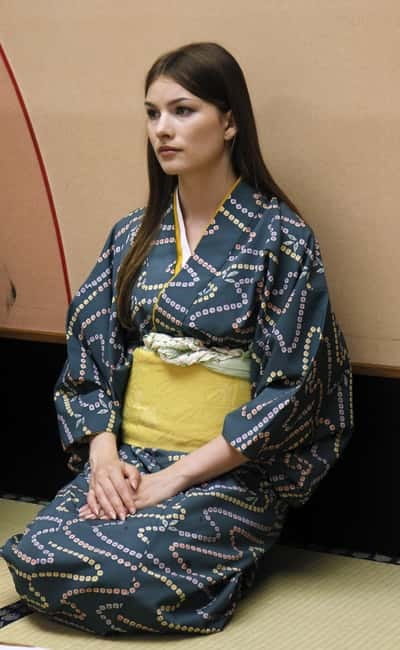
Photography is included, with images sent to a designated email address. That is a practical perk in a ceremony where your hands and attention are often occupied. You can participate rather than keep reaching for your phone, and the photos preserve the clothing and the room as part of the memory.
Some sessions have included a photographer taking many pictures during the activity. One participant reported receiving the photos the same day, but that timing is not guaranteed. The stated arrangement is that the data is sent to the email address you designate.
If you want a more elaborate portrait session or pictures outdoors, those are paid options. The included photo service should be understood as documentation of the activity, not necessarily a separate fashion shoot. Ask ahead if you have specific expectations about poses, hair styling, or the number of images.
More tea ceremonies around Osaka:
- Osaka: Tea Ceremony Experience
★ 4.9 · 1,426 reviews - Tea Ceremony Experience in Osaka Doutonbori
★ 5.0 · 754 reviews - Matcha Making Class in Osaka with Authentic Japanese Sweets Set
★ 5.0 · 509 reviews - Osaka: Matcha Making Experience with Japanese Sweets
★ 5.0 · 146 reviews
Is $40 good value?
At $40 per person for an hour, the price covers more than a cup of tea. Kimono or men’s traditional clothing, matcha, wagashi, an English interpreter guide, a certified instructor, tax, tips, and photo shooting are included. You also get a small group format, which can make a short class feel more personal and give you a chance to practice.
The value is strongest if you want a structured cultural activity that combines clothing, food, etiquette, and photographs. For a first visit to Japan, it offers a clear introduction to tea ceremony without requiring you to arrange garments or interpret the customs on your own.
It is less compelling if your main goal is a long, formal ceremony or an extended kimono photo session. The one-hour duration keeps the experience concise, and outdoor photos, additional clothing, and some hair accessories may add to the bill. At the stated price, it is a compact cultural class, not a full day of samurai-themed activities.
Timing, meeting point, and practical notes
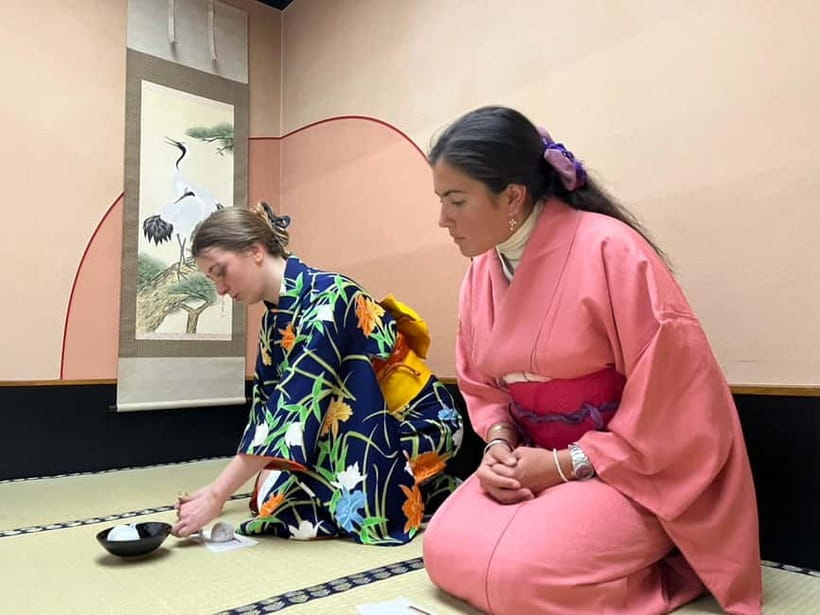
Plan for more than the one-hour session itself. You are asked to arrive 30 minutes before your reserved time for instructions and changing clothes. That early arrival is important: turning up at the start time could cut into the activity while you are still getting ready.
The meeting point is at Samurai Honor, Excellence Takayama 1F, 2-3-19 Shiginonishi, Joto-ku, Osaka. Follow Google Maps rather than Apple Maps, and look for the wooden Honor of the Samurai sign or the pamphlet rack in front. Kimonos and hakama hanging outside may also help identify the shop.
Transportation and hotel or station pickup are not included. Bring a T-shirt to wear beneath the clothing. The activity is offered in English and Japanese; interpreters for Italian, Spanish, French, Chinese, Thai, or Indonesian may be available, but staffing is limited, so check before reserving if you need another language.
Pets, alcohol, drugs, and nudity are not allowed. The activity is not suitable for children under 10, people with altitude sickness, or people over 95. The reservation terms allow free cancellation up to 24 hours in advance, and a reserve-now, pay-later option is available.
Who will enjoy this class
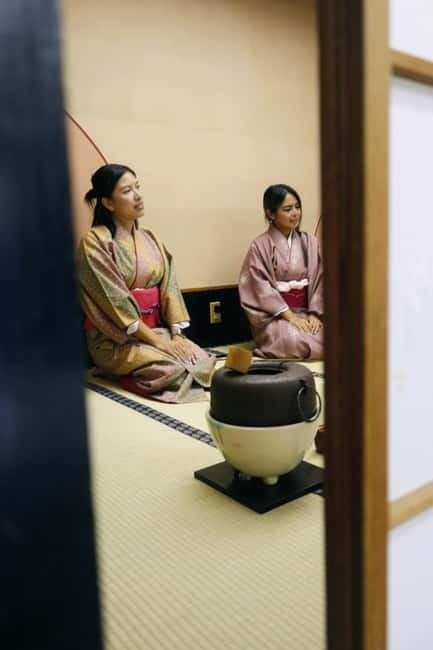
This is a good fit if you are curious about Japanese customs and want to do more than observe. The mix of dressing, instruction, sweets, tea, and photographs gives the hour a satisfying shape. Couples, small groups, solo visitors, and families with children aged 10 or older can all find a reason to book, especially if they like activities that make a good shared memory.
It is also suited to people who enjoy learning through details. The bow, the way the tea is received, the seasonal design of a sweet, and the act of preparing tea for someone else each add meaning to a ritual that might otherwise seem mysterious from the outside.
You may want another kind of activity if you need step-free or other access information, since none is provided here, or if you expect a lengthy, highly formal tea ceremony. The short format is designed as an introduction. Its strength is making a traditional practice approachable, not covering every nuance.
Should you book?
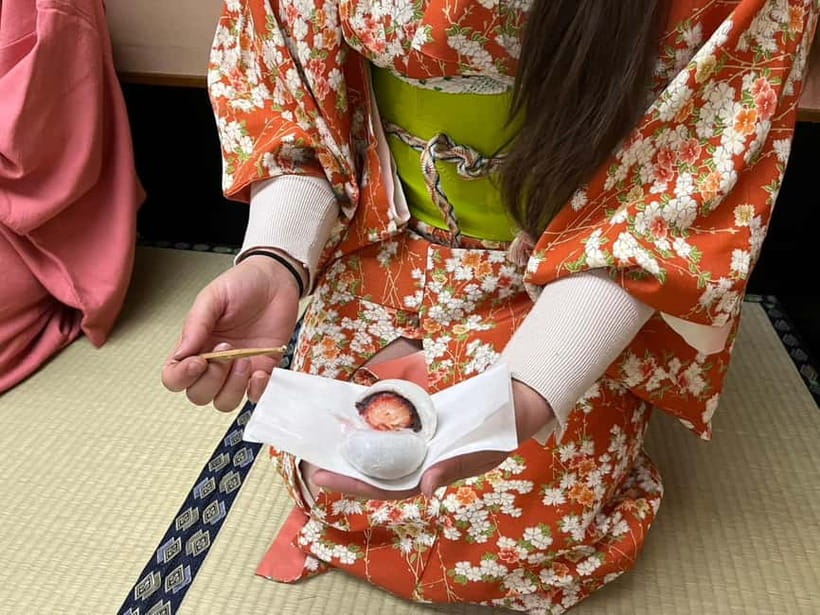
Book this if you want a small, hands-on cultural class with traditional dress, matcha, wagashi, English instruction, and photos included. The best reasons are the personal scale and the chance to practice the gestures instead of only watching them.
Before you commit, check the exact details of hair styling, photo arrangements, and any outdoor shoot you hope to add. Arrive early, use Google Maps, and treat the hour as a thoughtful introduction to tea culture rather than a complete course. For that purpose, the $40 price offers a useful blend of learning and keepsake value.
FAQ
How long is the tea ceremony class?
The class lasts one hour. You should also arrive 30 minutes before your reserved time for instructions and changing clothes.
How much does the experience cost?
The listed price is $40 per person. Paid options, including outdoor photography and some hair or clothing extras, may cost more.
What clothing is included?
Kimono clothing is included. Men wear hakama and dogi, while women wear kimono.
Are matcha and wagashi included?
Yes. Matcha and wagashi are included in the experience.
Is an English-speaking instructor available?
Yes. English and Japanese are the listed languages, and an English interpreter guide is included. Other language interpreters may be available by advance inquiry, subject to staff availability.
Are photographs included?
Yes. Photo shooting is included, and the data is sent to a designated email address. Same-day delivery is not guaranteed.
Where is the meeting point?
The activity takes place at Samurai Honor, Excellence Takayama 1F, 2-3-19 Shiginonishi, Joto-ku, Osaka. Use Google Maps because the Apple Maps address is reported as incorrect.
What should I bring?
Bring a T-shirt to wear beneath the traditional clothing.
Can children join the class?
Children under 10 are not considered suitable for the activity. The information does not specify other age requirements for children.
More hands-on workshops around Osaka
- Sushi Making Osaka Roll and Authentic Japanese Sushi Class
★ 5.0 · 1,220 reviews - Osaka: Ramen and Gyoza Cooking Class in Dotonbori
★ 5.0 · 378 reviews - Osaka Sushi Making Class – Hands-On Nigiri & Rolls (Same-Day OK)
★ 5.0 · 352 reviews - Osaka Cooking Class: Okonomiyaki &Japanese cuisines experience
★ 5.0 · 261 reviews
Just added around Osaka
- Mount Koya from Osaka: Cultural Small Group Day Tour★ 5.0 · 3 reviews
- Matcha Tea Bowl Experience in Osaka★ 5.0 · 11 reviews
- Master Washoku: 5 Core Techniques for Authentic Cooking★ 4.7 · 7 reviews
- Manno: Osaka Premium Wagyu BBQ Experience Reservation★ 5.0 · 4 reviews
- Learning Shodo with a kimono and Trying Samurai Calligraphy★ 4.2 · 7 reviews
- Katsu Curry OR Bento Making Cooking Class & Local Shop Tour★ 4.9 · 11 reviews
- Himeji: Private Guide Tour of the Castle from Osaka or Kyoto★ 4.5 · 7 reviews
- Osaka and Nara Customized Private tour with English Driver★ 4.7 · 4 reviews
Osaka Castle Tours, compared.

Osaka Castle Walking Tour and Castle Tower Admission
Read our review →
5-Hour Osaka Bike Tour to the Neighborhood of Osaka Castle
Read our review →

PRIVATE 6hr, Food tour from Osaka Castle, Kuromon, Dotonbori.
Read our review →
A Tour to Explore the Symbol of Osaka: Osaka Castle
Read our review →
Learning Zen of Japanese Calligraphy in kimono near Osaka Castle
Read our review →Browse the lists this tour appears in