
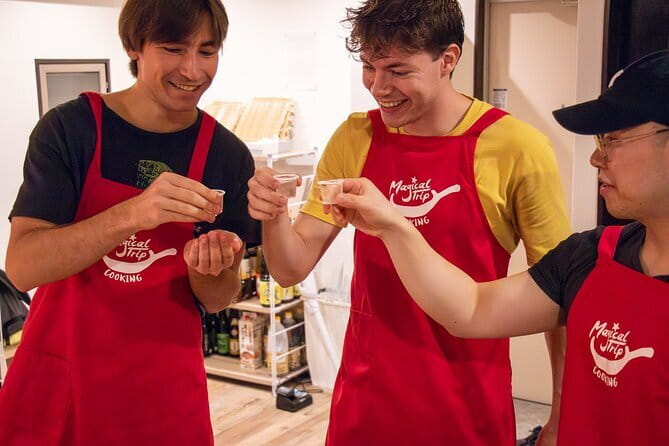
Reviewed · OSAKA COOKING CLASSES
Osaka Cooking Class and Sake Tasting with Local Supermarket Visit
The most useful part of this Osaka class may happen before anyone turns on a stove: you’ll visit a local supermarket and choose ingredients with your guide. Then you’ll put them to work making okonomiyaki, niku-sui, and gyoza, with instruction aimed at beginners as well as practiced home cooks.
I like two things in particular: the supermarket stop gives you a practical look at everyday food shopping, and the small group, capped at seven, leaves room for hands-on help. The meal also comes with local sake, beer, or soft drinks, so you can make the cooking lesson a shared lunch rather than just a demonstration.
One consideration: this is a four-hour activity, so it takes up a substantial part of your day. And while the class offers several dishes, the exact depth of instruction for each one is not specified, so come ready to cook at the group’s pace.
The best parts of this Osaka cooking class
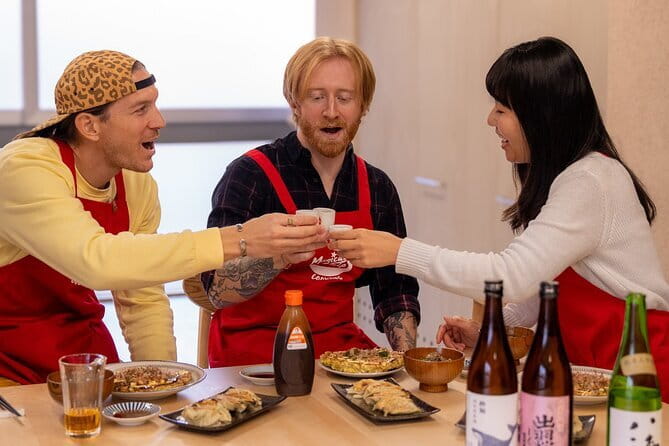
- A supermarket visit comes first: See local ingredients and select what the class will use, with your guide explaining what to shop for.
- Three Osaka-friendly dishes are on the menu: Make savory okonomiyaki, beef soup called niku-sui, and gyoza dumplings.
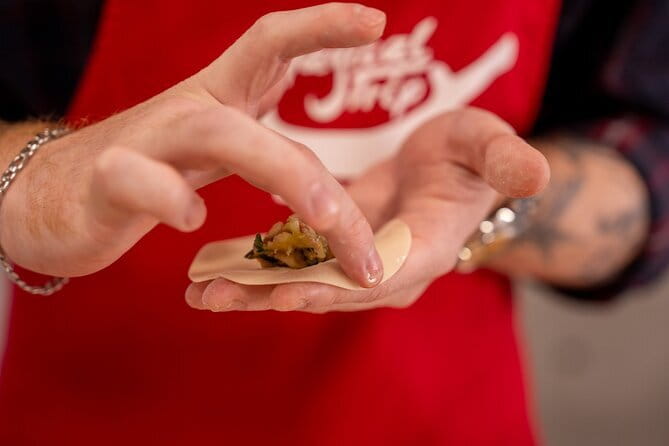
- You do the cooking: Fold gyoza and work through the recipes with step-by-step guidance rather than simply watching a chef.
- A very small group: The maximum is seven people, a useful limit for a class where everyone needs space and instructor attention.
- Drinks are part of the meal: Choose local sake, beer, or a soft drink to enjoy with what you cook.
- No prior skill is required: The recipes are presented as beginner-friendly, though more experienced cooks can practice familiar techniques too.
From supermarket shelves to the cooking studio
The class begins at 10:00 am at the FamilyMart on the south side of Minami-morimachi Station. From there, the first stop is a local supermarket, where your guide introduces ingredients and explains what to buy for the recipes. It’s a modest but useful change from a standard cooking lesson: instead of finding everything neatly laid out on a counter, you get a glimpse of the food choices people make in everyday Osaka.
The supermarket visit also helps turn unfamiliar ingredients into something less mysterious. If you’ve wondered what to look for when shopping for Japanese cooking at home, this is the moment to pay attention and ask questions. One instructor, Mari, has been praised for explaining what to buy for the different dishes. The exact products and explanations can vary, but the focus is practical: connect the ingredients you see in the shop with the meal you’ll prepare afterward.
There is a trade-off. A supermarket stop is not a market tour with a long list of vendors or a formal tasting session. The information provided promises a visit to a local supermarket, not a guided survey of Osaka’s food trade. Think of it as a useful introduction to everyday ingredients, not a major sightseeing stop.
More sake tastings around Osaka:
- Osaka Sake Tasting with Takoyaki Cooking
★ 5.0 · 156 reviews - Osaka Sake Tasting & Takoyaki Cooking Experience
★ 5.0 · 149 reviews - Osaka: Cooking Class & Sake Tasting with Local Market Visit
★ 4.8 · 31 reviews
Cooking three dishes, not just watching a chef
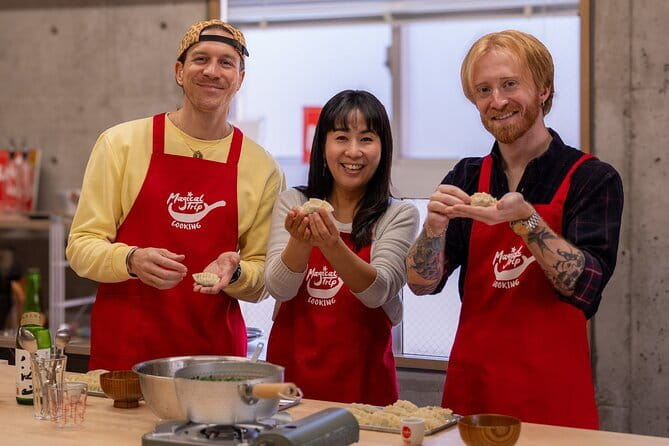
Back at MagicalTrip’s dedicated studio, the class shifts from shopping to cooking. The menu includes okonomiyaki, niku-sui, and gyoza. That gives you a mix of tasks and textures: shaping and cooking a savory pancake, preparing a beef soup, and learning to fold dumplings. You are not expected to arrive with professional knife skills or a Japanese recipe book tucked under your arm. The class is designed to work for beginners.
The appeal lies in doing the work yourself. You’ll follow step-by-step instructions and receive live feedback from the instructor, rather than watching a demonstration from the edge of the room. The class description specifically calls out folding gyoza and crafting okonomiyaki, so expect to take part in those hands-on steps. That active format is especially useful if you want to remember a recipe later. Your hands tend to recall the process better than a photo of a finished plate.
Each dish also gives you a different way to think about Osaka food. Okonomiyaki is the most recognizable of the three, a savory pancake that makes a satisfying centerpiece. Niku-sui, or beef soup, brings a warm, simple dish to the table. Gyoza add a folding technique that can take practice, but the class is designed to make it approachable. The point is not to master every detail in one afternoon; it’s to leave with a clearer idea of how the dishes come together.
What the guides add to the lesson
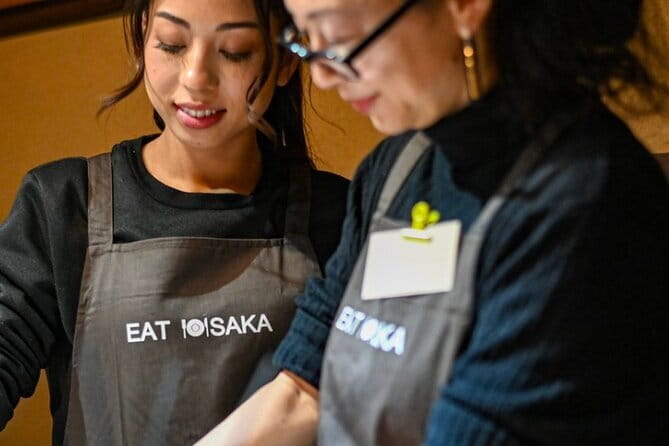
A cooking class can be only as useful as the person guiding it. This one puts emphasis on a friendly instructor who explains the steps and gives live feedback. Instructors associated with the class include Yuka and Mari, though you should not assume that either one will lead your particular session.
The details shared about their teaching are encouraging. Yuka has been associated with a four-hour class that included the supermarket visit and cooking several dishes. Mari has been praised for explaining the shopping choices and getting everyone involved. Those are the kinds of skills that matter here: clear instructions, practical explanations, and a pace that lets a mixed group participate.
The group limit of seven supports that format. It is small enough to make questions and individual help more feasible than in a large class, though it does not guarantee one-on-one instruction throughout. If you are an experienced cook, you may already know some of the basic techniques. You can still use the class to compare methods and get a closer look at these particular recipes. If you are new to cooking, the beginner-friendly structure should make it easier to join in without feeling behind.
Sake, beer, or a soft drink with lunch
Once the dishes are ready, you can enjoy them with local sake, beer, or soft drinks. The drinks are not an afterthought: the class combines cooking with a tasting, making the meal a chance to connect the food with a local drink. If you enjoy sake, this adds an extra layer to the afternoon. If you do not drink alcohol, the soft drink option means you can still take part in the meal.
The information provided does not specify how many sake varieties are included, whether the tasting is guided in detail, or how much is served. Keep expectations sensible: it is a cooking class with a sake tasting, not a dedicated brewery visit or a full sake seminar. The meal and drinks are the social finish to the class, and the emphasis remains on cooking.
This mix is one of the class’s stronger ideas. You get a meal you helped prepare, a choice of drinks, and time to enjoy the results with the group. The food is not merely a sample between sightseeing stops. It is the main event you have spent the morning making.
More cooking classes around Osaka:
- Sushi Making Osaka Roll and Authentic Japanese Sushi Class
★ 5.0 · 1,220 reviews - Osaka Sushi Making Experience
★ 5.0 · 400 reviews - Osaka: Ramen and Gyoza Cooking Class in Dotonbori
★ 5.0 · 378 reviews - Osaka Sushi Making Class – Hands-On Nigiri & Rolls (Same-Day OK)
★ 5.0 · 352 reviews
Four hours well spent, if food is a priority
At about four hours, this is a half-day activity. The 10:00 am start makes it a morning commitment, and the activity ends back at the original meeting point. That makes it relatively easy to plan around the rest of your day, though you should leave yourself room rather than scheduling another timed activity immediately afterward.
The duration has a clear benefit: there is time for shopping, instruction, cooking, and eating. A shorter class might have to skip the supermarket or rush through the meal. Here, the sequence gives the experience a natural rhythm, moving from choosing ingredients to using them and then sharing the dishes. The drawback is equally clear. If you have only a short stay in Osaka or would rather spend the morning sightseeing, this class will take a meaningful block of time.
The meeting point is FamilyMart Minamimorimachi Station South side, at 2-chōme 3-10 Tenjinbashi, Kita Ward, Osaka, postal code 530-0041. The class is near public transportation, and the activity ends at the same point. A mobile ticket is available. Since the meeting point is specific, check the south-side detail before setting out, especially if you are approaching the station from a different exit.
Is $92.50 good value?
At $92.50 per person, this is more than a basic recipe demonstration. You are paying for a four-hour experience that combines a supermarket visit, a small-group lesson, ingredients for several dishes, instructor guidance, and a meal with a choice of drinks. If you value participation and food culture, those parts make the price easier to justify than a class that simply shows you how to cook one recipe.
The strongest value is for someone who wants more than a meal out. You get to learn what goes into the dishes, practice making them, and enjoy the result. The small maximum group size also matters: hands-on lessons work best when the instructor can see what you are doing and offer help. With no more than seven participants, this class has a better chance of feeling personal than a large group session.
Still, value depends on what you want. If your priority is a cheap lunch, you can find simpler ways to eat in Osaka. If you want an extensive sake education, the description does not promise enough detail to justify booking for that alone. The price makes the most sense when you value the combined experience: shopping, cooking, instruction, and a shared meal.
Who should book this class?
I’d put this on the shortlist for solo visitors, couples, families, and friends who want to spend part of a day doing something together. The relaxed format is meant to suit different skill levels, and the cooking itself gives everyone a role. It can also work well for someone who enjoys Japanese food and wants to leave with techniques they can try again at home.
It is a particularly good fit if you like learning by doing. You will not just hear a description of okonomiyaki or look at a bowl of niku-sui. You’ll take part in making them, with the supermarket visit providing useful context before the cooking begins. The class also suits people who enjoy a meal as a social activity, especially with sake or beer available alongside soft drinks.
It may be less appealing if you want a very specialized cooking course, a long market tour, or a detailed sake tasting. Those are not the promised focus. And if your schedule is tight, four hours is a real commitment. Book it for the combination of everyday food shopping and hands-on cooking, not as a quick stop between other plans.
Should you book it?
Book this class if you want a practical introduction to Osaka cooking, prefer to take part rather than watch, and can spare a morning. The supermarket visit, three dishes, small group, and meal with drink choices make a well-rounded half-day plan. I especially like that the ingredients are part of the lesson, not just something that appears on the counter.
Skip it if you mainly want a low-cost lunch or a deep technical course. The class is designed to be welcoming and accessible, which is a strength for most first-timers but may feel basic to an advanced cook. For the right person, though, it offers a satisfying way to carry a little bit of Osaka’s food culture home in your hands and recipes.
FAQ
How long is the cooking class?
The activity lasts approximately four hours.
What time does the class start?
It starts at 10:00 am.
Where is the meeting point?
Meet at FamilyMart Minamimorimachi Station South side, 2-chōme 3-10 Tenjinbashi, Kita Ward, Osaka, 530-0041.
Where does the activity end?
It ends back at the meeting point.
What dishes will I learn to make?
The class includes okonomiyaki, niku-sui, and gyoza.
Do I need cooking experience?
No. The class is suitable for beginners and experienced cooks, and no prior cooking experience is needed.
What drinks are available with the meal?
You can choose local sake, beer, or soft drinks.
How large is the group?
The maximum group size is seven travelers.
More food and drink stops around Osaka
- Osaka: Shinsekai Food Tour with 13-15 Dishes at 5 Eateries
★ 4.8 · 2,204 reviews - Osaka Food Tour: 13 Dishes at 5 Local Eateries
★ 5.0 · 2,149 reviews - Hungry Osaka Street Food Tour:15 Tastings & 3 Drinks with a Local
★ 5.0 · 1,727 reviews - Hungry Osaka Street Food Tour: 15 Dishes & 3 Drinks
★ 4.9 · 694 reviews
More drinking tours around Osaka
- Osaka Bar Hopping Night Walking Tour in Namba (3 bars, 6 tastes)
★ 5.0 · 958 reviews - Osaka: Namba Pub Bar Crawl with a Local Guide
★ 4.9 · 424 reviews - Osaka: Izakaya Bars Guided Walking Tour
★ 4.9 · 385 reviews - Osaka Pub Crawl and Nightlife Tour
★ 5.0 · 293 reviews
Just added around Osaka
- Mount Koya from Osaka: Cultural Small Group Day Tour★ 5.0 · 3 reviews
- Matcha Tea Bowl Experience in Osaka★ 5.0 · 11 reviews
- Master Washoku: 5 Core Techniques for Authentic Cooking★ 4.7 · 7 reviews
- Manno: Osaka Premium Wagyu BBQ Experience Reservation★ 5.0 · 4 reviews
- Learning Shodo with a kimono and Trying Samurai Calligraphy★ 4.2 · 7 reviews
- Katsu Curry OR Bento Making Cooking Class & Local Shop Tour★ 4.9 · 11 reviews
- Himeji: Private Guide Tour of the Castle from Osaka or Kyoto★ 4.5 · 7 reviews
- Osaka and Nara Customized Private tour with English Driver★ 4.7 · 4 reviews
Osaka Cooking Classes, compared.

Sushi Making Osaka Roll and Authentic Japanese Sushi Class
Read our review →
Osaka Sushi Making Class – Hands-On Nigiri & Rolls (Same-Day OK)
Read our review →
Osaka Cooking Class: Okonomiyaki &Japanese cuisines experience
Read our review →
Roll and Authentic Sushi Making Class in Dotonbori
Read our review →
Browse the lists this tour appears in