
Reviewed · OSAKA COOKING CLASSES
Osaka Okonomiyaki Cooking Experience!
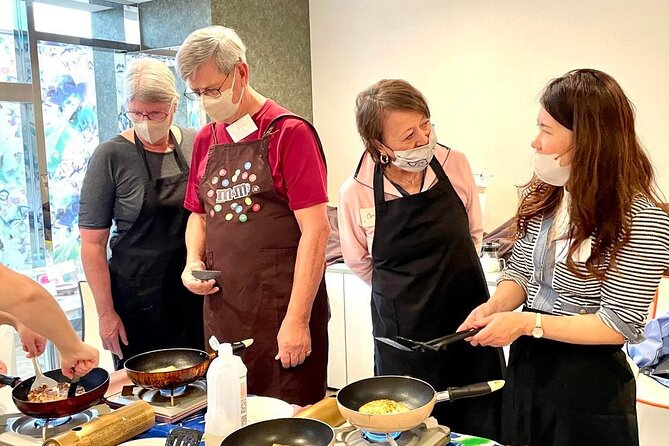
Okonomiyaki is Osaka comfort food you can flip yourself: a savory, cabbage-based pancake cooked with a host who shows you how to make it at home. This small class brings you together with Keiko, her mother or assistants, and local people she invites, so the cooking comes with conversation about food and daily life.
I like two things in particular: you do the cooking yourself, with a simple method meant to work in your own kitchen, and the group is capped at six, leaving room for questions and personal help. The class also covers miso soup, and the meal gives you a chance to talk with people from Osaka rather than simply order from a menu.
One point to plan around: this is a shared cooking class, so cross-contamination is possible. Dietary requests, including vegan, vegetarian, and Halal, can be accommodated, but contact the host before booking if you have strict requirements; ingredients may also contain refined sugar.
At a glance
- Cook Osaka-style okonomiyaki: Learn a straightforward recipe for the savory pancake, with guidance on how to make it again at home.
- Make miso soup too: The class includes instruction in this familiar Japanese side dish, adding another practical skill to the session.
- Meet locals at the table: Keiko invites Osaka friends to join the cooking and conversation.
- Keep the group small: A maximum of six people allows for hands-on participation and individual help.
- Plan for a two-hour afternoon: The listed start is 4:00 pm, with the activity ending back at its meeting point near Nagahoribashi station.
A two-hour class built around Osaka comfort food
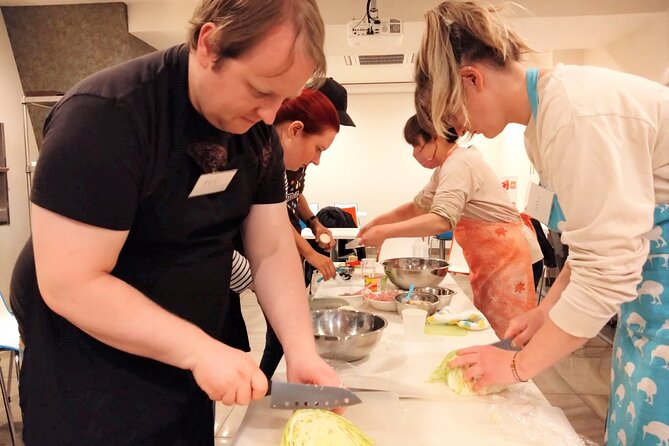
This experience is less about mastering restaurant technique and more about learning a dish you can adapt after you leave Japan. Okonomiyaki is often described as a Japanese pancake or pizza, but the fun is in making your own version: mix, cook, turn, and finish the dish under your host’s direction.
Keiko has been running the experience since 2015. She explains the cooking process and the dish’s background, including regional differences such as the contrast between Osaka- and Hiroshima-style okonomiyaki. You do not need to arrive with cooking skills. The emphasis is on a simple method that beginners can follow and repeat with ingredients available at home.
Miso soup is part of the lesson as well. That makes the class more useful than a single-recipe demonstration, while keeping the focus on a meal associated with everyday Japanese cooking. The exact sequence and pacing may vary, but expect to learn, prepare the food, and sit down to eat what you have made.
More cooking classes around Osaka:
- Sushi Making Osaka Roll and Authentic Japanese Sushi Class
★ 5.0 · 1,220 reviews - Osaka Sushi Making Experience
★ 5.0 · 400 reviews - Osaka: Ramen and Gyoza Cooking Class in Dotonbori
★ 5.0 · 378 reviews
Meeting Keiko near Nagahoribashi
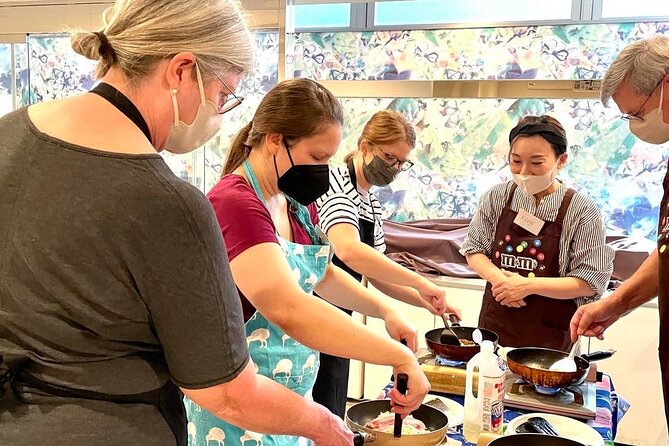
The meeting point is 1-chōme-1-3 Higashishinsaibashi, in Osaka’s Chuo Ward, near Nagahoribashi subway station. The class is held in a hostel setting, and the activity ends where it begins. That makes the logistics simple: you do not need to arrange a separate ride to a restaurant or another venue after cooking.
The scheduled start is 4:00 pm, and the session lasts about two hours. That timing puts the meal in the late afternoon or early evening, depending on the day and pace. The host may also offer a nighttime session on some days, so check the available time when choosing a date rather than assuming every class starts at the same hour.
The setting is deliberately informal. This is a small cooking class, not a polished restaurant kitchen or a formal culinary course. The upside is that you can ask questions as you go and take part directly. If you want a professional chef’s tour of advanced knife work or restaurant methods, this is not that kind of class. Its value lies in a friendly introduction to one local dish.
Cooking your own okonomiyaki
The hands-on part is the heart of the experience. Keiko gives clear instruction, then guides you as you make your own pancake. The small-group limit of six matters here: you are not just watching a demonstration from the back of a crowded room. There is space for the host to help with the steps and for you to ask how to adjust the recipe.
The method is meant to be accessible at home, without special equipment. That is a useful distinction for a visitor deciding between a cooking class and a meal out. You are paying not only for lunch or dinner, but for a skill you can take away and try again with local ingredients in your own country.
The class also gives context to the dish. Keiko explains its history and regional variations, including how Osaka-style preparation differs from the Hiroshima approach. For a short lesson, that makes the cooking more than a sequence of instructions. You can understand why this familiar food matters locally and how a basic recipe can shift from one place to another.
Miso soup, shared food, and conversation
After cooking, you sit down together to eat. That shared table is an important part of the experience: the meal becomes a natural place to continue asking questions and talking with the host, assistants, and local people who join the class. If you are traveling alone, the small group can make this a sociable evening without requiring you to arrive with a companion.
Keiko’s mother and assistants have also been part of the welcoming atmosphere. Some sessions have included Sachiko, and the class may bring together visitors and local people who want to chat or practice English. You can contribute to the conversation too, and some people use the setting to practice Japanese. Neither language exchange nor a particular mix of participants is guaranteed, but the format encourages conversation rather than a silent meal.
Miso soup is taught alongside the main dish. Some sessions have also included mochi dessert or other small extras, but treat those as a pleasant possibility, not a promised part of every booking. The dependable appeal is the cooking, the meal, and time to talk.
More food tours around Osaka:
- Osaka: Shinsekai Food Tour with 13-15 Dishes at 5 Eateries
★ 4.8 · 2,204 reviews - Osaka Food Tour: 13 Dishes at 5 Local Eateries
★ 5.0 · 2,149 reviews - Hungry Osaka Street Food Tour:15 Tastings & 3 Drinks with a Local
★ 5.0 · 1,727 reviews - Osaka Local Foodie Walking Tour in Dotonbori and Shinsekai
★ 5.0 · 985 reviews
The handmade touches
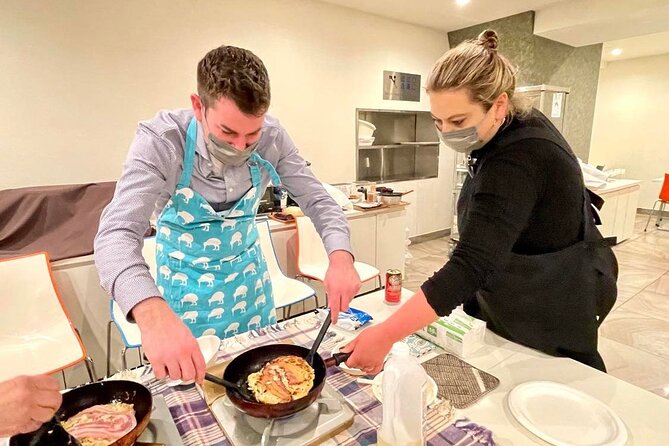
A few details give the class a personal feel. Keiko’s mother has sewn aprons from kimono fabric, and some participants have received small bags made from reused kimono cloth. These touches are not the main reason to book, and a souvenir should not be assumed, but they reflect the care the family brings to the experience.
The host’s English communication has been described as clear, and the teaching is organized and patient. That matters if you are nervous about following a cooking lesson in another country. You can focus on the ingredients and the process rather than trying to infer every step from gestures.
The food is the other strong point. You make the pancake yourself, then eat it fresh as part of the group meal. The class is designed to leave you with a usable recipe and enough understanding to make your own version later. In at least some cases, Keiko has sent written recipe information after the class. Since follow-up details may vary, ask whether you will receive a recipe if having one is important to you.
Dietary needs and practical limits
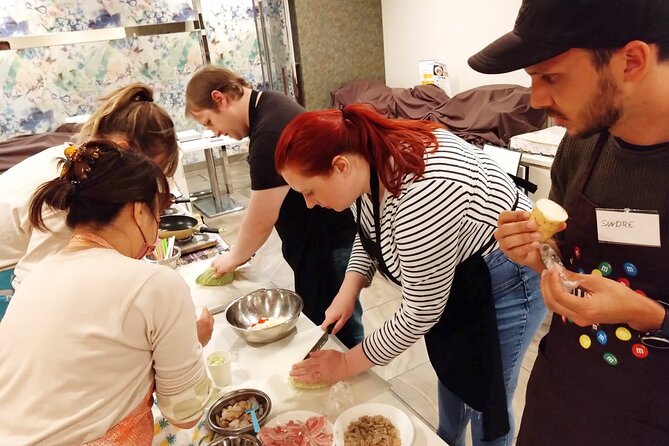
The host says she can accommodate vegan, vegetarian, and Halal requests. That flexibility is valuable for a dish that can be adapted with different ingredients, and participants have been able to make vegan okonomiyaki. Still, make your needs clear before the class. The available information does not specify exact ingredient substitutions or guarantee that every dietary restriction can be met.
There is also a straightforward caution: this is a group lesson, and cross-contamination is possible. Ingredients may contain refined sugar. If you have a serious allergy or need strict separation of ingredients and equipment, do not assume the shared setup will be safe. Confirm directly with the provider before booking.
The group size helps the host attend to individual requests, but it does not remove those limits. If your needs are flexible, the ability to adapt the dish may be enough. If they are medically strict, get specific assurances in advance.
What $49.55 buys you
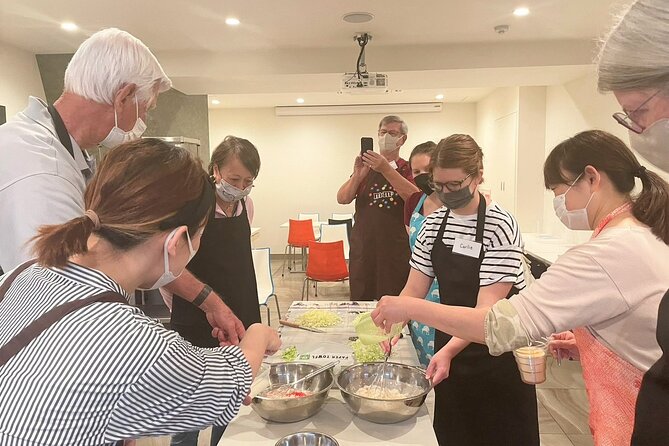
At $49.55 per person, the experience costs more than simply ordering okonomiyaki at a restaurant. The comparison, though, is not just food against food. You are paying for a two-hour lesson, ingredients, hands-on participation, instruction in both okonomiyaki and miso soup, and a shared meal with a small group.
I see the strongest value for anyone who wants to bring a piece of Osaka home. You learn a recipe that does not depend on special equipment, hear about local and regional food differences, and have a relaxed chance to talk with people who live in the city. If you are interested only in trying the dish once, a restaurant meal will likely be quicker and less costly.
The maximum group size of six supports that price. Personal attention is more likely in a small class than in a large demonstration, and you get to make your own food rather than watch someone else cook. For families, the experience can also work across ages: one family with children aged eight and eleven took part together. That does not guarantee every child will enjoy the activity, but it is a good sign that the format can suit a family that likes cooking and conversation.
The experience is popular enough that it is booked, on average, about 45 days ahead. That is a planning clue rather than a hard rule. If the class fits a specific day in your itinerary, booking ahead is sensible.
Who should book this Osaka cooking class
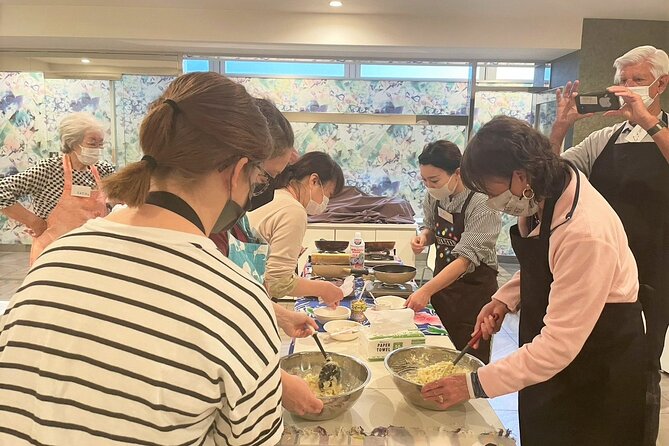
This class suits curious eaters who want more than a restaurant meal, first-time cooks who want a simple recipe, and visitors who enjoy meeting local people. It is also a good choice if you are traveling solo and would appreciate a structured, low-key social activity. Couples and families can take part together, and the small group size keeps the session personal.
You will get the most from it if you enjoy asking questions and are happy to share a table with people you have just met. The class is not a sightseeing tour, and it does not cover a series of Osaka neighborhoods or restaurants. Its focus is narrow by design: one famous local dish, a second recipe, and conversation around the food.
For a first visit, it can add an everyday dimension to a city often explored through landmarks and restaurant counters. You leave with a meal in your memory and a method you can try again. Just keep expectations grounded: this is a friendly home-style class, not a formal culinary qualification.
Should you book it?
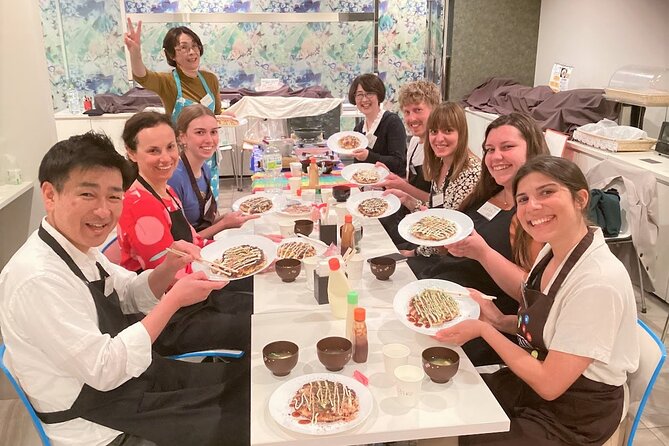
I would book this class if you want to cook Osaka-style okonomiyaki yourself, learn how it differs from other regional styles, and spend time talking with local people. The two-hour format, group cap of six, and at-home-friendly recipe make it a practical way to turn a meal into an activity.
Choose a restaurant instead if all you want is a quick taste, or contact the host first if cross-contamination, refined sugar, or a strict dietary requirement is a concern. If the class sounds right for your plans, reserve early for a preferred date: it is often booked weeks ahead, and free cancellation is available up to 24 hours before the start.
FAQ
How long does the cooking experience last?
It lasts approximately two hours.
What time does the class start?
The listed start time is 4:00 pm. The host may also offer a nighttime session on some days.
Where is the meeting point?
The meeting point is 1-chōme-1-3 Higashishinsaibashi, Chuo Ward, Osaka, near Nagahoribashi subway station.
Where does the activity end?
It ends back at the meeting point.
How many people can join?
The activity has a maximum of six participants.
What will I learn to cook?
You will learn to make Osaka-style okonomiyaki and miso soup.
Can the host accommodate dietary requests?
The host says she can accommodate vegan, vegetarian, and Halal requests. Ingredients may contain refined sugar, and cross-contamination is possible in the group lesson.
How much does the experience cost?
The listed price is $49.55 per person.
What is the cancellation policy?
You can cancel at least 24 hours before the start time for a full refund. Cancellations made less than 24 hours before the start time are not refunded.
Just added around Osaka
- Mount Koya from Osaka: Cultural Small Group Day Tour★ 5.0 · 3 reviews
- Matcha Tea Bowl Experience in Osaka★ 5.0 · 11 reviews
- Master Washoku: 5 Core Techniques for Authentic Cooking★ 4.7 · 7 reviews
- Manno: Osaka Premium Wagyu BBQ Experience Reservation★ 5.0 · 4 reviews
- Learning Shodo with a kimono and Trying Samurai Calligraphy★ 4.2 · 7 reviews
- Katsu Curry OR Bento Making Cooking Class & Local Shop Tour★ 4.9 · 11 reviews
- Himeji: Private Guide Tour of the Castle from Osaka or Kyoto★ 4.5 · 7 reviews
- Osaka and Nara Customized Private tour with English Driver★ 4.7 · 4 reviews
Osaka Cooking Classes, compared.
Sushi Making Osaka Roll and Authentic Japanese Sushi Class
Read our review →
Osaka Sushi Making Class – Hands-On Nigiri & Rolls (Same-Day OK)
Read our review →
Osaka Cooking Class: Okonomiyaki &Japanese cuisines experience
Read our review →
Roll and Authentic Sushi Making Class in Dotonbori
Read our review →
Browse the lists this tour appears in