
Reviewed · DOTONBORI TOURS
Ramen and Gyoza Cooking Class in Osaka Dotonbori
Ramen and gyoza are everyday comfort food in Japan, but making them from scratch gives you a better sense of the work behind a good bowl. Here, you knead the noodles, help prepare the broth, and fold gyoza in a small class in Dotonbori. I like two things in particular: you learn techniques you can try again at home, and the instructors explain ingredients and methods as you cook.
One point to plan around: the broth may include fish and chicken, and gluten-free meals aren’t available. If you need a vegetarian, pescatarian, or no-fish option, leave a note when booking. You’ll also want to allow time to find the apartment classroom and arrive without being hungry.
What makes this class worth your afternoon
- You make ramen noodles by hand. Kneading and shaping the dough is a practical lesson you won’t get by ordering a bowl at a restaurant.
- The broth is part of the work. You make it from scratch, with a fish-and-chicken base noted in the class details. Ask about the ingredients if you have dietary concerns.
- You prepare gyoza filling and fold the dumplings. One class version used chicken filling and ready-made wrappers, so expect hands-on cooking, though not every component is made from scratch.
- You can adjust fillings and toppings. The instructors offer tips for adapting the dishes to different tastes and dietary needs, within the options the class can accommodate.
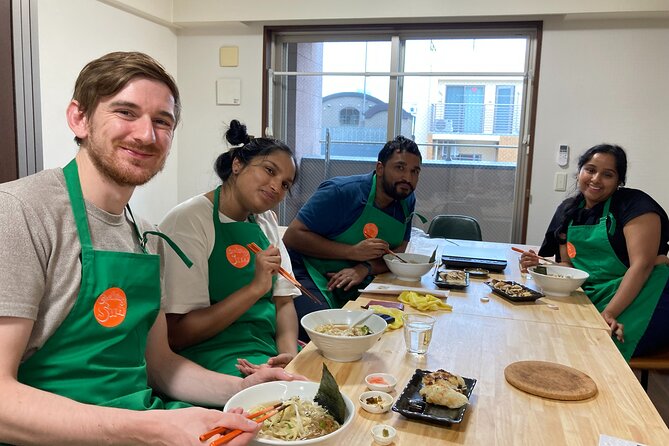
- The group is capped at eight. That gives you more room to ask questions and get help than a large demonstration class.
- You leave with recipes. Take-home instructions make this more useful than a meal you can only remember by taste.
A Dotonbori cooking class in an apartment kitchen
Cooking Sun’s classroom is in an apartment building in Osaka’s Chuo Ward, near the Dotonbori area. The address provided is 542-0082 Osaka, Chuo Ward, Shimanouchi, 2-chōme914, room 807. The class ends at the meeting point, so you won’t need to arrange a separate return transfer.
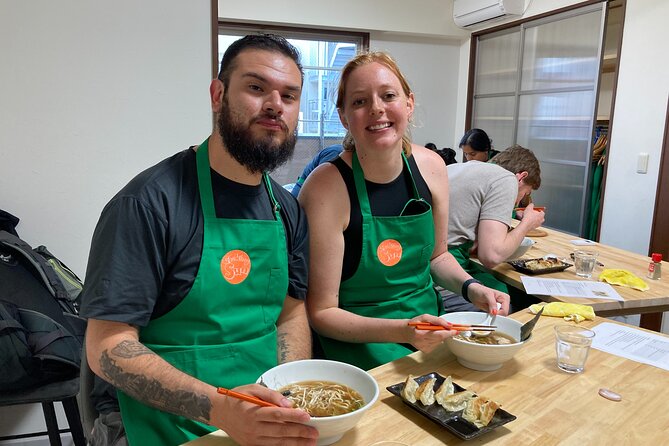
The setting is more home kitchen than restaurant school. That suits the idea: you’re learning food you can make in your own kitchen, not watching a chef work behind a counter. The room has been described as clean, modern, and well equipped, with the cooking set up for a group of up to eight.
Finding the entrance may take more attention than finding a restaurant on a main street. Put the street address into your map rather than searching only for Cooking Sun or Sun Cooking, which can lead to the wrong place. Once inside, take the elevator to the eighth floor and look for room 807. Give yourself a little extra time rather than arriving at 1:30 and starting your search then.
More Dotonbori and Namba tours around Osaka:
- Osaka Local Foodie Walking Tour in Dotonbori and Shinsekai
★ 5.0 · 985 reviews - Osaka Bar Hopping Night Walking Tour in Namba (3 bars, 6 tastes)
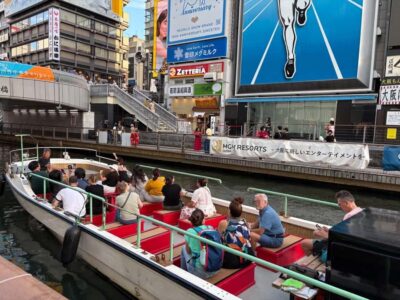
★ 5.0 · 958 reviews - Osaka: Dotonbori District River Cruise with Drink Discount
★ 4.2 · 876 reviews
From flour and broth to a bowl of ramen
The class is scheduled to begin at 1:30 pm and is listed as about three hours long. You’ll work through several steps, with the instructors demonstrating and guiding the group rather than simply serving a finished dish.
The noodle-making is a highlight because it turns a familiar food into a sequence of small, satisfying jobs. You knead the dough by hand and see how it becomes ramen noodles. It takes more effort than opening a packet, but that is the point: you learn a basic process and get a feel for the texture and technique.
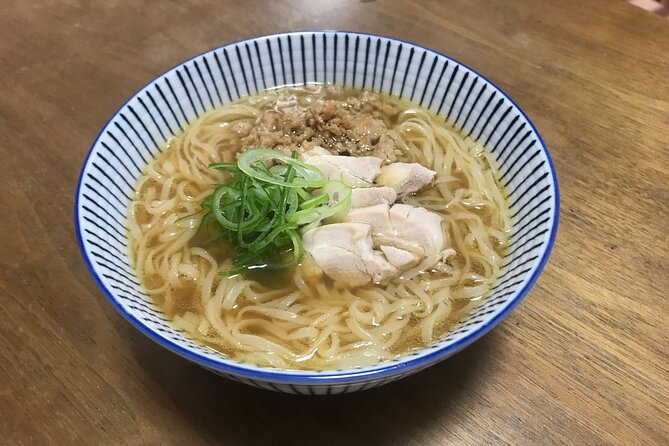
The broth is also made from scratch. A fish-and-chicken base has been part of the class, and instructors explain ingredients as you go. That context matters if you want to cook the dish at home. It helps you understand why a particular ingredient is used, and which substitutions might work if your local shop does not carry the same products.
Instructors have explained differences between fish flakes, soy sauces, and types of miso, as well as possible ingredient substitutes for cooking outside Japan. That sort of practical detail can make a recipe handout far more useful. You’re not only copying a list of ingredients; you’re learning what some of them contribute.
Ramen toppings can be adjusted to suit your taste. The class is a good fit if you like to experiment, though it is still a guided lesson with a shared menu and set steps. Don’t expect a completely open-ended cooking session where everyone chooses an entirely different dish.
Folding gyoza and sharing the meal
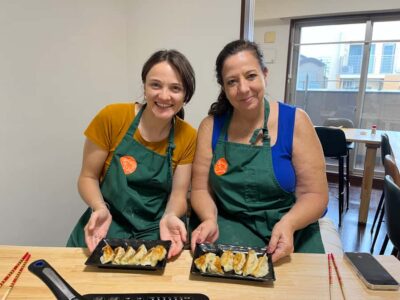
The gyoza work gives you another set of skills to try: preparing the filling, shaping the dumplings, and cooking them. In one described version, the filling was chicken and the wrappers were ready-made. That’s a useful distinction if you’re booking because you want every element made by hand. The ramen noodles and broth are made from scratch; the gyoza wrappers may not be.
You can customize the filling, and the instructors can advise on dietary needs. Still, don’t assume every request can be met. If you need a vegetarian, pescatarian, or no-fish version, make a note at booking. The class specifically cannot provide a gluten-free option, so it is not suitable for someone who must avoid gluten.
The cooking ends with a meal of the dishes you’ve prepared. That’s a satisfying payoff, and it also gives you a chance to taste how the ramen, broth, toppings, and gyoza work together. The food is substantial enough to function as an early dinner for many people, but timing can vary. One class ended around 3:30 pm, while the stated duration is approximately three hours. Have a light lunch if you tend to get hungry, and leave room in your afternoon schedule.
Patient teaching for beginners and families
This class is designed for participation, not prior cooking skill. The instructions are step by step, and the teaching style is described as patient and clear. That helps if you’re new to Japanese cooking, or if your kitchen experience mainly involves watching someone else do the chopping.
It can also work well for families. Children and teenagers have enjoyed the class, including participants who don’t normally cook. The small group size makes it easier for an instructor to help when a noodle-making attempt goes sideways or a gyoza refuses to fold neatly. Mistakes are part of the fun, not a reason to sit out.
English-speaking instruction is included. Past instructors have included Miki and Jun, as well as Kassa and Marina, though the instructor for your date may differ. The important practical point is that the class is set up for English-speaking participants, and the teaching includes explanations of ingredients and cooking customs as well as directions.
If you have an allergy, write it in your booking note and contact the provider with any questions before you go. One family’s allergy needs were accommodated, but that doesn’t guarantee every allergy can be handled safely. Be specific about what you cannot eat and confirm directly rather than relying on substitutions being available on the day.
More cooking classes around Osaka:
- Sushi Making Osaka Roll and Authentic Japanese Sushi Class
★ 5.0 · 1,220 reviews - Osaka Sushi Making Experience
★ 5.0 · 400 reviews - Osaka: Ramen and Gyoza Cooking Class in Dotonbori
★ 5.0 · 378 reviews - Osaka Sushi Making Class – Hands-On Nigiri & Rolls (Same-Day OK)
★ 5.0 · 352 reviews
The value of a $71.35 cooking class
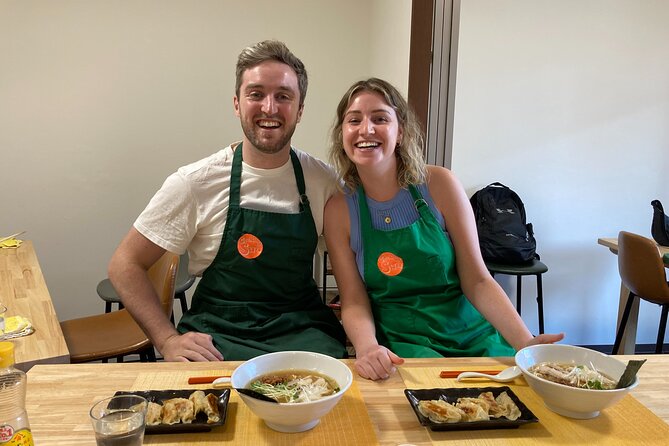
At $71.35 per person, this is more than a meal, but the price includes the ingredients, utensils, instruction, recipes, and taxes. You spend roughly an afternoon making two well-known Japanese dishes, then eat what you’ve cooked. For someone who wants a hands-on cultural activity and practical cooking skills, that’s a solid use of the money.
The lasting value depends on whether you’ll use the recipes again. The take-home instructions and ingredient explanations are useful, especially when the instructors suggest alternatives you may be able to find at home. If you only want a bowl of ramen, a restaurant is the simpler and cheaper choice. If you’re curious about how the food is made, the class offers a more memorable way to spend the time.
The maximum group size of eight is another part of the value. A small class gives you more direct guidance and a better chance to ask about ingredients, technique, or substitutions. It also keeps the session social without making it feel like a large tour group.
Timing, directions, and dietary notes
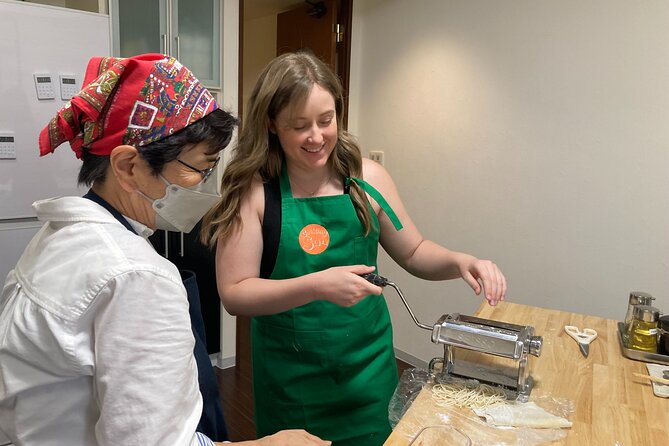
The meeting point is Cooking SunJapan, room 807, in Shimanouchi, Osaka. The activity starts at 1:30 pm and returns to the same point. Since the classroom is in an apartment building rather than an obvious street-level shop, use the full address in your map and allow a few minutes to find the entrance and elevator.
The listed duration is about three hours, but one participant finished at around 3:30 pm. Since that is shorter than the advertised estimate, don’t build a tight connection or reservation immediately afterward. Plan for the full approximate duration, and treat an earlier finish as a bonus.
All ingredients and utensils are included, along with the English-speaking instructor and printed recipes. Extra food or drinks are not included. The class is near public transportation, but no specific station or route is provided, so check your own route before leaving.
Dietary requests need attention before the class. Note vegetarian, pescatarian, or no-fish needs when booking. Gluten-free cooking is not offered, and the broth may use fish and chicken. If allergies or other restrictions are important, ask the provider directly before confirming.
Should you book the ramen and gyoza class?
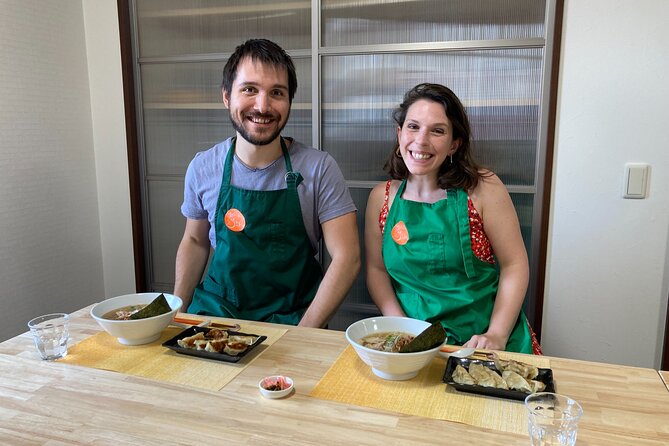
I’d choose this class if you want to do more than eat your way around Osaka. Making noodles, learning about the broth, folding gyoza, and taking home recipes gives you a practical connection to the food. It’s especially well suited to curious cooks, families with teenagers, and anyone who enjoys learning by doing.
Skip it if you need a gluten-free meal, want a guaranteed fully vegetarian menu without confirming first, or would rather spend the afternoon sightseeing. And if you’re booking mainly for a meal, remember that you’re paying for instruction and participation as well as the food.
For a small, English-led cooking session in central Osaka, the mix of hands-on work, ingredient explanations, and a meal at the end makes the price reasonable. Just leave a dietary note, use the full address to find the room, and don’t arrive hungry.
FAQ
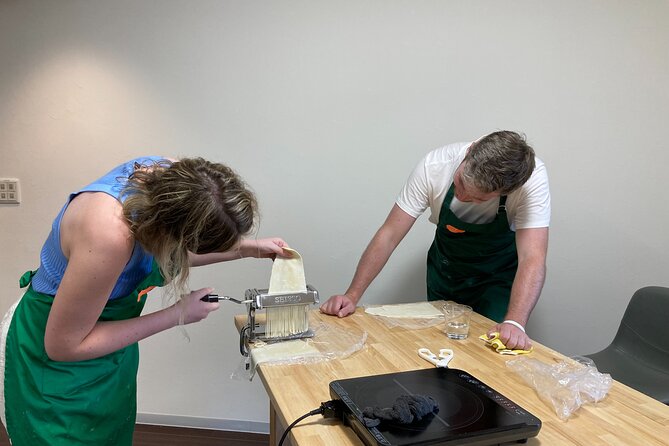
How long is the ramen and gyoza class?
It is listed as approximately three hours. One participant finished at about 3:30 pm after the 1:30 pm start, so the end time may vary.
What time does the class start?
The scheduled start time is 1:30 pm.
Where does the class meet?
It meets at Cooking SunJapan, room 807, at 542-0082 Osaka, Chuo Ward, Shimanouchi, 2-chōme914. The activity ends at the same meeting point.
What dishes will I make?
You’ll make ramen and gyoza. The ramen noodles and soup are made from scratch, and you prepare and fold the gyoza.
Is the class taught in English?
Yes. An English-speaking instructor is included.
Can I request a vegetarian, pescatarian, or no-fish option?
Yes. Leave a note upon booking for a vegetarian, pescatarian, or no-fish option.
Is a gluten-free option available?
No. A gluten-free option is not available, and the activity is not recommended for people with gluten intolerance.
What is included in the price?
The price includes ingredients, utensils, the hands-on class, an English-speaking instructor, recipes to take home, and fees and taxes. Extra food and beverages are not included.
More hands-on workshops around Osaka
- Matcha Making Class in Osaka with Authentic Japanese Sweets Set
★ 5.0 · 509 reviews - Osaka Cooking Class: Okonomiyaki &Japanese cuisines experience
★ 5.0 · 261 reviews - Osaka: Roll and Authentic Sushi Making Class in Dotonbori
★ 4.9 · 239 reviews - Ramen and Gyoza Cooking Class in Osaka
★ 5.0 · 202 reviews
More food tours around Osaka
- Osaka: Shinsekai Food Tour with 13-15 Dishes at 5 Eateries
★ 4.8 · 2,204 reviews - Osaka Food Tour: 13 Dishes at 5 Local Eateries
★ 5.0 · 2,149 reviews - Hungry Osaka Street Food Tour:15 Tastings & 3 Drinks with a Local
★ 5.0 · 1,727 reviews - Hungry Osaka Street Food Tour: 15 Dishes & 3 Drinks
★ 4.9 · 694 reviews
Just added around Osaka
- Mount Koya from Osaka: Cultural Small Group Day Tour★ 5.0 · 3 reviews
- Matcha Tea Bowl Experience in Osaka★ 5.0 · 11 reviews
- Master Washoku: 5 Core Techniques for Authentic Cooking★ 4.7 · 7 reviews
- Manno: Osaka Premium Wagyu BBQ Experience Reservation★ 5.0 · 4 reviews
- Learning Shodo with a kimono and Trying Samurai Calligraphy★ 4.2 · 7 reviews
- Katsu Curry OR Bento Making Cooking Class & Local Shop Tour★ 4.9 · 11 reviews
- Himeji: Private Guide Tour of the Castle from Osaka or Kyoto★ 4.5 · 7 reviews
- Osaka and Nara Customized Private tour with English Driver★ 4.7 · 4 reviews
Dotonbori Tours, compared.
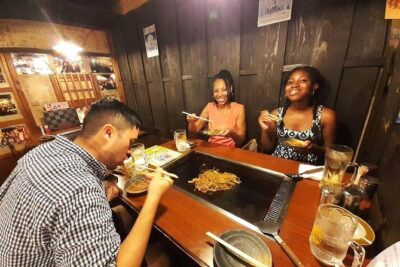
Osaka Local Foodie Walking Tour in Dotonbori and Shinsekai
Read our review →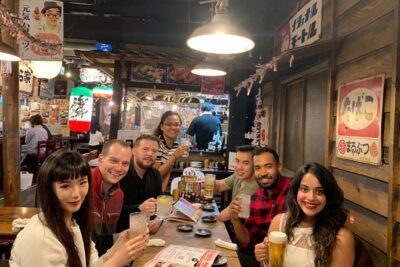
Osaka Bar Hopping Night Walking Tour in Namba (3 bars, 6 tastes)
Read our review →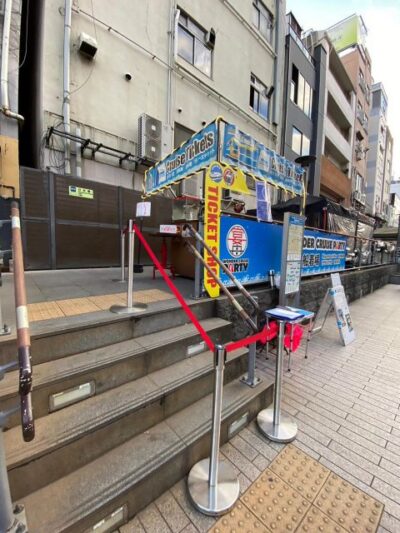
Dotonbori District River Cruise with Drink Discount
Read our review →
Ultimate Osaka Walking Tour: Castle, Dotonbori & Hidden Gems
Read our review →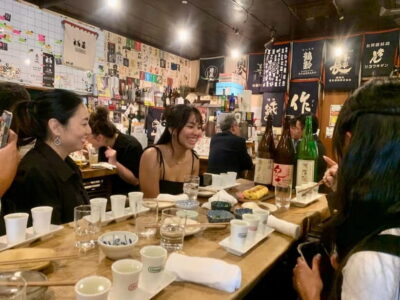
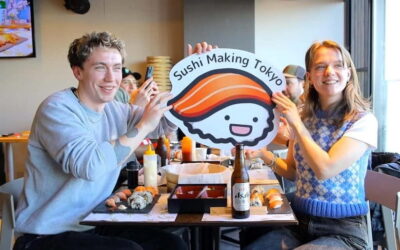
Roll and Authentic Sushi Making Class in Dotonbori
Read our review →Browse the lists this tour appears in