
Reviewed · OSAKA COOKING CLASSES
Well-balanced BENTO (lunch box) Cooking Class
The heart of this Osaka class is not just cooking lunch, but learning how its parts fit together: you make dashi, prepare home-style dishes, shape rice balls and arrange everything in a bento box. I like that the meal ends at the table with miso soup, so the class has a clear, satisfying finish.
Two details make the experience especially appealing: you practice several everyday techniques, including frying, grilling, simmering and marinating, and you get to pack the food yourself, with an instructor’s advice on presentation. The small group, capped at eight, should also leave room for hands-on help.
One consideration: two and a half hours is a brisk window for making up to seven dishes, learning new methods and eating your lunch. If you want a slow, open-ended cooking session, this may feel scheduled; if you like a focused class with a meal at the end, the pace makes sense.
- Start with dashi: Make the Japanese broth that forms the base for many dishes.
- Cook a home-style spread: Work with Wagyu beef, shrimp, salmon, egg, squash, mushrooms and green vegetables.
- Shape two rice balls: Practice triangular forms with plastic molds before making your own.
- Learn to pack the box: Arrange the food with fresh vegetables and get tips on presentation.
- Eat what you make: Finish with your bento, chopsticks and complimentary miso soup.
From dashi to a finished bento
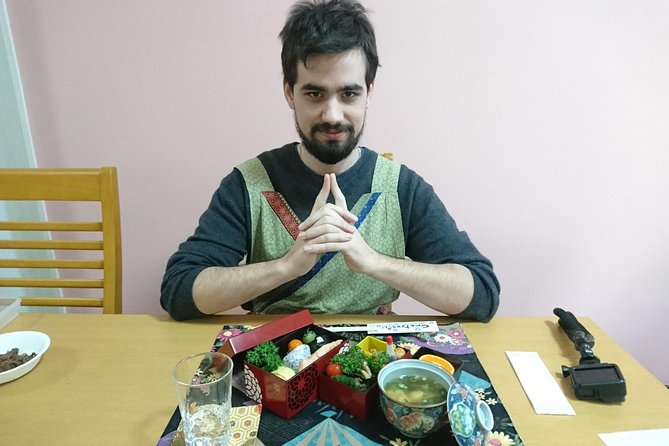
The class begins with a small personal choice: pick your lunch box, then put on an apron. It is a simple start, but the box gives the session a useful goal. You are not preparing a set of unrelated recipes; you are building a meal that needs to fit, look appealing and make sense as lunch.
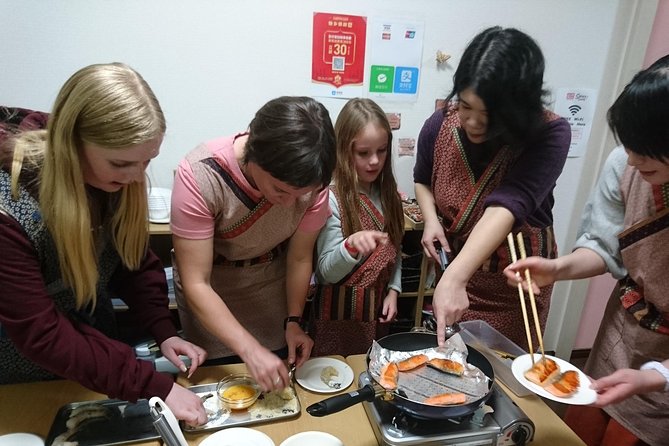
Your first cooking task is dashi, a traditional Japanese broth used in many dishes. This is a good place to begin because it introduces a basic building block of Japanese home cooking before you move on to the main ingredients. Instructor Yumi has been noted for explaining both the process and the background of dashi, so expect the lesson to include context as well as steps to follow.
The class then moves through up to seven dishes commonly made in Japanese homes. The ingredients include Wagyu beef, shrimp, salmon, egg, squash, mushrooms and green vegetables. The precise recipes are not specified, so it is best to think of this as a practical introduction to several ingredients and techniques rather than a promise of one particular menu.
That distinction matters if you are choosing the class for a specific recipe. You will get a broad, hands-on session centered on familiar home-style cooking, but the emphasis is on making a balanced bento, not mastering one signature dish.
Practicing more than one cooking method
Frying, grilling, simmering and marinating are all part of the experience. That variety is useful: you can see how different methods change the texture and flavor of a meal, rather than simply following a single recipe from start to finish.
You should expect to take part in preparing the dishes, not just watch an instructor demonstrate them. The class is designed to give everyone a chance to participate, and the maximum group size of eight supports that hands-on format. With fewer people, an instructor can spend more time explaining or helping with a technique.
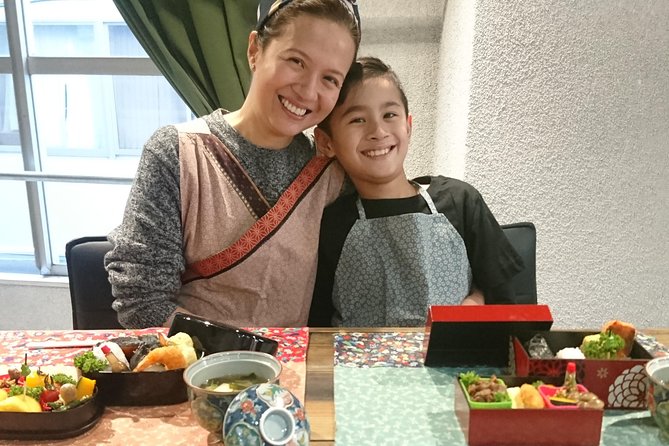
Past participants have specifically praised instructors Yumi and Fumi for clear, careful teaching. One family found the class manageable for a 12-year-old who enjoys cooking, while another pair received detailed guidance in a very small session. Group size can vary, of course, so don’t assume you will have a private lesson. The cap does mean the class is limited in size, not a large demonstration where you have to watch from the back.
More cooking classes around Osaka:
- Sushi Making Osaka Roll and Authentic Japanese Sushi Class
★ 5.0 · 1,220 reviews - Osaka Sushi Making Experience
★ 5.0 · 400 reviews - Osaka: Ramen and Gyoza Cooking Class in Dotonbori
★ 5.0 · 378 reviews
Making rice balls that hold their shape
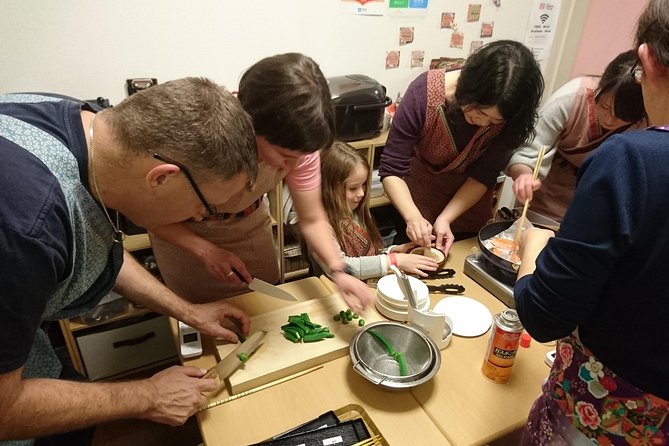
The rice balls are a small but memorable part of the class. You first practice creating triangular shapes with plastic molds, then make two rice balls of your own. The molds make the task approachable, especially if this is your first attempt, while the practice gives you a chance to understand how the shape comes together.
This is also a useful reminder that Japanese food presentation is not reserved for restaurant chefs. A lunch box has limited space, so shaping and placing the rice neatly is part of making the meal work. The class ties that detail to the larger task of packing the bento, rather than treating the rice balls as a separate novelty.
If you are cooking with a child, this hands-on step may be especially satisfying. The class has been found easy for a 12-year-old to follow, though children must be accompanied by an adult. The practical appeal is clear: there is a tangible result to make, and it becomes part of the lunch you eat afterward.
Packing the box is part of the lesson
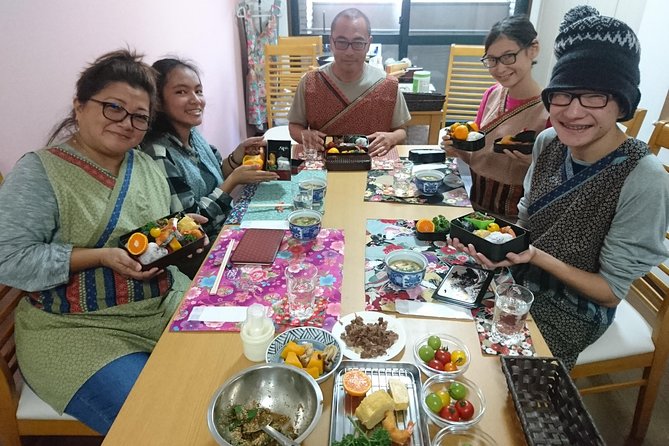
Once the dishes are ready, you arrange them in your chosen lunch box with fresh vegetables. Your instructor offers advice on how to pack it attractively. This step is more than decoration. The bento format asks you to think about the meal as a whole, balancing colors and placing several foods together in a compact space.
I like that presentation is included in the cooking class rather than left to chance. You are learning how the components work together, then putting that idea into practice with the food you have prepared. It is a useful skill to take home, even if you do not own a Japanese lunch box.
The final meal is served with chopsticks and complimentary miso soup. The class ends by eating what you made, with Itadakimasu marking the start of the meal. That finish gives the session a welcome sense of completion: you have cooked, packed and then sat down to eat your own lunch.
What the meal and instruction are like
The food is intended to make a balanced lunch, with meat, seafood, egg, vegetables, rice and soup represented across the ingredients and dishes. That range is one reason the class may suit someone who wants more than a quick sushi-making demonstration. You are working with different ingredients and cooking methods, then bringing them together in one meal.
The experience is also a good fit if cultural context matters to you. Learning why dashi is used, and seeing how several dishes are combined in an everyday bento, gives you a window into home cooking rather than just a recipe to reproduce. The session is still practical first: you will spend the time cooking, not sitting through a long lecture.
Instruction is in English, according to the feedback about the class, and one attendee described the instructor’s English as warm and direct. That is a helpful sign for following demonstrations and asking questions, though no particular language level is specified. Instructors Yumi and Fumi are names to look out for, but you should not assume which one will lead your session.
More trips with lunch around Osaka:
- Osaka: Five Must-See Highlights Walking Tour & Ramen Lunch
★ 4.7 · 411 reviews - Osaka/Kyoto: Amanohashidate & Miyama Tour with Boat & Lunch
★ 4.6 · 207 reviews - Walking Tour of Osaka’s 5 Must-See Sights, with Ramen for Lunch
★ 5.0 · 158 reviews - 5-Hour Osaka Highlights Bike Tour with Lunch
★ 4.8 · 146 reviews
Is $92.24 a fair price?
At $92.24 per person, this is not a bargain lunch. You are paying for a two-and-a-half-hour guided activity, ingredients for several dishes, instruction in multiple cooking methods, use of a lunch box and apron, and the meal you prepare, with miso soup included. The value is strongest if you want a cultural activity that is also practical and filling.
Compare it with a simple restaurant meal and the class will cost more. Compare it with a short cooking demonstration, and the difference is that you do the work yourself and eat the result. The small-group cap also matters: a maximum of eight makes hands-on instruction more plausible than in a large class, though it does not guarantee individual attention throughout.
This is a better buy for curious cooks, families with an older child who likes cooking, or anyone who wants a useful break from sightseeing than for someone looking only for the cheapest lunch. If you already cook Japanese food often, the appeal may depend on whether you want to practice presentation and learn from an instructor in Osaka.
The activity is booked, on average, 53 days in advance. That figure is a planning clue, not a rule, but it suggests booking ahead if this class is important to your itinerary. Confirmation is provided within 48 hours of booking, subject to availability.
Finding the class and planning your visit
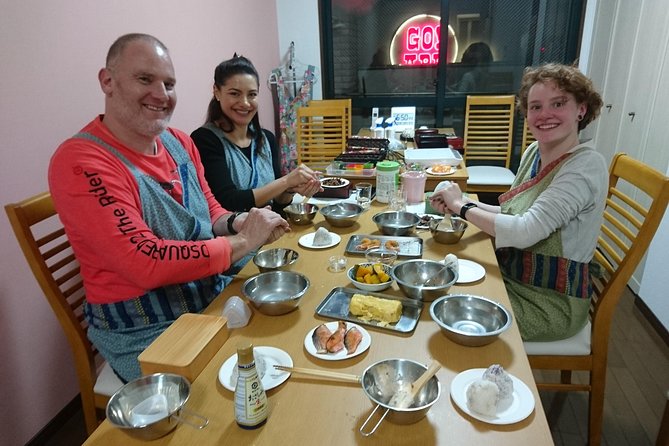
The meeting point is Banix北堀江Japan, at システマギャラリー, 3-chōme 6-2 Kitahorie, Nishi Ward, Osaka, postal code 550-0014. The activity is near public transportation and ends back at the meeting point. Check the address carefully when planning your route, especially since the meeting-point name includes Japanese text.
The session lasts about two hours and 30 minutes, so allow that time in your Osaka schedule. The ticket is mobile, which means you can use an electronic ticket rather than needing a printed one. Children must come with an adult, and you should advise the provider of dietary requirements when booking. No specific substitutions or accommodations are promised, so raise the question before you commit if you have a dietary restriction.
You can cancel for a full refund up to 24 hours before the start time. Cancellations or changes made less than 24 hours in advance are not accepted for a refund or change, and the cut-off is based on local time.
Who should book this cooking class?
Book it if you want to spend part of your Osaka visit doing something active, learn techniques you can use at home, and finish with a meal you made yourself. The strongest reasons to go are the mix of cooking methods, the practical bento-packing lesson and the chance to learn about dashi from an instructor such as Yumi or Fumi.
It also suits families with a child who enjoys cooking, and people who like food experiences that explain everyday habits as well as recipes. The format is structured and compact, which is helpful when you have a busy itinerary but less appealing if you want a leisurely class with plenty of unscheduled time.
Skip it if you are mainly looking for a low-cost meal, need a guaranteed specific menu, or would rather spend your time exploring Osaka’s food shops and restaurants. For a focused introduction to Japanese home cooking, though, this class offers more than lunch: you leave having shaped, cooked and packed a meal yourself.
FAQ
How long is the bento cooking class?
The class lasts approximately two hours and 30 minutes.
Where does the class meet?
It meets at Banix北堀江Japan, at システマギャラリー, 3-chōme 6-2 Kitahorie, Nishi Ward, Osaka, postal code 550-0014.
Where does the activity end?
It ends back at the meeting point.
What food will I prepare?
You make dashi and up to seven home-style dishes using ingredients that include Wagyu beef, shrimp, salmon, egg, squash, mushrooms and green vegetables. You also make two triangular rice balls.
Is the class suitable for children?
Children must be accompanied by an adult. The class has been manageable for a 12-year-old, but no minimum age is specified.
Can I share dietary requirements?
Yes. You should advise the provider of any specific dietary requirements at the time of booking.
What is the cancellation policy?
You can cancel at least 24 hours before the start time for a full refund. Cancellations or changes made less than 24 hours before the experience are not accepted.
More hands-on workshops around Osaka
- Matcha Making Class in Osaka with Authentic Japanese Sweets Set
★ 5.0 · 509 reviews - Osaka Sushi Making Class – Hands-On Nigiri & Rolls (Same-Day OK)
★ 5.0 · 352 reviews - Osaka Cooking Class: Okonomiyaki &Japanese cuisines experience
★ 5.0 · 261 reviews - Osaka: Roll and Authentic Sushi Making Class in Dotonbori
★ 4.9 · 239 reviews
Just added around Osaka
- Mount Koya from Osaka: Cultural Small Group Day Tour★ 5.0 · 3 reviews
- Matcha Tea Bowl Experience in Osaka★ 5.0 · 11 reviews
- Master Washoku: 5 Core Techniques for Authentic Cooking★ 4.7 · 7 reviews
- Manno: Osaka Premium Wagyu BBQ Experience Reservation★ 5.0 · 4 reviews
- Learning Shodo with a kimono and Trying Samurai Calligraphy★ 4.2 · 7 reviews
- Katsu Curry OR Bento Making Cooking Class & Local Shop Tour★ 4.9 · 11 reviews
- Himeji: Private Guide Tour of the Castle from Osaka or Kyoto★ 4.5 · 7 reviews
- Osaka and Nara Customized Private tour with English Driver★ 4.7 · 4 reviews
Osaka Cooking Classes, compared.
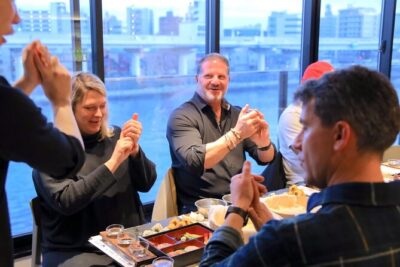
Sushi Making Osaka Roll and Authentic Japanese Sushi Class
Read our review →
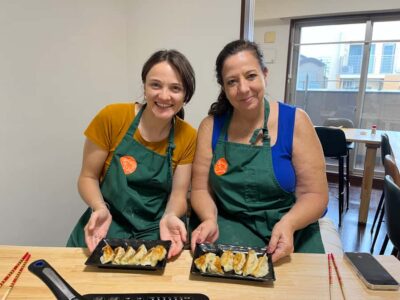
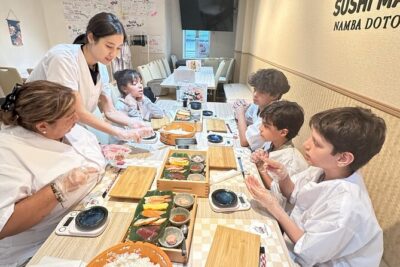
Osaka Sushi Making Class – Hands-On Nigiri & Rolls (Same-Day OK)
Read our review →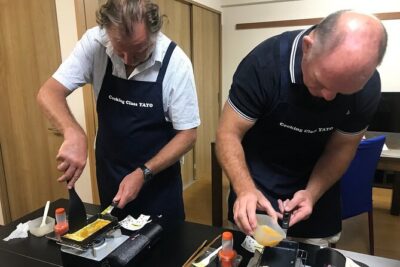
Osaka Cooking Class: Okonomiyaki &Japanese cuisines experience
Read our review →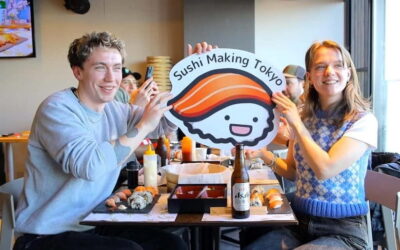
Roll and Authentic Sushi Making Class in Dotonbori
Read our review →
Browse the lists this tour appears in